


Search results
Search for "hydration" in Full Text gives 80 result(s) in Beilstein Journal of Nanotechnology.
Nanoconjugates of a calixresorcinarene derivative with methoxy poly(ethylene glycol) fragments for drug encapsulation
Beilstein J. Nanotechnol. 2018, 9, 2057–2070, doi:10.3762/bjnano.9.195
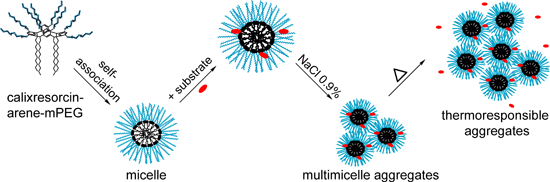
- macrocycle, the hydrophobic effect with its alkyl substituents and hydrogen, and donor–acceptor bonds with its polyethyleneoxy groups. The encapsulation was performed through thin-film hydration (also called evaporation method) or through solubilisation. Thin-film hydration means that ethanol solutions of
- of 3 (370 nm) compared to the mPEG-550 solution (362 nm) means a more hydrophobic microenvironment of the substrate in the macrocycle micelles [35]. The encapsulation of these substrates through thin-film hydration showed that the encapsulation efficiency (EE) of more hydrophobic Orange OT is a
- carried out by using thin-film hydration. The particle size distribution of 3 significantly changes in the presence of Dox: The averaged size of small particles increases from 8 to 16 nm and large particles disappear, which leads to a decrease of the PDI value (Figure S11a, Table S1, Supporting


Quantitative comparison of wideband low-latency phase-locked loop circuit designs for high-speed frequency modulation atomic force microscopy
Beilstein J. Nanotechnol. 2018, 9, 1844–1855, doi:10.3762/bjnano.9.176
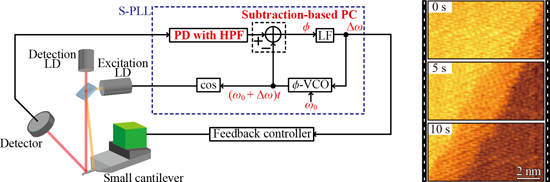
- subnanometer-scale imaging of biomolecules [15][16][17]. Moreover, three-dimensional (3D) imaging techniques have been developed based on FM-AFM and used to visualize 3D distributions of hydration structures as well as flexible surface structures at solid–liquid interfaces [18][19][20][21][22]. Although FM-AFM



A simple extension of the commonly used fitting equation for oscillatory structural forces in case of silica nanoparticle suspensions
Beilstein J. Nanotechnol. 2018, 9, 1095–1107, doi:10.3762/bjnano.9.101
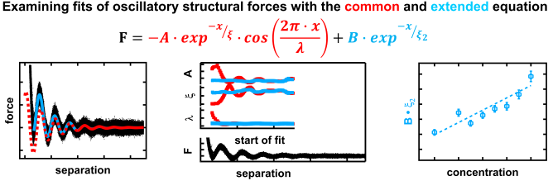
- additional term of repulsive nature that only affects small separations. Inspired by the additional terms shown by Israelachvili [51] for hydration forces near to a hydrophilic surface, a simple decaying exponential function was chosen leading to the new extended Equation 2: A fit of the data with this


Biological and biomimetic materials and surfaces
Beilstein J. Nanotechnol. 2017, 8, 403–407, doi:10.3762/bjnano.8.42

- dispersal. Kreitschitz et al. studied these tribological properties of the seed envelope under different hydration conditions and revealed the presence of cellulose fibrils in the mucilage in a microscopy study, which are presumably responsible for the uniform distribution of the mucilaginous layer on the
“Sticky invasion” – the physical properties of Plantago lanceolata L. seed mucilage
Beilstein J. Nanotechnol. 2016, 7, 1918–1927, doi:10.3762/bjnano.7.183
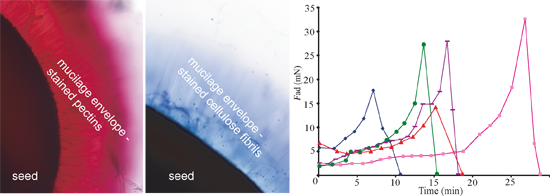
- envelope that also influence the dispersal of seeds. To determine the physical properties of Plantago lanceolata seed mucilage we studied (1) composition, (2) desiccation, (3) adhesion, and (4) friction properties of the mucilage under different hydration conditions. We revealed the presence of cellulose
- mucilage against loss from the seed surface. Keywords: adhesion; cellulose mucilage; desiccation; friction; Plantago lanceolata; Introduction The ability of seeds and fruits (diaspores) to form mucilage after hydration is known as myxospermy [1][2]. The mucilaginous diaspores are particularly
- wall that is rich in pectins form elastic, gel-like mucilage envelope after hydration [14][17]. Other components of the mucilage envelope such as cellulose fibrils also influence its properties and consequently its function. Seed mucilage possesses a clearly defined nanostructure. Cellulose is a linear


Influence of hydrothermal synthesis parameters on the properties of hydroxyapatite nanoparticles
Beilstein J. Nanotechnol. 2016, 7, 1586–1601, doi:10.3762/bjnano.7.153
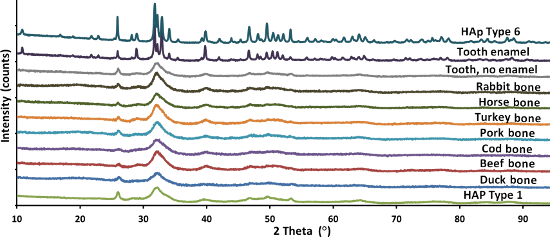
- –600 °C [62]. Even if this simplification is imprecise, it is sufficient to indicate trends in apatite hydration. Therefore, the total water content in our samples decreases in the following order: Type 1 HAp > Type 2 HAp > Type 3 HAp > Type 4 HAp > Type 5 HAp > Type 6 HAp (Figure 12


Influence of ambient humidity on the attachment ability of ladybird beetles (Coccinella septempunctata)
Beilstein J. Nanotechnol. 2016, 7, 1322–1329, doi:10.3762/bjnano.7.123
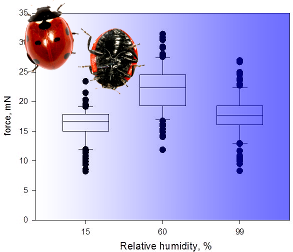
- high amounts of water [47]. Peisker et al. [46] showed a 6000-fold increase in the Young’s modulus of the setal tips after drying. Consequently, the degree of hydration should also significantly affect the mechanical properties of the setae of the beetles in the present study and may also explain our


On the pathway of cellular uptake: new insight into the interaction between the cell membrane and very small nanoparticles
Beilstein J. Nanotechnol. 2016, 7, 1296–1311, doi:10.3762/bjnano.7.121
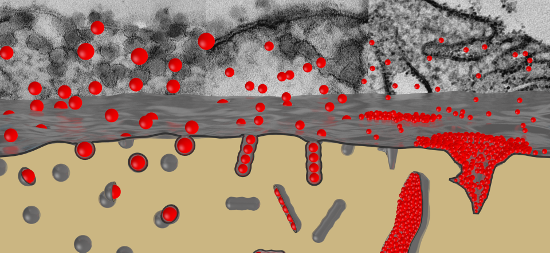
- determined. However, systematic errors of TEM micrograph processing together with a broad size distribution may be causal for this discrepancy. Since DLS measurements of nanoparticle size distribuitons are carried out in solution, the hydration shell of the nanoparticles additionally contributes to the
- particle radius value. On the other hand, TEM measurements require dried samples and hence no additional hydration shell contributes. Accordingly, DLS will systematically yield a slightly larger average particle size than the TEM measurement. Furthermore, DLS measurement integrates, as every scattering




Functional diversity of resilin in Arthropoda
Beilstein J. Nanotechnol. 2016, 7, 1241–1259, doi:10.3762/bjnano.7.115
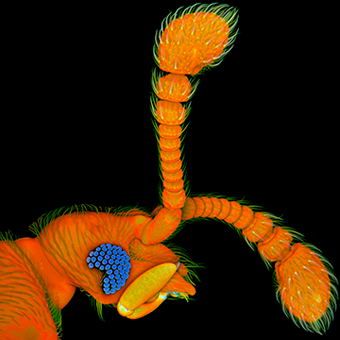
- and trityrosine, which were identified to form the cross-links between the polypeptide chains [9]. The mechanical properties of resilin strongly depend on the degree of hydration because resilin is plasticised by water [5]. When resilin is completely hydrated, it behaves close to a perfect rubber [3
- the relationship between the material properties and the hydration status of resilin mentioned above. Besides the differences in the Young’s modulus, the mechanical behaviour of the respective materials shows the pronounced differences in the material composition between the tips and the bases of
- contribution of the large resilin proportions in the setal tips to the attachment performance of the adhesive pads on a high level, the hydration of the resilin must be maintained. It is imaginable that this is achieved by slowly evaporating tarsal liquids covering the setae and thereby keeping the resilin in


Hydration of magnesia cubes: a helium ion microscopy study
Beilstein J. Nanotechnol. 2016, 7, 302–309, doi:10.3762/bjnano.7.28
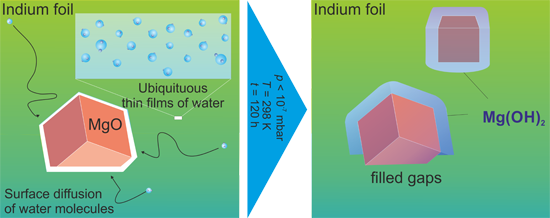
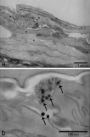
- H2O depending on their size and distribution at the sample surface. Comparison between (a) and (b) points to the volume expansion during hydration and hydroxylation, while (c) and (d) show a probable dissolution/precipitation mechanism. (HIM SE images recorded at 30 kV acceleration voltage and (a,c


3D solid supported inter-polyelectrolyte complexes obtained by the alternate deposition of poly(diallyldimethylammonium chloride) and poly(sodium 4-styrenesulfonate)
Beilstein J. Nanotechnol. 2016, 7, 197–208, doi:10.3762/bjnano.7.18
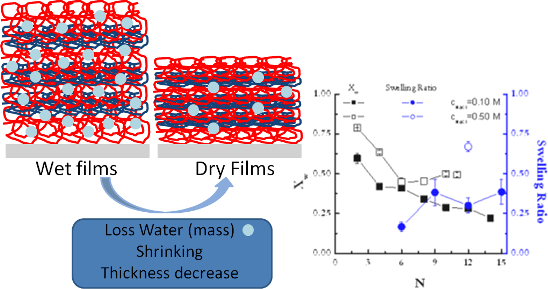
- -dimensional solid-supported inter-polyelectrolyte films. The growth mechanism of the multilayers, followed using a quartz crystal microbalance, evidences two different growth trends, which show a dependency on the ionic strength due to its influence onto the polymer conformation. The hydration state does not
- the polyelectrolyte multilayers. Keywords: charge compensation; hydration; polyelectrolyte multilayers; stratification; swelling; Introduction The new requirements of science and technology have created an increasing interest for the fabrication of materials with reduced dimensionality for their
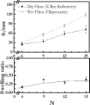
- interactions occurring in the system and the polymer conformation, without effects due to the hydration/swelling phenomena associated with the uptake/release of water. Even though the N dependence of the adsorbed mass is not changed by the drying process, other aspects are strongly modified by the film drying



Capillary and van der Waals interactions on CaF2 crystals from amplitude modulation AFM force reconstruction profiles under ambient conditions
Beilstein J. Nanotechnol. 2015, 6, 809–819, doi:10.3762/bjnano.6.84
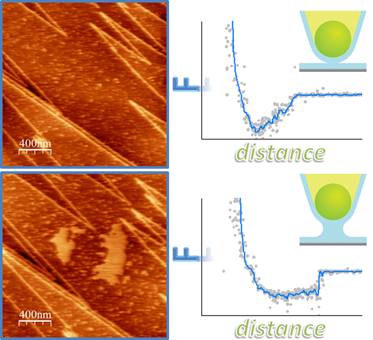
- ]. This is particularly true when working in air under ambient conditions, where the presence of thin layers of water is ubiquitous even on highly hydrophobic surfaces [8][9][10] and specific interactions (hydration, capillary forces) [11] need to be accounted for, which can be effective at relatively


Overview about the localization of nanoparticles in tissue and cellular context by different imaging techniques
Beilstein J. Nanotechnol. 2015, 6, 263–280, doi:10.3762/bjnano.6.25
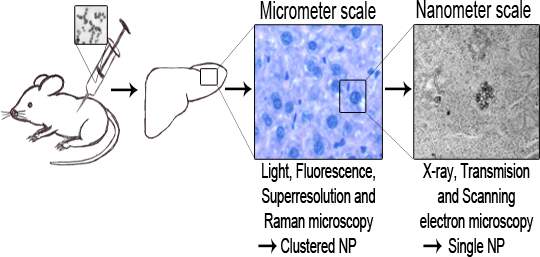
- , dehydration effects may deleteriously affect the ultrastructure of tissues [162]. Therefore, cryogenic approaches in which chemical fixation is avoided and the normal hydration state is maintained may be advantageous for a more life-like preservation of biological samples [163]. Cryo-TEM has been used to



Materials and characterization techniques for high-temperature polymer electrolyte membrane fuel cells
Beilstein J. Nanotechnol. 2015, 6, 68–83, doi:10.3762/bjnano.6.8
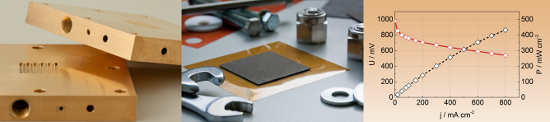
- exhibit high proton conductivity in low-hydration and even anhydrous states. Of special concern for phosphoric-acid-doped PBI-type membranes is the acid loss and management during operation. The slow oxygen reduction reaction in HT-PEMFCs remains a challenge. Phosphoric acid tends to adsorb onto the
- further increase in current density to 300 mA/cm2 and 500 mA/cm2 did not lead to a significant additional swelling of the membrane. After returning to zero current, the membrane thickness was restored to the original value before the load cycle. The swelling of the membrane can be explained by hydration




Inorganic Janus particles for biomedical applications
Beilstein J. Nanotechnol. 2014, 5, 2346–2362, doi:10.3762/bjnano.5.244
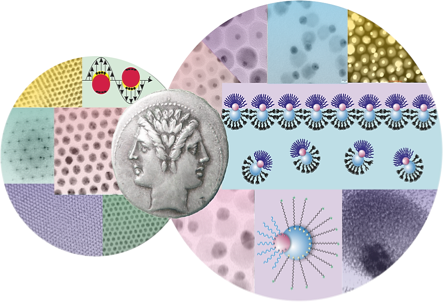
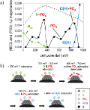
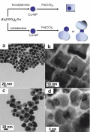
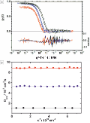
- contribution of the hydration shell in non-polar or aqueous solution. Time-resolved photoluminescence measurements showed that the photoluminescence dynamics of Au@MnO@SiO2-Atto495 Janus particles can be described by a bi-exponential decay progress. That is, it consists of two independent exponential decay






Nanobioarchitectures based on chlorophyll photopigment, artificial lipid bilayers and carbon nanotubes
Beilstein J. Nanotechnol. 2014, 5, 2316–2325, doi:10.3762/bjnano.5.240
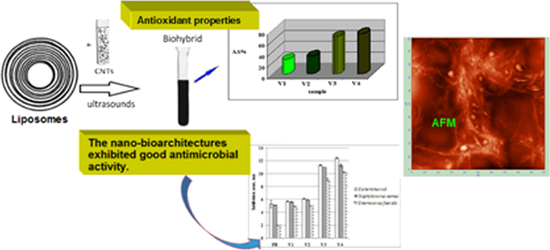
- (obtained by hydration of a dipalmitoyl phosphatidylcholine thin film) with and without cholesterol were labelled with a natural photopigment (chlorophyll a), which functioned as a sensor to detect modifications in the artificial lipid bilayers. These biomimetic membranes were used to build non-covalent
- composition: peptone (Merck, 10 g/L), yeast extract (Biolife, 5 g/L), NaCl (Sigma-Aldrich, 5 g/L) and agar (Fluka, 20 g/L). Synthesis Liposome preparation The hydration method [22] of a thin DPPC film was used to obtain two kinds of multilamellar lipid vesicles (MLVs, 0.5 mM) with and without cholesterol in
- bionanoarchitectures with interesting properties and potential applications in biomedical and biotechnological fields. Two types of biohybrids (with and without cholesterol) were developed starting with the chlorophyll-containing, artificial lipid bilayers prepared by hydration of a thin DPPC film. Chlorophyll a was


Sequence-dependent electrical response of ssDNA-decorated carbon nanotube, field-effect transistors to dopamine
Beilstein J. Nanotechnol. 2014, 5, 2113–2121, doi:10.3762/bjnano.5.220
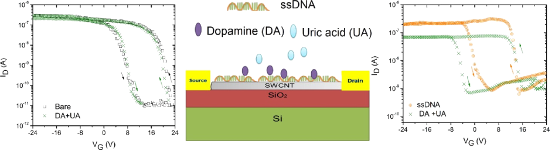
- binding pockets within the proximity of the SWCNT sidewall. This hydrophilic environment on the SWCNT surface attracts polar analytes onto these hydration layers and solvates them, resulting in an increasing binding affinity of the polar analytes to these pockets. As more polar molecules are adsorbed, the
- DNA hydration layer, which is reflected as the decline in channel conductance (−∆Gon/Gon) [34]. The DA protonation results in electron transfer from the DNA to the SWCNT causing a change in the electrostatic environment around the nanotube, which is responsible for the observed shift in threshold


Effect of silver nanoparticles on human mesenchymal stem cell differentiation
Beilstein J. Nanotechnol. 2014, 5, 2058–2069, doi:10.3762/bjnano.5.214
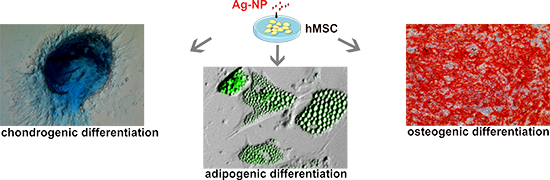
- . Note that the hydrodynamic diameter includes the polymer layer and the hydration shell and is therefore always larger than the pure metal diameter of the silver core as determined by electron microscopy under high vacuum. PVP (K30, Povidon 30; Fluka, molecular weight 40,000 g·mol−1), trisodium citrate


Effects of surface functionalization on the adsorption of human serum albumin onto nanoparticles – a fluorescence correlation spectroscopy study
Beilstein J. Nanotechnol. 2014, 5, 2036–2047, doi:10.3762/bjnano.5.212
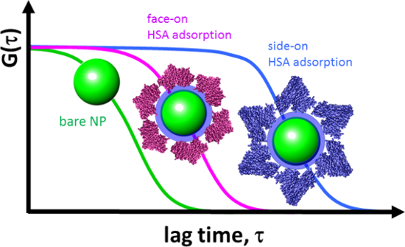
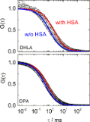
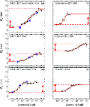
- is the difference in hydrodynamic radius of NPs with and without protein corona. Consequently, the thickness change can only be attributed solely to the protein if the hydration layer contribution is equal for the bare and protein-bound NP surfaces. DPA–QDs are the only NPs with zwitterionic surface
- coatings in this data set, and they may have a more tightly bound, thicker hydration layer in the absence of protein. In fact, studies of the hydration layers on proteins, which have similar zwitterionic surfaces, suggest that these layers can extend out to 1 nm from the protein surface [52]. Another



In vitro and in vivo interactions of selected nanoparticles with rodent serum proteins and their consequences in biokinetics
Beilstein J. Nanotechnol. 2014, 5, 1699–1711, doi:10.3762/bjnano.5.180
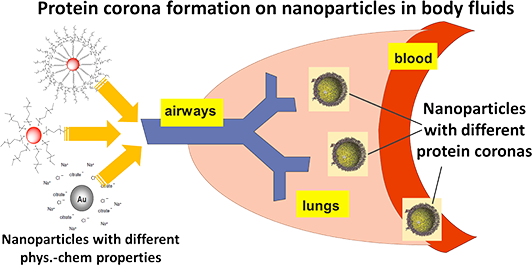
- with transmission electron microscopy (TEM), and does not take into account the hydration shell and adsorbed counter ions [6]. Selection of murine serum proteins bound to the differently sized AuNP after 24 h of incubation. A total of nine SDS gels per AuNP were investigated by using proteome analysis


Magnesium batteries: Current state of the art, issues and future perspectives
Beilstein J. Nanotechnol. 2014, 5, 1291–1311, doi:10.3762/bjnano.5.143


Model systems for studying cell adhesion and biomimetic actin networks
Beilstein J. Nanotechnol. 2014, 5, 1193–1202, doi:10.3762/bjnano.5.131
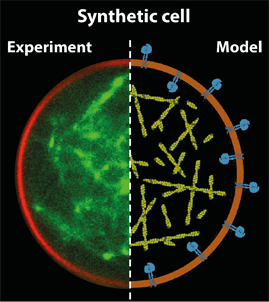
- incorporate biologically active proteins into GUVs. Gentle hydration of hybrid lipid-agarose films in solutions of cytoskeletal proteins yielded uniform actin and actomyosin networks enclosed in vesicles of 10 to 20 μm diameter (Figure 6) [72]. Actin filaments could also be specifically anchored to the GUV


Adsorption and oxidation of formaldehyde on a polycrystalline Pt film electrode: An in situ IR spectroscopy search for adsorbed reaction intermediates
Beilstein J. Nanotechnol. 2014, 5, 747–759, doi:10.3762/bjnano.5.87
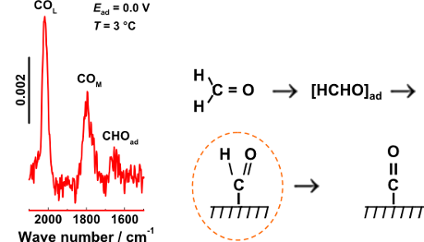
- proceeding via adsorption of methylene glycol species, which are formed by hydration of formaldehyde in the solution phase [66][67]. Methylene glycol can be oxidized to adsorbed formates (formic acid) via a dehydrogenation step [6], without the need for OHad species. It is well known for methanol [4] and a
- species were possible via re-hydrogenation and subsequent desorption of the resulting adsorbed formaldehyde, re-hydrogenation of CDOad by protons (from water) should result in the formation of a mixed D1H1-formaldehyde. Its subsequent hydration to D1H1-methylene glycol and re-adsorption and oxidation to


Biocalcite, a multifunctional inorganic polymer: Building block for calcareous sponge spicules and bioseed for the synthesis of calcium phosphate-based bone
Beilstein J. Nanotechnol. 2014, 5, 610–621, doi:10.3762/bjnano.5.72
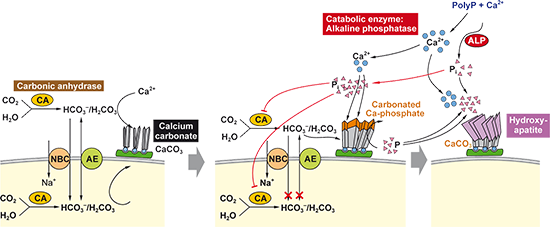
- prevalent enzymes that allow bicarbonate to be formed in an organism are the carbonic anhydrases [CAs] [32]. These enzymes, which are characterized by an extremely high turnover number, catalyze the reversible hydration of carbon dioxide (CO2) to bicarbonate. This reaction occurs also in the presence of Ca
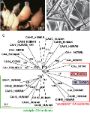
- . The closest human related CA to the Sycon enzyme (Figure 2C), the human CA-X (CAHA_HUMAN; Q9NS85), and -XI (CAHB_HUMAN; O75493), are grouped to the "acatalytic" CA isoforms of unknown function, which have been proposed to be devoid of CO2 hydration activity [39]. However, the branch with the two
- sponge CAs comprises a common origin with the stony coral Stylophora pistillata enzyme [40] for which an enzymatic activity has been proven. Those human CAes, comprising CO2 hydration activity (the catalytic CA), are in the CA group I to IV. The Zn-binding sites that are involved in the catalytic



Oriented attachment explains cobalt ferrite nanoparticle growth in bioinspired syntheses
Beilstein J. Nanotechnol. 2014, 5, 210–218, doi:10.3762/bjnano.5.23
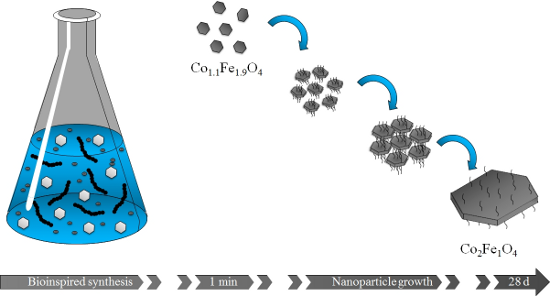
- -attraction and repulsive forces due to c25-mms6 or hydration layers, are most likely the dominating factors in this process since the small substructures possess diameters below the superparamagnetic limit [9][11]. During the assembly, crystallites grow and form the subunits referred to as primary building





