


Search results
Search for "ion exchange" in Full Text gives 56 result(s) in Beilstein Journal of Nanotechnology.
The surface properties of nanoparticles determine the agglomeration state and the size of the particles under physiological conditions
Beilstein J. Nanotechnol. 2014, 5, 1774–1786, doi:10.3762/bjnano.5.188
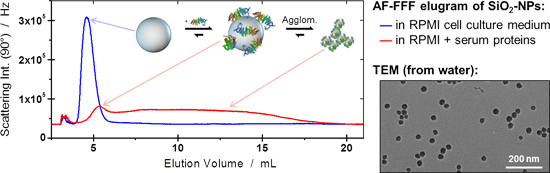
- (aqueous solutions of alkali silicates, e.g., Na2SiO3, Na4SiO4). Typically, this neutralization is performed by using ion exchange resins where particle sizes of around 5 to 500 nm in diameter can be realized [55][56][57]. 2. Pyrogenic silica (also referred to as “fumed silica”) is produced on the


Liquid fuel cells
Beilstein J. Nanotechnol. 2014, 5, 1399–1418, doi:10.3762/bjnano.5.153
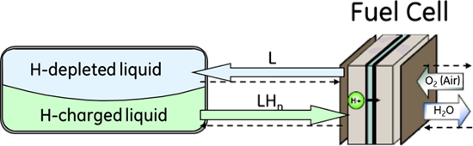
- and oxidative stability than PEMs [12]. The lower conductivity may be compensated for by the larger number of cationic sites, resulting in a high OH− conductivity and power density. For example, an alkaline fuel cell utilizing a poly(vinylbenzyl(trimethylammonium hydroxide)) ion-exchange membrane
- as a solution. Water is a natural solvent for organic and inorganic fuels, because it is produced at the cathode side, and it is the ion conducting medium in the majority of ion exchange membranes. Some of the proposed organic fuels are produced from renewable biomass, e.g., ethanol by fermentation
- increased with lower temperatures. Combining a borohydride electrolyte with a mixed anode (Zn + LaNi4.7Al0.3) and a MnO2 cathode catalyst allowed for an increased cell capacity (up to 1800 mA/g for the anode) and an increased peak power compared to a Zn/air cell [174]. Replacing the ion exchange membranes

3D-nanoarchitectured Pd/Ni catalysts prepared by atomic layer deposition for the electrooxidation of formic acid
Beilstein J. Nanotechnol. 2014, 5, 162–172, doi:10.3762/bjnano.5.16
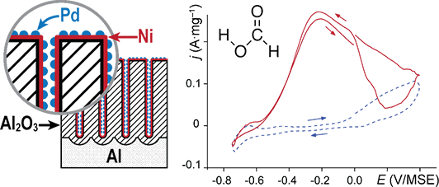
- enhanced properties as compared to those grown by conventional methods, such as impregnation, ion-exchange, and deposition–precipitation [15][16]. ALD has initially been used to produce oxide layers to support the catalysts [17], but two additional approaches have been recently proposed: ALD is either used


Synthesis and electrochemical performance of Li2Co1−xMxPO4F (M = Fe, Mn) cathode materials
Beilstein J. Nanotechnol. 2013, 4, 860–867, doi:10.3762/bjnano.4.97
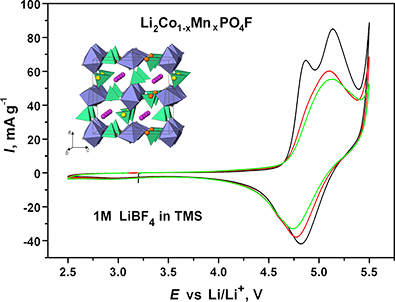
- synthesis, the preparation of 3D-Li2FePO4F requires the electrochemical ion-exchange of the Na-counterpart, and the corresponding Mn-based fluorophosphate has not been yet identified [16]. It is reasonable, that a substitution of Co2+ by Mn2+, which has the largest ionic radius, only takes place in a



Lithium peroxide crystal clusters as a natural growth feature of discharge products in Li–O2 cells
Beilstein J. Nanotechnol. 2013, 4, 758–762, doi:10.3762/bjnano.4.86
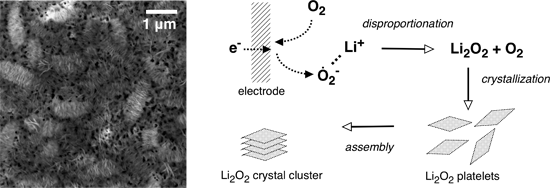
- that are subsequently converted to Li2O2. To find out the most probable way for the generation of such building blocks, we performed a simple experiment purely based on the chemical generation of lithium peroxide in the ion exchange reaction KO2 + Li+ → K+ + ½ Li2O2 + ½ O2. Figure 3a demonstrates


Distribution of functional groups in periodic mesoporous organosilica materials studied by small-angle neutron scattering with in situ adsorption of nitrogen
Beilstein J. Nanotechnol. 2012, 3, 428–437, doi:10.3762/bjnano.3.49
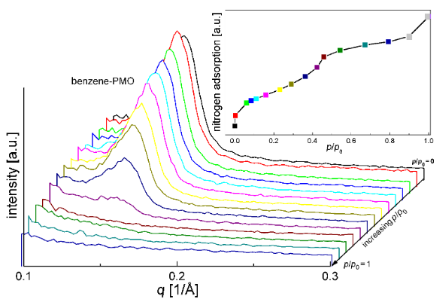
- . If grafting is performed at the silanol groups as well as the benzene rings, resulting in a total loading of 1.65 mmol SO3H per gram as determined by measuring the ion exchange capacity (IEC), the changes in the texture properties for modified benzene-PMO are even more pronounced, as documented by a


Other Beilstein-Institut Open Science Activities



