Search results
Search for "magnetron" in Full Text gives 152 result(s) in Beilstein Journal of Nanotechnology.
Structural and electronic properties of SnO2 doped with non-metal elements
Beilstein J. Nanotechnol. 2020, 11, 1321–1328, doi:10.3762/bjnano.11.116
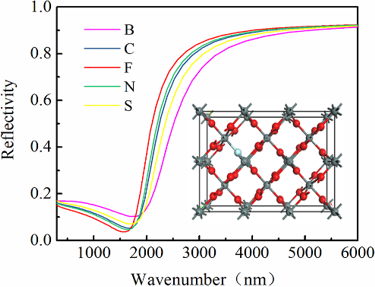
- . Nguyen successfully prepared p-type N-doped SnO2 films using magnetron sputtering [9]. The results show that the SnO2 films were n-type semiconductors, and the concentration of free carriers in the film increased as the temperature for sedimentation increased. Also, p-type semiconductors were



Gram-scale synthesis of splat-shaped Ag–TiO2 nanocomposites for enhanced antimicrobial properties
Beilstein J. Nanotechnol. 2020, 11, 1119–1125, doi:10.3762/bjnano.11.96
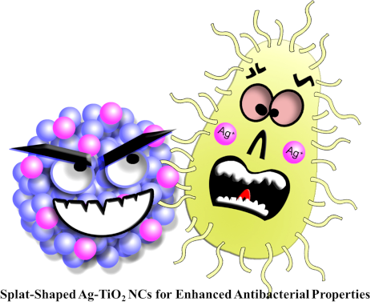
- , magnetron sputtering, molecular precursor techniques and photo-deposition techniques have been applied to the preparation of nanocomposites [6][21][22]. However, these techniques are very sophisticated and not optimized for synthesis on a large scale. Herein, a simple hydrothermal process was employed to


Electrochemical nanostructuring of (111) oriented GaAs crystals: from porous structures to nanowires
Beilstein J. Nanotechnol. 2020, 11, 966–975, doi:10.3762/bjnano.11.81
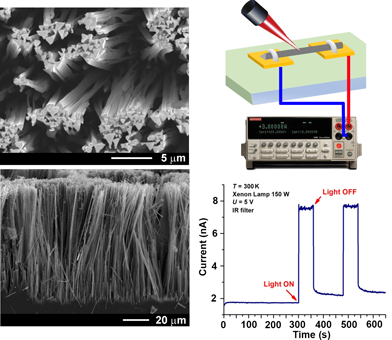
- followed by 250 nm Au layer was sputtered using a magnetron from Torr International Inc model No: CRC622-2G2-RF-DC and lift-off was performed with Microposit remover 1165 at 50 °C. Photoelectrical characterization. To excite photoconductivity in the GaAs nanowires, the radiation from a Xenon lamp DKSS-150





Band tail state related photoluminescence and photoresponse of ZnMgO solid solution nanostructured films
Beilstein J. Nanotechnol. 2020, 11, 899–910, doi:10.3762/bjnano.11.75
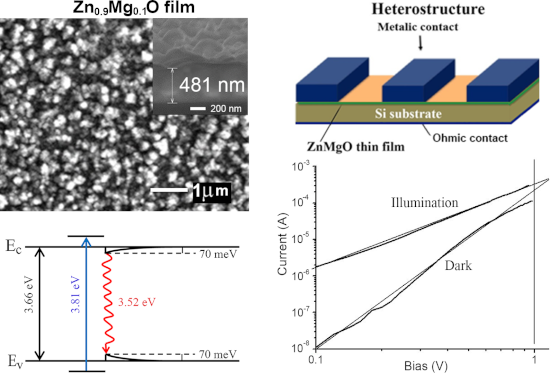
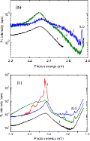
- radio-frequency plasma-assisted molecular beam epitaxy (RF-MBE) [2][7][10][11], DC [12][13] and RF [1][3][6] magnetron sputtering, pulsed laser deposition (PLD) [14][15], plasma-enhanced atomic layer deposition (PE-ALD) [16], chemical vapor deposition (CVD) [17], metal–organic chemical vapor deposition
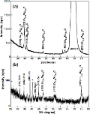
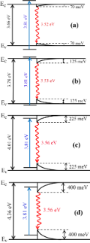
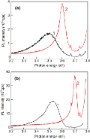
- –0.78 for Zn1−xMgxO thin films grown by reactive DC magnetron co-sputtering [12]. It was shown that this investigation technique is highly sensitive for the detection of embedded structural inhomogeneities, and it was found that the phase segregation occurs in the range of x = 0.35–0.65 with coexistence

Epitaxial growth and superconducting properties of thin-film PdFe/VN and VN/PdFe bilayers on MgO(001) substrates
Beilstein J. Nanotechnol. 2020, 11, 807–813, doi:10.3762/bjnano.11.65
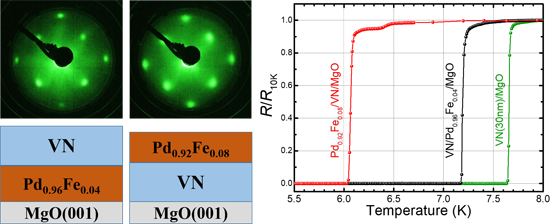
- analysis system. The VN layers were reactively magnetron sputtered from a metallic vanadium target in Ar/N2 plasma, while the Pd1−xFex layers were deposited by co-evaporation of metallic Pd and Fe pellets from calibrated effusion cells in a molecular beam epitaxy chamber. The VN stoichiometry and Pd1−xFex
- ) and Fe (99.97% purity, ChemPur GmbH, Germany) were co-evaporated from the pre-calibrated high-temperature effusion cells to obtain the desired Pd1−xFex composition. Vanadium nitride layers were synthesized by using reactive DC magnetron sputtering (MS) in the UHV chamber with a base pressure of p ≤ 5
- synthesis of VN. During the deposition process, the pressure of the Ar/N2 gas mixture in the chamber was automatically kept at 6 × 10⁻³ mbar. A metallic vanadium disk of 99.95% purity (GIRMET Ltd, Russia) was used as a target. The magnetron power was 50 W, the distance between the target and the substrate


A set of empirical equations describing the observed colours of metal–anodic aluminium oxide–Al nanostructures
Beilstein J. Nanotechnol. 2020, 11, 798–806, doi:10.3762/bjnano.11.64
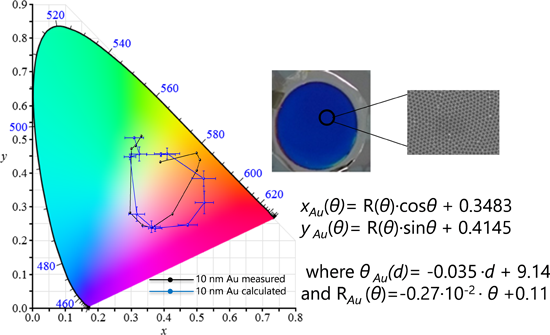
- Alliance-Concept DP 650 DC magnetron sputtering equipment. 25, 17.5 and 10 nm thin films of gold were deposited on top of the AAO films using a Leica EM ACE600 sputtering equipment. The Au layers were deposited using a sputtering pressure and intensity of 5 × 10⁻² mbar and 30 mA, respectively, and the Cr


Effect of Ag loading position on the photocatalytic performance of TiO2 nanocolumn arrays
Beilstein J. Nanotechnol. 2020, 11, 717–728, doi:10.3762/bjnano.11.59
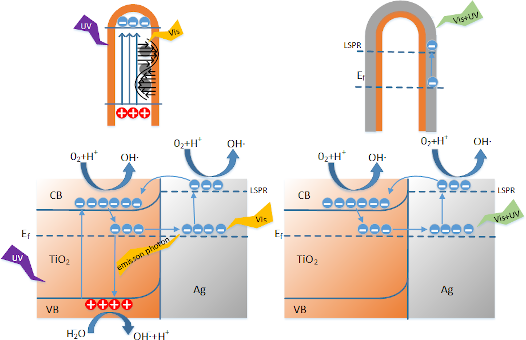
- photolithography and the template method by Sung et al. [30]. In this case, Ag particles were loaded on the outside of the nanocolumns by magnetron sputtering, and the catalysis was carried out at a sputtering time of 30 min. Besides, Jani et al. [31] studied the preparation of TiO2 nanotube arrays by anodization


Structural optical and electrical properties of a transparent conductive ITO/Al–Ag/ITO multilayer contact
Beilstein J. Nanotechnol. 2020, 11, 695–702, doi:10.3762/bjnano.11.57
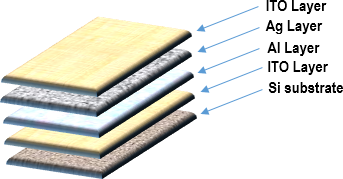
- enhanced optical transmittance. Conclusion ITO/Al-Ag/ITO (IAAI) multilayer films were deposited by RF and DC magnetron sputtering at room temperature. The inclusion of the Al–Ag bilayer coupled with annealing at 400 °C significantly enhanced the microstructural, optical and electrical properties of the
- measurements) were used as substrates. Decon90 glass cleaner was used for glass substrate cleansing. Thin film preparation A SNTEK Korea magnetron sputtering system with a dual radio frequency (RF)/direct current (DC) sputtering source with a main deposition chamber 15.7 inches in height and 23.6 inches in


Evolution of Ag nanostructures created from thin films: UV–vis absorption and its theoretical predictions
Beilstein J. Nanotechnol. 2020, 11, 494–507, doi:10.3762/bjnano.11.40
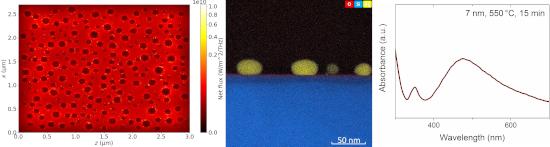
- thickness) were deposited using a table-top dc magnetron sputtering coater (EM SCD 500, Leica) in pure Ar plasma (argon, Air Products 99.999%). The Ag target was of 99.99% purity, the rate of layer deposition was about 0.4 nm·s−1, and the incident power was in the range of 30–40 W. The layer thickness was




Advanced hybrid nanomaterials
Beilstein J. Nanotechnol. 2019, 10, 2563–2567, doi:10.3762/bjnano.10.247

- electronic devices” [29]. A combination of deposition techniques was used, chemical vapor deposition for parylene and RF-magnetron sputtering for silver nanoparticles. The content and size of the latter influences the dielectric characteristics of the resulting hybrid films. Such devices may find application
Formation of metal/semiconductor Cu–Si composite nanostructures
Beilstein J. Nanotechnol. 2019, 10, 2497–2504, doi:10.3762/bjnano.10.240
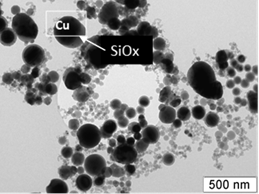
- they are immiscible in the bulk state. In addition to chemical techniques [9][10][11][12], physical methods such as gas-phase methods [5][6][15], laser ablation [7][8][16], and magnetron-sputter gas-phase condensation [17] have been developed. When these methods are combined with the possibility of


Facile synthesis of carbon nanotube-supported NiO//Fe2O3 for all-solid-state supercapacitors
Beilstein J. Nanotechnol. 2019, 10, 1923–1932, doi:10.3762/bjnano.10.188
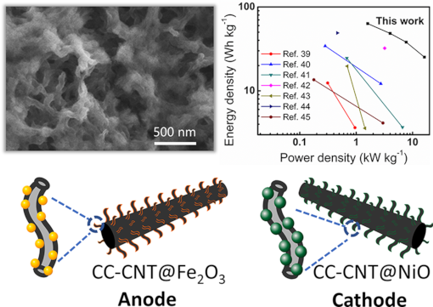
- . deposited iron oxide on CNTs by atomic layer deposition (ALD) and the obtained CNTs@Fe2O3 presented a specific capacitance of 580.6 F·g−1 at 5 A·g−1 [21]. Zhang et al. used magnetron sputtering to prepare sandwich-like CNT@Fe2O3@C structures, and the composite exhibited a specific capacitance of 787.5 F·g−1


Oblique angle deposition of nickel thin films by high-power impulse magnetron sputtering
Beilstein J. Nanotechnol. 2019, 10, 1914–1921, doi:10.3762/bjnano.10.186
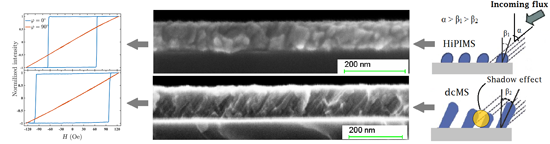
- -100 44, Stockholm, Sweden 10.3762/bjnano.10.186 Abstract Background: Oblique angle deposition is known for yielding the growth of columnar grains that are tilted in the direction of the deposition flux. Using this technique combined with high-power impulse magnetron sputtering (HiPIMS) can induce
- unique properties in ferromagnetic thin films. Earlier we have explored the properties of polycrystalline and epitaxially deposited permalloy thin films deposited under 35° tilt using HiPIMS and compared it with films deposited by dc magnetron sputtering (dcMS). The films prepared by HiPIMS present lower
- properties for some important technological applications in addition to the ability to fill high aspect ratio trenches and coating on cutting tools with complex geometries. Keywords: glancing angle deposition (GLAD); high-power impulse magnetron sputtering (HiPIMS); oblique angle deposition; magnetron


Fabrication and characterization of Si1−xGex nanocrystals in as-grown and annealed structures: a comparative study
Beilstein J. Nanotechnol. 2019, 10, 1873–1882, doi:10.3762/bjnano.10.182
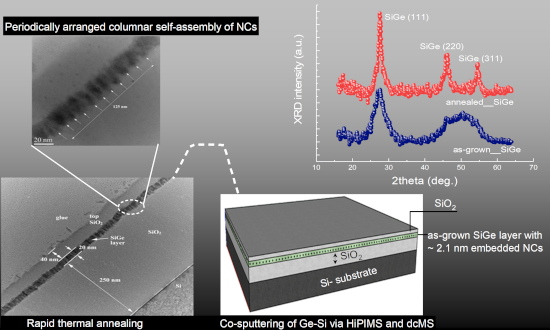
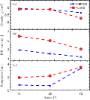
- , 050094 Bucharest, Romania 10.3762/bjnano.10.182 Abstract Multilayer structures comprising of SiO2/SiGe/SiO2 and containing SiGe nanoparticles were obtained by depositing SiO2 layers using reactive direct current magnetron sputtering (dcMS), whereas, Si and Ge were co-sputtered using dcMS and high-power
- impulse magnetron sputtering (HiPIMS). The as-grown structures subsequently underwent rapid thermal annealing (550–900 °C for 1 min) in N2 ambient atmosphere. The structures were investigated using X-ray diffraction, high-resolution transmission electron microscopy together with spectral photocurrent
- consequential interface characteristics and its effect on the photocurrent spectra. Keywords: grazing incidence XRD (GIXRD); high-power impulse magnetron sputtering (HiPIMS); HRTEM; magnetron sputtering; photocurrent spectra; SiGe nanocrystals in SiO2/SiGe/SiO2 multilayers; STEM-HAADF; TEM; Introduction


Subsurface imaging of flexible circuits via contact resonance atomic force microscopy
Beilstein J. Nanotechnol. 2019, 10, 1636–1647, doi:10.3762/bjnano.10.159
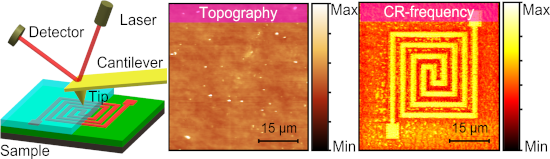
- 11 wt % PMMA in anisole solvent at 1500 rpm for 5 min, resulting in a thickness of approximately 3.5 µm. Then, a 300 nm thick Au film was sputtered on the PMMA substrate by using magnetron sputtering. The Au film was subsequently patterned by focused ion beam (FIB) milling (FEI, Helios NanoLab 650



Rapid thermal annealing for high-quality ITO thin films deposited by radio-frequency magnetron sputtering
Beilstein J. Nanotechnol. 2019, 10, 1511–1522, doi:10.3762/bjnano.10.149
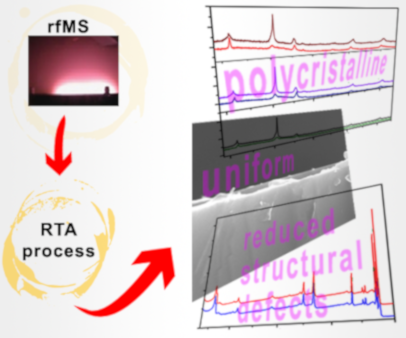
- temperature by radio-frequency magnetron sputtering (rfMS). After deposition, the films were subjected to a RTA process at 575 °C (heating rate 20 °C/s), maintained at this temperature for 10 minutes, then cooled down to room temperature at a rate of 20 °C/s. The film structure was modified by changing the
- treatment in an open atmosphere. Such films could be used to manufacture transparent contact electrodes for solar cells. Keywords: conductive transparent electrodes; indium tin oxide (ITO) films; optical properties; radio-frequency magnetron sputtering (rfMS); rapid thermal annealing (RTA); Introduction
- of ITO in various applications increases when the electrical properties are improved. Various deposition techniques have been used to obtain TCO thin films, such as: vacuum thermal evaporation [15][16], chemical vapor deposition [17], sol–gel [18], pyrolysis spray techniques [5][19], magnetron


Gas sensing properties of individual SnO2 nanowires and SnO2 sol–gel nanocomposites
Beilstein J. Nanotechnol. 2019, 10, 1380–1390, doi:10.3762/bjnano.10.136
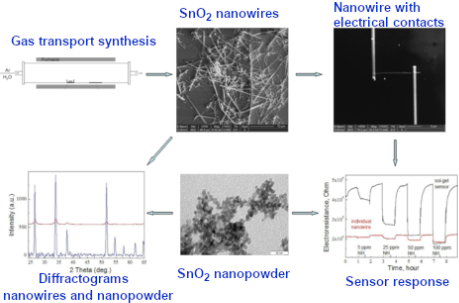
- and high surface-to-volume ratio, obtained by sintering, are traditionally used as sensing materials. By means of preparation methods such as magnetron sputtering, laser ablation, and pulverization, layer-by-layer nanoparticle deposition can be achieved with adhesion to the substrate and to previously
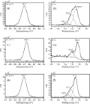
- ; this difference can be related to the contributions from the sorbed components. The O 1s component at 532 eV binding energy, prevailing on wire-like sample surfaces, was previously observed on metallic tin foil surfaces stored under laboratory conditions [38] and for magnetron sputtered tin nanolayers
- intensity of the 533.6 eV component (Figure 6) of the O 1s line [51]. Previously, this component was observed on polycrystalline nanolayers formed by magnetron sputtering of tin and ambient air oxidation afterwards [47]. Figure 7 compares XANES Sn M4,5 spectra of the samples with those obtained on the SnO2




Periodic Co/Nb pseudo spin valve for cryogenic memory
Beilstein J. Nanotechnol. 2019, 10, 833–839, doi:10.3762/bjnano.10.83
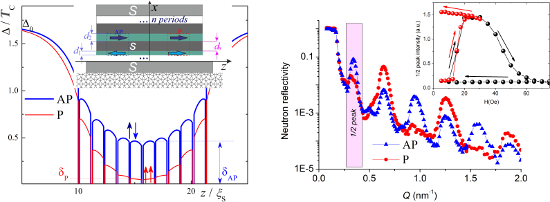
- ≈ 6–10 nm, the value found in our prior studies [31][32]. The thickness of the Co layers were in the range of ξF ≈ 1 nm [19], which is enough to form a homogeneous and magnetic layer [26]. The sample was prepared using a Leybold Z-400 magnetron machine at room temperature on an R-plane-oriented


Biomimetic synthesis of Ag-coated glasswing butterfly arrays as ultra-sensitive SERS substrates for efficient trace detection of pesticides
Beilstein J. Nanotechnol. 2019, 10, 578–588, doi:10.3762/bjnano.10.59
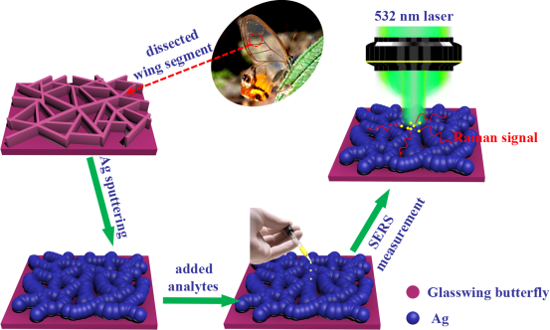
- hybrids (Ag-G.b.) by magnetron sputtering technology. The 3D surface-enhanced Raman scattering (SERS) substrate is fabricated from an original chitin-based nanostructure, which serves as a bio-scaffold for Ag nanofilms to be coated on. The novel crisscrossing plate-like nanostructures of 3D Ag-G.b
- a bio-scaffold for the coating with magnetron-sputtered Ag nanofilms. The thickness of Ag nanofilms and the size of the nanogaps deposited on the G.b. wing arrays can be easily controlled by tuning the sputtering time. In order to find the optimum SERS enhancement performance, the sputtering time is
- successfully fabricated by magnetron sputtering. The thickness of the Ag nanofilms can be well controlled by adjusting the sputtering time. The Ag-G.b.-20 substrate with large-scale “hot spots” and an increased roughness shows the highest enhancement efficiency for CV molecules. The EF for Ag-G.b.-20 arrays is


Nanocomposite–parylene C thin films with high dielectric constant and low losses for future organic electronic devices
Beilstein J. Nanotechnol. 2019, 10, 428–441, doi:10.3762/bjnano.10.42
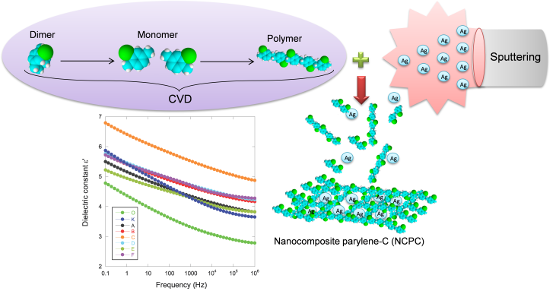
- deposition and RF-magnetron sputtering for silver deposition. This method yields good dispersion of Ag-containing nanoparticles inside the parylene C polymer matrix. Film composition and structure were studied by using several techniques. It was found that the plasma generated by the RF-magnetron reactor
- increase the dielectric constant of NCPC without degrading its dielectric losses. In this context, this work presents a new strategy to synthesize nanocomposite parylene C materials by a combination of two processes, CVD and RF-magnetron sputtering. The NCPC properties are analyzed in detail by different
- ) and the inorganic compond (silver-containing nanoparticles). This method consists of two associated processes, i.e., primary vacuum-CVD and RF-magnetron sputtering. The deposition process of NCPC involves three successive operations. The process begins with the deposition of parylene C. Some hundreds




Geometrical optimisation of core–shell nanowire arrays for enhanced absorption in thin crystalline silicon heterojunction solar cells
Beilstein J. Nanotechnol. 2019, 10, 322–331, doi:10.3762/bjnano.10.31
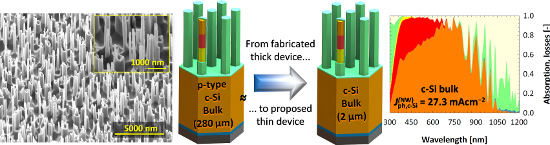
- , a 100 nm thick transparent tin-doped indium oxide (In2O3:Sn, ITO) was deposited at low power and low temperature, using radio-frequency (RF) magnetron sputtering. The cell area was defined as 5 mm × 5 mm, using a mask during ITO deposition. The reported equivalent thickness values of thin films on


Zn/F-doped tin oxide nanoparticles synthesized by laser pyrolysis: structural and optical properties
Beilstein J. Nanotechnol. 2019, 10, 9–21, doi:10.3762/bjnano.10.2
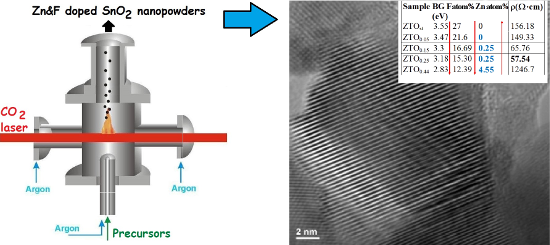
- atom %) made by spray pyrolysis showing high transparency and bandgap values between 3.86 and 4.45 eV have also been reported [32]. Other researchers have used radio frequency magnetron sputtering of mixed 30 wt % ZnO and 70 wt % SnO2 targets to obtain similar FZTO films, yet their reported different



Site-controlled formation of single Si nanocrystals in a buried SiO2 matrix using ion beam mixing
Beilstein J. Nanotechnol. 2018, 9, 2883–2892, doi:10.3762/bjnano.9.267
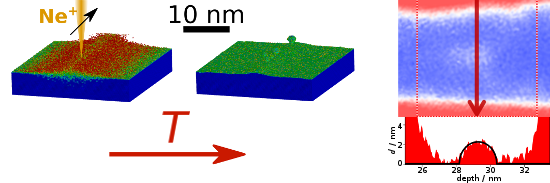
- -oxide-semiconductor (CMOS) technology and thus have yet to be integrated into a cost-efficient Si-based technology. Multiple methods have been proposed and optimized for Si NC fabrication, including plasma-enhanced chemical vapor deposition (PECVD) [4][10], magnetron sputtering [11][12], laser-induced


Optimization of Mo/Cr bilayer back contacts for thin-film solar cells
Beilstein J. Nanotechnol. 2018, 9, 2700–2707, doi:10.3762/bjnano.9.252
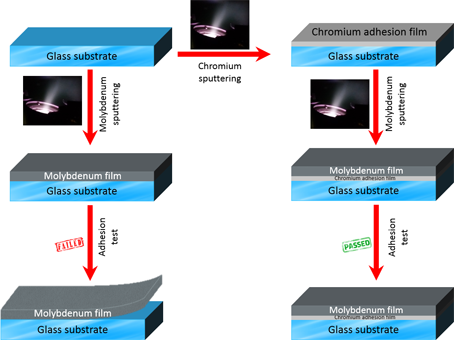
- chromium (Cr) adhesion layer is used as the back contact for a copper zinc tin sulfide (CZTS) thin-film solar cell on a SLG substrate. DC magnetron sputtering is used for deposition of Mo and Cr films. The conductivity of Mo/Cr bilayer films, their microstructure and surface morphology are studied at
- substrate using a Kurt J. Lesker PVD75 DC magnetron sputtering system operated at 40 W and 10 mTorr for 10 min, from a 2 inch Cr target (Kurt J. Lesker, 99.95% purity). The Mo layer was deposited on uncoated and Cr-coated substrates by using a 2 inch Mo target (Kurt J. Lesker, 99.95% purity) at different


Au–Si plasmonic platforms: synthesis, structure and FDTD simulations
Beilstein J. Nanotechnol. 2018, 9, 2599–2608, doi:10.3762/bjnano.9.241
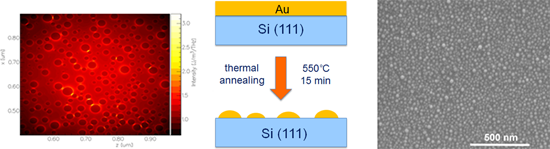
- . Experimental Au nanostructures were prepared on Si(111) as a substrate. The substrates (1 × 1 cm2 of area) were cleaned with acetylacetone and then rinsed in ethanol. Thin Au films (with thicknesses in a range of 1.7–5.0 nm) were deposited using a table-top dc magnetron sputtering coater (EM SCD 500, Leica