Search results
Search for "mechanism" in Full Text gives 1270 result(s) in Beilstein Journal of Nanotechnology. Showing first 200.
Programmable soliton dynamics in all-Josephson-junction logic cells and networks
Beilstein J. Nanotechnol. 2025, 16, 1883–1893, doi:10.3762/bjnano.16.131

- diverse dynamical modes. By introducing a structural asymmetry into a transmission line, we implement a Josephson diode that enforces unidirectional soliton propagation. The programmability of the kinetic inductance then provides a crucial mechanism to selectively enable or disable this diode
- . When α > αcrit, the soliton velocity is a monotonically increasing function of the damping. This dependence falls into an approximately linear regime for α > 3. The physical mechanism for this velocity increase can be understood from the RCSJ model; a higher value of α enhances the resistive
- -dependent transmission and annihilation is the core mechanism that allows the KICK to function as a memory element or a dynamic routing switch. Beyond primary operational modes, the system exhibits other notable behavior types in specific regions of its parameter space. The M-Mode, for instance, is


Self-assembly and adhesive properties of Pollicipes pollicipes barnacle cement protein cp19k: influence of pH and ionic strength
Beilstein J. Nanotechnol. 2025, 16, 1863–1872, doi:10.3762/bjnano.16.129
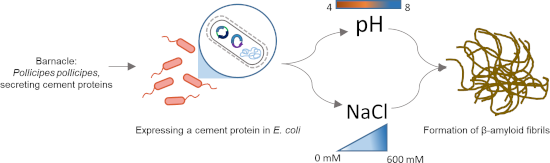
- timescale of fibrillogenesis likely preventing premature adhesive curing within the gland prior to secretion. Overall, our findings support a model in which cp19k undergoes pH- and salt concentration-dependent self-assembly into fibrils in the cement gland, with implications for the mechanism and timing of


Current status of using adsorbent nanomaterials for removing microplastics from water supply systems: a mini review
Beilstein J. Nanotechnol. 2025, 16, 1837–1850, doi:10.3762/bjnano.16.127
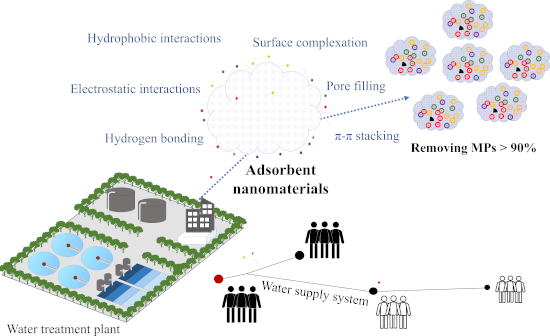
- , and the main mechanism involved electrostatic attractions between the positive charge of MPs and negatively charge of GAC [58]. Metal-organic frameworks. MOFs are highly ordered crystalline materials characterized by high porosity and large surface area (Figure 3). Their pore size, volume, and
- ., “Catalytic degradation of polyethylene terephthalate microplastics by Co-N/C@CeO2 composite in thermal-assisted activation PMS system: Process mechanism and toxicological analysis”, Article No. 163192, Copyright (2025), with permission from Elsevier. This content is not subject to CC BY 4.0. Illustration of


Phytol-loaded soybean oil nanoemulsion as a promising alternative against Leishmania amazonensis
Beilstein J. Nanotechnol. 2025, 16, 1826–1836, doi:10.3762/bjnano.16.126

- and in vivo investigations to confirm its efficacy, tissue distribution, and mechanism of action. Experimental Material ʟ-α-Phosphatidylcholine (95%) (Avanti Polar lipids, United States); polaxamer 407 (Sigma-Aldrich, Brazil); glycerin (Vetec, Brazil); phytol (97%), mixture of isomers (Sigma-Aldrich


Piezoelectricity of layered double hydroxides: perspectives regarding piezocatalysis and nanogenerators
Beilstein J. Nanotechnol. 2025, 16, 1812–1817, doi:10.3762/bjnano.16.124

- current output. The piezoelectric potential generated in the ZnO nanosheets functions as an applied voltage, facilitating charge storage within the LDH layers, which act as capacitors. This mechanism leads to enhanced voltage and current pulses under mechanical stimulation. LDHs can also enhance the
- for activating peroxymonosulfate (PMS) to degrade norfloxacin [9]. The obtained catalyst demonstrated effective degradation within 15 min, achieving a degradation efficiency of 91.50% and a rate constant of 0.1644 min−1. In this study, the main PMS activation mechanism was non-radical. The

Electrical, photocatalytic, and sensory properties of graphene oxide and polyimide implanted with low- and medium-energy silver ions
Beilstein J. Nanotechnol. 2025, 16, 1794–1811, doi:10.3762/bjnano.16.123
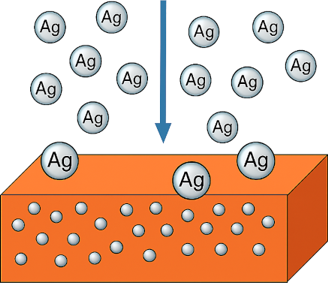
- collisions dominate the energy loss mechanism. This results in intense atomic displacements near the surface, leading to significant surface damage, defect formation, and localized modifications within a shallow depth (Rp = 25–27 nm). The opposite situation occurs when both GO and PI were implanted with 1.5
- the polyimide surface layer occurs, the main mechanism being defect formation and partial cleavage of the polymer chains. However, the resulting graphitic regions are not yet sufficiently interconnected and, therefore, the surface resistance remains relatively high. As the fluence increases to 3.75


Exploring the potential of polymers: advancements in oral nanocarrier technology
Beilstein J. Nanotechnol. 2025, 16, 1751–1793, doi:10.3762/bjnano.16.122
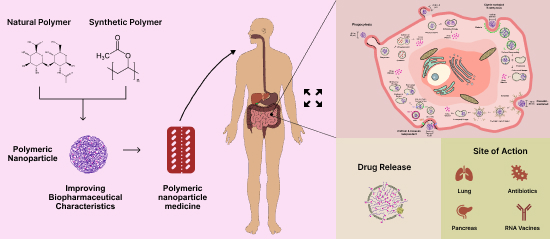
- . Similar to CME, dynamin is responsible for vesicle formation; however, in this pathway, vesicles fuse with caveosomes, avoiding lysosomal degradation. This mechanism is the main advantage of this internalization pathway, making it a suitable alternative when NPs are sensitive to degradation. Albumin
- adjustments in the disassembly pH can optimize this mechanism, which must occur during the endo/lysosomal pathway to minimize cytotoxic effects. This highlights the significance of polymeric chemical functionality as a key factor for escape efficiency [85]. Once endocytosis followed by endosomal escape occurs
- . Diffusion-controlled release is directly influenced by the effective diffusion coefficient of the drug within the polymer matrix [10]. Erosion, as a release mechanism, involves the degradation of the polymer matrix, altering the nanostructure in two ways: surface and bulk erosion. In surface erosion, the


Advances of aptamers in esophageal cancer diagnosis, treatment and drug delivery
Beilstein J. Nanotechnol. 2025, 16, 1734–1750, doi:10.3762/bjnano.16.121
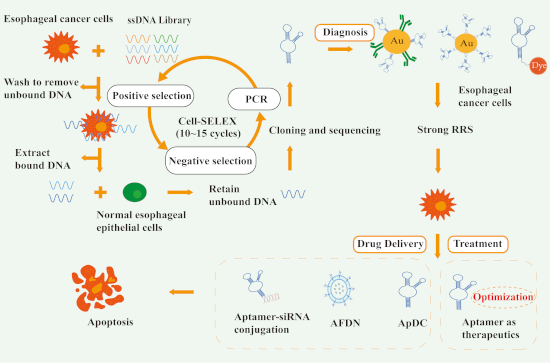
- cells, slow down tumor growth and metastasis, and had no obvious toxicity to human normal esophageal epithelial cells. Cluster analysis showed that the mechanism of action of peptide 58 may be closely related to the inhibition of ESCC cell metabolism. However, pharmacokinetic data on peptide 58 remain
- azithromycin, but its effect in vivo is inferior. It is expected that ZY3A can be applied to clinical practice through optimizing drug administration strategies, such as combination of antibiotics and improvement of the aptamer structure. The mechanism of action of ZY3A may be to inhibit NF-κB pathway and MMP2
- frequently compromised by acquired drug resistance. Studies have revealed that one pivotal mechanism underlying this resistance involves the overexpression of P-gp on tumor cell surfaces [109]. Notably, DOX has been widely employed in drug delivery systems [110][111] due to its unique ability to


Beyond the bilayer: multilayered hygroscopic actuation in pine cone scales
Beilstein J. Nanotechnol. 2025, 16, 1695–1710, doi:10.3762/bjnano.16.119
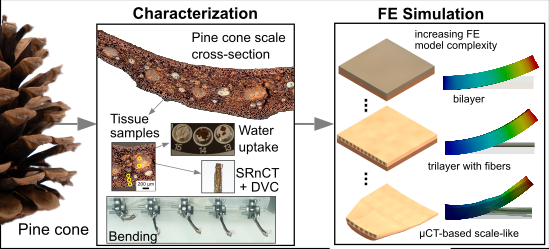
- building parts [13], ceramic bilayer actuators [14], and 4D-printed weather-responsive façade shading elements [15]. The underlying principle in these biological examples is often compared to a thermally actuated “bimetal” mechanism [16][17]. The differential expansion or shrinkage of adjacent tissues
- humidity after a dry state ensures that the cone does not respond abruptly to transient increases in humidity, thereby stabilizing the seed dispersal process. A similar mechanism may apply to closed cones, where it has already been described that the initial opening is influenced by resin at the apophysis
- drawn by Horstmann et al. [21], who attributed the successive orchestration to the overlapping arrangement of scales and the constrained evaporation through the apophysis. This coordinated opening mechanism may facilitate seed dispersal since not all seeds are released at the same time. It also provides


Ambient pressure XPS at MAX IV
Beilstein J. Nanotechnol. 2025, 16, 1677–1694, doi:10.3762/bjnano.16.118
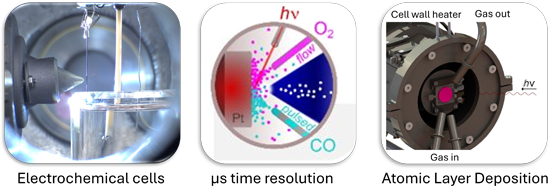
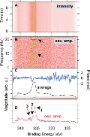
- , and the main Ni 2p peak broadens due to the emergence of an additional peak at 857.4 eV attributed to NiOOH. This indicates that photoexcitation triggers oxidation and structural changes, consistent with plasmon-driven electron excitation at the Ni/NiO interface. The authors propose a mechanism where
- beneath the native oxide layer, as reported in Figure 13. The Ni-Cr-Mo alloy exhibited activity towards the oxygen evolution reaction (OER), which is responsible for initiating passivity breakdown due to the dissolution of Mo in its Mo6+ state. This mechanism contrasts with the typical transpassive
- Attribution 4.0 International License, https://creativecommons.org/licenses/by/4.0). (a) Ni 2p XP spectra recorded at 1 mbar H2O pressure under dark (bottom spectra) and light illumination (top spectra) conditions. (b) Photocatalytic HER mechanism under light illumination 1 mbar H2O pressure. Figure 10 was





Prospects of nanotechnology and natural products for cancer and immunotherapy
Beilstein J. Nanotechnol. 2025, 16, 1644–1667, doi:10.3762/bjnano.16.116
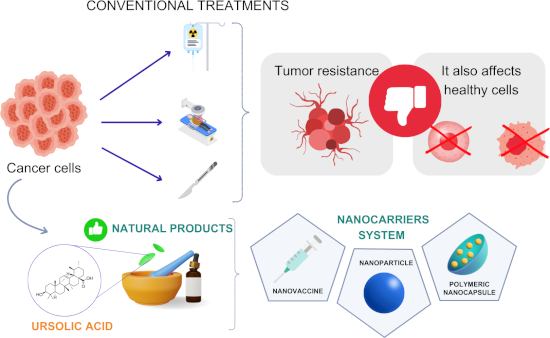
- through their targeted mechanism [62]. Patent CN115252560 (2022) describes self-assembled nanoparticles composed of berberine, lonidamine, and gambogic acid in a 3:1:4 ratio, all acting as APIs, encapsulated with vitamin E polyethylene glycol succinate (VE-TPGS), an excipient, for stability. Berberis


Venom-loaded cationic-functionalized poly(lactic acid) nanoparticles for serum production against Tityus serrulatus scorpion
Beilstein J. Nanotechnol. 2025, 16, 1633–1643, doi:10.3762/bjnano.16.115
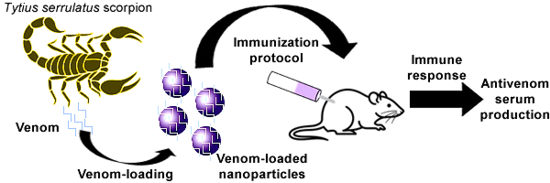
- controlled by diffusion mechanism was also measured. Finally, in vivo immunization in BALB/c mice showed superior efficacy of the T. serrulatus venom protein-loaded nanoparticles compared to the traditional aluminum hydroxide immunoadjuvant. Thus, the formulations shown are promising nanocarriers to be used
- the samples containing 0.5% and 1.0% of T. serrulatus venom, respectively. The mechanism of release of venom protein-loaded PLA nanoparticles profile was studied by applying different mathematical models to the experimental data. The data were subject to four different diffusion kinetic linear models
- : zero order, first order, Korsmeyer–Peppas, and parabolic diffusion (Table 2). The zero order, first order, and Korsmeyer–Peppas models exhibiting determination coefficient (r2) values demonstrate that the release mechanism cannot be explained by these models. The parabolic diffusion model better fitted


Nanotechnology-based approaches for the removal of microplastics from wastewater: a comprehensive review
Beilstein J. Nanotechnol. 2025, 16, 1607–1632, doi:10.3762/bjnano.16.114
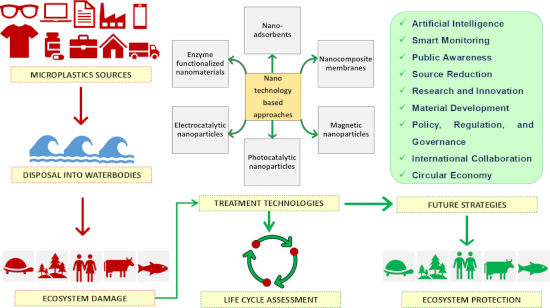
- , and advanced membrane materials, exhibit unique properties such as high surface area, enhanced reactivity, and tunable surface chemistry, which offer promising avenues for the selective and efficient removal of MPs from water. This paper also explores the mechanism, performance and limitations of
- structure, and adjustable pore dimensions, designing a durable and compact MOF nanocomposite membrane could provide an effective strategy for MP filtration [116]. The mechanism involved in the removal of MPs using MOFs is represented in Figure 10. Gnanasekaran et al. [117] developed a novel composite
- fully explore and optimize MXenes’ capabilities, particularly for the removal of MPs from water. The mechanism involved in the removal of MPs using MXenes is shown in Figure 11. To develop lasting strategies for combating water pollution, integrating metals and metal oxides into membrane systems has


Bioinspired polypropylene-based functionally graded materials and metamaterials modeling the mistletoe–host interface
Beilstein J. Nanotechnol. 2025, 16, 1592–1606, doi:10.3762/bjnano.16.113
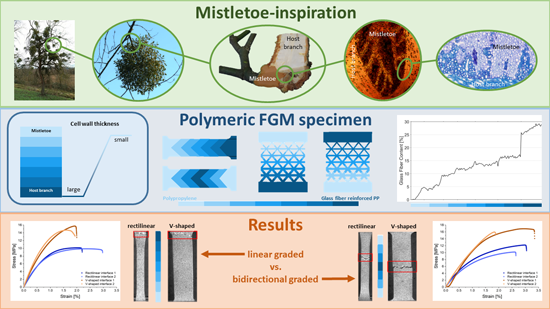
- . Conclusion Using a material system of polymeric FGMs made of reinforced polypropylene with graded glass fiber content, we were able to demonstrate the two-part attachment mechanism of European mistletoe with its V-shaped interfacial structure and the gradual progression of mechanical properties along it
- used in future studies to systematically investigate this functional mechanism and its relevance to plant material systems, thus laying an even broader foundation for mistletoe-inspired composites. The knowledge of the different failure behavior of PP and PPGF was also used to program the failure


Photocatalytic degradation of ofloxacin in water assisted by TiO2 nanowires on carbon cloth: contributions of H2O2 addition and substrate absorbability
Beilstein J. Nanotechnol. 2025, 16, 1567–1579, doi:10.3762/bjnano.16.111
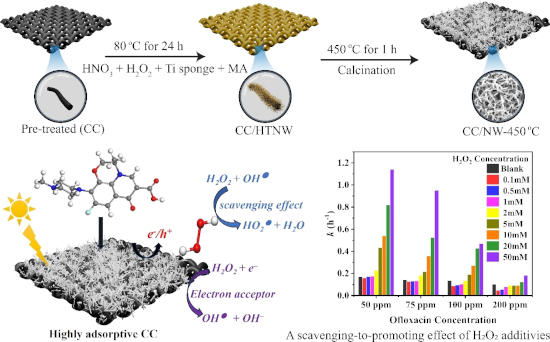
- carbon cloth substrate via a heterogeneous nucleation mechanism [19][20]. Figure S1 in Supporting Information File 1 shows the homogeneous precipitation of hydrogen titanate nanowires on the carbon cloth. Subsequent calcination in air at 450 °C transformed the hydrogen titanate structures into anatase
- photocatalytic degradation mechanism. Supporting Information File 1, Figure S7 explores the effect of the pH value on the OFL degradation efficiency. The highest degradation occurs at a slightly alkaline pH (pH 8), where ROS generation and pollutant adsorption onto TiO2 are the most favorable. Both strong acidic
- our system. The introduction of KBrO3 resulted in a relatively modest reduction in the removal to 41%, suggesting that the involvement of e− is minor in the process. These results indicate that the photocatalytic degradation mechanism is predominantly governed by photogenerated holes, followed by


Transient electronics for sustainability: Emerging technologies and future directions
Beilstein J. Nanotechnol. 2025, 16, 1545–1556, doi:10.3762/bjnano.16.109

- environmental cues [37][40][41]. Perspective Expanding the material palette for biodegradable electronics The elucidation and experimental validation of the biodegradation mechanism of single-crystalline silicon [14][42][43][44] marked a significant turning point in the development of bioresorbable electronics


Influence of laser beam profile on morphology and optical properties of silicon nanoparticles formed by laser ablation in liquid
Beilstein J. Nanotechnol. 2025, 16, 1533–1544, doi:10.3762/bjnano.16.108
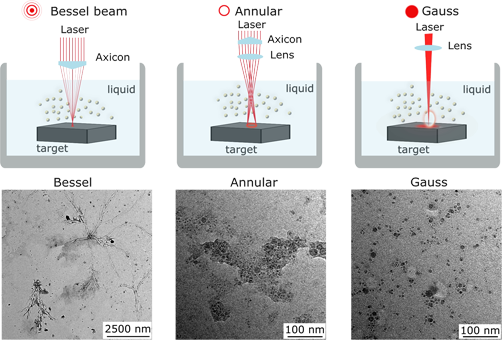
- the propagation direction [34]. Formation of NPs in liquid media during laser ablation is known to be a complex phenomenon. A typical mechanism assumes that the ablation process starts with absorption of the laser pulse by a target during first tens of nanoseconds, followed by electron–phonon
- of ethanol decomposition or ethanol molecules. In [10], this mechanism has been supported by the results of optical emission spectroscopy of the generated plasma, which showed the presence of silicon species, including atomic (390.55 nm) and ionic (385.61, 413.10, and 505.61 nm) lines, as well as


Dendrimer-modified carbon nanotubes for the removal and recovery of heavy metal ions from water
Beilstein J. Nanotechnol. 2025, 16, 1522–1532, doi:10.3762/bjnano.16.107

- chelation of divalent ions at later stages. In fact, chelation mechanism has been reported in previous studies including PAMAM-functionalized carbon materials [46][47][48]. Moreover, the kinetic study for the adsorption of Pb2+ and Cd2+ metal ions by dendrimerized CNTs-G5 was evaluated using two kinetic
- metal ion adsorption is an endothermic spontaneous process across all studied temperatures. The relatively low ΔH values support the conclusion that the overall adsorption mechanism is primarily governed by physisorption. The recyclability of the adsorbents is an important parameter to assess their
- using 30 mL of distilled water through a ring-opening mechanism [51]. Then, 0.4 g of freshly prepared MA was mixed with 3.0 g of a DES synthesized by the reaction of choline chloride and zinc chloride in a 1:2 molar ratio under continuous stirring at room temperature until a homogeneous liquid was


Laser processing in liquids: insights into nanocolloid generation and thin film integration for energy, photonic, and sensing applications
Beilstein J. Nanotechnol. 2025, 16, 1428–1498, doi:10.3762/bjnano.16.104
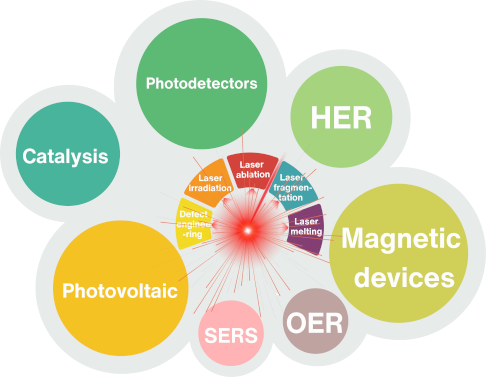
- catalysis, solar energy, and light emission. A critical review on the emerging topic of laser ablation, fragmentation, and melting in liquids, and key reports on both the fundamental principles and applications related to these processes are available in [6]. In another review, the formation mechanism and
- mechanism of NPs in PLAL has been investigated extensively, primarily through the use of laser-induced fluorescence analysis and shadowgraph analysis [17][18][19][20][21]. Use of small-angle X-ray scattering, wide-angle X-ray scattering, and X-ray imaging techniques has enabled a more comprehensive
- exploration of the nanoparticle formation mechanism. These advanced analytical methods offer higher temporal and spatial resolutions compared to conventional techniques [22][23][24][25]. A recent review by Byram et al. [11] highlights the significant advancements made in PLAL over the past decade using laser






Photochemical synthesis of silver nanoprisms via green LED irradiation and evaluation of SERS activity
Beilstein J. Nanotechnol. 2025, 16, 1417–1427, doi:10.3762/bjnano.16.103
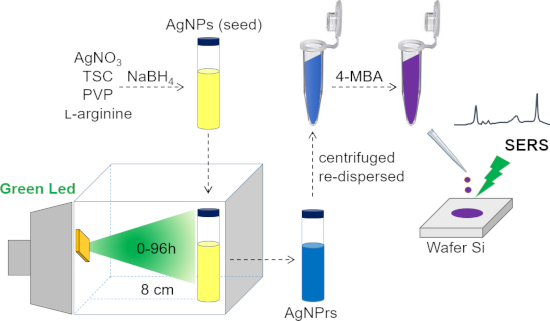
- ± 20 nm) for various periods of time up to 72 h. The growth mechanism was investigated through ultraviolet–visible spectroscopy, field-emission scanning electron microscopy, X-ray diffraction, and transmission electron microscopy analyses, confirming the gradual transformation of spherical seeds into
- , violet, green, and blue. This makes AgNPrs highly suitable for optical sensing applications [2]. The formation mechanism of AgNPrs in solution typically proceeds through three stages, namely, nucleation, seeding, and crystallization, with the crystallization phase being the slowest and rate-determining
- , this method avoids excessive oxidative–reductive agents such as H2O2, thereby improving the structural integrity, stability, and potential applicability of the resulting AgNPrs. Formation mechanism of AgNPrs During the seed development process leading to the formation of AgNPrs, two critical components


The role of biochar in combating microplastic pollution: a bibliometric analysis in environmental contexts
Beilstein J. Nanotechnol. 2025, 16, 1401–1416, doi:10.3762/bjnano.16.102
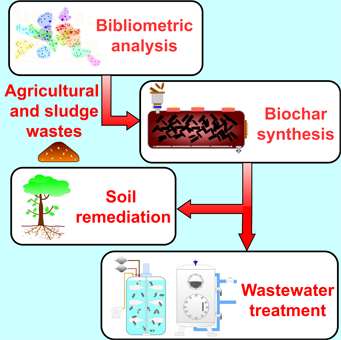
- as “adsorbent”, “adsorbent mechanism”, “waste”, and “walnut shell”, highlight the development of biochar from agricultural residues and adsorption mechanism evaluations. Similarly, terms like “aggregate”, ”soil remediation”, “identification”, “mechanism”, and “kinetics” indicate a research trajectory



Parylene-coated platinum nanowire electrodes for biomolecular sensing applications
Beilstein J. Nanotechnol. 2025, 16, 1392–1400, doi:10.3762/bjnano.16.101
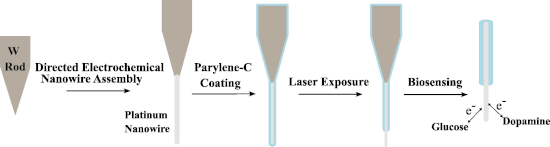
- water as a catalyst, then the final product gluconolactone was generated [28][29]. These reactions were illustrated in Scheme 2. Similarly, peaks were observed to be same during the reverse scan [29]. Based on curve shape and reaction mechanism, the peaks from the reverse curve around 50 mV were


Enhancing the therapeutical potential of metalloantibiotics using nano-based delivery systems
Beilstein J. Nanotechnol. 2025, 16, 1350–1366, doi:10.3762/bjnano.16.98
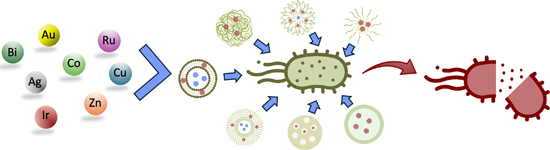
- considered as fully innovative, that is, no cross-resistance, new chemical class, new target, and new mechanism of action. Furthermore, just four of them are active against at least one pathogen of the top risk category [12]. The urgent need for novel antibiotics has led researchers to consider repurposing
- delivery mechanism are broadly categorized into passive and active targeting [38]. Passive targeting is controlled by size, charge, and composition of the nanoparticle, which influences the localization, cell penetration, and release of the drug as physicochemical features of pathogenic tissues facilitate
- antimicrobial agents since they usually exhibit superior antimicrobial activity compared to silver(I) alone [100]. The mechanism of action of most silver complexes is based on a slow release of the silver(I) ions, which react with the thiol groups of proteins or with key functional groups of enzymes; the


Ferroptosis induction by engineered liposomes for enhanced tumor therapy
Beilstein J. Nanotechnol. 2025, 16, 1325–1349, doi:10.3762/bjnano.16.97
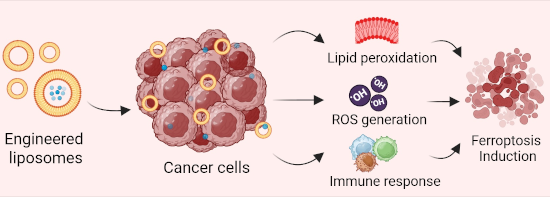
- ][10]. The main advantage of ferroptosis lies in its cell death mechanism, which bypasses multidrug resistance and improves conventional chemotherapy, highlighting its remarkable therapeutic efficacy [8]. Ferroptosis treatment holds potential for addressing a range of conditions, including liver
- polyunsaturated fatty acids (PUFAs), increased labile iron pool, and weakened GPX4–GSH defense mechanism [35][87]. Additionally, cancer cells that are resistant to therapy and exhibit certain cellular characteristics are susceptible to ferroptosis; for instance, cancer cells displaying a mesenchymal phenotype


Wavelength-dependent correlation of LIPSS periodicity and laser penetration depth in stainless steel
Beilstein J. Nanotechnol. 2025, 16, 1302–1315, doi:10.3762/bjnano.16.95
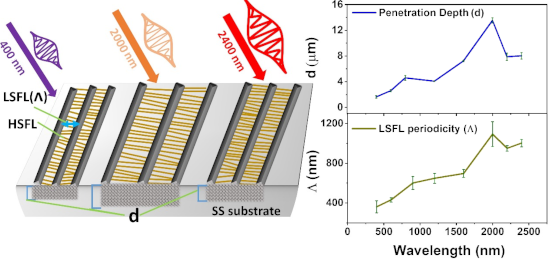
- density coherently oscillates, coupled to both media. Usually, LIPSS formation is a multipulse phenomenon, as pulse after pulse create a different roughness on the surface or feedback mechanism to form certain SPP modes. The interference of incoming light with scattering from the SPP modes can lead to the
- -organization [33] to second harmonic generation [11] and cavitation instability [23][50][51]. Despite numerous studies, the formation mechanism of HSFL and the reason for their shorter periodicity compared to the laser wavelength remain elusive. Our previous work addressed this gap by patterning a single line
- LIPSS occurs at repetition rates of 100 kHz or less, where the sequence of successive pulses creates a feedback mechanism conducive to LIPSS formation. This results in pulse intervals of more than 10 µs, deemed sufficient for efficient heat conduction [55][56]. To achieve a clear formation of HSFL or