


Search results
Search for "metal nanostructures" in Full Text gives 55 result(s) in Beilstein Journal of Nanotechnology.
k-space imaging of the eigenmodes of sharp gold tapers for scanning near-field optical microscopy
Beilstein J. Nanotechnol. 2013, 4, 603–610, doi:10.3762/bjnano.4.67
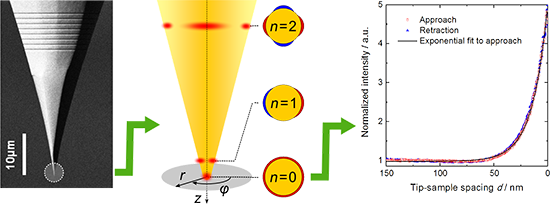
- within the field of plasmonics. The concept of SPP to LSP transformation has been investigated theoretically and experimentally for different metal nanostructures [2][3][4][5] in both the adiabatic [5][6][7] and the non-adiabatic [8] limit. Theoretically, it has been shown to be particularly promising in


Near-field effects and energy transfer in hybrid metal-oxide nanostructures
Beilstein J. Nanotechnol. 2013, 4, 306–317, doi:10.3762/bjnano.4.34
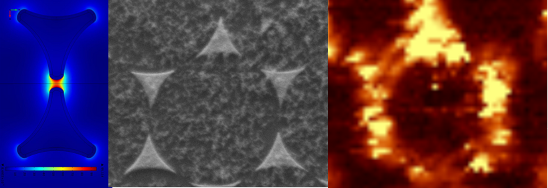
- . Plasmonic-metal nanostructures are also promising for increasing the conversion efficiency of solar energy directly into chemical energy (see review in [7]), such as in plasmon-enhanced water splitting. These systems depend on the close interaction between metallic nanoparticles and semiconductors
- . Typically, noble metals are used for the metal nanostructures, since they offer both long term stability and strong resonant enhancements in the range of visible light. A general review of materials aspects in nanotechnology-based approaches in energy technology can be found in [8]. From the examples given
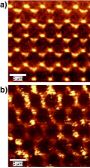
- -defined structure and composition of both the metallic and the semiconducting part. In the following, we present results of studies on hybrid nanostructures using regular arrays of nanoantennas formed by lithographic techniques. The optical properties of the metal nanostructures have been characterized by










Platinum nanoparticles from size adjusted functional colloidal particles generated by a seeded emulsion polymerization process
Beilstein J. Nanotechnol. 2011, 2, 459–472, doi:10.3762/bjnano.2.50
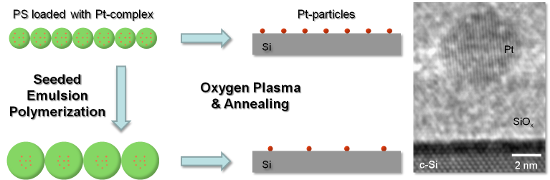
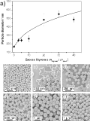
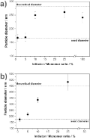
- polymerization; Introduction Uniform colloidal particles have attracted attention from various research fields for their ability to crystallize in highly symmetric arrangements. Two-dimensional crystals, commonly referred to as colloidal monolayers, are widely used for lithographic processes to create metal
- nanostructures in a cheap and highly parallel fashion [1]. As it is not a light-based process, the diffraction limit is conveniently circumvented and nanostructures with dimensions of only several tens of nanometers are created with remarkable ease. While the conventional process, leading to triangular shaped



Plasmonic nanostructures fabricated using nanosphere-lithography, soft-lithography and plasma etching
Beilstein J. Nanotechnol. 2011, 2, 448–458, doi:10.3762/bjnano.2.49

- triggered extensive research on nanostructures that support surface plasmons, namely, nanocavities on metal films, arrays of interacting metal particles and gratings. The coupling between light and localized surface plasmons on metal nanostructures that have been favorably tailored leads to a variety of


Room temperature synthesis of indium tin oxide nanotubes with high precision wall thickness by electroless deposition
Beilstein J. Nanotechnol. 2011, 2, 119–126, doi:10.3762/bjnano.2.14

- development of applications in optoelectronics, sensors and biomedical sciences [4][5][6]. Miscellaneous methods for the fabrication of ITO nanostructures, such as the post calcination method [7], alkaline hydrolysis [8] or pulsed laser ablation [9] have been developed and used. For fabricating metal
- nanostructures, the template deposition method, pioneered by C.R. Martin [10][11], is one of the most important processes. So far, various types of nanostructures obtained by electroless deposition have been successfully fabricated using chemical and physical methods [12][13][14]. However, the synthesis of ITO



Other Beilstein-Institut Open Science Activities



