Search results
Search for "migration" in Full Text gives 209 result(s) in Beilstein Journal of Nanotechnology. Showing first 200.
Biomimetic chitosan with biocomposite nanomaterials for bone tissue repair and regeneration
Beilstein J. Nanotechnol. 2022, 13, 1051–1067, doi:10.3762/bjnano.13.92
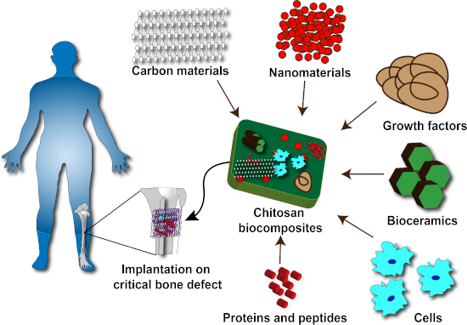
- adhesion and migration of mesenchymal stem cells confirmed by cell adhesion and morphology studies. The cell differentiation activity of 3D-printed scaffolds was confirmed by the alkaline phosphatase activity assay on the 14th day [127]. Liu et al. (2020) has used 3D printing and electrospinning for the
Spindle-like MIL101(Fe) decorated with Bi2O3 nanoparticles for enhanced degradation of chlortetracycline under visible-light irradiation
Beilstein J. Nanotechnol. 2022, 13, 1038–1050, doi:10.3762/bjnano.13.91
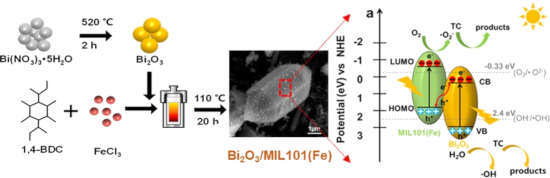
- nanoparticles and tridimensional MIL101(Fe). This 0D/3D heterojunction is conducive to fast separation and migration of the photoproduced electron–hole pairs due to more contact areas between Bi2O3 and MIL101(Fe) and shorter transfer distances of photoinduced charge carriers [8], which results in enhanced
- -prepared catalysts. The k value of BOM-20 (0.01348 min−1) is the largest, which is 5.9 and 4.3 times higher than that of Bi2O3 (0.00226 min−1) and MIL101(Fe) (0.00309 min−1), respectively. The enhanced photocatalytic activity is attributed to the effective separation and migration of the photoinduced


Bioselectivity of silk protein-based materials and their bio-inspired applications
Beilstein J. Nanotechnol. 2022, 13, 902–921, doi:10.3762/bjnano.13.81
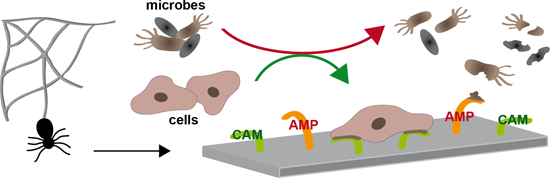
- embryonic differentiation, cell morphology, cell migration, and thrombosis [19]. The function of fibronectin as a cell-binding molecule involves its recognition by integrins through short peptide motifs, among them the prominent Arg–Gly–Asp (RGD) and Leu–Asp–Val–Pro (LDVP) sequences [19]. 1.2 Applications


Hierarchical Bi2WO6/TiO2-nanotube composites derived from natural cellulose for visible-light photocatalytic treatment of pollutants
Beilstein J. Nanotechnol. 2022, 13, 745–762, doi:10.3762/bjnano.13.66
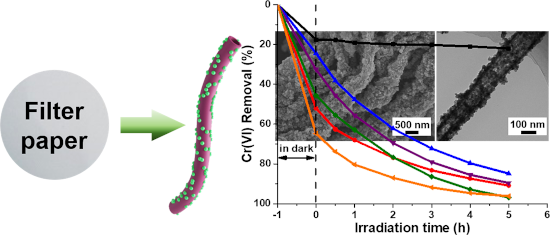
- nanotubes result in optimum migration efficiencies of photogenerated electrons and holes, which leads to the optimal photocatalytic reduction activity. Similarly, as shown in Supporting Information File 1, Figure S4a, all Bi2WO6/TiO2-NT nanocomposites have larger adsorption capacities toward RhB than those


Sodium doping in brookite TiO2 enhances its photocatalytic activity
Beilstein J. Nanotechnol. 2022, 13, 599–609, doi:10.3762/bjnano.13.52
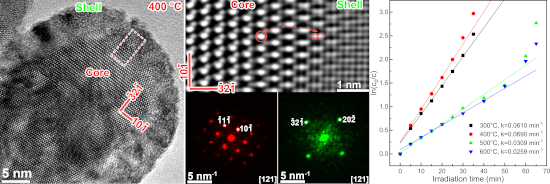
- migration rate, atoms at higher potential energy sites will migrate to the stable site and finally develop into a perfect crystallite. For example, the atomic arrangement within the brookite crystallite in Figure 6c becomes more ordered than that calcinated at a lower temperature, and the size of the
- enhance the photocatalytic activity [33][34]. However, the high temperature can improve the atomic migration rate which makes the atomic arrangement more ordered. In other words, the high temperature relaxes the lattice distortion and smoothen the incomplete structure while weakening the photocatalytic


Effects of substrate stiffness on the viscoelasticity and migration of prostate cancer cells examined by atomic force microscopy
Beilstein J. Nanotechnol. 2022, 13, 560–569, doi:10.3762/bjnano.13.47
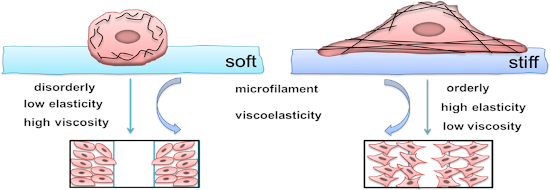
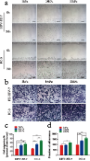
- unclear how mechanical properties regulate the cellular response to the environmental matrix. In this study, atomic force microscopy (AFM) and laser confocal imaging were used to qualitatively evaluate the relationship between substrate stiffness and migration of prostate cancer (PCa) cells. Cells
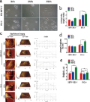
- . Analysis of AFM force–distance curves indicated that the elasticity of the cells cultured on 35 kPa substrates increased while the viscosity decreased. Wound-healing experiments showed that PCa cells cultured on 35 kPa substrates have higher migration potential. These phenomena suggested that the
- mechanical properties may be correlated with the migration of PCa cells. After actin depolymerisation, the elasticity of the PCa cells decreased while the viscosity increased, and the migration ability was correspondingly decreased. In conclusion, this study clearly demonstrated the relationship between



Micro- and nanotechnology in biomedical engineering for cartilage tissue regeneration in osteoarthritis
Beilstein J. Nanotechnol. 2022, 13, 363–389, doi:10.3762/bjnano.13.31
- , osteogenic, and chondrogenic potentials of the hMSCs [124]. However, the migration of SWCNTs through the cell wall to the nucleus was detected using fluorescence-labeled CNTs. In line with these results, the long term exposure of chondrocytes to COOH- and PEG-functionalized SWCNTs in 2D cultures, 3D pellet
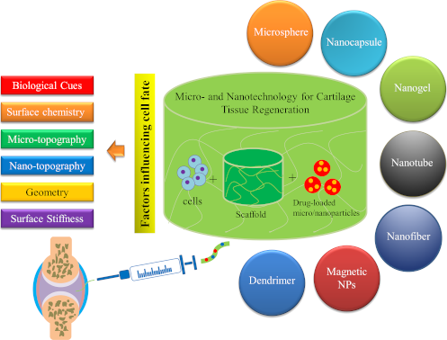
- Biological cues in cartilage TE Natural ECM provides a desirable microenvironment containing biologically important motifs (Table 2) for cell attachment, spread, migration, proliferation, and differentiation [149]. This microenvironment is inevitably disregarded during the in vitro cell culture and expansion
- microcarriers could be developed into microtissues enabling MSC differentiation, which could subsequently be used for in vivo cartilage repair. In addition, ECM derived from MSCs was used to coat polystyrene plastic tissue culture surfaces and led to dramatically increased MSC proliferation, migration, and


Engineered titania nanomaterials in advanced clinical applications
Beilstein J. Nanotechnol. 2022, 13, 201–218, doi:10.3762/bjnano.13.15
- significantly increases early HGF adhesion, migration, and ECM secretion [74]. The aforementioned studies suggest that nanostructured titania offers additional benefits for the successful and long-term retention of the implants. Titania nanomaterials as antimicrobial agents The treatment of bacterial infections


Tin dioxide nanomaterial-based photocatalysts for nitrogen oxide oxidation: a review
Beilstein J. Nanotechnol. 2022, 13, 96–113, doi:10.3762/bjnano.13.7
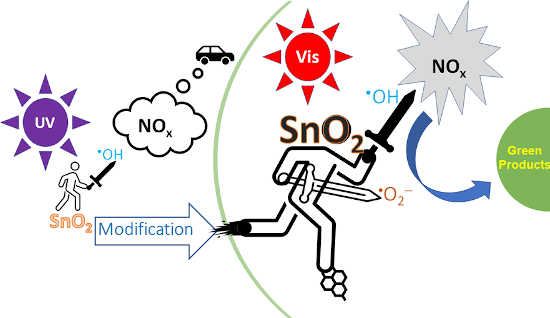
- products was inhibited effectively. The charge movement at the BiOBr/SnO2 p–n interface was also revealed via theoretical and experimental findings. Electrons in SnO2 transfer into BiOBr over pre-formed charge migration channels and an internal electric field at the BiOBr/SnO2 interface, which directs
- •O2− radicals played a primary role in the photocatalytic NO oxidation. Additionally, using photoluminescence (PL) spectroscopy, XPS, active species trapping tests, and ESR spectroscopy, the authors studied the photoinduced charge migration and trapping. They proposed the band structure of the SnO2
- ), Copyright 2018 Springer Nature. This content is not subject to CC BY 4.0. Proposed mechanisms for photocatalytic NO oxidation via interfacial charge migration over BiOBr/SnO2 p–n heterojunctions. Figure 8 was reprinted with permission from [70], Copyright 2020 American Chemical Society. This content is not


A review on slip boundary conditions at the nanoscale: recent development and applications
Beilstein J. Nanotechnol. 2021, 12, 1237–1251, doi:10.3762/bjnano.12.91
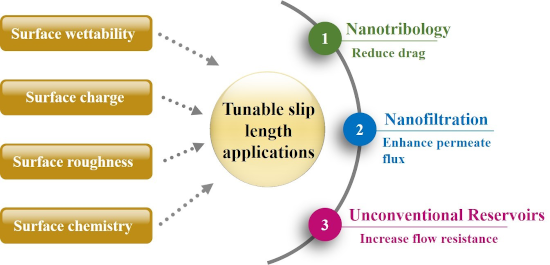
- of same water–solid interaction energy, for the case with more uniform and more compact distribution of water molecules near solid surfaces, liquid water can slip more easily. Otherwise, for the case with more isolated and corrugated distribution, the migration of liquid water molecules is more


The effect of cobalt on morphology, structure, and ORR activity of electrospun carbon fibre mats in aqueous alkaline environments
Beilstein J. Nanotechnol. 2021, 12, 1173–1186, doi:10.3762/bjnano.12.87
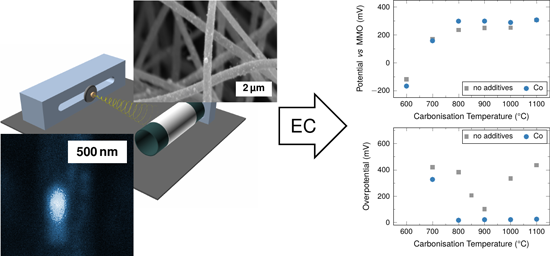
- temperatures. As a result of cobalt migration in the material the resulting overall morphology is that of turbostratic carbon. Nitrogen removal and nitrogen-type distribution are enhanced by the cobalt additives. At lower carbonisation temperatures cobalt is distributed over the surface of the fibres, whereas


Self-assembly of amino acids toward functional biomaterials
Beilstein J. Nanotechnol. 2021, 12, 1140–1150, doi:10.3762/bjnano.12.85
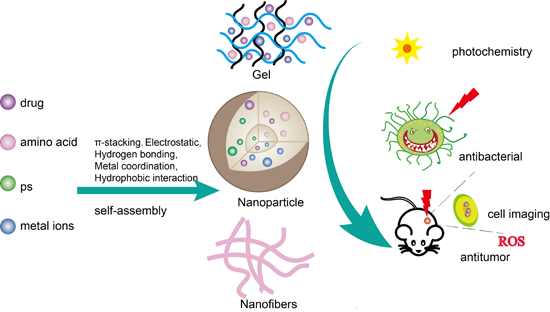
- promising natural antitumor drug, which can inhibit the transformation, proliferation, and migration of tumor cells through various ways, and has anti-angiogenic activity and good biocompatibility [72]. However, the poor water solubility and low bioavailability of curcumin hinder its direct application [73

Open-loop amplitude-modulation Kelvin probe force microscopy operated in single-pass PeakForce tapping mode
Beilstein J. Nanotechnol. 2021, 12, 1115–1126, doi:10.3762/bjnano.12.83
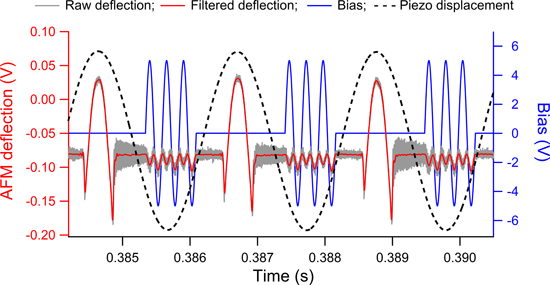
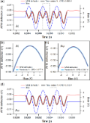
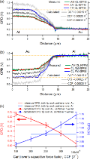
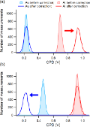
- microscopy [29][30], pump–probe KPFM [31][32], or fast free force recovery KPFM [33] that are capable of observing the dynamics of the optoelectronic response of materials and electric field-induced charge migration at time scales of the order of tens of microseconds. Various OL KPFM implementations with





Use of nanosystems to improve the anticancer effects of curcumin
Beilstein J. Nanotechnol. 2021, 12, 1047–1062, doi:10.3762/bjnano.12.78
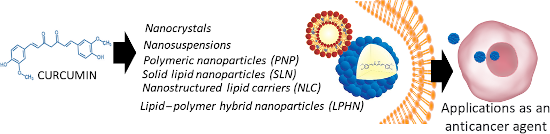
- exerted an antiangiogenic effect when assayed against human umbilical vein endothelial cells; particles co-delivered doxorubicin–CUR in an amphiphilic poly-β-amino ester copolymer. Their mechanism was apparently related to the VEGF pathway, according to the results of inhibited proliferation, migration


Progress and innovation of nanostructured sulfur cathodes and metal-free anodes for room-temperature Na–S batteries
Beilstein J. Nanotechnol. 2021, 12, 995–1020, doi:10.3762/bjnano.12.75
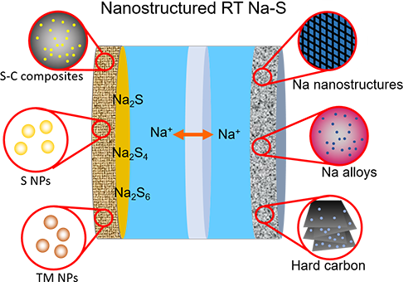
- phenomenon caused by the migration of long-chain sodium polysulfides (Na2Sn) to the anode, facilitated by their high solubility in carbonate- and ether-based electrolytes [21]. At the anode, Na2Sn is further reduced to insoluble short-chain sodium polysulfides, which precipitate and passivate the electrode




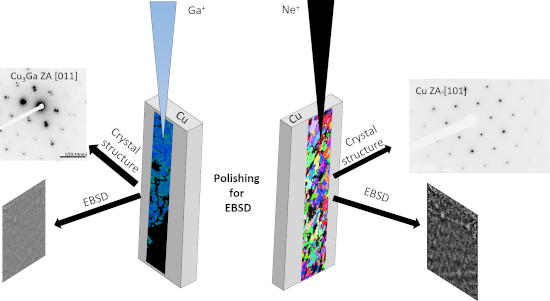
Is the Ne operation of the helium ion microscope suitable for electron backscatter diffraction sample preparation?
Beilstein J. Nanotechnol. 2021, 12, 965–983, doi:10.3762/bjnano.12.73



Comprehensive review on ultrasound-responsive theranostic nanomaterials: mechanisms, structures and medical applications
Beilstein J. Nanotechnol. 2021, 12, 808–862, doi:10.3762/bjnano.12.64
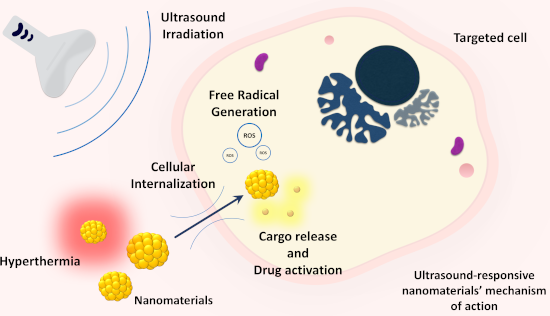
- work by King provided the mathematical basis [93]. The ARF can be divided into primary and secondary forces. Primary forces are applied to single particles, while secondary forces cause particle–particle interactions. Moreover, primary forces cause migration and aggregation of the particles in an


Silver nanoparticles induce the cardiomyogenic differentiation of bone marrow derived mesenchymal stem cells via telomere length extension
Beilstein J. Nanotechnol. 2021, 12, 786–797, doi:10.3762/bjnano.12.62
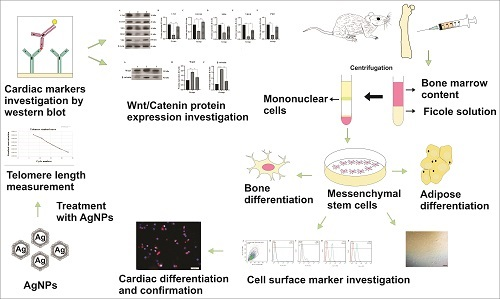
- that Ag-NPs induced mESCs cell cycle arrest at the G1 and S phases through inhibition of the hyperphosphorylation of Retinoblastoma protein [12]. Kalishwaralal et al. reported that Ag-NPs could inhibit cell proliferation, cell viability, and cell migration through activating caspase-3 and suppressing


Prediction of Co and Ru nanocluster morphology on 2D MoS2 from interaction energies
Beilstein J. Nanotechnol. 2021, 12, 704–724, doi:10.3762/bjnano.12.56
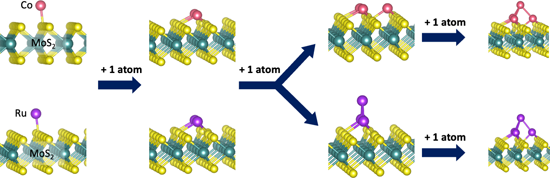
- -quality, conformal thin films with low resistivity, to avoid many of the typical failure mechanisms such as electromigration [42][43]. This means that 3D migration of atoms (agglomeration) should be inhibited, while 2D growth (wetting) should be promoted. In contrast, in catalysis applications the ratio
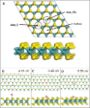
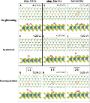
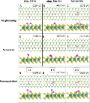
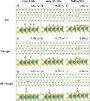
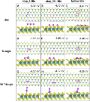
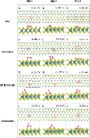
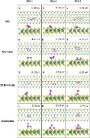
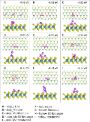
- 4D) is the least favourable configuration for Ru2, as well, although no rearrangements or migration occur here. Similar to Co2, adsorption of Ru at equivalent separated sites atop_Mo (Figure 4E) is the second most favourable of the equivalent Ru2 adsorptions. The large distortions of the MoS2 ML for
- migration to different sites or cause the ML to rearrange, or in some cases both. However, in contrast to Co4, the tetrahedral configuration is not favoured in these rearrangements. Instead, we observe more structural distortions to the Ru4 geometries and the MoS2 lattice. In the case of the 3D rectangle at



The impact of molecular tumor profiling on the design strategies for targeting myeloid leukemia and EGFR/CD44-positive solid tumors
Beilstein J. Nanotechnol. 2021, 12, 375–401, doi:10.3762/bjnano.12.31


The nanomorphology of cell surfaces of adhered osteoblasts
Beilstein J. Nanotechnol. 2021, 12, 242–256, doi:10.3762/bjnano.12.20
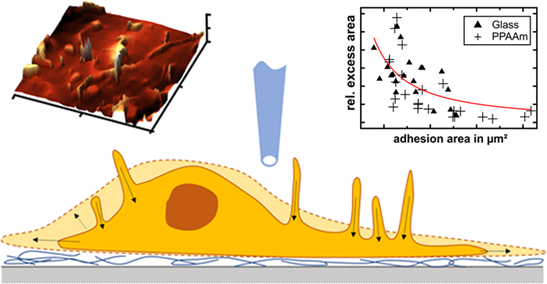
- capability of apical membrane features and fluctuation dynamics in aiding the assessment of adhesion and migration properties on a single-cell basis. Keywords: cell adhesion; membrane fluctuations; osteoblast; plasma membrane nanomorphology; scanning ion conductance microscopy (SICM); Introduction
- migration for many mammalian cell types [12][13]. Migrating and spreading cells form flat, actin-supported, organelle-free regions, referred to as lamellipodia, and other features that may expand their attachment area [14]. A physical coupling of adhesion molecules to the actin polymerization machinery has
- breast cancer cells [30], and on keratinocytes [35]. In general, these features are associated with migration, receptor internalization, and micropinocytosis [30][36][37]. Membrane ruffling is regulated by a distinct signaling pathway [38] and the supporting actin is denser and more cross-linked [35


Cardiomyocyte uptake mechanism of a hydroxyapatite nanoparticle mediated gene delivery system
Beilstein J. Nanotechnol. 2020, 11, 1685–1692, doi:10.3762/bjnano.11.150
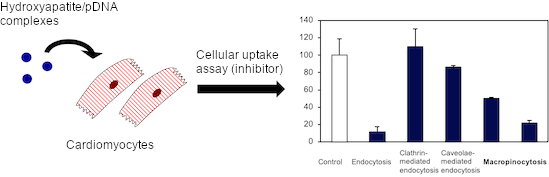
- ]. The results suggested that calcium ions from HAp particles might activate macropinocytosis in HL-1 cells. CaSR has different functions depending on the cell type. In osteoclasts, for example, it directs migration toward bone tissue for bone remodeling, whereas in macrophages it aids in the antigen


Oxidation of Au/Ag films by oxygen plasma: phase separation and generation of nanoporosity
Beilstein J. Nanotechnol. 2020, 11, 1608–1614, doi:10.3762/bjnano.11.143
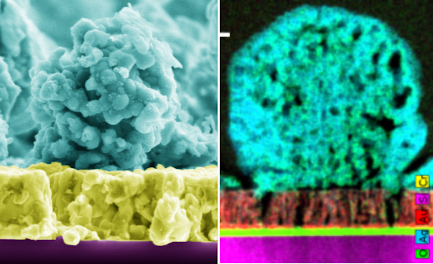
- . Interestingly, these microspheres do not cover the entire film surface but are rather randomly distributed over the surface. Moreover, when examining the surface an increase in porosity is noticed, probably as a consequence of the decrease in film density due to the migration of the oxidized silver toward the
- result since the plasma was kept at a low temperature during the film oxidation process which, in principle, should not trigger the silver migration. However, as discussed in our previous reports for the pure silver case [18][19], the local rise in the temperature at the nanometer scale resulted from the
- between gold and silver (Figure 7). HAADF and EDS-STEM image analysis revealed that the column was mainly constituted of gold surrounded with silver. This suggests that the migration of silver to the upper surface might have resulted from a grain-boundary diffusion mechanism. Indeed, in thin films silver


Electrokinetic characterization of synthetic protein nanoparticles
Beilstein J. Nanotechnol. 2020, 11, 1556–1567, doi:10.3762/bjnano.11.138
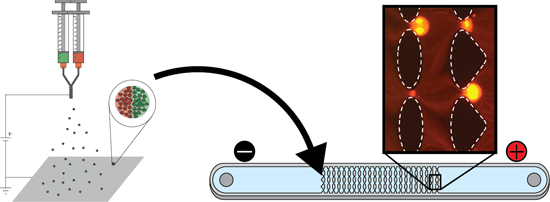
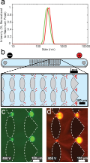
- of biological particles of interest. Furthermore, it has been shown that nonlinear EK effects, such as EP of the second kind [23][24], are very effective mechanisms for controlling particle migration within microdevices. An advantageous strategy for enhancing nonlinear EK effects on a particle is to
- migration due to the polarizability of particles when exposed to a non-homogenous electric field. The DEP velocity is characterized by the following equation: where µDEP is the DEP mobility. Therefore, summarizing the four phenomena discussed above, the total particle velocity within our system (Figure 2b



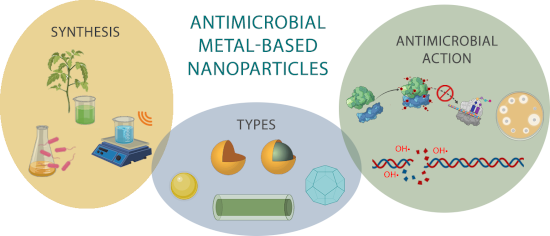
Antimicrobial metal-based nanoparticles: a review on their synthesis, types and antimicrobial action
Beilstein J. Nanotechnol. 2020, 11, 1450–1469, doi:10.3762/bjnano.11.129