Search results
Search for "nanoparticle formation" in Full Text gives 60 result(s) in Beilstein Journal of Nanotechnology.
Time-dependent growth of crystalline Au0-nanoparticles in cyanobacteria as self-reproducing bioreactors: 2. Anabaena cylindrica
Beilstein J. Nanotechnol. 2016, 7, 312–327, doi:10.3762/bjnano.7.30
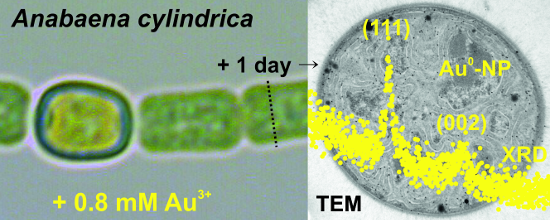
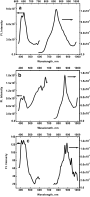
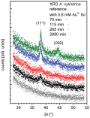
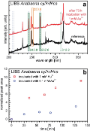
- plotted stacked in Figure 2 and a smoothened line was added to improve readability. From bottom to top data are shown for a reference without any added gold and therefore no nanoparticle formation (grey filled stars). Further samples were taken 75 minutes (black open squares), 115 min (red open circles
- the nanoparticle production [23][29]. This will not be necessarily true for metal nanoparticle formed at the cell-wall at the outside of the cell, but even this constitutes a more restricted location than in a solution. In inorganic systems effects of the confinement on the nanoparticle formation have
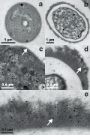
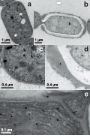
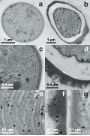
- cylindrica the time scale of nanoparticle formation is comparable for both cyanobacteria. Within some hours the final size of the biosynthesized nanoparticles is achieved, as recorded by XRD. In Figure 7 the average size of the gold nanoparticles is shown over the time of incubation for Anabaena cylindrica



pH-Triggered release from surface-modified poly(lactic-co-glycolic acid) nanoparticles
Beilstein J. Nanotechnol. 2015, 6, 2504–2512, doi:10.3762/bjnano.6.260
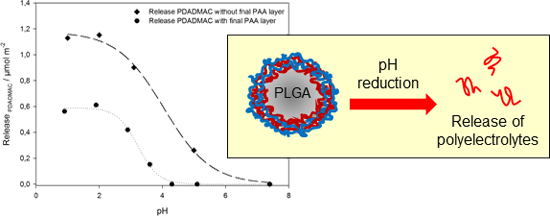
- ] or improved drug targeting. These optimization procedures are generally performed after particle assembly, since the nanoparticle formation is influenced by many parameters and often limited by minor changes in the experimental setup. However, several further surface modifications are well


Observing the morphology of single-layered embedded silicon nanocrystals by using temperature-stable TEM membranes
Beilstein J. Nanotechnol. 2015, 6, 964–970, doi:10.3762/bjnano.6.99

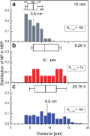
- -normal distribution. The results strongly reflect the ability to control the Si NC size by geometrical one-dimensional confinement of the SRON layers. Furthermore, the influence of the SRON stoichiometry on Si nanoparticle formation is demonstrated in Figure 4c–e. Interestingly, increasing the Si excess


Biopolymer colloids for controlling and templating inorganic synthesis
Beilstein J. Nanotechnol. 2014, 5, 2129–2138, doi:10.3762/bjnano.5.222
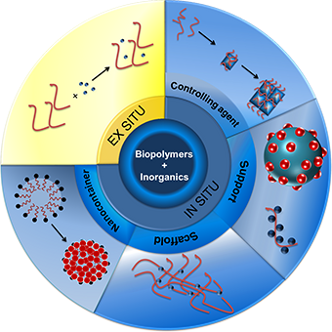
- inorganic nanoparticles takes places on biopolymer molecules or on particles: (B1) Nanoparticle formation on biopolymer molecules (often referred to as “metallization” and “mineralization” of biopolymers). (B2) Biopolymer particles as support, with the formation of the inorganic nanoparticles taking place


The impact of the confinement of reactants on the metal distribution in bimetallic nanoparticles synthesized in reverse micelles
Beilstein J. Nanotechnol. 2014, 5, 1966–1979, doi:10.3762/bjnano.5.206
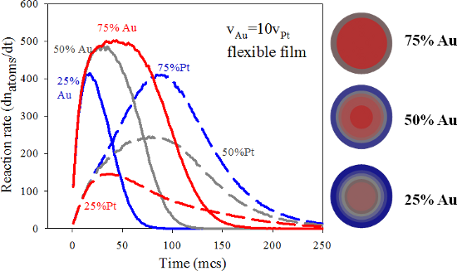
- by the surfactant), and is directly related to the facility with which intermicellar channels can be established. The intermicellar exchange of material takes place through the intermicellar channel, thus the kinetics of the nanoparticle formation will strongly depend on the channel feature. Two
- distribution in bimetallic nanoparticles Nanoparticle formation is complete when the contents of each micelle do not vary with time. Each simulation run results in a set of micelles, each of which can contain a particle whose composition can be different. The composition of each particle is stored during the


Oriented attachment explains cobalt ferrite nanoparticle growth in bioinspired syntheses
Beilstein J. Nanotechnol. 2014, 5, 210–218, doi:10.3762/bjnano.5.23
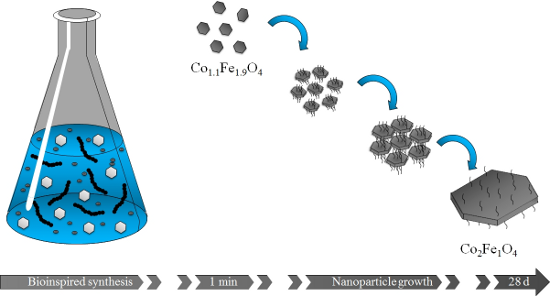
- protein MMS6, involved in nanoparticle formation within magnetotactic bacteria, was used to alter the growth of cobalt ferrite. We demonstrate that the bioinspired nanoparticle growth can be described by the oriented attachment model. The intermediate stages proposed in the theoretical model, including
- oriented attachment (OA) and Ostwald ripening (OR) process. The single contributions from the oriented attachment model as well as the Ostwald ripening are displayed as dashed lines. Schematic of nanoparticle formation during the biomimetic growth process. (a) Crystallites are formed, (b) c25-mms6


Forming nanoparticles of water-soluble ionic molecules and embedding them into polymer and glass substrates
Beilstein J. Nanotechnol. 2012, 3, 267–276, doi:10.3762/bjnano.3.30
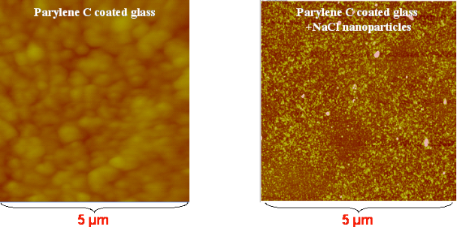
- due to a directional growth of the KI on the silicon surface. An additional proof of nanoparticle formation in the sonochemical reaction, based on sonication of the saturated solution of NaCl (CuSO4, KI), was the formation of sediment that was not immobilized on the glass slide but instead




Approaches to nanostructure control and functionalizations of polymer@silica hybrid nanograss generated by biomimetic silica mineralization on a self-assembled polyamine layer
Beilstein J. Nanotechnol. 2011, 2, 760–773, doi:10.3762/bjnano.2.84
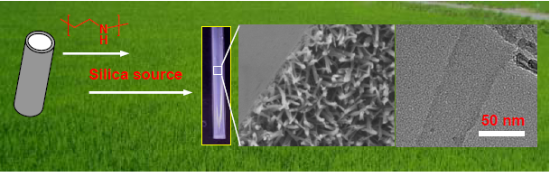
- generation of Au nanostructures on the LPEI@silica nanograss. SEM images show no damage or change to the surface of the LPEI@silica nanograss due to treatment in the aqueous solution of NaAuCl4, as seen before (Supporting Information File 1, Figure S3) and after Au nanoparticle formation (Figure 8b). TEM


Formation of SiC nanoparticles in an atmospheric microwave plasma
Beilstein J. Nanotechnol. 2011, 2, 665–673, doi:10.3762/bjnano.2.71
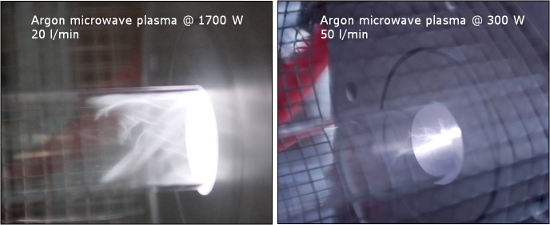
- plasma synthesis an ideal tool for nanoparticle formation. In a gaseous plasma there exist several radical and ion species, which are formed by the decomposition of the feed gases [9][22]. The system will minimize its internal energy, if possible, by building molecules or clusters. Small particles of SiC



Precursor concentration and temperature controlled formation of polyvinyl alcohol-capped CdSe-quantum dots
Beilstein J. Nanotechnol. 2010, 1, 119–127, doi:10.3762/bjnano.1.14
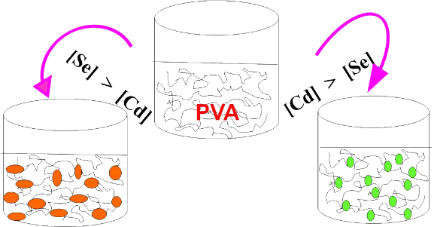
- , or vice versa, could be due to the mechanism of nanoparticle formation. Cd2+ ions are freely available from the Cd(OAc)2 precursor, whereas the counter part is released from SeSO32− much slower. Therefore, the concentration of Cd(OAc)2 governs the number of nucleation sites available for the growth