


Search results
Search for "nanosystems" in Full Text gives 95 result(s) in Beilstein Journal of Nanotechnology.
Metal-free catalysis based on nitrogen-doped carbon nanomaterials: a photoelectron spectroscopy point of view
Beilstein J. Nanotechnol. 2018, 9, 2015–2031, doi:10.3762/bjnano.9.191
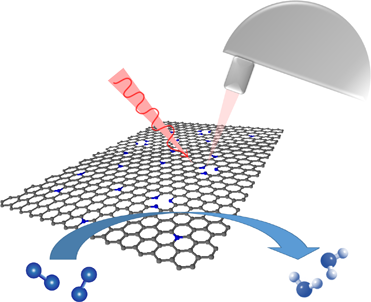
- graphene. Reproduced from [66], copyright 2014 American Chemical Society, published under a CC-BY 4.0 International license, https://creativecommons.org/licenses/by/4.0/. Figure 5 (a–c) Conversion of the projectile initial kinetic energy into thermal energy in bulk and nanosystems: (a) impact of an
- . There are many other nonradiative relaxation channels in nanosystems that affect the excitation lifetimes. Reproduced with permission from [83], copyright 2010 American Institute of Physics. (d–i) Production of defects in graphene under ion irradiation as revealed by the analytical potential molecular




Recent highlights in nanoscale and mesoscale friction
Beilstein J. Nanotechnol. 2018, 9, 1995–2014, doi:10.3762/bjnano.9.190
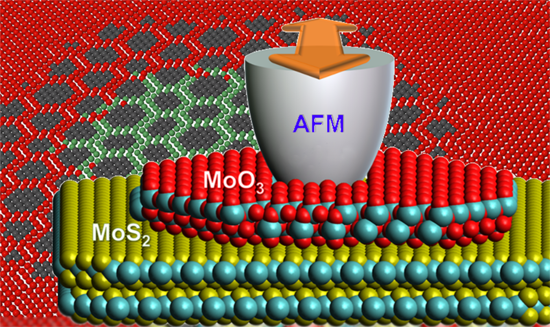
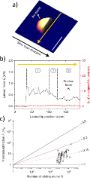
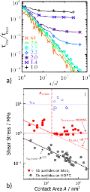
- sliding nanosystems. This was demonstrated, e.g., for sheared graphite stacks [49], where nanomanipulation experiments also allowed the authors to determine the adhesion forces between the sliding graphite surfaces, simply by distinguishing between reversible displacement forces related to the


Biomimetic and biodegradable cellulose acetate scaffolds loaded with dexamethasone for bone implants
Beilstein J. Nanotechnol. 2018, 9, 1986–1994, doi:10.3762/bjnano.9.189
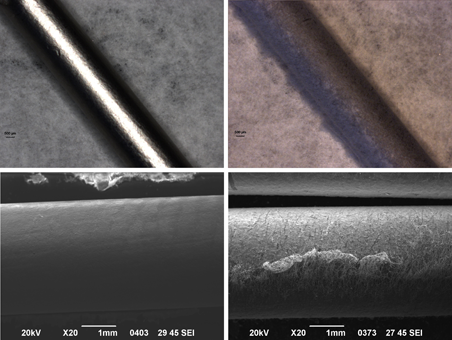
- Aikaterini-Rafailia Tsiapla Varvara Karagkiozaki Veroniki Bakola Foteini Pappa Panagiota Gkertsiou Eleni Pavlidou Stergios Logothetidis Lab for “Thin Films - Nanosystems & Nanometrology”, Nanomedicine Group, Department of Physics, Aristotle University of Thessaloniki, Greece BL NanoBiomed P.C


Atomic-level characterization and cilostazol affinity of poly(lactic acid) nanoparticles conjugated with differentially charged hydrophilic molecules
Beilstein J. Nanotechnol. 2018, 9, 1328–1338, doi:10.3762/bjnano.9.126
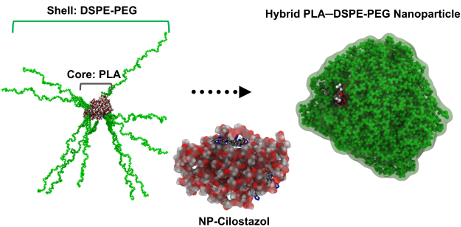
- many other nanosystems concerning their biodegradation, biocompatibility and highly modifiable physical and mechanical properties [1][4][5][6]. Polymeric materials also have demonstrated superior efficacy to deliver therapeutic agents at the site of the disease or damaged area and protecting drugs
- , computational modelling provides useful approaches to help elucidate the behavior at the atomic level of various nanosystems, predict their drug affinity, and at the same time, reduce the number of preliminary experimental tests (or to be used as a complementary approach to experimental work). The structural
- factor related to toxicity in nanosystems [25][26][27][42]. DSPE–PEG structures were built in three-dimensional coordinates. As the starting point, the DSPE–PEG chains were arranged around the PLA core (10 PLA chains) using PACKMOL [43][44], as follows. The PLA core was fixed with its center of mass at


Graphene composites with dental and biomedical applicability
Beilstein J. Nanotechnol. 2018, 9, 801–808, doi:10.3762/bjnano.9.73
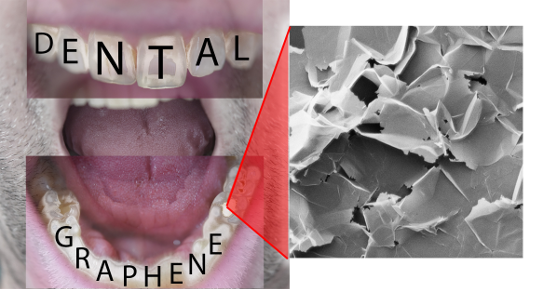
- . acknowledges support by the Helmholtz society through program Science and Technology of Nanosystems (STN). This work was partly supported by World Premier International Research Center Initiative (WPI Initiative) from MEXT, Japan and we thank Dr Daisuke Fuijita and Dr Kiyotaka Iiayma for their support. This


Patterning of supported gold monolayers via chemical lift-off lithography
Beilstein J. Nanotechnol. 2017, 8, 2648–2661, doi:10.3762/bjnano.8.265
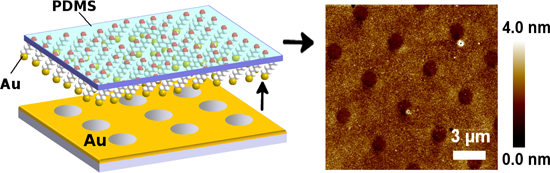
- Liane S. Slaughter Kevin M. Cheung Sami Kaappa Huan H. Cao Qing Yang Thomas D. Young Andrew C. Serino Sami Malola Jana M. Olson Stephan Link Hannu Hakkinen Anne M. Andrews Paul S. Weiss California NanoSystems Institute, University of California, Los Angeles, Los Angeles, CA 90095, USA Department


Group-13 and group-15 doping of germanane
Beilstein J. Nanotechnol. 2017, 8, 1642–1648, doi:10.3762/bjnano.8.164
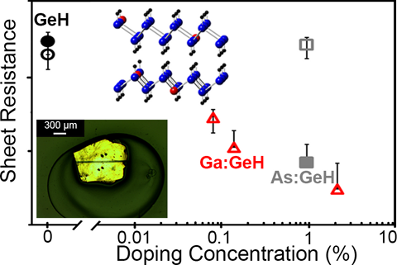
- Laboratory and the Surface Analysis Laboratory (NSF DMR-0114098) of The Ohio State University Department of Chemistry and Biochemistry and The Ohio State University Nanosystems Laboratory (NSL). Funding for this research was primarily provided by the NSF EFRI-1433467. We acknowledge partial support from the


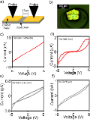

Sub-nanosecond light-pulse generation with waveguide-coupled carbon nanotube transducers
Beilstein J. Nanotechnol. 2017, 8, 38–44, doi:10.3762/bjnano.8.5
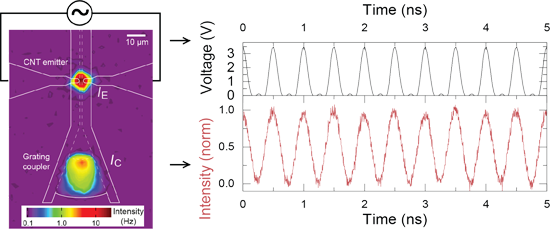
- -0005. W.P. also acknowledges support by the DFG and the State of Baden-Württemberg through the DFG-Center for Functional Nanostructures (CFN). F.H., M.M.K.and R.K. acknowledge support by Helmholtz Association through program Science and Technology of Nanosystems (STN) and by the Karlsruhe Nano Micro


Controlled supramolecular structure of guanosine monophosphate in the interlayer space of layered double hydroxide
Beilstein J. Nanotechnol. 2016, 7, 1928–1935, doi:10.3762/bjnano.7.184
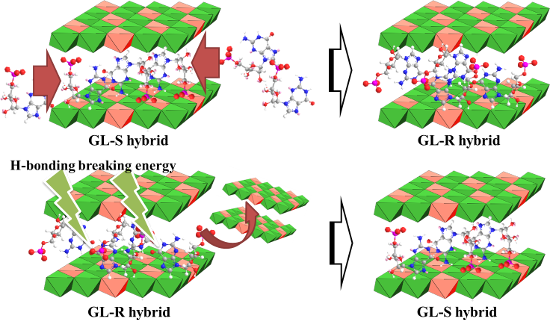
- Gyeong-Hyeon Gwak Istvan Kocsis Yves-Marie Legrand Mihail Barboiu Jae-Min Oh Department of Chemistry and Medical Chemistry, College of Science and Technology, Yonsei University, Wonju, Gangwondo, 26493, Republic of Korea, Adaptive Supramolecular Nanosystems Group, Institut Européen des Membranes


Properties of Ni and Ni–Fe nanowires electrochemically deposited into a porous alumina template
Beilstein J. Nanotechnol. 2016, 7, 1709–1717, doi:10.3762/bjnano.7.163
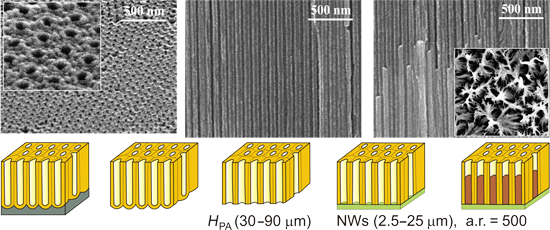
- magnetic, electronic, biomedical and optical nano-scale devices [1][2][3][4][5]. Additionally, the magnetic composite nanostructures are interesting as materials for basic research of magnetic and transport properties in magnetic nanosystems as they possess unique physicochemical properties compared with


Antitumor magnetic hyperthermia induced by RGD-functionalized Fe3O4 nanoparticles, in an experimental model of colorectal liver metastases
Beilstein J. Nanotechnol. 2016, 7, 1532–1542, doi:10.3762/bjnano.7.147
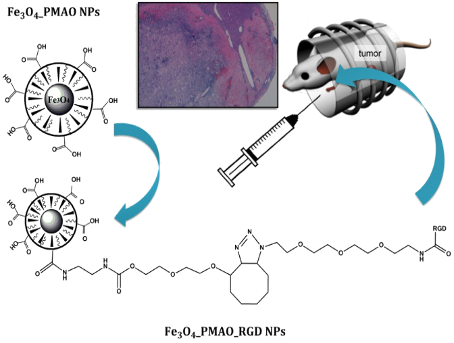
- could seriously compromise tumor cell viability. For such tumor destruction it is necessary to combine the heat capacity of the magnetic system with its localization in tumor tissues. However, the creation of high quality magnetic nanosystems that meet both requirements is still a great challenge


Nanostructured germanium deposited on heated substrates with enhanced photoelectric properties
Beilstein J. Nanotechnol. 2016, 7, 1492–1500, doi:10.3762/bjnano.7.142
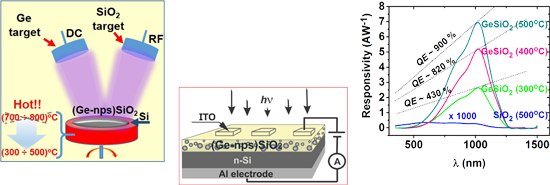
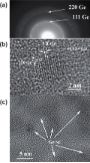
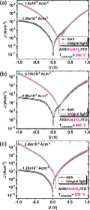
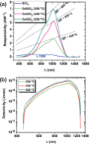
- Nanosystems, Gamma 1000, sputtering equipment. Clean 1 cm2 substrates of n-type Si(100) with a resistivity of 10–20 Ω·cm were used and they were firstly degassed for 5 min at 200 °C in vacuum. To obtain the desired Ge/SiO2 (50:50) concentration ratio on the Si substrate at a base pressure of 1 × 10⁻⁷ Torr




Photocurrent generation in carbon nanotube/cubic-phase HfO2 nanoparticle hybrid nanocomposites
Beilstein J. Nanotechnol. 2016, 7, 1075–1085, doi:10.3762/bjnano.7.101
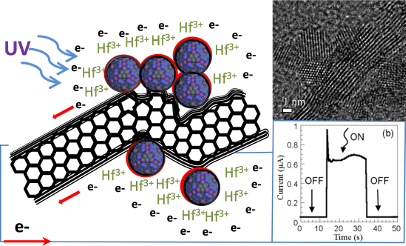
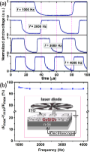
- employs HfO2-based devices and can therefore facilitate its integration into nanosystems. This further expedites the development and integration of new technologies based on HfO2 owing to already existing technological platforms. Major efforts are being directed worldwide towards mastering the


Charge and heat transport in soft nanosystems in the presence of time-dependent perturbations
Beilstein J. Nanotechnol. 2016, 7, 439–464, doi:10.3762/bjnano.7.39
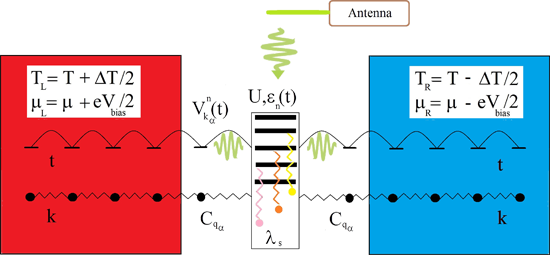
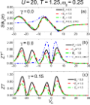
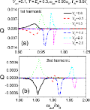
- Sant’Angelo, Via Cintia, I-80126 Napoli, Italy 10.3762/bjnano.7.39 Abstract Background: Soft nanosystems are electronic nanodevices, such as suspended carbon nanotubes or molecular junctions, whose transport properties are modulated by soft internal degrees of freedom, for example slow vibrational modes
- review has been to discuss common features of different soft nanosystems under external drive. The most interesting effects induced by time-dependent perturbations are obtained when the external forcing is nearly resonant with the slow vibrational modes. Indeed, not only the external forcing can enhance






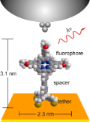
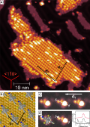
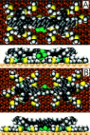
Rigid multipodal platforms for metal surfaces
Beilstein J. Nanotechnol. 2016, 7, 374–405, doi:10.3762/bjnano.7.34










High-bandwidth multimode self-sensing in bimodal atomic force microscopy
Beilstein J. Nanotechnol. 2016, 7, 284–295, doi:10.3762/bjnano.7.26
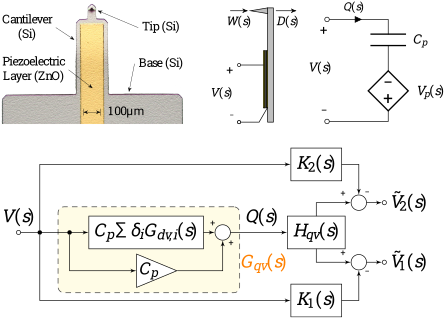
- . Acknowledgements This research was performed in the Laboratory for Dynamics and Control of Nanosystems (LDCN) at The University of Newcastle, Callaghan, NSW, Australia. The authors would like to acknowledge the support from the University of Newcastle, the Australian Research Council (ARC) and the CSIRO, Clayton


Green and energy-efficient methods for the production of metallic nanoparticles
Beilstein J. Nanotechnol. 2015, 6, 2354–2376, doi:10.3762/bjnano.6.243
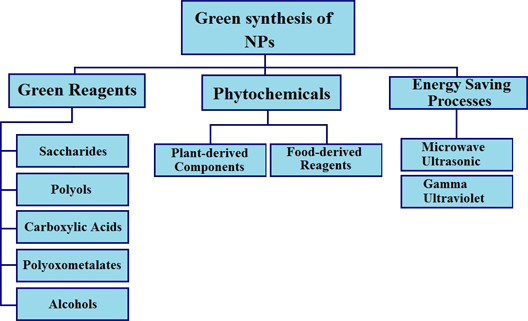
- , surface-enhanced Raman scattering (SERS) detection and catalysis of chemical reactions. Furthermore, biocompatible and functionalized NPs have applications in diagnosis and treatment of cancer. For these two purposes, fluorescent and magnetic nanocrystals for detection of tumors and also nanosystems for


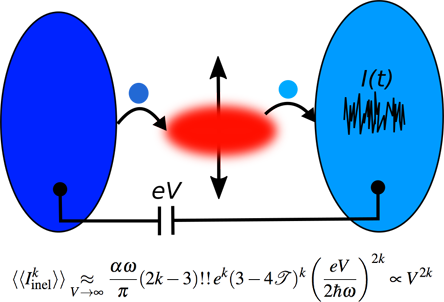
Large-voltage behavior of charge transport characteristics in nanosystems with weak electron–vibration coupling
Beilstein J. Nanotechnol. 2015, 6, 1853–1859, doi:10.3762/bjnano.6.188
Two-phase equilibrium states in individual Cu–Ni nanoparticles: size, depletion and hysteresis effects
Beilstein J. Nanotechnol. 2015, 6, 1811–1820, doi:10.3762/bjnano.6.185
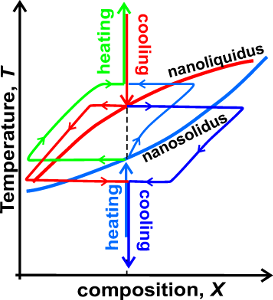
- nanosystems where the phase transition temperature becomes the function of composition as well [4][5][6][7]. The size and composition dependent results have been obtained mainly for melting and solidification of nanoparticles and they demonstrate the increase of solubilities of chemical elements, shift of
- equilibrium curves at phase diagrams downward in temperatures, etc. [8][9][10][11][12][13]. Hereby most of investigations have the restriction comparing only the energies of entire solid and entire liquid nanosystems. The problem is that the melting and solidification of nanomaterials are examples of the
- for individual Cu–Ni nanoparticles) providing new insights into first-order phase transition problem for nanosystems and basic concepts of phase diagram and solubility diagram in materials science. The structure of the paper is as follows. First we give in brief the general thermodynamic approach


Atomic scale interface design and characterisation
Beilstein J. Nanotechnol. 2015, 6, 1708–1711, doi:10.3762/bjnano.6.174

- surface adsorbates [28], and nanosystems structured from misfit layer compounds [29]. Planar and bended misfit structures, such as tubes, scrolls or nanoparticles, with intriguing electronic and magnetic characteristics have been synthesized, while calculations explained their electronic structure and
Thermal treatment of magnetite nanoparticles
Beilstein J. Nanotechnol. 2015, 6, 1385–1396, doi:10.3762/bjnano.6.143
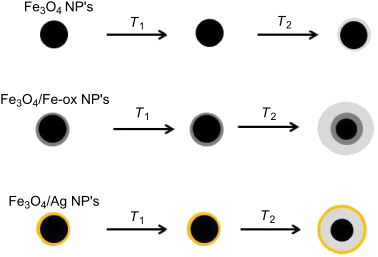
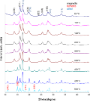
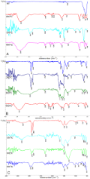
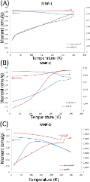
- assumed that phase transformation in nano-granular systems occurs from 200 to 600 °C with different contribution from both oxides, γ-Fe2O3 and α-Fe2O3 [20]. It should also be underlined that the data regarding the behavior of nanosystems at elevated temperatures are very different and generalizations




PLGA nanoparticles as a platform for vitamin D-based cancer therapy
Beilstein J. Nanotechnol. 2015, 6, 1306–1318, doi:10.3762/bjnano.6.135
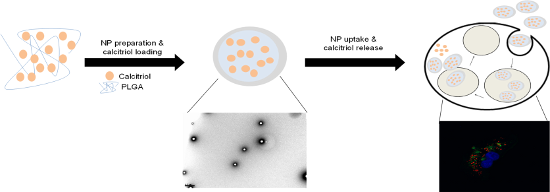
- discussed drawbacks continue to be highlighted as major challenges in developing formulations for clinical use. To overcome some of these limitations, we propose drug delivery systems for new calcitriol formulations. These nanosystems, namely nanoparticles (NPs), must meet several requirements such as


Characterization of nanostructured ZnO thin films deposited through vacuum evaporation
Beilstein J. Nanotechnol. 2015, 6, 971–975, doi:10.3762/bjnano.6.100
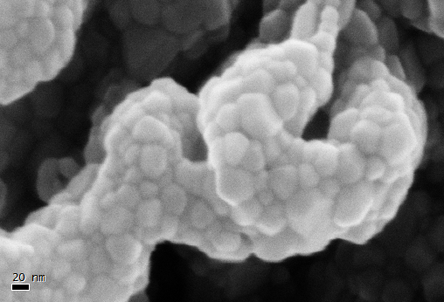
- nanodevices and nanosystems [1][2]. It has a wide band gap (3.37 eV), and a high exciton binding energy (60 meV) at room temperature, which allows for an efficient UV emission from the exciton, making it suitable for UV-emitting devices [3]. Depending on the form and the shape of the deposited thin films


Simulation tool for assessing the release and environmental distribution of nanomaterials
Beilstein J. Nanotechnol. 2015, 6, 938–951, doi:10.3762/bjnano.6.97
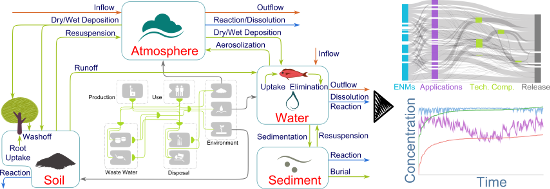
- Haoyang Haven Liu Muhammad Bilal Anastasiya Lazareva Arturo Keller Yoram Cohen Center for the Environmental Implications of Nanotechnology, California NanoSystems Institute, University of California, Los Angeles, CA 90095, USA Chemical and Biomolecular Engineering Department, University of


Magnetic properties of self-organized Co dimer nanolines on Si/Ag(110)
Beilstein J. Nanotechnol. 2015, 6, 777–784, doi:10.3762/bjnano.6.80
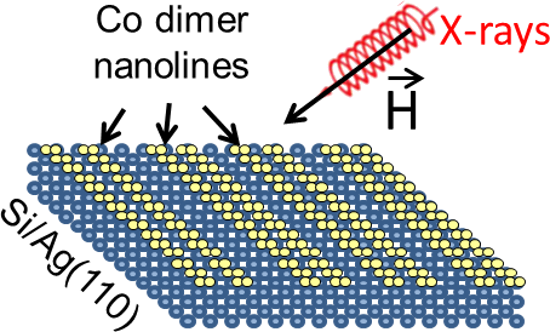
- to fundamental investigations of magnetism at the nanoscale. Since the discovery of the magnetoresistance effect in 1988, this field has been constantly developing novel nanosystems with unusual physical properties, highlighting the need to study structures of low dimensionality for a fundamental





