


Search results
Search for "narrow size distribution" in Full Text gives 102 result(s) in Beilstein Journal of Nanotechnology.
Fabrication of carbon nanospheres by the pyrolysis of polyacrylonitrile–poly(methyl methacrylate) core–shell composite nanoparticles
Beilstein J. Nanotechnol. 2017, 8, 1897–1908, doi:10.3762/bjnano.8.190

- should first realize the controlled and efficient fabrication of PAN nanoparticles and PAN–PMMA nanoparticles. Very recently, we reported a novel AIBN-initiated semicontinuous emulsion polymerization method for the synthesis of narrow-size-distribution PAN nanolatex at high AN concentration and low


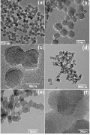

Calcium fluoride based multifunctional nanoparticles for multimodal imaging
Beilstein J. Nanotechnol. 2017, 8, 1484–1493, doi:10.3762/bjnano.8.148
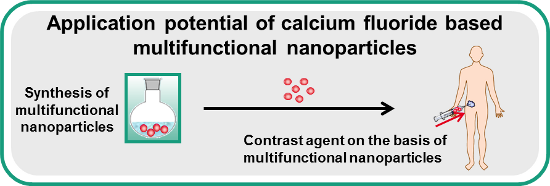
- ) show that these NPs are non-agglomerated and exhibit a narrow size distribution and a hydrodynamic particle diameter of 25–30 nm (number- and volume-weighted, Figure 1, see also DLS of the stabilized NPs, Figure S1, Supporting Information File 1 (number-weighted)). For the determination of the MR


Bright fluorescent silica-nanoparticle probes for high-resolution STED and confocal microscopy
Beilstein J. Nanotechnol. 2017, 8, 1283–1296, doi:10.3762/bjnano.8.130
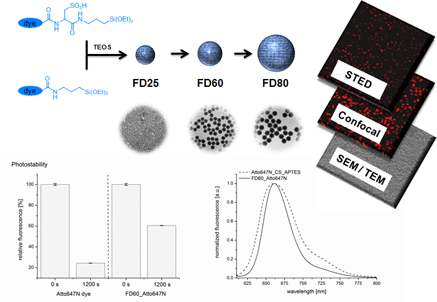
- narrow size distribution in the range of 100 nm to several micrometres, the method is less suited for the synthesis of silica nanoparticles with a narrow dispersity in the size regime below 100 nm. Thus many research studies have been based on this approach, developing new synthesis methods of
- diameters of the regrowth steps, but on the size distribution. The synthesized 25 nm large Star635-embedded silica nanoparticles, using the dye modified with cysteic acid, exhibited a mean particle diameter of 20 nm (FD25_Star635) with a narrow size distribution of 4% (Table 4). The particle size
- U.S. Food and Drug Administration (FDA) and are being tested in human clinical trials [42]. Although many other reports about the preparation of silica nanoparticles with a fluorescent label have been published [43], the synthesis of silica nanoparticles in the lower nanoscale range with a narrow size


Recombinant DNA technology and click chemistry: a powerful combination for generating a hybrid elastin-like-statherin hydrogel to control calcium phosphate mineralization
Beilstein J. Nanotechnol. 2017, 8, 772–783, doi:10.3762/bjnano.8.80
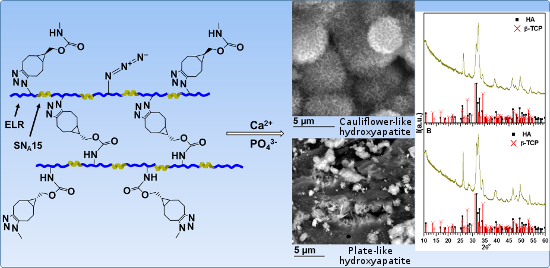
- size and morphologies of CP under mild reaction conditions, it is difficult to control the crystallinity and phase purity of the synthesized CP nanostructures with narrow size distribution [9][12]. Furthermore, the generation of delicate nanostructures, for example neuron-like morphology of amorphous



Functionalized TiO2 nanoparticles by single-step hydrothermal synthesis: the role of the silane coupling agents
Beilstein J. Nanotechnol. 2017, 8, 304–312, doi:10.3762/bjnano.8.33
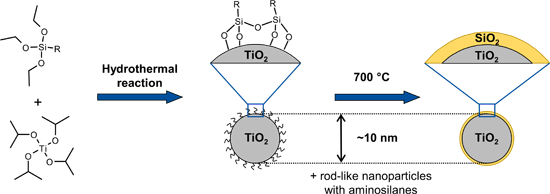
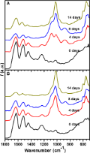
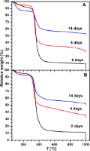
- (DTES)). Spherical nanoparticles (ca. 9 nm) with narrow size distribution were obtained by using DTES or by synthesis performed without silane coupling agents. Rod-like nanoparticles along with 9 nm spherical nanoparticles were formed using aminosilane coupling agents because of a combination of
- nm and a narrow size distribution. Samples functionalized with aminosilane (Figure 3c,d) exhibit similar nanoparticles, but also larger rod-like nanoparticles. Similar crystallite size and roughness of the rod-like nanostructures suggest that they are formed by oriented attachment [31] of the



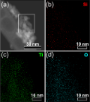
Comparison of four functionalization methods of gold nanoparticles for enhancing the enzyme-linked immunosorbent assay (ELISA)
Beilstein J. Nanotechnol. 2017, 8, 244–253, doi:10.3762/bjnano.8.27
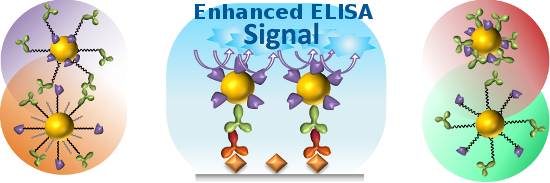
- ]. AuNPs possess the advantages of easy synthesis and narrow size distribution together with an easy and efficient surface modification compatible with linkers or biomolecules [16]. A critical step for obtaining gold complexes is the conjugation of biomolecules to AuNPs. Increasingly, the process of


From iron coordination compounds to metal oxide nanoparticles
Beilstein J. Nanotechnol. 2016, 7, 2074–2087, doi:10.3762/bjnano.7.198
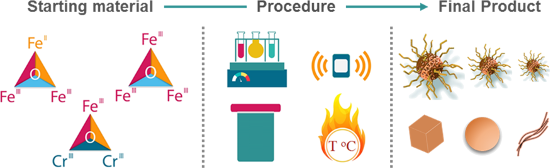
- control of formed micro- or nanostructures [19]. Most studies in this area relate to the thermal decomposition of metal complexes with ligands such as acetylacetonates, acetates and oleates. Good results in terms of narrow size distribution of nanoparticles are correlated with nucleation and growth stages
- obtain spherical small nanoparticles, NPT1a, with a narrow size distribution. The nanoparticle dispersion and diameter distribution was evaluated by dynamic light scattering (DLS) (Supporting Information File 1, Figure S4). It was confirmed that the high amount of stabilizing agent for NPT1a provided


Fundamental properties of high-quality carbon nanofoam: from low to high density
Beilstein J. Nanotechnol. 2016, 7, 2065–2073, doi:10.3762/bjnano.7.197
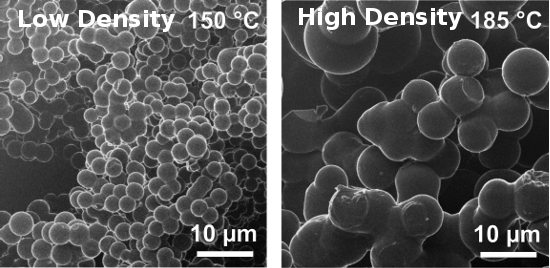
- µm. The low-density foams consist of nearly monodisperse small spheres with diameters between 2 and 3 µm. These micropearls have a narrow size distribution. The sample morphology is quite uniform over large areas. Occasionally, the micropearls are grown together forming larger units. However, in most
- microspheres generally have a narrow size distribution. An attractive interaction keeps the spheres together, forming the overall foam structure. We find that if other variables are kept constant, the size of the spheres is dependent on the process temperature. At higher temperatures we still find spherical


Microwave synthesis of high-quality and uniform 4 nm ZnFe2O4 nanocrystals for application in energy storage and nanomagnetics
Beilstein J. Nanotechnol. 2016, 7, 1350–1360, doi:10.3762/bjnano.7.126
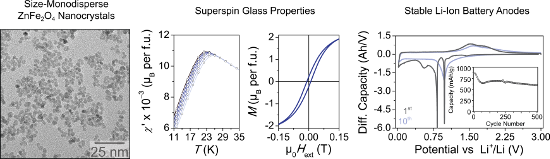
- narrow size distribution hold promise for many applications in different areas ranging from biomedicine to electronics and energy storage. Herein, the microwave-assisted sol–gel synthesis and thorough characterization of size-monodisperse zinc ferrite nanoparticles of spherical shape is reported. X-ray
- shape of the ZFO nanoparticles was investigated by means of transmission electron microscopy (TEM). The low-magnification bright-field TEM image in Figure 1a shows that they are spherical in shape with a narrow size distribution around 4 nm. Both high-resolution TEM (HRTEM, Figure 1b) and selected-area


Efficient electron-induced removal of oxalate ions and formation of copper nanoparticles from copper(II) oxalate precursor layers
Beilstein J. Nanotechnol. 2016, 7, 852–861, doi:10.3762/bjnano.7.77
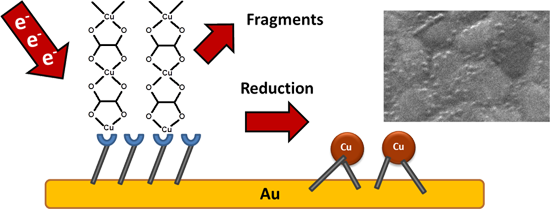
- confirms that copper(II) oxalate is decomposed under electron exposure and yields a nanoparticulate material with relatively narrow size distribution. X-ray photoelectron spectroscopy In order to elucidate the nature of the nanoparticles observed by HIM and obtain further evidence for the decomposition and
- to penetrate deeper in the material than 50 eV electrons [42]. HIM also reveals that degradation of copper(II) oxalate yields a nanoparticulate material with relatively narrow size distribution as compared to similar techniques. The advantage of the process is that no thermal post processing is
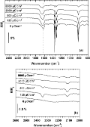


Microwave solvothermal synthesis and characterization of manganese-doped ZnO nanoparticles
Beilstein J. Nanotechnol. 2016, 7, 721–732, doi:10.3762/bjnano.7.64
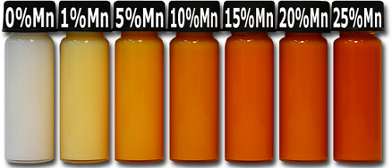
- content, high efficiency, and surface modification [47]. MSS products are characterised by homogeneous morphology, purity, narrow size distribution and low agglomeration. The present paper contains an attempt to obtain ZnO nanoparticles with a Mn2+ dopant content of up to 25 mol %. For the synthesis we


Hierarchical coassembly of DNA–triptycene hybrid molecular building blocks and zinc protoporphyrin IX
Beilstein J. Nanotechnol. 2016, 7, 697–707, doi:10.3762/bjnano.7.62
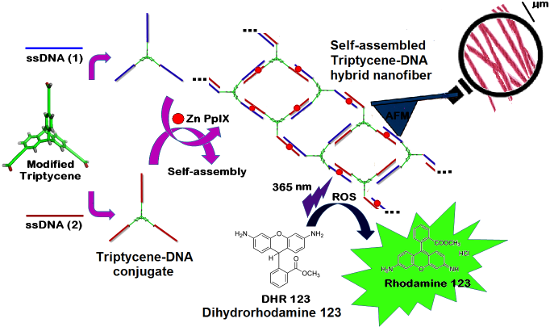
- –TPA triconjugate self-assembly The average size distributions of the self-assembled DNA–TPA di- and triconjugates in the presence and absence of Zn PpIX were evaluated by DLS (Table 2 and Supporting Information File 1, Figure S11). Similar to observations of native PAGE, a narrow size distribution was
- polydispersity index (PDI) whereas the PDI decreases in the presence of Zn PpIX. A narrow size distribution for the coassembly of DNA–TPA triconjugates with Zn PpIX correlates well with the appearance of higher-ordered structures in the native PAGE. AFM imaging and analysis of self-assembled DNA nanostructures


Antibacterial activity of silver nanoparticles obtained by pulsed laser ablation in pure water and in chloride solution
Beilstein J. Nanotechnol. 2016, 7, 465–473, doi:10.3762/bjnano.7.40
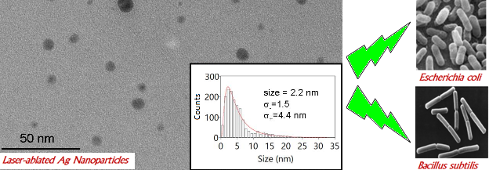
- ). Conclusion We have synthetized AgNPs with a small average diameter and a narrow size distribution using the pulsed laser ablation in liquid method (PLAL). The diameter of the resulting nanoparticles lies in the size range known to have the highest antimicrobial activity. The AgNPs are effective against both


pH-Triggered release from surface-modified poly(lactic-co-glycolic acid) nanoparticles
Beilstein J. Nanotechnol. 2015, 6, 2504–2512, doi:10.3762/bjnano.6.260
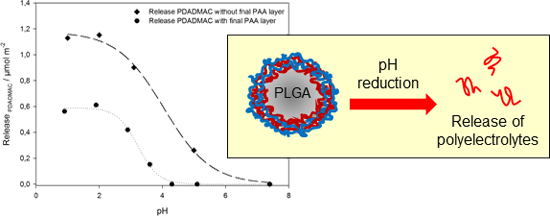
- ), and zeta potential. PLGA nanoparticles were (249 ± 4) nm in diameter, showing a narrow size distribution (PDI 0.04 ± 0.02) and a zeta potential of (−53 ± 1) mV. After adsorption of the initial layer of polyethylenimine (PEI), the particles were washed as described in the Experimental section. The


Silica-coated upconversion lanthanide nanoparticles: The effect of crystal design on morphology, structure and optical properties
Beilstein J. Nanotechnol. 2015, 6, 2290–2299, doi:10.3762/bjnano.6.235
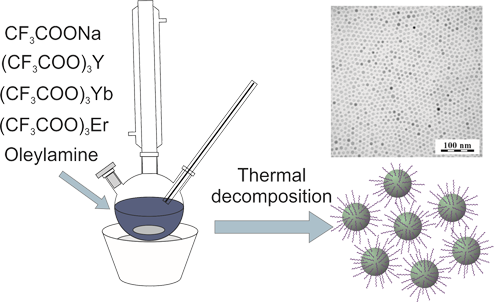
- , as documented by the polydispersity index (PDI) ranging from 1.07 to 1.30. Nearly monodispersed particles (PDI = 1.07), which are supposed to possess uniform physical, chemical and biological properties, were obtained at 350 °C. Small size (about 10 nm) and narrow size distribution are important for






Metal hydrides: an innovative and challenging conversion reaction anode for lithium-ion batteries
Beilstein J. Nanotechnol. 2015, 6, 1821–1839, doi:10.3762/bjnano.6.186
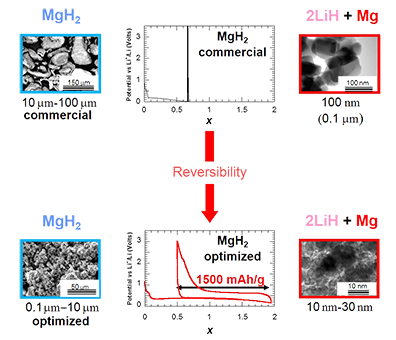
- , composites containing MgH2 nanoparticles (with a narrow size distribution of 1–10 nm) which were well-dispersed into a porous carbon host have been prepared by Zlotea et al. [68]. These were produced with varying metal content up to 50 wt % and were designed to be used as a negative electrode for Li-ion










Synthesis, characterization and in vitro biocompatibility study of Au/TMC/Fe3O4 nanocomposites as a promising, nontoxic system for biomedical applications
Beilstein J. Nanotechnol. 2015, 6, 1677–1689, doi:10.3762/bjnano.6.170
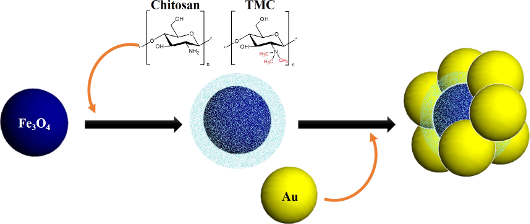
- that the true nanoparticle diameter could not be determined using the DLS technique. Despite this, the DLS results revealed a narrow size distribution and also showed the reasonable increase in nanoparticle diameter as the polymer layers and Au were added onto the magnetic core. The attachment of Au




Peptide-equipped tobacco mosaic virus templates for selective and controllable biomineral deposition
Beilstein J. Nanotechnol. 2015, 6, 1399–1412, doi:10.3762/bjnano.6.145
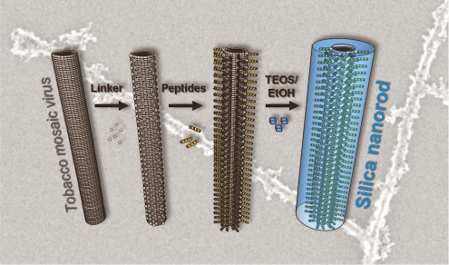
- advantages, namely high availability, robustness and an exact replication of the particle shape and dimension, which are genetically determined and result in a narrow size distribution. Different species such as the fibrous bacteriophage M13, icosahedral cowpea mosaic virus (CPMV), or tubular tobacco mosaic




PLGA nanoparticles as a platform for vitamin D-based cancer therapy
Beilstein J. Nanotechnol. 2015, 6, 1306–1318, doi:10.3762/bjnano.6.135
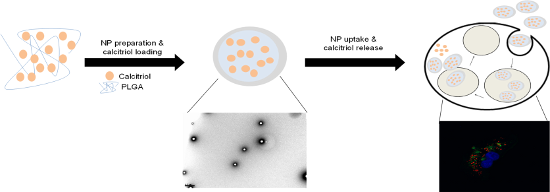
- not significantly different between cholecalciferol and calcitriol-loaded NPs (p > 0.05). The prepared systems exhibited a narrow size distribution (PDI ≤ 0.1). TEM analysis revealed spherical- and uniform-shaped PLGA nanoparticles, as shown in Figure 1. The diameter of the nanoparticles revealed by


Addition of Zn during the phosphine-based synthesis of indium phospide quantum dots: doping and surface passivation
Beilstein J. Nanotechnol. 2015, 6, 1237–1246, doi:10.3762/bjnano.6.127
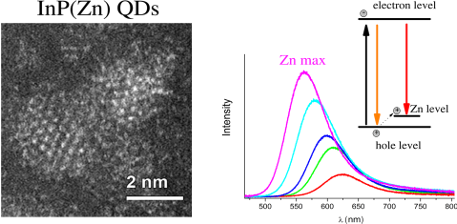
- 10.3762/bjnano.6.127 Abstract Zinc-doped InP(Zn) colloidal quantum dots (QDs) with narrow size distribution and low defect concentration were grown for the first time via a novel phosphine synthetic route and over a wide range of Zn doping. We report the influence of Zn on the optical properties of the
- excitonic Bohr radius and the lower toxicity in comparison to the widely used II–VI compounds [5]. For the practical application QDs should meet certain requirements: low defect concentration, narrow size distribution, and physico-chemical stability. The synthesis of these QDs should be reproducible


Nano-contact microscopy of supracrystals
Beilstein J. Nanotechnol. 2015, 6, 1229–1236, doi:10.3762/bjnano.6.126
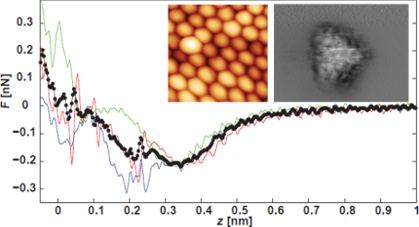
- tunnelling microscopy and spectroscopy. Keywords: dynamic force microscopy; nanoparticle; non-contact atomic force microscopy; point contact imaging; scanning probe microscopy; supracrystal; Introduction Artificial solids comprising extended assemblies of nanocrystals with a narrow size distribution

![[Graphic 1]](/bjnano/content/inline/2190-4286-6-126-i1.png?max-width=637&scale=1.18182) = 20 pA, ...
= 20 pA, ...


Synthesis, characterization and in vitro effects of 7 nm alloyed silver–gold nanoparticles
Beilstein J. Nanotechnol. 2015, 6, 1212–1220, doi:10.3762/bjnano.6.124
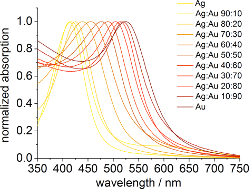
- degree of monodispersity. The nanoparticles showed a narrow size distribution with an average particle size of ≈6 nm, except for the Ag/Au 90:10 nanoparticles that exhibited an average diameter of 8 nm. Figure 2 shows representative DCS graphs of samples of three different compositions after ligand


Magnetic properties of self-organized Co dimer nanolines on Si/Ag(110)
Beilstein J. Nanotechnol. 2015, 6, 777–784, doi:10.3762/bjnano.6.80
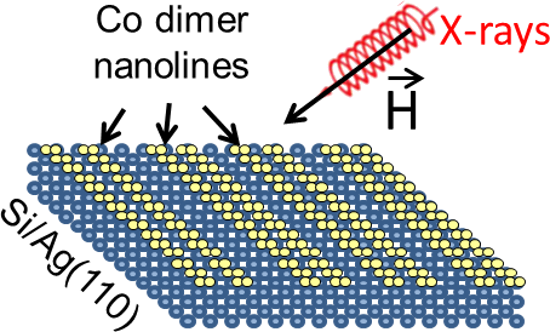
- transition metal nanostructures, it appears interesting to also study the growth of such objects on a non-metallic template. We underline that since self-organized growth allows the fabrication of a high-density of nanostructures with a narrow size distribution, this route of nanofabrication opens up the


Silica micro/nanospheres for theranostics: from bimodal MRI and fluorescent imaging probes to cancer therapy
Beilstein J. Nanotechnol. 2015, 6, 546–558, doi:10.3762/bjnano.6.57

- Gd2(CO3)3:Tb complex was found to be 8–12 nm with high degree of narrow size distribution. The coating with silica was confirmed by HRTEM studies in which the outer material covering the hybrid nanocomposites appeared as a thin layer with diameter of 6 nm. The magnetic properties of the NPs were


Conformal SiO2 coating of sub-100 nm diameter channels of polycarbonate etched ion-track channels by atomic layer deposition
Beilstein J. Nanotechnol. 2015, 6, 472–479, doi:10.3762/bjnano.6.48
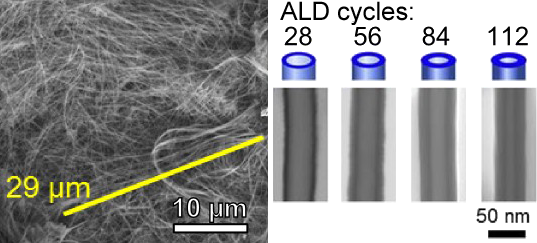
- narrow size distribution [4][5][6]. Typically, polymers such as polycarbonate (PC), polyethylene terephthalate, and polyimide are employed as templates. Hydrophilicity is sometimes improved by immersing the etched membrane in a surfactant solution such as polyvinylpyrrolidone. The addition of surfactants
- a narrow size distribution of the cylindrical channels in the template. This result is further confirmed by high resolution scanning electron microscopy (HRSEM) of nanotubes released from the PC matrix by dissolving the polymer. The chemical composition of the deposited layer is analyzed by X-ray
- analysed by SAXS. Figure 5a shows the intensity profile deduced from the SAXS pattern for an uncoated reference membrane (orange) and for the membrane coated with SiO2 in 56 ALD cycles (blue). The distinct oscillations in both cases clearly indicate a narrow size distribution of the channels both before





