Search results
Search for "phosphorus" in Full Text gives 83 result(s) in Beilstein Journal of Nanotechnology.
Ultralight super-hydrophobic carbon aerogels based on cellulose nanofibers/poly(vinyl alcohol)/graphene oxide (CNFs/PVA/GO) for highly effective oil–water separation
Beilstein J. Nanotechnol. 2018, 9, 508–519, doi:10.3762/bjnano.9.49
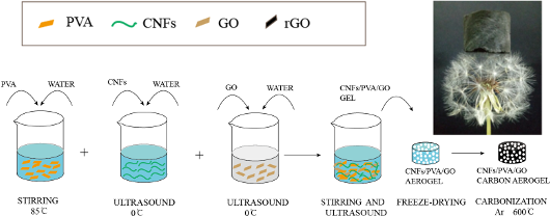
- (H2O2, 30%), potassium permanganate (KMnO4), concentrated sulfuric acid (H2SO4, 98%), hydrochloric acid (HCl), sodium nitrate (NaNO3), sodium chlorite (NaClO2), phosphorus pentoxide (P2O5), potassium persulfate (K2S2O8) and ammonium hydroxide (NH3·H2O) were purchased from Nanjing Chemical Reagent Co


Comparative study of post-growth annealing of Cu(hfac)2, Co2(CO)8 and Me2Au(acac) metal precursors deposited by FEBID
Beilstein J. Nanotechnol. 2018, 9, 91–101, doi:10.3762/bjnano.9.11
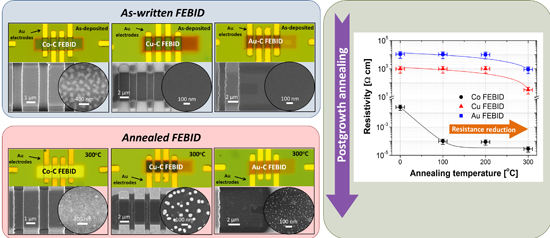
- thick CuxFyCzOz and 50 nm thick AuxCyOz depositions. Each defined a rectangular pattern of 20 × 5 μm2 onto predefined 100 nm thick Au electrodes. These electrodes were obtained by standard UV lithography on phosphorus-doped Si wafers (8 mΩ·cm) with a 200 nm thick SiO2 layer for electrodes isolation. The
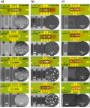


Comparing postdeposition reactions of electrons and radicals with Pt nanostructures created by focused electron beam induced deposition
Beilstein J. Nanotechnol. 2017, 8, 2410–2424, doi:10.3762/bjnano.8.240
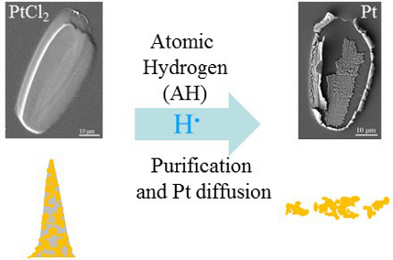
- could also be exploited to help redisperse metals, such as Pt, which have nucleated as a result of sintering during catalysis. Other Pt-containing deposits In contrast to the effectiveness of AH towards purification of PtCl2, there was no measureable removal of carbon or phosphorus contaminants for
- ]) a decrease in carbon content is observed from 81% to 65% upon exposing the PtCx deposits to a high-pressure AH source. However, the current work demonstrates that the efficiency of AH-mediated carbon and phosphorus purification is significantly lower than that of halogen atom removal. This
- difference in efficiency may be attributed to the number of elementary steps required to generate a stable gas-phase species from carbon (C(ads) + H(g) →→ CH4(g)) or phosphorus (P(ads) + H(g) →→ PH3(g)), coupled with the reversibility of AH addition/abstraction reactions (e.g., CH2(ads) + H(g) CH3(ads); CH2




Optical contrast and refractive index of natural van der Waals heterostructure nanosheets of franckeite
Beilstein J. Nanotechnol. 2017, 8, 2357–2362, doi:10.3762/bjnano.8.235
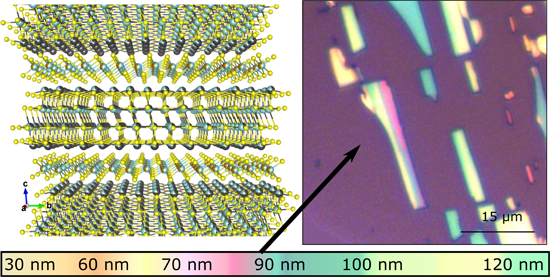
- bandgap (below 0.7 eV) and p-type doping, and that they are very resilient upon atmospheric exposure. These characteristics makes franckeite an excellent alternative to black phosphorus which tends to degrade quickly upon air exposure [20][21][22][23]. Here we study the thickness dependence of the optical


Self-assembly of chiral fluorescent nanoparticles based on water-soluble L-tryptophan derivatives of p-tert-butylthiacalix[4]arene
Beilstein J. Nanotechnol. 2017, 8, 1825–1835, doi:10.3762/bjnano.8.184
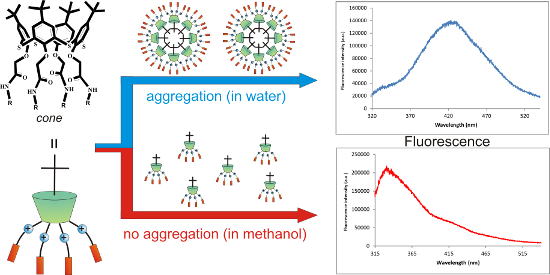
- dried under reduced pressure over phosphorus pentoxide. L-tryptophan ethyl ester hydrochloride 2: 1H NMR (400 MHz, 298 K, DMSO-d6) δ 1.08 (t, 3JHH = 7.1 Hz, 3H, CH3CH2O–), 3.22–3.30 (m, 2H, CHCH2Trp), 4.07 (q, 3JHH = 7.1 Hz, 2H, CH3CH2O–), 4.19 (m, 1H, NНCHСО), 6.99–7.53 (m, 5H, ArHTrp), 8.55 (s, 1Н
- washed with water and dried under reduced pressure over phosphorus pentoxide. 5,11,17,23-Tetra-tert-butyl-25,26,27,28-tetrakis[(N-(3,3-dimethyl-3-{(ethoxycarbonyl[S-(1H-indol-3-yl)methyl]methyl)amidocarbonylmethylammonio}propyl)carbamoylmethoxy]-2,8,14,20-tetrathiacalix[4]arene tetrabromide (cone-8



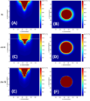
Laser processing of thin-film multilayer structures: comparison between a 3D thermal model and experimental results
Beilstein J. Nanotechnol. 2017, 8, 1749–1759, doi:10.3762/bjnano.8.176
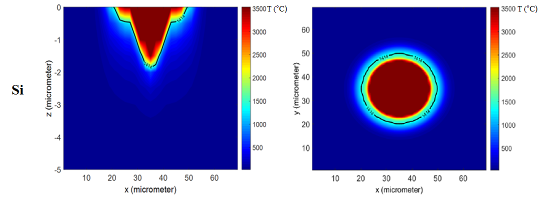
- Si layer with a phosphorus- or boron-containing liquid before laser processing the surface for n- and p-type TFTs respectively [8]. Another important application is mask repairing for MEMS/NEMS device fabrication [4]. There are also many potential applications in biomedical engineering. It’s been





Group-13 and group-15 doping of germanane
Beilstein J. Nanotechnol. 2017, 8, 1642–1648, doi:10.3762/bjnano.8.164
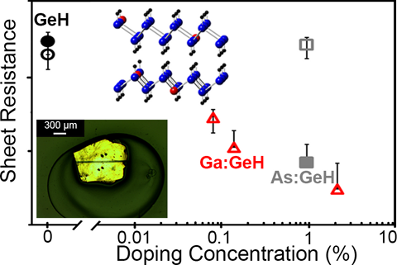
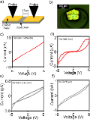
- need of extrinsic dopants to access devices with lower resistivity. In previous studies, the resistivity of germanane was reduced through the incorporation of phosphorus only when activated in the presence of atmospheric water [29]. Recently [30], undoped germanane field-effect transistors were
- lattice of the CaGe2 precursor [29][31]. Providing that these elements are retained in the germanium framework after the topotactic deintercalation process, the effect on the electronic transport behavior of GeH should be appreciable. Having previously grown phosphorus-doped GeH (P:GeH) [29] using this
- P:GeH [29], H2O-containing atmospheres are necessary to activate the phosphorus (group 15) dopants. For Ga:GeH, the presence of atmospheric water, while significantly increasing conductivity, also introduces a significantly non-linear behavior in the I–V plots, suggesting that H2O plays an additional



Two-dimensional silicon and carbon monochalcogenides with the structure of phosphorene
Beilstein J. Nanotechnol. 2017, 8, 1338–1344, doi:10.3762/bjnano.8.135
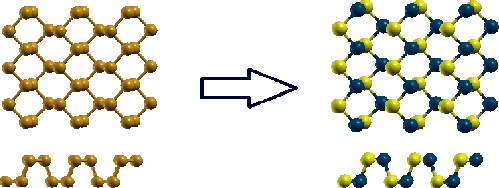
- electronic structure that are markedly different from those of graphene, with, for instance, the existence of a finite bandgap in the band structure [5]. One of the latest newcomers in the family of two-dimensional materials is phosphorene [6][7][8][9], which corresponds to a single layer of black phosphorus
- [10][11], one of the many phases of crystalline phosphorus. Among other properties [12][13][14][15], the values of the carrier mobility and of the on–off ratio of transistors made from phosphorene are intermediate between the values of graphene and those of transition metal dichalcogenides, making
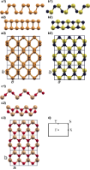
- phosphorous [33]. Within this system each phosphorus atom is covalently bonded with three adjacent phosphorus atoms to form a puckered honeycomb structure [33][34] (Figure 1a). For the sake of simplicity this phosphorene monolayer will be denoted as “experimental structure”. Upon optimization at the PBE level


Fully scalable one-pot method for the production of phosphonic graphene derivatives
Beilstein J. Nanotechnol. 2017, 8, 1094–1103, doi:10.3762/bjnano.8.111
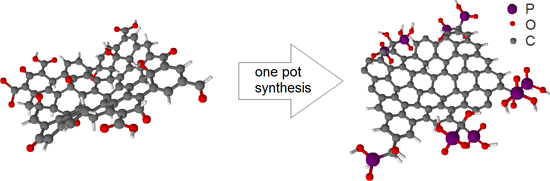
- simultaneous reduction to produce phosphonated reduced graphene oxide in a novel, fully scalable, one-pot method. The phosphonic derivative of graphene was obtained through the reaction of graphene oxide with phosphorus trichloride in water. The newly synthesized reduced graphene oxide derivative was fully
- described a ball milling process to efficiently functionalize and exfoliate pristine graphite directly into graphene phosphonic acid. In the first step, graphite is ball-milled for 48 h with red phosphorus to produce a derivative that is edge-functionalized with phosphorus. Then, upon exposure to air
- retardation [4][11], catalysis [12], tissue engineering [13], and purification air and water [6][14]. Results and Discussion The phosphonic derivative of graphene (GO-P) was obtained through the reaction of GO with phosphorus trichloride in water. Phosphorous trichloride reacts with water to produce


Nanostructured carbon materials decorated with organophosphorus moieties: synthesis and application
Beilstein J. Nanotechnol. 2017, 8, 485–493, doi:10.3762/bjnano.8.52
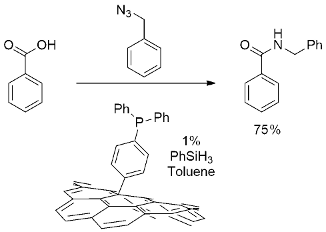
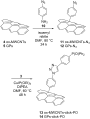
- corresponding phosphine derivatives and applied one of the materials produced as heterogeneous organocatalyst in a Staudinger ligation reaction. Keywords: azides; click chemistry; heterogeneous catalysis; organocatalysis; phosphorus; Introduction The term of carbon nanomaterial (CNMs) comprises many different
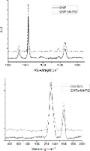
- 12 was confirmed by the signal at 2118 cm−1 in the FTIR spectra (see Supporting Information File 1, Figures S9 and S10). The ICP-AES was used to determine the amount of phosphorus in the complex matrix. The samples were previously mineralized by treatment with nitric acid and a hydrogen peroxide
- phosphorus-phosphorus, trichlorosilane mediated oxygen transfer protocol, developed by Hamilton [16] and Wu [36], was used with compound 6 (Scheme 4). The reaction was carried out in a Pyrex tube, heating for 48 h, a degassed solvent solution of compound 6, trichlorosilane and triethyl phosphite as final





Phosphorus-doped silicon nanorod anodes for high power lithium-ion batteries
Beilstein J. Nanotechnol. 2017, 8, 222–228, doi:10.3762/bjnano.8.24
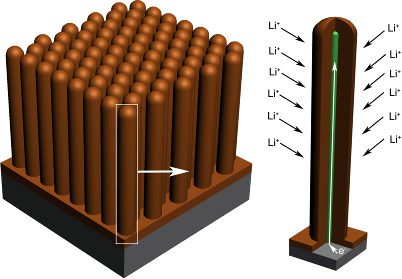
- Chao Yan Qianru Liu Jianzhi Gao Zhibo Yang Deyan He School of Physics and Information Technology, Shaanxi Normal University, Xi’ an 710119, China School of Physical Science and Technology, Lanzhou University, Lanzhou 730000, China 10.3762/bjnano.8.24 Abstract Heavy-phosphorus-doped silicon anodes
- performance for Si-based anodes. In this work, we prepared heavy-phosphorus-doped silicon anodes on CuO nanorods for high power LIBs. In our experiments, once the voltage cut-off window was set in the range that only covers the discharge–charge range of Si, the conductivity of CuO nanorods was highly
- increased by the irreversible reaction with Li-ion during the first discharge, and the lithiated CuO played the role of an electronic conductor in the following cycles. In addition, the silicon layer was heavily doped by phosphorus and delivered a conductivity as high as 54.0 S/cm, which is vital for the


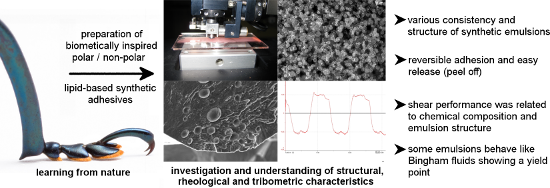
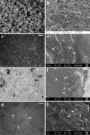
Structural and tribometric characterization of biomimetically inspired synthetic "insect adhesives"
Beilstein J. Nanotechnol. 2017, 8, 45–63, doi:10.3762/bjnano.8.6


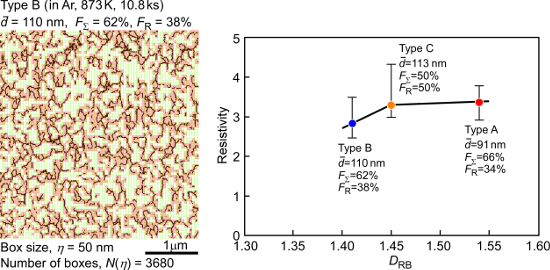
A new approach to grain boundary engineering for nanocrystalline materials
Beilstein J. Nanotechnol. 2016, 7, 1829–1849, doi:10.3762/bjnano.7.176
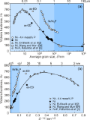
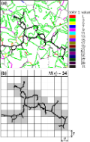
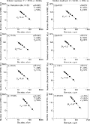
- relationship between the Vickers hardness and the average grain size for pure nickel (Ni) and nickel–phosphorus (Ni–P) alloy specimens produced by electrodeposition and subsequent annealing. The data obtained from our recent investigation are shown together with those for pure Ni [62][64] and Ni–1.2 mass % P
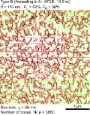
- alloy [3] reported by other researchers. The state of the supersaturated solid solution in as-electrodeposited Ni–4.4 mass % P alloy specimens was confirmed, although the Ni–P phase diagram [65] indicates that the solubility limit of phosphorus into nickel matrix is 0.17 mass %. Accordingly, the Ni3P







3D printing of mineral–polymer bone substitutes based on sodium alginate and calcium phosphate
Beilstein J. Nanotechnol. 2016, 7, 1794–1799, doi:10.3762/bjnano.7.172
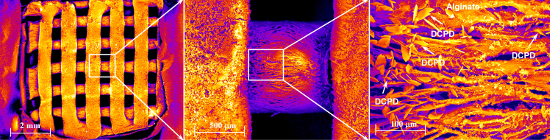
- %. Glutamic acid was used to maintain a low pH value. Then, a solution of ammonium hydrogen phosphate (CAS number 7783-28-0) with concentration of 5 wt % was added as the source of phosphorus in the system. The second “ink” was calcium chloride (CAS number 10043-52-4) water solution with a concentration of 10


Ultrastructural changes in methicillin-resistant Staphylococcus aureus induced by positively charged silver nanoparticles
Beilstein J. Nanotechnol. 2015, 6, 2396–2405, doi:10.3762/bjnano.6.246
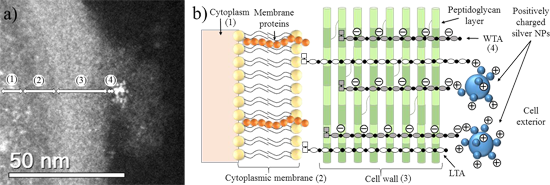
- permeability [38]. After penetrating the cell membrane, AgNPs can also alter sulfur-containing amino acids and phosphorus (a main constituent of DNA), inhibiting replication via attaching to the bacterial ribosome [39][40]. The proteomic signatures of AgNP-treated E. coli demonstrated an accumulation of


Electrochemical coating of dental implants with anodic porous titania for enhanced osteointegration
Beilstein J. Nanotechnol. 2015, 6, 2183–2192, doi:10.3762/bjnano.6.224
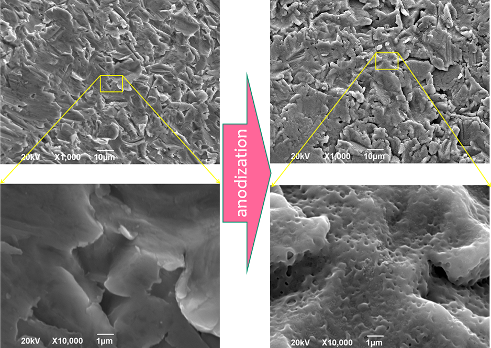
- at %), given the deep penetration (≥1 µm) of the energetic, primary electrons (10 kV) with respect to the APT thickness (≈100 nm), such that the probed volume is mainly in the bulk of the Ti implant under the surface. In Figure 3b a new type of contamination, phosphorus, also appears at a


Heterometal nanoparticles from Ru-based molecular clusters covalently anchored onto functionalized carbon nanotubes and nanofibers
Beilstein J. Nanotechnol. 2015, 6, 1287–1297, doi:10.3762/bjnano.6.133
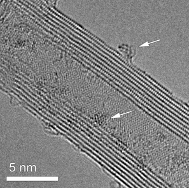
- SIMS as well as model compounds in solution on activated carbon functionalized with the same chelating phosphines [52]. It was shown to take place effectively to give covalent anchoring of the cluster in a molecular form via metal–phosphorus bonds. Thermal activation Thermogravimetric analysis of the




Addition of Zn during the phosphine-based synthesis of indium phospide quantum dots: doping and surface passivation
Beilstein J. Nanotechnol. 2015, 6, 1237–1246, doi:10.3762/bjnano.6.127
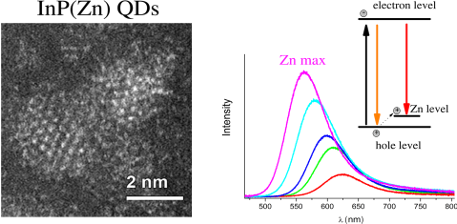
- thermal decomposition of sililphosphides [11]. This is a quite complicated method because of the reactivity and inflammability of such substances. Recently, we developed the simplest way to date to produce such material by using phosphine (PH3) as a source of phosphorus [6] and indium carboxilates as a
- case a covering of the particles with zinc myristate occurs. During the synthesis zinc myristate covers the nucleus and prevents the particle growth and at the same time leads to an increase of the luminescence intensity through the reduction of phosphorus dangling bonds. The real Zn amount in the


Simple approach for the fabrication of PEDOT-coated Si nanowires
Beilstein J. Nanotechnol. 2015, 6, 640–650, doi:10.3762/bjnano.6.65
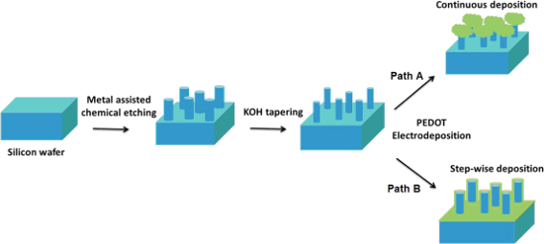
- as chemical etching and electrochemical deposition. To our knowledge, these two processes have never been combined for the production of such a hybrid material. Experimental SiNW etching and tapering Before chemical etching, the Si wafers (phosphorus-doped, <100> oriented, resistivity 1–10 Ω∙cm




Tm-doped TiO2 and Tm2Ti2O7 pyrochlore nanoparticles: enhancing the photocatalytic activity of rutile with a pyrochlore phase
Beilstein J. Nanotechnol. 2015, 6, 605–616, doi:10.3762/bjnano.6.62
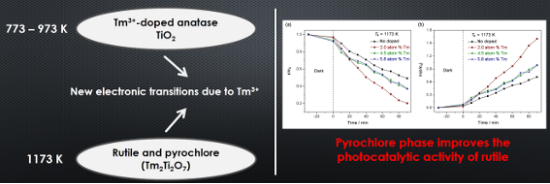
- chemistry properties. For example, the TiO2 doping and the annealing temperatures have been widely studied to control its crystalline structure, optical and electronic properties, etc. Marschall and Wang reported doping with non-metals such as boron, carbon, nitrogen, fluorine, iodine, phosphorus, or sulfur


Entropy effects in the collective dynamic behavior of alkyl monolayers tethered to Si(111)
Beilstein J. Nanotechnol. 2015, 6, 583–594, doi:10.3762/bjnano.6.60
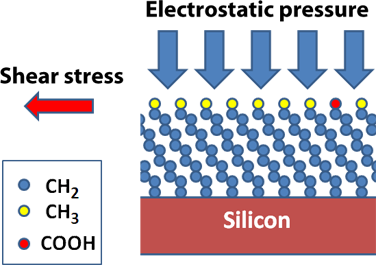
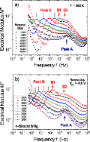
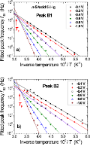
- molecules with a UV-assisted liquid phase process [40][64]. A low-doped n-type Si (phosphorus doped, 1–10 Ω·cm resistivity, Siltronix) was chosen to obtain rectifying junctions. After etching, the Si(111):H surface was used immediately for covalent binding of the mixed n-dodecyl/undecanoic acid-terminated




Overview about the localization of nanoparticles in tissue and cellular context by different imaging techniques
Beilstein J. Nanotechnol. 2015, 6, 263–280, doi:10.3762/bjnano.6.25
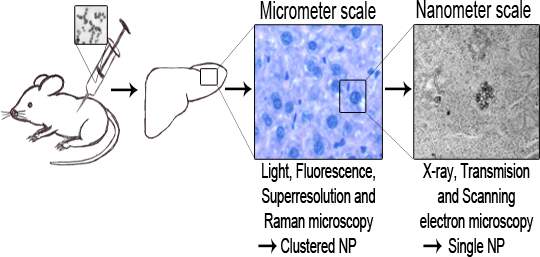
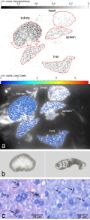
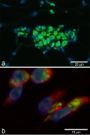
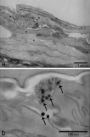
- ) allows for 2D-mapping of tissues or cells. As a result, the distribution of specific elements such as phosphorus, calcium and iron can be identified [173] and conclusions about toxic effects induced by NP may be drawn. In summary, TEM is thus regarded as a useful addition to a series of microscopic tools



X-ray photoelectron spectroscopy of graphitic carbon nanomaterials doped with heteroatoms
Beilstein J. Nanotechnol. 2015, 6, 177–192, doi:10.3762/bjnano.6.17
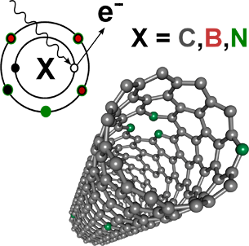
- carbon in the periodic table, nitrogen and boron, with phosphorus starting to emerge as an interesting new alternative. Hundreds of studies have used XPS for analyzing the concentration and bonding of dopants in various materials. Although the majority of works has concentrated on nitrogen, important
- . This serves as a prerequisite to further analyze the dopant core states, namely 1s for nitrogen and boron and 2p for phosphorus. Finally, when the background-subtracted areas aX of the responses of the sought elements X are multiplied by the corresponding energy-dependent sub-shell photoionisation
- cross sections σx [60], their ratios to the area of the carbon response gives the dopant concentration in atomic percent (atom %). As an example, the atomic concentration of nitrogen cN would be evaluated as For phosphorus it should be noted that for the commonly considered photoemission from the 2p


Rapid degradation of zinc oxide nanoparticles by phosphate ions
Beilstein J. Nanotechnol. 2014, 5, 2007–2015, doi:10.3762/bjnano.5.209
- ZnHPO4 which generally precipitates faster than tertiary zinc phosphate despite its higher solubility [31]. Any intermediate value lower than 0.67 reflects a partial degradation of the ZnO-NP. The error in the determination of the ratio is in the range of 10%. For phosphorus concentrations lower than 1
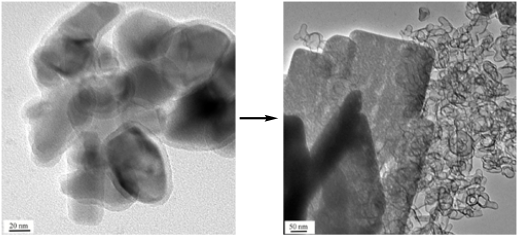
- silica remained as heaps of empty shells clearly separated from the crystals (Figure 5, right). The separation of the two components was confirmed by EDX analysis of the two regions: the left regions (large crystals) shows zinc and phosphorus but no silicon while the right region (empty shells) shows
- silicon but no zinc or phosphorus. The degradation of the zinc oxide core of the coated particles is therefore complete. The silica shell (thickness 3–6 nm) is obviously not sufficiently compact to prevent the access of water to the ZnO core. Silica NP and shells formed by the Stöber process have a


Silicon and germanium nanocrystals: properties and characterization
Beilstein J. Nanotechnol. 2014, 5, 1787–1794, doi:10.3762/bjnano.5.189
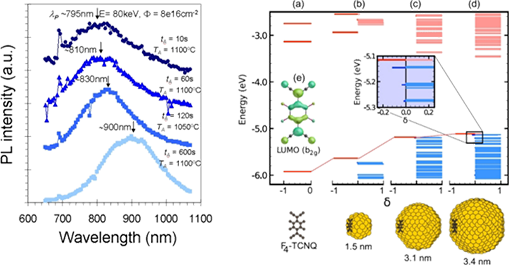
- formation and the formation of the sub-oxide interface states [23]. As ion implantation is unavoidable for CMOS technology today, it is desirable to use it not only for the fabrication of NCs but for the doping of NCs as well. Over the past decade, phosphorus-and erbium-doped Si NCs have attracted a great
- are strongly overlapping [28]. Moreover, it was reported that the density of interface-related defects may be decreased by light phosphorus doping [29]. An alternative method to the doping of NCs by using ion implantation is by means of neutron transmutation doping (NTD). NTD is a technique commonly
- annealing conditions (yielding control over of the NC size). Interaction of Si NCs with Er ions has attracted a special attention due to the possibility of producing optoelectronic devices operating in the telecommunications band around 1.5 μm. Recent studies have shown that doping with phosphorus can