


Search results
Search for "physical vapor deposition" in Full Text gives 53 result(s) in Beilstein Journal of Nanotechnology.
Plasmonics-based detection of H2 and CO: discrimination between reducing gases facilitated by material control
Beilstein J. Nanotechnol. 2012, 3, 712–721, doi:10.3762/bjnano.3.81
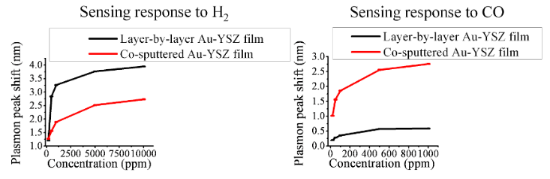
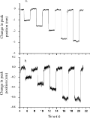
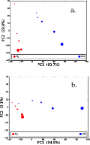
- fabricated through layer-by-layer physical vapor deposition (PVD). The change in the peak position of the localized surface plasmon resonance (LSPR) was monitored as a function of time and gas concentration. The responses of the films were preferential towards H2, as observed from the results of exposing the
- sensors for turbine engines, solid-oxide fuel cells, and other high-temperature applications. Keywords: hydrogen detection; nanocomposites gold nanoparticles; optical sensor; plasmonics; physical vapor deposition; surface plasmon resonance; Introduction Sensors based on surface plasmon resonance have
- determined by statistical algorithms that show the greatest selective detection of the target analytes. In the current work, a Au–YSZ film has been fabricated through a layer-by-layer physical vapor deposition (PVD) procedure, and the response of the film to H2, CO and NO2 at 500 °C has been monitored by





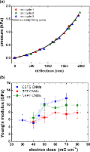
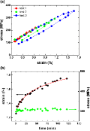
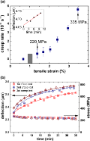
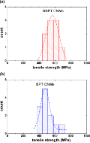
Mechanical characterization of carbon nanomembranes from self-assembled monolayers
Beilstein J. Nanotechnol. 2011, 2, 826–833, doi:10.3762/bjnano.2.92
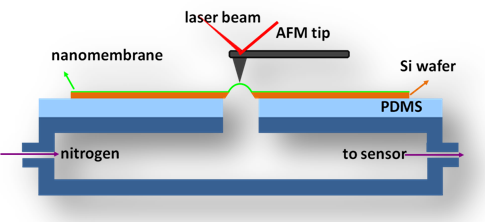
- epitaxially grown on a mica substrate (Georg Albert Physical Vapor Deposition). The substrate was cleaned with a UV/ozone cleaner (UVOH 150 LAB FHR), rinsed with ethanol and then blown dry under a nitrogen stream. Afterwards the substrates were immersed into a ~10 mmol solution of dry and degassed

Plasmonic nanostructures fabricated using nanosphere-lithography, soft-lithography and plasma etching
Beilstein J. Nanotechnol. 2011, 2, 448–458, doi:10.3762/bjnano.2.49

- pillars are discussed in the next two subsections. Coated hemispheres Figure 1 shows schematically the fabrication of hemispheres coated by a metal film. After the preparation of a PS 2D colloidal crystal and two casting steps, the resulting structures were metal coated by physical vapor deposition. In
- -ahesive film. The Cr masks were removed with a commercial etching solution (Chrome Etch 1 from SOTRAMCHEM Technic, France). Metal coating Gold films were deposited by physical vapor deposition (PVD), from tungsten boats, at a rate of 1 to 2 Å/s under a vacuum of 10−6 to 10−5 mbar. The thickness of the
- vapor deposition. AFM topography images of coated beads (a) and coated hemispheres (b), both fabricated using PS spheres of 1 μm diameter. The plots of (c) and (d) are cross sections of lines marked in the topography images. Reflectance (left) and transmittance (right) obtained at vertical illumination


Other Beilstein-Institut Open Science Activities



