


Search results
Search for "sustained release" in Full Text gives 56 result(s) in Beilstein Journal of Nanotechnology.
Cationic PEGylated polycaprolactone nanoparticles carrying post-operation docetaxel for glioma treatment
Beilstein J. Nanotechnol. 2017, 8, 1446–1456, doi:10.3762/bjnano.8.144
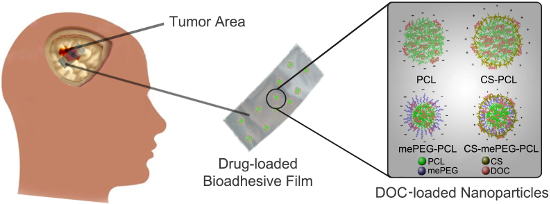
- sustained release of the model drug epidoxorubicin as carriers of pEGFP DNA complexes. The results demonstrated that co-delivery of drug and gene could be performed and strong inhibition effects on glioblastoma can be achieved with their system [25]. Additionally, magnetic core–shell nanoparticles have been




Chitosan-based nanoparticles for improved anticancer efficacy and bioavailability of mifepristone
Beilstein J. Nanotechnol. 2016, 7, 1861–1870, doi:10.3762/bjnano.7.178
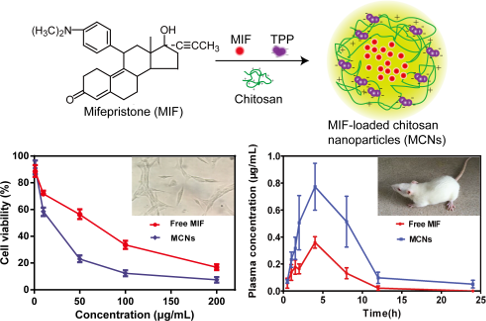
- kinetics demonstrated that MIF was released from CNs in a sustained-release manner. Compared with free MIF, MCNs demonstrated increased anticancer activity in several cancer cell lines. Pharmacokinetic studies in male rats that were orally administered MCNs showed a 3.2-fold increase in the area under the
- the medium at designed time points and the released MIF was quantified by HPLC. The release rate of MIF from MCNs showed a sustained release profile in both buffers, and the release rate of MIF from MCNs was very fast at pH 2.5 (Figure 6). This is because MIF, with weakly basic nitrogen, is more
- likely to dissolve in acidic solution [33]. The sustained-release manner of MCNs could prolong the time of drug absorption in the gastrointestinal tract, which might be beneficial to enhanced bioavailability of MIF [31][34]. The sustained-release phenomenon also proved that TPP is an appropriate


Fabrication and characterization of novel multilayered structures by stereocomplexion of poly(D-lactic acid)/poly(L-lactic acid) and self-assembly of polyelectrolytes
Beilstein J. Nanotechnol. 2016, 7, 81–90, doi:10.3762/bjnano.7.10
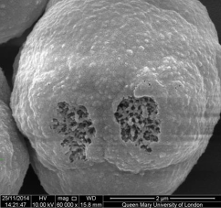
- for sustained release. Keywords: biocompatibility; layer-by-layer assembly; microcapsules; poly(lactic acids); stereocomplex; Introduction The polycationic/polyanionic layer-by-layer (LBL) deposition on surfaces has been widely studied since the first description by Decher et al. [1][2][3]. The


PLGA nanoparticles as a platform for vitamin D-based cancer therapy
Beilstein J. Nanotechnol. 2015, 6, 1306–1318, doi:10.3762/bjnano.6.135
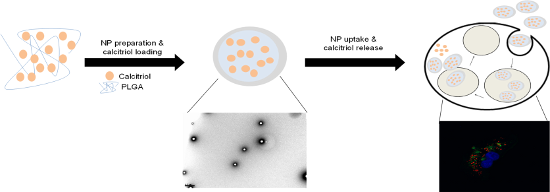
- dimethacrylate) microspheres with a size of about 35 μm [22]. In this project, the authors used cholecalciferol as a drug model for calcitriol. They demonstrated that their cholecalciferol-loaded microspheres are biocompatible, allowed for controlled and sustained release, and increased the efficiency of the
- 2. The prepared PLGA NPs exhibited an initial rapid release, followed by a slower, sustained release. As Figure 2 shows, calcitriol released at 24 h was around 46%. This initial rapid release might be attributed to the release of the surface-adsorbed vitamin. The calcitriol entrapped in the
- Holzer et al., where it was proven that this is a well-suited cryoprotectant [31]. PLGA NPs tend to exhibit a biphasic release pattern, characterized by an initial rapid release, followed by a slower sustained release [19]. As expected, the NPs exhibited a rapid release in the first 24 h due to the


Release behaviour and toxicity evaluation of levodopa from carboxylated single-walled carbon nanotubes
Beilstein J. Nanotechnol. 2015, 6, 243–253, doi:10.3762/bjnano.6.23
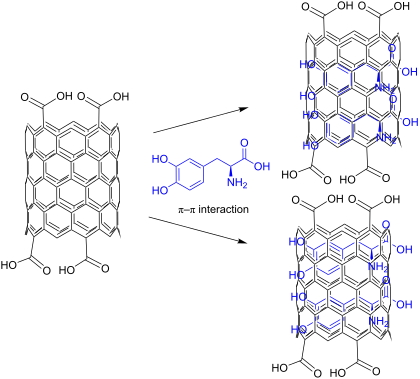
- exhibited favourable, slow, sustained-release characteristics as a drug carrier with a release period over more than 20 h. The results obtained from the drug release studies of LD at different pH values showed that the LD-loaded nanohybrid is pH activated. The release kinetics of LD from SWCNT–COOH were
- carbon nanotubes; levodopa; MTT assay; nanomedicine; Parkinson’s disease; PC12 cells; sustained release; Introduction Over the past few years, the revolutionary development of nanomedicine has emerged as one of the most prominent research areas in biomedical science. This interdisciplinary technology is
- carriers for proteins and pharmaceuticals to treat diseases by Bangham and Horne in the 1960s [1]. Since then, multidisciplinary researchers have been actively investigating advanced drug delivery systems by directing drugs and/or carriers with sustained release properties directly to a the specific site




Magnetic-Fe/Fe3O4-nanoparticle-bound SN38 as carboxylesterase-cleavable prodrug for the delivery to tumors within monocytes/macrophages
Beilstein J. Nanotechnol. 2012, 3, 444–455, doi:10.3762/bjnano.3.51
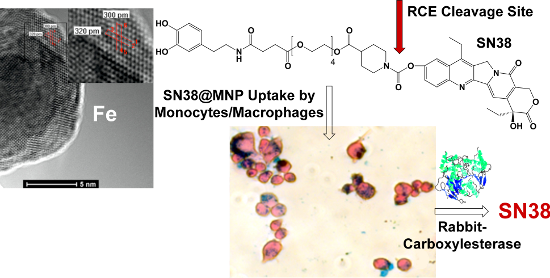
- ][22][23][24][25][26]. SN38-loaded polymeric micelles (NK012) have been used in preclinical and clinical studies against various types of cancer. Specific accumulation of this formulation to the tumor site by the EPR effect (enhanced permeation and retention), and sustained release of SN38 in tumor


Other Beilstein-Institut Open Science Activities



