


Search results
Search for "synchrotron radiation" in Full Text gives 57 result(s) in Beilstein Journal of Nanotechnology.
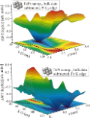
Deformation-induced grain growth and twinning in nanocrystalline palladium thin films
Beilstein J. Nanotechnol. 2013, 4, 554–566, doi:10.3762/bjnano.4.64
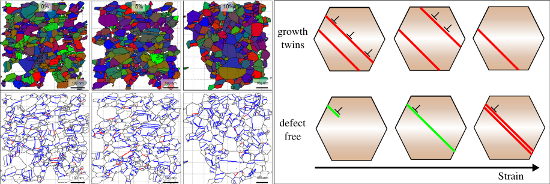
- elongation of 2% and subsequent unloading, followed by a second cycle to 3.8% and unloading. X-ray diffraction profiles were recorded continuously during deformation using 17.5 keV synchrotron radiation. For comparison with the ex-situ investigations in this work, only the results from the initial state


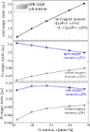
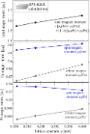
Antiferromagnetic coupling of TbPc2 molecules to ultrathin Ni and Co films
Beilstein J. Nanotechnol. 2013, 4, 320–324, doi:10.3762/bjnano.4.36
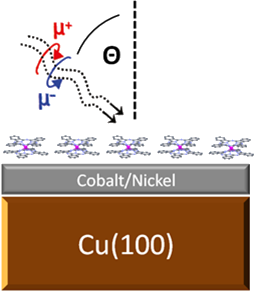
- at SOLEIL Synchrotron, France (proposal number 20120073). We are grateful to the SOLEIL staff for smoothly running the facility. We also acknowledge the European Synchrotron Radiation Facility for financial support (Project HE 3739) and we would like to thank the beamline staff for assistance in

Dipole-driven self-organization of zwitterionic molecules on alkali halide surfaces
Beilstein J. Nanotechnol. 2012, 3, 285–293, doi:10.3762/bjnano.3.32
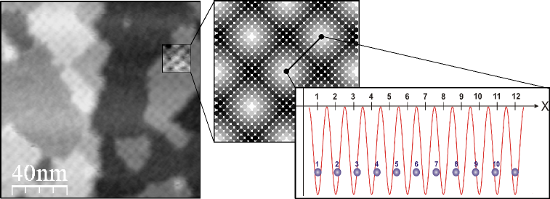
- cmsps,exp can be easily answered as follows: The MSPS lattice is overlaid on the lattice of KCl with parallel orientation as observed in the experiment. Figure 3d shows a schematic representation (SPlot by Stefan C. B. Mannsfeld, Stanford Synchrotron Radiation Lightsource, Menlo Park, CA, USA) in which


Surface functionalization of aluminosilicate nanotubes with organic molecules
Beilstein J. Nanotechnol. 2012, 3, 82–100, doi:10.3762/bjnano.3.10
- Scientific Research (A) (No. 19205031) from the Japan Society for the Promotion of Science. The present work is also supported by a Grant-in-Aid for the Global COE Program, “Science for Future Molecular Systems” from the Ministry of Education, Culture, Science, Sports and Technology of Japan. The synchrotron
- radiation experiments were performed at BL02B2 in SPring-8 with the approval of the JASRI (Proposal No. 2010A1454).


Nanoscaled alloy formation from self-assembled elemental Co nanoparticles on top of Pt films
Beilstein J. Nanotechnol. 2011, 2, 473–485, doi:10.3762/bjnano.2.51
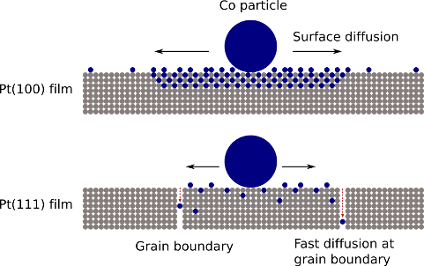
- were made on specimens of the deposited Co NPs on both textured Pt(111) and epitaxial Pt(100) films, as function of annealing temperature. The investigations were performed at the bending magnet beamline PM3 of BESSY II synchrotron radiation facility at the Helmholtz-Center Berlin, Germany. Throughout




Extended X-ray absorption fine structure of bimetallic nanoparticles
Beilstein J. Nanotechnol. 2011, 2, 237–251, doi:10.3762/bjnano.2.28
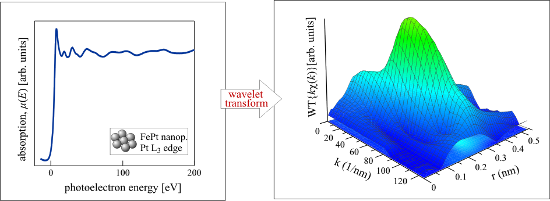
- important status nowadays, e.g., in material sciences, physics, chemistry, and biology. The advent of synchrotron radiation sources in the 1960s set a milestone in the improvement of the brilliance of X-ray radiation, i.e., of the number of emitted photons per second per unit solid angle in a narrow energy
- bandpass (usually 0.1%). The increase in average brilliance of X-rays available from artificial sources, from the first X-ray tubes to synchrotron radiation sources of the third generation, is a remarkable factor of about 1013. For next generation free electron lasers an additional increase in the peak
- brilliance by ten orders of magnitude is aimed for [1]. A detailed description of synchrotron radiation sources and optical devices can be found, e.g., in [2][3][4][5][6]. The interested reader may also be referred to [7], in which the electrodynamics behind synchrotron radiation are explained. Here we focus
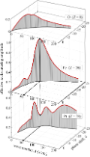
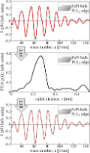


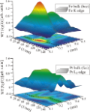

Structure, morphology, and magnetic properties of Fe nanoparticles deposited onto single-crystalline surfaces
Beilstein J. Nanotechnol. 2011, 2, 47–56, doi:10.3762/bjnano.2.6
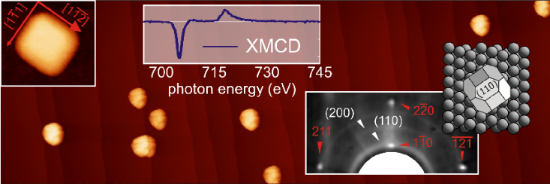
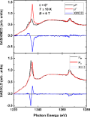
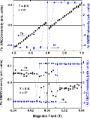
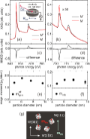
- show X-ray absorption spectra in the vicinity of the L2 and L3 edges of both, the Ni(111) substrate and Fe nanoparticles with D = (7.6 ± 1.5) nm, respectively. The data were recorded with circularly polarized synchrotron radiation provided by the helical undulator beamline UE46-PGM1 at the electron
- earlier (Figure 3d). Acknowledgements We acknowledge the Helmholtz-Zentrum Berlin - Electron storage ring BESSY II for provision of synchrotron radiation at beamline UE46 PGM and we would like to thank Dr. D. Schmitz and Dr. E. Holub-Krappe for their assistance. Furthermore we would like to thank Prof

Other Beilstein-Institut Open Science Activities



