Search results
Search for "thermal properties" in Full Text gives 66 result(s) in Beilstein Journal of Nanotechnology.
Development of a novel nanoindentation technique by utilizing a dual-probe AFM system
Beilstein J. Nanotechnol. 2015, 6, 2015–2027, doi:10.3762/bjnano.6.205
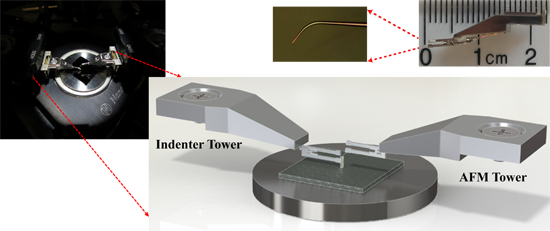
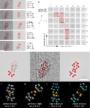
- be used as a voltage source and the fourth probe can be used to measure the current. In this way, electrical nano-characterization of the sample can be performed on-line during nanoindentation. Furthermore, thermoresistive probes can be integrated into the approach to monitor the thermal properties


Simulation of thermal stress and buckling instability in Si/Ge and Ge/Si core/shell nanowires
Beilstein J. Nanotechnol. 2015, 6, 1970–1977, doi:10.3762/bjnano.6.201
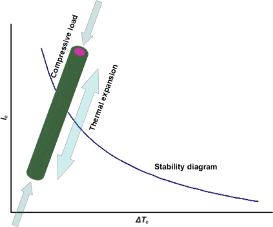
- been widely adopted for incorporating the quantum effects in classical MD simulations dealing with the measurement of thermal properties such as thermal conductivity [31] and the coefficient of thermal expansion [32][33]. In this method, a system with N atoms produces the 3N × 3N dynamical matrix, as


Possibilities and limitations of advanced transmission electron microscopy for carbon-based nanomaterials
Beilstein J. Nanotechnol. 2015, 6, 1541–1557, doi:10.3762/bjnano.6.158
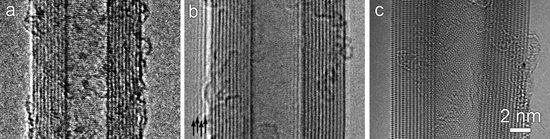
- paired to form 5–7 pairs or even 5–8 pairs [28][43] as demonstrated in Figure 4a,b. The imaging with AC-TEM confirms the presence of these defects in graphene, and provides evidence for the variations in its electronic properties, mechanical properties and thermal properties [61]. An example is shown in


Thermal energy storage – overview and specific insight into nitrate salts for sensible and latent heat storage
Beilstein J. Nanotechnol. 2015, 6, 1487–1497, doi:10.3762/bjnano.6.154
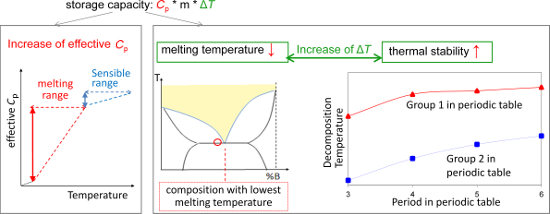
- consumption. This review focuses mainly on material aspects of alkali nitrate salts. They include thermal properties, thermal decomposition processes as well as a new method to develop optimized salt systems. Keywords: eutectic mixture; molten salt; nitrate; phase change material; thermal decomposition
- candidates. However experience with oxyanion salts and halogen salts is currently limited to theoretical studies [1][2]. Physico-chemical properties: thermal properties Characterization of thermal energy storage in molten salts requires data of salt properties in the liquid phase. For sensible storage media
- various types of thermal energy storage materials and concepts. At the time of writing, in the field of concentrated power applications (CSP), molten nitrate salts (predominantly a mixture of 60 wt % NaNO3 and 40% KNO3, so called “Solar Salt”) are used exclusively. Concerning the thermal properties of


Electron and heat transport in porphyrin-based single-molecule transistors with electro-burnt graphene electrodes
Beilstein J. Nanotechnol. 2015, 6, 1413–1420, doi:10.3762/bjnano.6.146
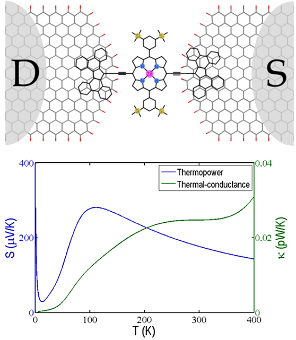
- voltage and kB = 8.6 × 10⁻⁵ eV/K is Boltzmann’s constant. Under nonequilibrium conditions, the Ids–Vds characteristic could be calculated from the voltage-dependent transmission, T(E,Vds), as where the fS,D are the electrochemical potential in the drain and source. Thermal properties: In a similar manner
- as described in [29][30], the thermal properties of a given device could be calculated from the transmission coefficient, T(E). The thermopower (S) and electronic contribution in thermal conductance (κe) as a function of the temperature (T) can be written as: where . Porphyrin SET molecular structure
- T(E) using Hückel parameters, (c) drain source current (Ids) as a function of the drain source (bias) voltage (Vds) and (d) drain source current as a function of the gate voltage (Vg). Thermal properties of the PM–EBG device. Thermopower (blue) and thermal conductance (green) as a function of the (a


Enhancing the thermoelectric figure of merit in engineered graphene nanoribbons
Beilstein J. Nanotechnol. 2015, 6, 1176–1182, doi:10.3762/bjnano.6.119
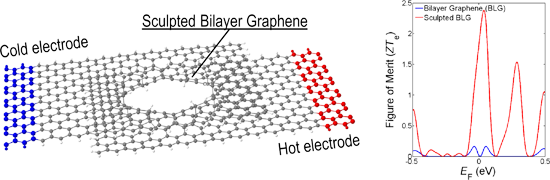
- Fourier’s law, where q is the heat flux, κ = κpl + κe is the thermal conductance due to phonons (κpl) and electrons (κe) and is the temperature gradient [1]. Nanostructures show significantly different thermal properties than bulk crystals in which acoustic phonons are the main heat carriers. The reasons
- scattering region and S is the overlap matrix. Results and Discussion Thermal properties of graphene Carbon-based materials show a wide range of thermal properties from about 0.01 W·mK−1 in amorphous carbon to above 2,000 W·mK−1 at room temperature in graphene [1][16][17][18][19] and even higher in few layer


Structural, optical, opto-thermal and thermal properties of ZnS–PVA nanofluids synthesized through a radiolytic approach
Beilstein J. Nanotechnol. 2015, 6, 529–536, doi:10.3762/bjnano.6.55
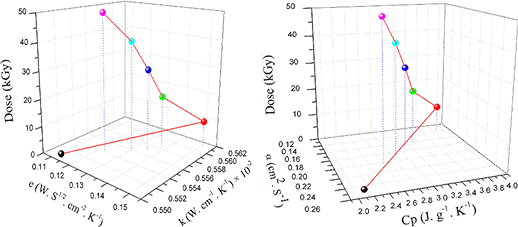
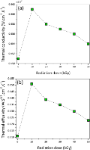
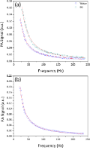
- , opto-thermal and thermal properties of ZnS–PVA nanofluids synthesized through a room temperature radiolytic method were studied, since these properties are considerable factors in optoelectronic devices. To the best of our knowledge, this is the first report on thermal characteristics of ZnS–PVA


Synthesis of Pt nanoparticles and their burrowing into Si due to synergistic effects of ion beam energy losses
Beilstein J. Nanotechnol. 2014, 5, 1864–1872, doi:10.3762/bjnano.5.197
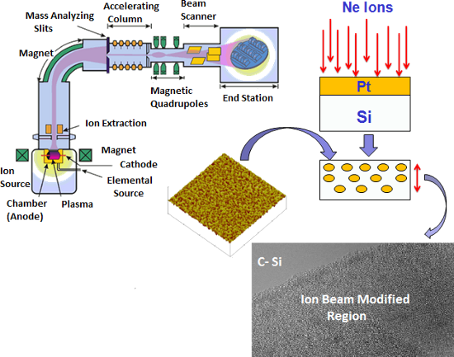
- combination is 846/ion (TRIM calculations). Using the thermal properties of silicon (a specific heat of 710 J/kg∙K and a thermal conductivity of 150 W/m∙K) and electronic energy deposited by the ions in silicon, we expect a spike temperature of about ≈2540 K (within 1 ps and 1 nm away from the ion track) [44



Integration of ZnO and CuO nanowires into a thermoelectric module
Beilstein J. Nanotechnol. 2014, 5, 927–936, doi:10.3762/bjnano.5.106
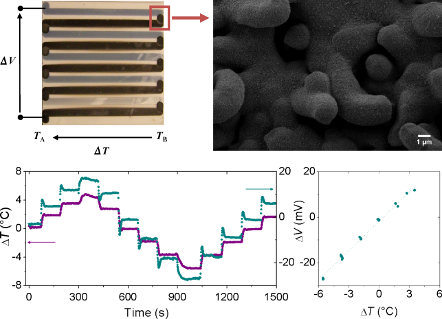
- ) are a family of thermoelectric material that are not widely explored in literature, even if well known in other research areas [5]. Their electronic and thermal properties can be controlled by tuning morphology, doping and stoichiometry, and thus are promising materials for the implementation of


Mechanical and thermal properties of bacterial-cellulose-fibre-reinforced Mater-Bi® bionanocomposite
Beilstein J. Nanotechnol. 2013, 4, 325–329, doi:10.3762/bjnano.4.37
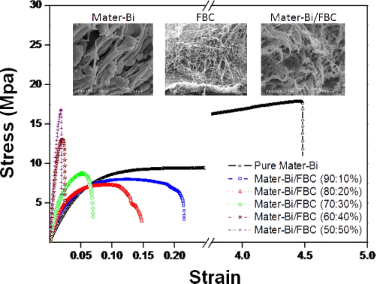
- field emission scanning electron microscope was used to observe the morphology at an accelerating voltage of 10 kV. The crystallinity (Tc) and melting temperature (Tm) were measured by DSC. Results showed a significant improvement in mechanical and thermal properties in accordance with the addition of
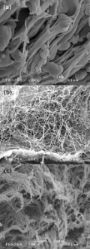
- ). SEM images of (a) pure Mater-Bi, (b) FBC and (c) Mater-Bi/FBC. DSC Thermograms of the second crystallinity and melting of Mater-Bi and Mater-Bi/FBC. The thermal properties of Mater-Bi and Mater-Bi/FBC bionanocomposites.


Grating-assisted coupling to nanophotonic circuits in microcrystalline diamond thin films
Beilstein J. Nanotechnol. 2013, 4, 300–305, doi:10.3762/bjnano.4.33
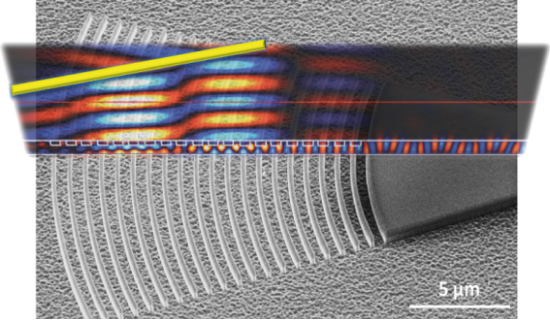
- broadband transparency of diamond and the good thermal properties, such devices may also be driven at high optical input power. Thus, our approach holds promise for the realization of optical functionality that is currently not available in silicon technology. While our initial demonstration proves the


Characterization and properties of micro- and nanowires of controlled size, composition, and geometry fabricated by electrodeposition and ion-track technology
Beilstein J. Nanotechnol. 2012, 3, 860–883, doi:10.3762/bjnano.3.97
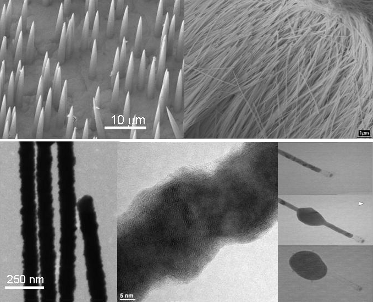
- metal, semimetal, and semiconductor nanowires in polymeric etched ion-track membranes. Particular focus is given to our current efforts to study the influence of size, morphology and crystallinity of nanowires on electrical, optical and thermal properties. In section 1, we discuss the processes involved
- , size effects on the optical, electrical, and thermal properties are of special interest. The following section presents recent results by the GSI group on electrical, optical, and thermal size effects of electrodeposited nanowires. 4.1 Finite-size effects in electrical properties Systematic








Conducting composite materials from the biopolymer kappa-carrageenan and carbon nanotubes
Beilstein J. Nanotechnol. 2012, 3, 415–427, doi:10.3762/bjnano.3.48
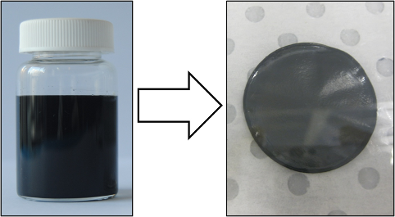
- attracted attention due to their unique electronic, mechanical, optical and thermal properties, which make them suitable for applications in nanotechnology [1][2][3][4]. However, one of the main disadvantages of CNTs is their process-ability; they are difficult to disperse in most common solvents due to


Substrate-mediated effects in photothermal patterning of alkanethiol self-assembled monolayers with microfocused continuous-wave lasers
Beilstein J. Nanotechnol. 2012, 3, 65–74, doi:10.3762/bjnano.3.8
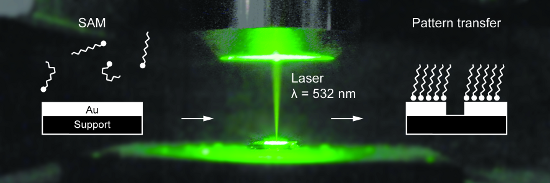
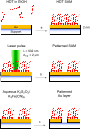
- surface linkage, and the optical and thermal properties of the substrate [11][13]. In this contribution we focus on substrate-mediated effects in photothermal laser patterning of alkanethiol SAMs on Au-coated Si and glass substrates. Patterning experiments are combined with temperature calculations and
- are attributed to the peculiar optical and thermal properties of the Au-coated supports. This, of course, affects the temperature rise on the substrate surface and, hence, is well expected to influence the overall patterning process. Commonly, in photothermal processing with microfocused lasers the
- within the Au film and the laser power required in order to establish a certain peak temperature increases. The distinct thermal properties of the substrates also determine the width of the temperature profiles. The width of the temperature profiles on Au/Si substrates is determined by the Si support




Investigation on structural, thermal, optical and sensing properties of meta-stable hexagonal MoO3 nanocrystals of one dimensional structure
Beilstein J. Nanotechnol. 2011, 2, 585–592, doi:10.3762/bjnano.2.62
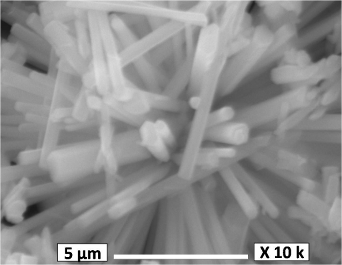
- ][8][9][10][11]. Recently, Dhage et al. [12], Ramana et al. [13] and Song et al. [14] have prepared h-MoO3 and studied its structural and thermal properties. Zheng et al. prepared highly dispersed h-MoO3 through a solution-based technique and investigated its photochromic and electrochromic properties


Infrared receptors in pyrophilous (“fire loving”) insects as model for new un-cooled infrared sensors
Beilstein J. Nanotechnol. 2011, 2, 186–197, doi:10.3762/bjnano.2.22
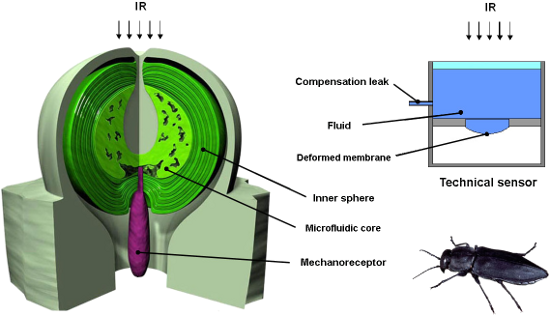
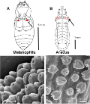
- plastic matrix or a dye absorbs most of the radiation and transfers the absorbed energy to the fluid, which provides optimal thermal properties and a large thermal expansion. The choice of the plastic matrix must ensure a large surface-to-volume ratio and a low product of density and heat capacity. The
- . Several read-out methods will be evaluated, but it has to be stressed that this search must yield a rugged and cost-effective design in order to be able to compete with existing IR sensors. An obvious method to enhance the displacement of the membrane is to choose liquids with optimal thermal properties