Search results
Search for "water purification" in Full Text gives 66 result(s) in Beilstein Journal of Nanotechnology.
Bright fluorescent silica-nanoparticle probes for high-resolution STED and confocal microscopy
Beilstein J. Nanotechnol. 2017, 8, 1283–1296, doi:10.3762/bjnano.8.130
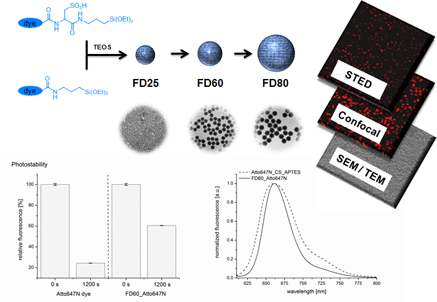
- multicolour silica particles with or without Förster resonance energy transfer (FRET). These different approaches are currently under investigation. Experimental Materials All syntheses and purification steps in aqueous solution were conducted in ultrapure water (18.2 MΩ·cm, MilliQ water purification system


High photocatalytic activity of Fe2O3/TiO2 nanocomposites prepared by photodeposition for degradation of 2,4-dichlorophenoxyacetic acid
Beilstein J. Nanotechnol. 2017, 8, 915–926, doi:10.3762/bjnano.8.93
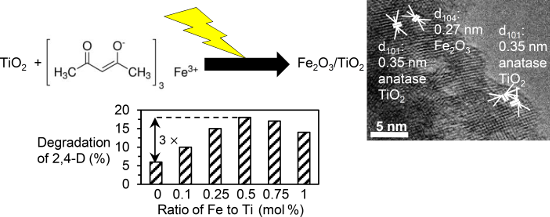
- stability and reusability, suggesting its potential for water purification applications. Keywords: 2,4-dichlorophenoxyacetic acid; Fe2O3/TiO2; herbicide degradation; heterojunction; holes and superoxide radicals; photocatalyst; photodeposition; water purification; Introduction Photocatalytic reactions
- application for photocatalytic water purification. Degradation and proposed mechanism After the photocatalytic reactions on all samples, the formation of a 2,4-dichlorophenol (2,4-DCP) intermediate was observed from the HPLC analysis, which was in good agreement with reported studies [15][28][29][30][31][32


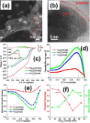
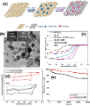
Synthesis of graphene–transition metal oxide hybrid nanoparticles and their application in various fields
Beilstein J. Nanotechnol. 2017, 8, 688–714, doi:10.3762/bjnano.8.74






Role of oxygen in wetting of copper nanoparticles on silicon surfaces at elevated temperature
Beilstein J. Nanotechnol. 2017, 8, 425–433, doi:10.3762/bjnano.8.45
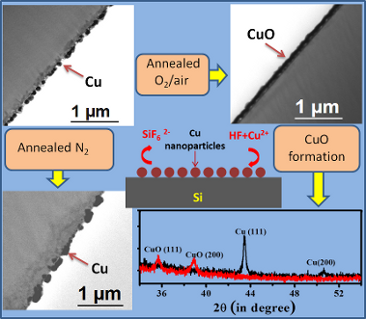
- been observed in composite CuO–carbon nanotube and CuO–graphene systems [8][9]. CuO nanostructures find promising application in many other fields such as gas sensing, catalysis, and arsenic (As) removal in water purification [10][11][12]. Such differently shaped CuO nanostructures have been


Photocatalysis applications of some hybrid polymeric composites incorporating TiO2 nanoparticles and their combinations with SiO2/Fe2O3
Beilstein J. Nanotechnol. 2017, 8, 272–286, doi:10.3762/bjnano.8.30
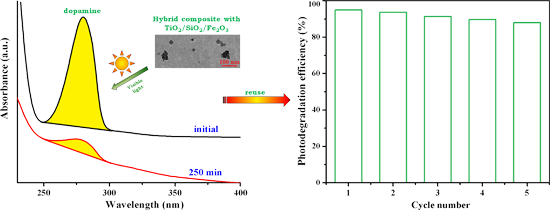
- . The presence of Fe2O3 NPs extended the light absorption of TiO2 into the visible range, a feature that recommends their use in water purification under sunlight. Experimental Materials Titanium(IV) isopropoxide (TTIP), glacial acetic acid, tetraethyl orthosilicate (TEOS), iron(II) chloride


Laser irradiation in water for the novel, scalable synthesis of black TiOx photocatalyst for environmental remediation
Beilstein J. Nanotechnol. 2017, 8, 196–202, doi:10.3762/bjnano.8.21
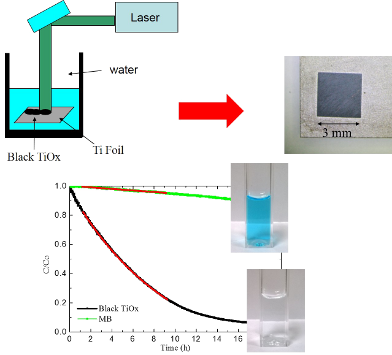
- widely used for both water splitting and mineralization of organic contaminants in solution [2]. The applications range from third generation solar cells [3] to material for air or water purification [4] to antifogging and self-cleaning surfaces [5][6]. The main advantage of this material is its high
- inertness (even in a corrosive environment), stability, abundance and nontoxicity. Nevertheless, its exploitation in environmental remediation, and in particular in water purification, is relatively limited due to its wide band gap (≈3.2 eV). This means that only 5% of the incoming solar radiation can be
- melting and oxidation on the metallic titanium surface and, at the same time, the process is fast enough to allow the formation of substoichiometric oxides. We have demonstrated that the proposed methodology allows for the successful synthesis of a black TiOx material suitable for water purification


Nanostructured TiO2-based gas sensors with enhanced sensitivity to reducing gases
Beilstein J. Nanotechnol. 2016, 7, 1718–1726, doi:10.3762/bjnano.7.164
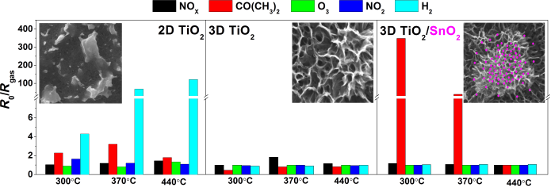
- cells, photocatalytic water purification, and hydrogen generation by water splitting [3][4][5]. In sensor technology this n-type semiconductor is frequently considered as a promising material for gas detection applications [6]. It has excellent sensitivity and selectivity for many different gases such


Hydrophilic silver nanoparticles with tunable optical properties: application for the detection of heavy metals in water
Beilstein J. Nanotechnol. 2016, 7, 1654–1661, doi:10.3762/bjnano.7.157
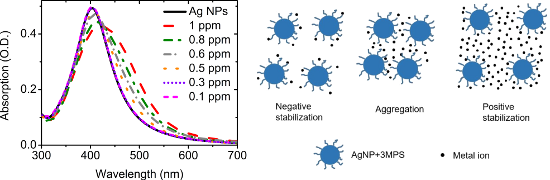
- salt (C3H7S2O3Na, 3MPS, Sigma-Aldrich, 98%) were used as received. Deionized water (electrical conductivity less than 1 μΩ/cm at room temperature) was obtained from a Millipore Milli-Q water purification system. Synthesis a: silver NPs (AgNPs) were prepared at room temperature in a single phase system


Probing fibronectin–antibody interactions using AFM force spectroscopy and lateral force microscopy
Beilstein J. Nanotechnol. 2015, 6, 1164–1175, doi:10.3762/bjnano.6.118
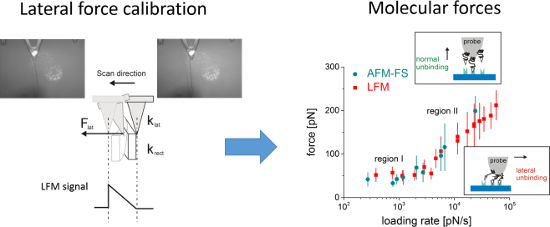
- ) was used for the silanization of the mica and cantilever surfaces; (c) 2.5% glutaraldehyde aqueous solution, prepared from a 25% solution of glutaraldehyde was purchased from Sigma. All solutions were prepared using deionized water (Cobrabid water purification system, 0.08 µS). Cantilevers



DFT study of binding and electron transfer from colorless aromatic pollutants to a TiO2 nanocluster: Application to photocatalytic degradation under visible light irradiation
Beilstein J. Nanotechnol. 2014, 5, 1016–1030, doi:10.3762/bjnano.5.115
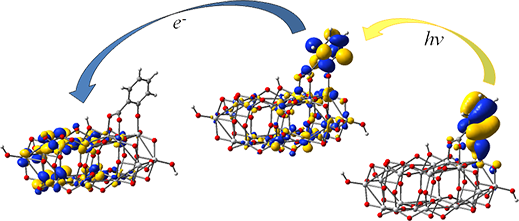
- ; density functional theory; photocatalytic degradation; titanium dioxide; visible light irradiation; Introduction Titania, TiO2, has been widely used as photocatalyst for environmental applications [1][2][3][4][5][6], particularly for waste water purification. Due to its large band gap TiO2 absorbs only




Effects of the preparation method on the structure and the visible-light photocatalytic activity of Ag2CrO4
Beilstein J. Nanotechnol. 2014, 5, 658–666, doi:10.3762/bjnano.5.77
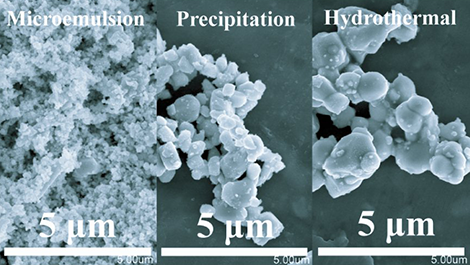
- . Considering the universalities of microemulsion, precipitation, and hydrothermal methods, this work may also provide a prototype for the comparative study of semiconductor based photocatalysis for water purification and environmental remediation. Keywords: microemulsion method; nanoparticles; photocatalysis


Structural, optical and photocatalytic properties of flower-like ZnO nanostructures prepared by a facile wet chemical method
Beilstein J. Nanotechnol. 2013, 4, 763–770, doi:10.3762/bjnano.4.87
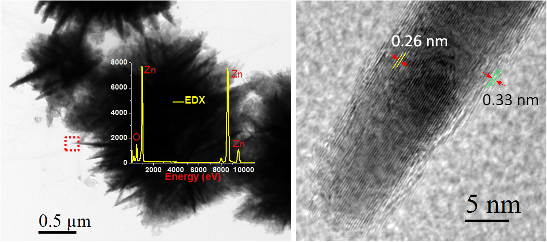
- these toxic chemicals. Photocatalytic degradation, in which the organic pollutants are degraded through photocatalytic oxidation and reduction reactions in the presence of a photocatalyst, is one of the most promising and clean processes used for water purification. Nanostructured semiconductor


Large-scale atomistic and quantum-mechanical simulations of a Nafion membrane: Morphology, proton solvation and charge transport
Beilstein J. Nanotechnol. 2013, 4, 567–587, doi:10.3762/bjnano.4.65
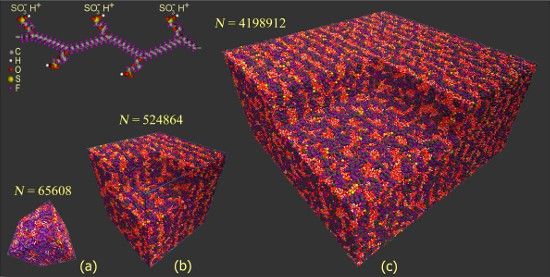
- the PEM while the hydrophobic domains maintain its mechanical stability [2]. Owing to this specific microphase separated morphology, Nafion and similar nanostructured materials are widely used not only in fuel cell manufacture but also in organic batteries, for water purification by reverse osmosis


Distribution of functional groups in periodic mesoporous organosilica materials studied by small-angle neutron scattering with in situ adsorption of nitrogen
Beilstein J. Nanotechnol. 2012, 3, 428–437, doi:10.3762/bjnano.3.49
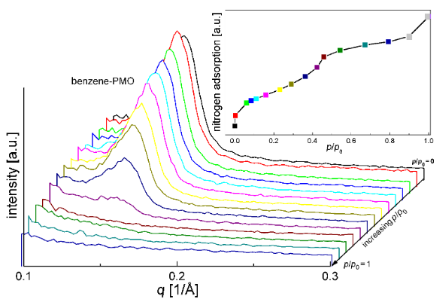
- -groups; such material shows a high proton conductivity [27] and has potential to create proton-conducting hybrid membranes for applications in fuel cells [28][29], electrodialysis for water purification [30], or photoelectrochemical cells for water splitting with solar light in order to separate the


Precursor concentration and temperature controlled formation of polyvinyl alcohol-capped CdSe-quantum dots
Beilstein J. Nanotechnol. 2010, 1, 119–127, doi:10.3762/bjnano.1.14
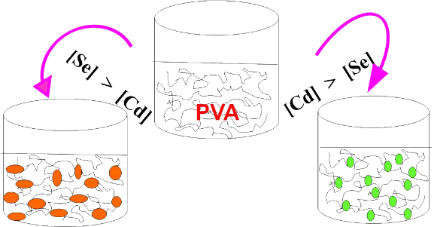
- received. All the other chemicals used were of A.R. grade. Solutions were prepared, in water obtained from Millipore-Q water purification system (with conductivity of 0.6 µS cm−1 or lower). Sodium selenosulfate (Na2SeSO3) was prepared by the reported method, from Na2SO3 and Se powder [34]: Briefly, a




Sensing surface PEGylation with microcantilevers
Beilstein J. Nanotechnol. 2010, 1, 3–13, doi:10.3762/bjnano.1.2
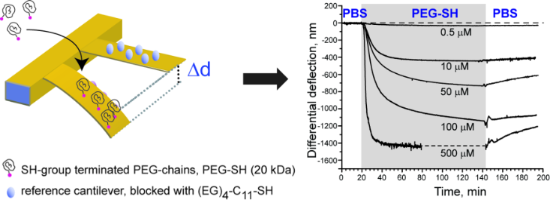
- highly effective at reducing protein adsorption from blood [3] thereby improving the biocompatibility of biomedical implants [4]. The protein-resistant properties of PEG have also been applied to reduce membrane fouling in ultrafiltration membranes for water purification [5]. It is important to develop a