


Search results
Search for "wound healing" in Full Text gives 53 result(s) in Beilstein Journal of Nanotechnology.
Effect of silver nanoparticles on human mesenchymal stem cell differentiation
Beilstein J. Nanotechnol. 2014, 5, 2058–2069, doi:10.3762/bjnano.5.214
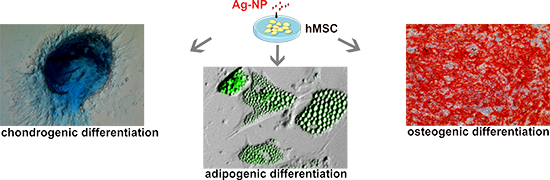
- nanomaterials have been used in numerous devices and products, such as silver sulfadiazine in the treatment of burns to reduce skin infections. Furthermore, silver has been used to coat a variety of different surfaces, such as catheters [4][5][6][7], or it has been incorporated into a hydrogel network for wound
- healing [8]. In our previous studies on the biological effects of Ag-NP (PVP-coated, 80 nm) on human mesenchymal stem cells (hMSCs), we have shown that cell activation could occur at elevated but non-toxic silver concentrations [9][10]. In addition, we have shown that hMSCs are able to ingest Ag-NP


Biocompatibility of cerium dioxide and silicon dioxide nanoparticles with endothelial cells
Beilstein J. Nanotechnol. 2014, 5, 1795–1807, doi:10.3762/bjnano.5.190
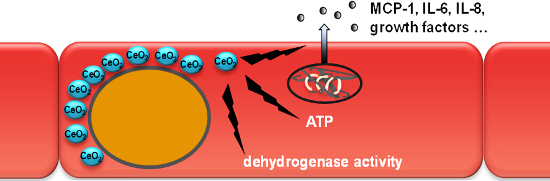
- studies reported the presence of anti-oxidative [16][17][18][19], neuroprotective [20], cardioprotective [21], anti-inflammatory [22] and radioprotective properties [23]. Moreover, CeO2 nanoparticles fostered wound healing in mice due to reduction of oxidative damage [24]. However, in other studies an


Model systems for studying cell adhesion and biomimetic actin networks
Beilstein J. Nanotechnol. 2014, 5, 1193–1202, doi:10.3762/bjnano.5.131
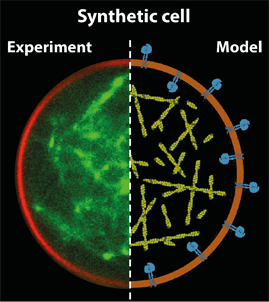
- 10.3762/bjnano.5.131 Abstract Many cellular processes, such as migration, proliferation, wound healing and tumor progression are based on cell adhesion. Amongst different cell adhesion molecules, the integrin receptors play a very significant role. Over the past decades the function and signalling of


Other Beilstein-Institut Open Science Activities



