Search results
Search for "absorption spectroscopy" in Full Text gives 143 result(s) in Beilstein Journal of Nanotechnology.
Selective photodissociation of tailored molecular tags as a tool for quantum optics
Beilstein J. Nanotechnol. 2017, 8, 325–333, doi:10.3762/bjnano.8.35
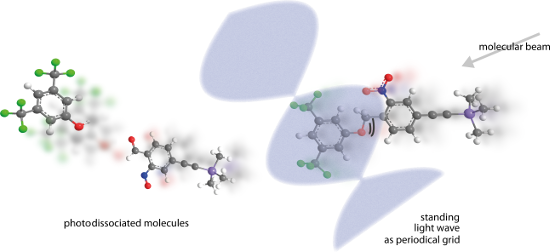
- . We therefore analysed its photoresponse using UV absorption spectroscopy. Figure 3 displays the decay of the UV absorption of the trimer 1 in CH2Cl2 upon illumination by UV light at 254 nm and 365 nm respectively. The UV cuvette was exposed to a UV-lamp (8 W, 230 V, 50 Hz) at a constant distance of


Ferromagnetic behaviour of ZnO: the role of grain boundaries
Beilstein J. Nanotechnol. 2016, 7, 1936–1947, doi:10.3762/bjnano.7.185
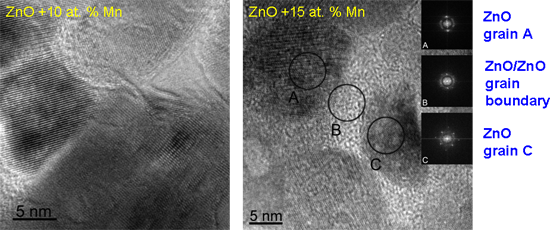
- transmission electron microscopy) were dense (i.e., pore free) and contained equiaxial grains with sizes of about 20 nm (Figure 2). The films were transparent and slightly greenish. The composition of the films was controlled by atomic absorption spectroscopy in a Perkin-Elmer spectrometer and by electron


Monolayer graphene/SiC Schottky barrier diodes with improved barrier height uniformity as a sensing platform for the detection of heavy metals
Beilstein J. Nanotechnol. 2016, 7, 1800–1814, doi:10.3762/bjnano.7.173
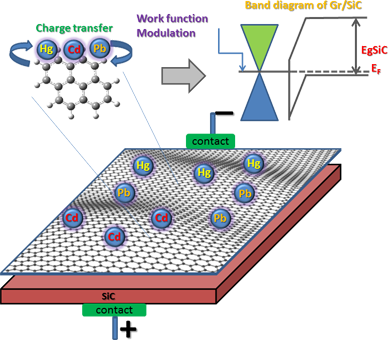
- properties. It is also important to note that the most popular approaches to detect heavy metals are mainly based on complicated chromatography principles [3], photometric methods [4], atomic absorption spectroscopy [5], mass spectrometry [6] and total reflection X-Ray fluorimetry [7]. These techniques




Hydrophilic silver nanoparticles with tunable optical properties: application for the detection of heavy metals in water
Beilstein J. Nanotechnol. 2016, 7, 1654–1661, doi:10.3762/bjnano.7.157
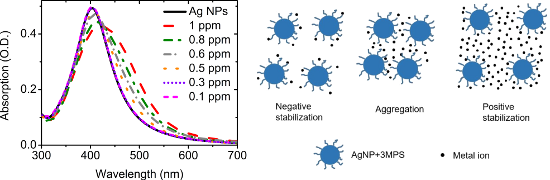
- of the nanoparticles occurred. Metal ion detection We investigated the optical sensing properties of the AgNP-3MPS material via absorption spectroscopy. Each solution of AgNP-3MPS/ion was prepared in spectroscopic cuvettes that were carefully cleaned to avoid contamination. To a specific amount of
- . SPR absorption spectroscopy of the AgNP-3MPS solution (synthesis b) taken immediately after the synthesis and after 15 days, indicating good long term stability. Absorption spectra of the AgNP-3MPS (synthesis b) solution with 1 ppm ion concentration. a) Absorption spectra of the AgNP-3MPS system


Scanning probe microscopy studies on the adsorption of selected molecular dyes on titania
Beilstein J. Nanotechnol. 2016, 7, 1642–1653, doi:10.3762/bjnano.7.156
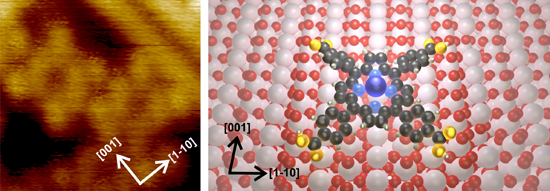
- (PES) and the near-edge X-ray absorption spectroscopy (NEXAFS) to investigate the ZnPc/TiO2 system. They conclude that molecules in the first layer bind with the molecular plane 30° from the surface and the tilt angle increases to 33° at higher coverage [51]. However, already the authors suggest


An efficient recyclable magnetic material for the selective removal of organic pollutants
Beilstein J. Nanotechnol. 2016, 7, 1447–1453, doi:10.3762/bjnano.7.136
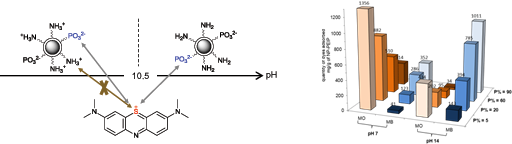
- atomic absorption spectroscopy in the supernatant. The decreasing of effectiveness is already under study. Conclusion The modulation of positive and negative charges of phosphonated polyethylenimine, through the controlled insertion of phosphonate groups on polyethylenimine, can be considered as an


Photocurrent generation in carbon nanotube/cubic-phase HfO2 nanoparticle hybrid nanocomposites
Beilstein J. Nanotechnol. 2016, 7, 1075–1085, doi:10.3762/bjnano.7.101
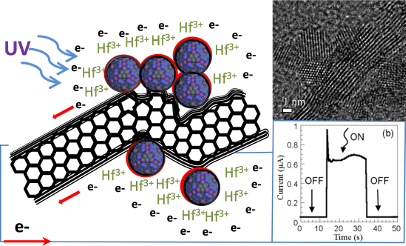
- electronic structure of the C K-edge in the nanocomposites was probed by electron energy loss spectroscopy, highlighting the key role of the MWCNT growth defects in anchoring HfO2 NPs. A combined optical emission and absorption spectroscopy approach illustrated that, in contrast to HfO2 NPs, the metallic
- is manifested as a broad hump starting above 288 eV and extending up to 305 eV, corresponding to the C 1s → σ* transition for disordered carbon–carbon bonds. On a similar note, other noticeable features are usually observed via X-ray absorption spectroscopy (XAS) in the region between π* and σ


Optical absorption signature of a self-assembled dye monolayer on graphene
Beilstein J. Nanotechnol. 2016, 7, 862–868, doi:10.3762/bjnano.7.78
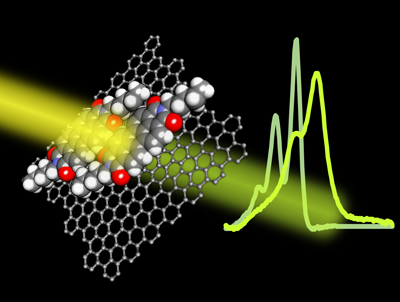
- strengths of the vibronic structures are preserved. These changes are attributed to non-resonant interactions with the graphene layer and the neighbouring molecules. Keywords: absorption spectroscopy; dye aggregates; graphene; molecular monolayer; optical spectroscopy; perylene-3,4,9,10-tetracarboxylic
- (0.45 molecule per nm2). This target concentration evaluates to about 1.5 × 10⁻⁵ mol·L−1 and was adjusted with absorption spectroscopy applying the Beer–Lambert law with a molar absorptivity of ε = 87000 L·mol−1·cm−1 for various alkylated PTCDI [34]. For dip-coating experiments, the samples were



Rigid multipodal platforms for metal surfaces
Beilstein J. Nanotechnol. 2016, 7, 374–405, doi:10.3762/bjnano.7.34

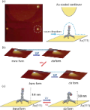
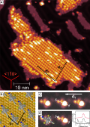
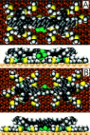
- were characterized by XPS, Fourier transform infrared absorption spectroscopy (FT-IRRAS), near-edge X-ray absorption fine structure spectroscopy (NEXAFS), and a scanning tunneling microscopy (STM) analysis. As revealed by XPS and NEXAFS analysis, the monolayers derived from the thiol-terminated











Influence of calcium on ceramide-1-phosphate monolayers
Beilstein J. Nanotechnol. 2016, 7, 236–245, doi:10.3762/bjnano.7.22
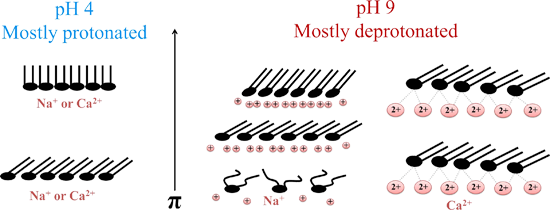
- techniques as Brewster angle microscopy (BAM), infrared reflection–absorption spectroscopy (IRRAS) and grazing incidence X-ray diffraction (GIXD). The isotherms indicate that C1P monolayers are in a condensed state in the presence of calcium ions, regardless of the pH. At higher pH without calcium ions, the
- measured at 30 °C is clearly shifted to smaller area values, most probably due to a slightly increased solubility of C1P in this subphase. Infrared reflection–absorption spectroscopy (IRRAS) has been used to determine the phase state of the aliphatic chains on the different subphases. For this purpose, the
- constant at the desired value with an accuracy of ±0.1 °C. Infrared reflection–absorption spectroscopy (IRRAS) Infrared reflection–absorption spectra were recorded on a Vertex 70 FTIR spectrometer (Bruker, Ettlingen, Germany). The setup includes a MCT detector cooled with liquid nitrogen and coupled to a


Characterisation of thin films of graphene–surfactant composites produced through a novel semi-automated method
Beilstein J. Nanotechnol. 2016, 7, 209–219, doi:10.3762/bjnano.7.19
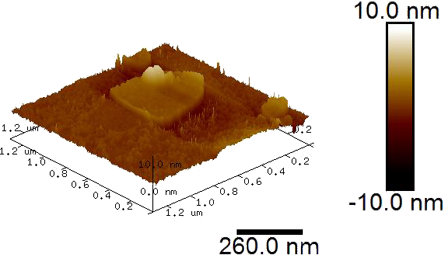
- LbL deposition of graphene(−)SDS alternated with polyethyleneimine (PEI). The optical study of graphene thin films deposited on different substrates was carried out using UV–vis absorption spectroscopy and spectroscopic ellipsometry. A particular focus was on studying graphene layers deposited on gold




Linear and nonlinear optical properties of hybrid metallic–dielectric plasmonic nanoantennas
Beilstein J. Nanotechnol. 2016, 7, 111–120, doi:10.3762/bjnano.7.13
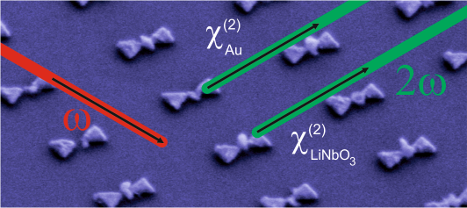
- itself is not the source of the signal, but rather an optically active species is responsible and the antenna is “dark”. This observation is in particular true for surface-enhanced Raman scattering (SERS) [45][46][47] and for experiments on surface-enhanced infrared absorption spectroscopy (SEIRA) [48


Chemical bath deposition of textured and compact zinc oxide thin films on vinyl-terminated polystyrene brushes
Beilstein J. Nanotechnol. 2016, 7, 102–110, doi:10.3762/bjnano.7.12
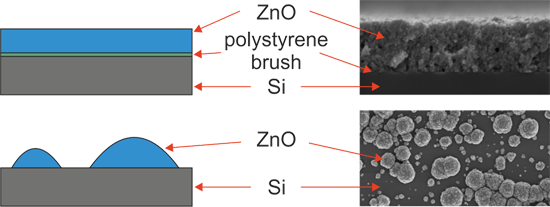
- reflection absorption spectroscopy (IRRAS) measurements were performed on a PS brush grafted to the Si wafer. In this case, the main part of the chain detaches from the surface and only the small rest with the ester group remains, since it is covalently bound to the substrate (compare Scheme 1b). Indeed, the


A facile method for the preparation of bifunctional Mn:ZnS/ZnS/Fe3O4 magnetic and fluorescent nanocrystals
Beilstein J. Nanotechnol. 2015, 6, 1743–1751, doi:10.3762/bjnano.6.178
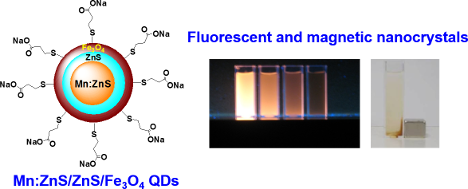
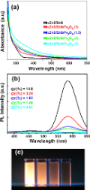
- conducted for all Mn:ZnS/ZnS/Fe3O4 materials prepared. Figure 4b illustrates the sensitive magnetic response of the Mn:ZnS/ZnS/Fe3O4 (2) sample. PL properties of Mn:ZnS/ZnS/Fe3O4 QDs The optical properties of Mn:ZnS/ZnS/Fe3O4 samples were studied by UV–vis absorption spectroscopy and PL spectroscopy (Figure




Synthesis, characterization and in vitro biocompatibility study of Au/TMC/Fe3O4 nanocomposites as a promising, nontoxic system for biomedical applications
Beilstein J. Nanotechnol. 2015, 6, 1677–1689, doi:10.3762/bjnano.6.170
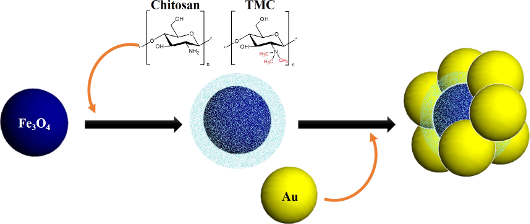
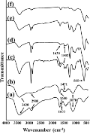
- , chitosan/TMC-containing, magnetic nanoparticles and their respective characterization using transmission electron microscopy (TEM), ultraviolet–visible absorption spectroscopy (UV–vis), X-ray diffraction spectroscopy (XRD), Fourier transform infrared spectroscopy (FTIR), a vibrating sample magnetometer




Formation of substrate-based gold nanocage chains through dealloying with nitric acid
Beilstein J. Nanotechnol. 2015, 6, 1362–1368, doi:10.3762/bjnano.6.140
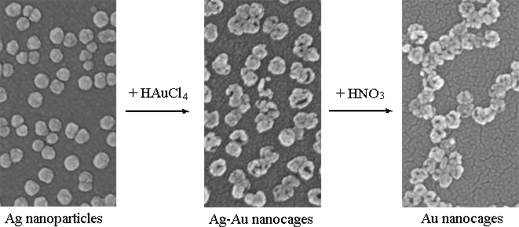
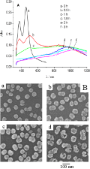
- using absorption spectroscopy. Figure 2A shows the UV–vis absorption spectra recorded from ITO-supported AgNPs after immersion in 0.1 mM HAuCl4 solution for various times. The spectra correspond to the excitation of dipolar and quadrupolar oscillations. The AgNPs exhibited typical LSPR peaks at 455 and

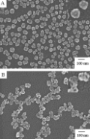
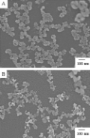
Synthesis, characterization and in vitro effects of 7 nm alloyed silver–gold nanoparticles
Beilstein J. Nanotechnol. 2015, 6, 1212–1220, doi:10.3762/bjnano.6.124
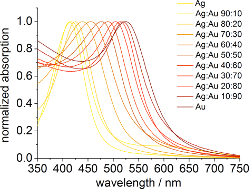
- important factor for subsequent in vitro experiments) was carried out by multiple ultracentrifugation steps. Characterization by transmission electron microscopy (TEM), differential centrifugal sedimentation (DCS), dynamic light scattering (DLS), UV–vis spectroscopy and atomic absorption spectroscopy (AAS
- volume of 3.5 mL were used. Atomic absorption spectroscopy (AAS) was carried out with a Thermo Electron M-Series spectrometer with a graphite tube furnace according to DIN EN ISO/IEC 17025:2005 after dissolving the particles in aqua regia. Cell culture HeLa cells (human transformed cervix epithelial
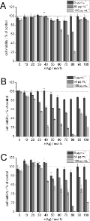
- , determined by atomic absorption spectroscopy. The cell viability was analyzed by the MTT assay. 3-(4,5-dimethylthiazol-2-yl)-2,5-diphenyl-2H-tetrazolium bromide (MTT; Sigma, Taufkirchen, Germany) was dissolved in PBS (5 mg mL−1) and then diluted to 1 mg mL−1 in the cell culture medium. After incubation, the


Effects of swift heavy ion irradiation on structural, optical and photocatalytic properties of ZnO–CuO nanocomposites prepared by carbothermal evaporation method
Beilstein J. Nanotechnol. 2015, 6, 928–937, doi:10.3762/bjnano.6.96
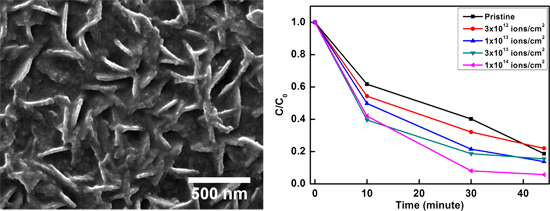
- absorption spectroscopy and Raman spectroscopy. XRD studies showed the presence of ZnO and CuO nanostructures in the nanocomposites. FESEM images revealed the presence of nanosheets and nanorods in the nanocomposites. The photocatalytic activity of ZnO–CuO nanocomposites was evaluated on the basis of
- –CuO nanocomposites The structural and optical properties of the as-prepared and irradiated samples were characterized by X-ray diffraction (XRD), field emission scanning electron microscopy (FESEM), Raman spectroscopy and UV–visible absorption spectroscopy. Grazing incidence XRD patterns were recorded
- . Following sun light irradiation, the photocatalysts were removed from the aqueous dye solutions. The concentrations of the dye in the resultant solutions were monitored by UV–visible absorption spectroscopy with double distilled water as the reference medium, in the wavelength range of 300–800 nm. FESEM



Magnetic properties of self-organized Co dimer nanolines on Si/Ag(110)
Beilstein J. Nanotechnol. 2015, 6, 777–784, doi:10.3762/bjnano.6.80
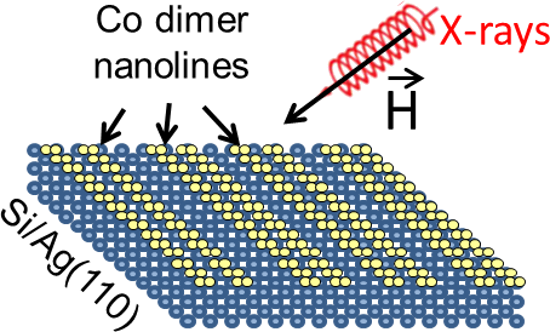
- nanolines X-ray absorption spectroscopy (XAS) spectra were recorded at normal incidence in a magnetic field of 6 T for parallel (σ+) and antiparallel (σ−) alignment of the X-ray helicity with respect to the sample magnetization. Magnetic hysteresis measurements at the L3 resonance confirm that the sample


Self-assembled anchor layers/polysaccharide coatings on titanium surfaces: a study of functionalization and stability
Beilstein J. Nanotechnol. 2015, 6, 617–631, doi:10.3762/bjnano.6.63
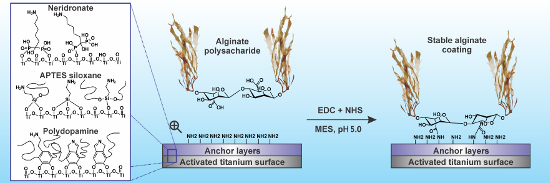
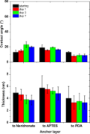
- immobilization, as well as the stability upon immersion under physiological-like conditions, are demonstrated by different surface sensitive techniques such as spectroscopic ellipsometry, infrared reflection–absorption spectroscopy and X-ray photoelectron spectroscopy. The changes in morphology and the
- photoelectron spectroscopy (XPS), spectroscopic ellipsometry (SE) and infrared reflection–absorption spectroscopy (IRRAS). The changes in topography and the established continuity of the layers were revealed by scanning electron microscopy (SEM), stylus profilometry (SP) and atomic force microscopy (AFM). The
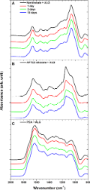
- . Infrared reflection–absorption spectroscopy (IRRAS): The infrared spectra of neridronate, APTES and dopamine moieties were recorded using a Perkin Elmer, Paragon 1000PC, FTIR spectrometer, equipped with a MCT detector and a single reflection, monolithic diamond, Golden Gate ATR accessory (Specac, England


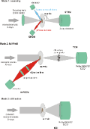
Overview of nanoscale NEXAFS performed with soft X-ray microscopes
Beilstein J. Nanotechnol. 2015, 6, 595–604, doi:10.3762/bjnano.6.61
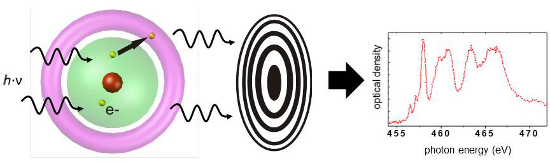
- approach to reduce the greenhouse gas emissions. Parallel to the development of novel synchrotron sources, the nanoscale of the current technologies triggered the revision of X-ray absorption spectroscopy [9][10] or photoelectron spectroscopy [11][12] techniques. These techniques can be used to study the
- transmitted intensity I(E) through the sample and another data set I0(E) without sample. The absorption spectrum normally will be displayed as an optical density OD(E) = −log[I(E)/I0(E)] [69]. So far, nearly all absorption spectroscopy techniques cannot measure I(E) and I0(E) at the same time which can lead


Silica micro/nanospheres for theranostics: from bimodal MRI and fluorescent imaging probes to cancer therapy
Beilstein J. Nanotechnol. 2015, 6, 546–558, doi:10.3762/bjnano.6.57

- was incorporated inside the SiO2 spheres. The concentration of the NPs and the number of the Gd3+ ions present in the silanized NPs were determined by absorption spectroscopy and inductively coupled plasma mass spectrometry (ICP-MS). The size of the NPs was found to be 8–15 nm. The MRI experiments
- inside the silica spheres by using CTAB as template surfactant. Finally complexes of lanthanides, namely Eu3+, Tb3+ with nicotinic and isonicotinic acid were introduce inside silica. The characterization of these multifunctional nanostructures was achieved by UV–vis absorption spectroscopy, XRD
- nanocomposites material was done by attenuated total reflectance FTIR (ATR FTIR), TEM, DLS, fluorescence and atomic absorption spectroscopy (AAS) studies. The TEM micrographs suggested that the average diameter of CMSC coated γ-Fe2O3 NPs and bifunctional silica-coated NPs were 9 nm (PDI = 1.17) and 9.3 nm (PDI


Overview about the localization of nanoparticles in tissue and cellular context by different imaging techniques
Beilstein J. Nanotechnol. 2015, 6, 263–280, doi:10.3762/bjnano.6.25
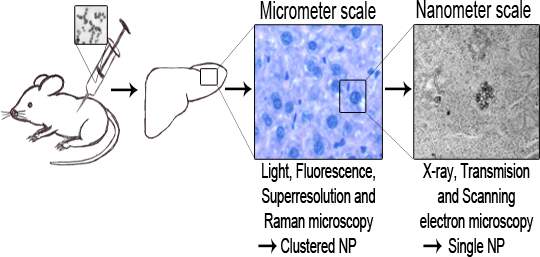
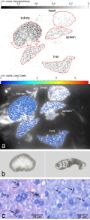
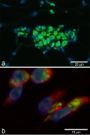
- localize or quantify NP, including elemental analyses by methods such as inductively coupled plasma atomic emission spectroscopy (ICP-AES) or atom absorption spectroscopy (AAS), require lysis, separation or homogenization of the cells and tissues [28][31][32]. The resulting consequence is a complete and




X-ray photoelectron spectroscopy of graphitic carbon nanomaterials doped with heteroatoms
Beilstein J. Nanotechnol. 2015, 6, 177–192, doi:10.3762/bjnano.6.17

- double-walled carbon nanotubes, and for N-MWCNTs and N-graphene restrict ourselves to summarize studies in which synchrotron radiation or an additional complementary technique (such as STM, EELS or X-ray absorption spectroscopy) was used for probing the doping. Table 2 contains our survey, with both the


Materials and characterization techniques for high-temperature polymer electrolyte membrane fuel cells
Beilstein J. Nanotechnol. 2015, 6, 68–83, doi:10.3762/bjnano.6.8

- electrochemical stripping. Yet there has been no published data on the issue of phosphoric adsorption from this setup. X-ray absorption spectroscopy to investigate the adsorption of phosphoric acid species on platinum Very recently, Kaserer et al. [63] published a study on the catalyst poisoning effect of H3PO4
- in HT-PEM by using in operando X-ray absorption spectroscopy (XAS) incorporating the Δμ technique. The goal of this study was also to investigate phosphoric acid adsorption on platinum in a real fuel cell. The technique is capable to determine adsorbates on the platinum catalyst particles by
- poisoning of Pt-alloy catalysts in the presence of phosphoric acid, Mukerjee and co-workers [64] conducted in situ X-ray absorption spectroscopy experiments. Similar to the previously described study [63], they investigated adsorbates on the catalyst surface by interpreting the X-ray near edge structure