


Search results
Search for "antibiotics" in Full Text gives 83 result(s) in Beilstein Journal of Nanotechnology.
High antiviral effect of TiO2·PL–DNA nanocomposites targeted to conservative regions of (−)RNA and (+)RNA of influenza A virus in cell culture
Beilstein J. Nanotechnol. 2016, 7, 1166–1173, doi:10.3762/bjnano.7.108
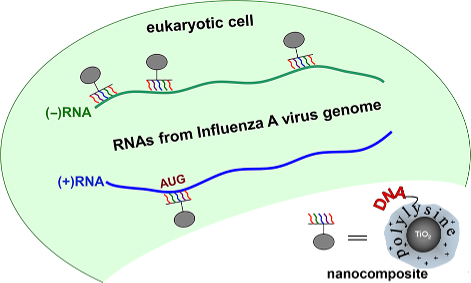
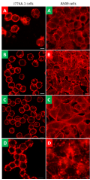
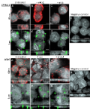
- : RPMI-1640 medium; antibiotics (BioloT, Russia); trypsin, L-glutamine; PBS buffer (Sigma, USA); and fetal calf serum (Gibco, USA). TiO2 nanoparticles were synthesized in the crystal form (anatase) as described in [17]. Сhicken erythrocytes, MDCK cells, and influenza A virus strains Aichi/2/68 (H3N2), A


Reconstitution of the membrane protein OmpF into biomimetic block copolymer–phospholipid hybrid membranes
Beilstein J. Nanotechnol. 2016, 7, 881–892, doi:10.3762/bjnano.7.80
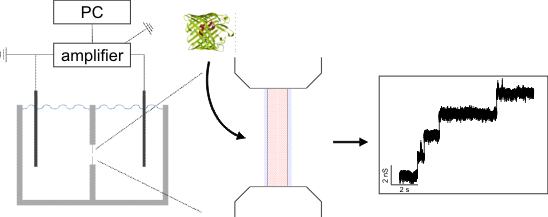
- high potential in technical applications, for example the desalination of water using aquaporins or the controlled release of antibiotics from OmpF-functionalized nanoreactors [11][12][13][14][15]. Although the chemical and physical properties of natural phospholipid bilayers are optimized for the



Antibacterial activity of silver nanoparticles obtained by pulsed laser ablation in pure water and in chloride solution
Beilstein J. Nanotechnol. 2016, 7, 465–473, doi:10.3762/bjnano.7.40
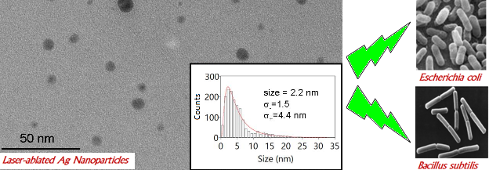
- antibiotics [19]. AgNPs have been synthesized by following various physical, chemical and biological pathways [22][23]. Their microscopic, physical and chemical properties have been found to be closely related to the experimental preparation procedures, the interaction of metal ions with reducing agents, as


Ultrastructural changes in methicillin-resistant Staphylococcus aureus induced by positively charged silver nanoparticles
Beilstein J. Nanotechnol. 2015, 6, 2396–2405, doi:10.3762/bjnano.6.246
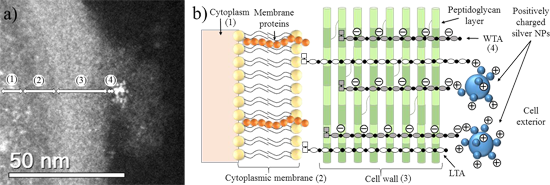
- resistance against almost all antibiotics [3]. As penicillin and other β-lactams were previously very efficient antibiotics in treating staphylococcal infections, the prevalent resistance of methicillin-resistant Staphylococcus aureus (MRSA) has made therapy continuously more complex [4]. S. aureus has also
- become resistant to antibiotics of last resort, including vancomycin [5], daptomycin [6], and linezolid [7]. β-Lactam antibiotics target the synthesis of peptidoglycan (PG), a cell wall polymer that renders structural strength and counteracts the osmotic pressure of the cytoplasm, known as turgor
- pressure. MRSA is resistant to all ß-lactam antibiotics due to its production of an extra penicillin-binding protein (PBP2a) [8]. With scarce management options for MRSA, there is a pressing necessity for the development of novel bactericides [9]. S. aureus is capable of causing chronic bone and joint


Silica micro/nanospheres for theranostics: from bimodal MRI and fluorescent imaging probes to cancer therapy
Beilstein J. Nanotechnol. 2015, 6, 546–558, doi:10.3762/bjnano.6.57
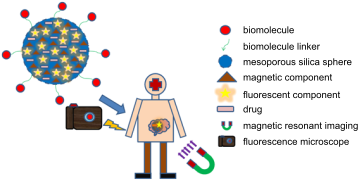
- materials [8], for controlled delivery [9], and in biotechnology for the controlled release of biomolecules such as small drugs [10], therapeutic proteins [11], antibiotics [12], and antibodies [13]. In MRI, the relative difference of the signal intensity between two adjoining tissues can be improved by


Different endocytotic uptake mechanisms for nanoparticles in epithelial cells and macrophages
Beilstein J. Nanotechnol. 2014, 5, 1625–1636, doi:10.3762/bjnano.5.174
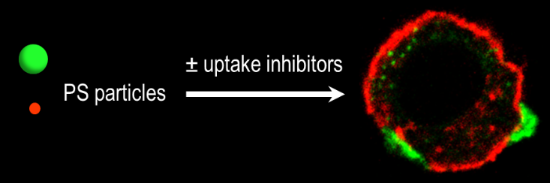
- coverglass system, NC-155382, Nunc, Milian, Geneva, Switzerland), stained with Cell trackerTM violet BMQC dye and incubated for 1 hour at 37 °C and 5% CO2 followed by three washing steps with 1× PBS. Finally, transparent RPMI 1640 medium (no 1% L-glutamine, no antibiotics, no fetal calf serum and without



Antimicrobial properties of CuO nanorods and multi-armed nanoparticles against B. anthracis vegetative cells and endospores
Beilstein J. Nanotechnol. 2014, 5, 789–800, doi:10.3762/bjnano.5.91
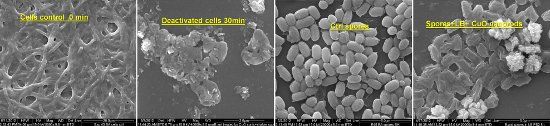
- conditions. The spores can survive for prolonged periods in soil despite extremes of temperature, desiccation, chemical treatment and UV exposure [2][3][4][5][6]. The possible development and release of genetically engineered strains that are resistant against antibiotics and vaccines, similar to those
- nanostructures comparable to established antibiotics as well as their photocatalytic potential. However, we have not come across any report on bactericidal potential of CuO nanoparticles against B. anthracis cells and spores. The earlier findings inspired us to evaluate antibacterial activity of noncorrosive CuO


Sensing surface PEGylation with microcantilevers
Beilstein J. Nanotechnol. 2010, 1, 3–13, doi:10.3762/bjnano.1.2
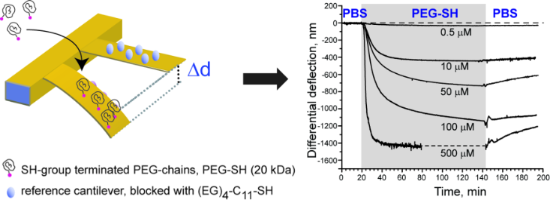
- resonant frequency of an oscillating microcantilever shifts due to mass adsorption on its surface. The versatility of the microcantilever technique as a chemical/biological sensor has been demonstrated for vapors [15], ions [16], DNA [17][18], proteins [19][20], antibiotics [21] and pathogenic



Other Beilstein-Institut Open Science Activities



