


Search results
Search for "breast cancer" in Full Text gives 84 result(s) in Beilstein Journal of Nanotechnology.
Early breast cancer screening using iron/iron oxide-based nanoplatforms with sub-femtomolar limits of detection
Beilstein J. Nanotechnol. 2016, 7, 364–373, doi:10.3762/bjnano.7.33
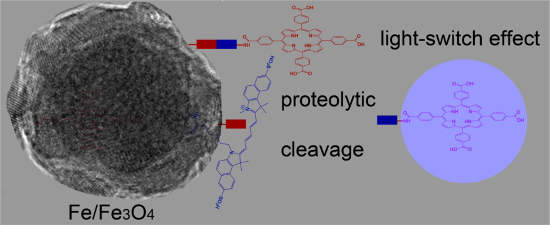
- the central nanoparticle by means of a protease-cleavable consensus sequence and a second dye (Cy 5.5) that is directly linked. Based on the protease activities of urokinase plasminogen activator (uPA), MMPs 1, 2, 3, 7, 9, and 13, as well as CTS B and L, human breast cancer can be detected at stage I
- by means of a simple serum test. By monitoring CTS B and L stage 0 detection may be achieved. This initial study, comprised of 46 breast cancer patients and 20 apparently healthy human subjects, demonstrates the feasibility of protease-activity-based liquid biopsies for early cancer diagnosis
- . Keywords: biophotonics; breast cancer; iron/iron oxide nanoparticle; liquid biopsy; nanodiagnostics detection; nanomedicine; sub-femtomolar limit of detection; Introduction We have detected stage I breast cancer in human patients with statistical significance by means of a simple serum test using highly


Optimized design of a nanostructured SPCE-based multipurpose biosensing platform formed by ferrocene-tethered electrochemically-deposited cauliflower-shaped gold nanoparticles
Beilstein J. Nanotechnol. 2015, 6, 1840–1852, doi:10.3762/bjnano.6.187
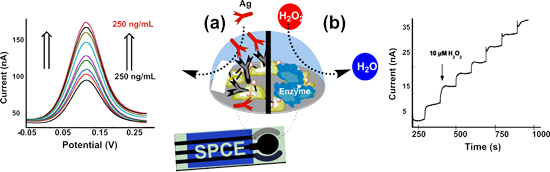
- . prepared a nanocomposite consisting of reduced graphene oxide hybridized with electrochemically co-reduced gold nanoparticles and ferrocene as a sensitive immunosensor of breast cancer biomarkers [14]. Very recently, Mars et al. showed that the aggregation of gold nanoparticles through a ferrocene-based


PLGA nanoparticles as a platform for vitamin D-based cancer therapy
Beilstein J. Nanotechnol. 2015, 6, 1306–1318, doi:10.3762/bjnano.6.135
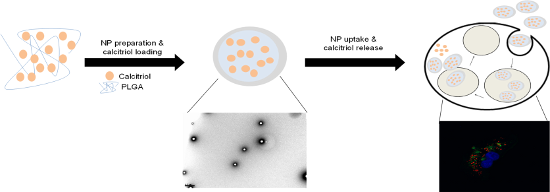
- inhibition when compared to free calcidiol, and the PLA NPs enhanced the intracellular delivery of vitamin in breast cancer cells [14]. In another work, Bonor et al. [23] developed calcitriol-conjugated quantum dots to analyze calcitriol distribution and dynamics in mouse myoblast cells. The authors


Silica micro/nanospheres for theranostics: from bimodal MRI and fluorescent imaging probes to cancer therapy
Beilstein J. Nanotechnol. 2015, 6, 546–558, doi:10.3762/bjnano.6.57
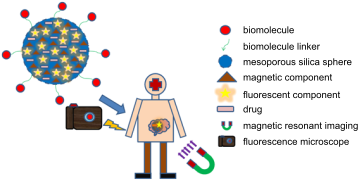
- liver cancer cells, NIH-3T3 mouse fibroblast cells, and 4T1 mouse breast cancer cells. Confocal laser scanning microscopy (CLSM) images indicated a successful bioconjugation of silica-coated QDs and MQDs with a bio-anchored membrane. Again, Salgueiriño-Maceira et al. [44] reported a new class of
- hypointense spot with excellent contrast against the surrounding tissues. Again, Corsi et al. [58] reported the synthesis of a modified hybrid nanocomposite material consisting of magnetic fluorescent NPs for bimodal diagnosis of breast cancer cells. The magnetic Fe3O4 NPs were prepared by using a co


Anticancer efficacy of a supramolecular complex of a 2-diethylaminoethyl–dextran–MMA graft copolymer and paclitaxel used as an artificial enzyme
Beilstein J. Nanotechnol. 2014, 5, 2293–2307, doi:10.3762/bjnano.5.238
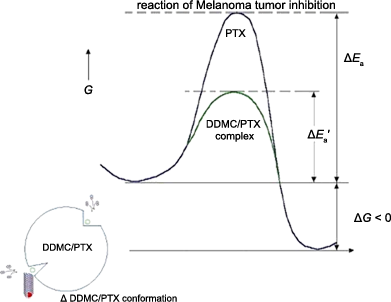
- interacted with the TUBA4A gene encoded the tubulin α-4A chain. Two hours after administration, TXNIP became a hub gene, which was found to act as a key gene in the treatment of breast cancer that was not responsive to PTX. Four hours after administration, the mathematical model for the DNA microarray data
- revealed the activation of several genes downstream of EGR1 and TXNIP. Six hours after administration, CYR61, which is involved in resistance to PTX in breast cancer, became more active and continued to be influenced by EGR1. In this way, cancer cells exposed to anticancer drugs acquire resistance to the


Carbon-based smart nanomaterials in biomedicine and neuroengineering
Beilstein J. Nanotechnol. 2014, 5, 1849–1863, doi:10.3762/bjnano.5.196
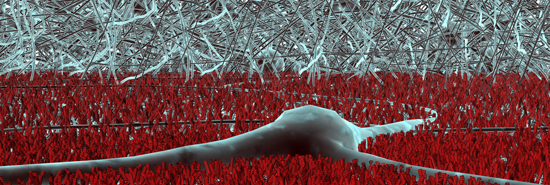
- and water-insoluble chemotherapeutic drugs [102], as well as research involving sulfonic acid groups bound with folic acid in order to target human breast cancer [103]. Furthermore, Weaver and co-workers [104], exploiting the conductive properties of GO sheets, developed an electrically-controlled


The softening of human bladder cancer cells happens at an early stage of the malignancy process
Beilstein J. Nanotechnol. 2014, 5, 447–457, doi:10.3762/bjnano.5.52
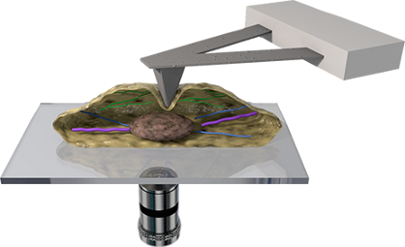
- cancerous cells in the tumor progression [1][2]. The best example is breast cancer, whose solid tumors are detectable in macroscale by palpation whereas single cells show a larger deformability [3]. In this context, it has also been proposed that tumorigenesis in breast tissues is driven by changes in the


Growth behaviour and mechanical properties of PLL/HA multilayer films studied by AFM
Beilstein J. Nanotechnol. 2012, 3, 778–788, doi:10.3762/bjnano.3.87
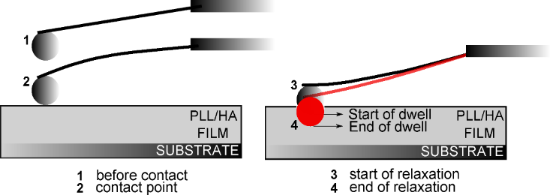
- , back in 1993 [9]. Further measurements include different strains of E. coli with a colloidal probe [10], elastic modulus of human platelet cells [11], human bone cell or skeletal muscle cells [12], breast cancer cells [13][14], hydrogel films [15][16][17], or nanoribbons [18], as well as single


Magnetic nanoparticles for biomedical NMR-based diagnostics
Beilstein J. Nanotechnol. 2010, 1, 142–154, doi:10.3762/bjnano.1.17
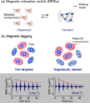
- .) Tumor cell detection and profiling with the µNMR device. (a) Human breast cancer cells (BT474) were labeled with anti-Her2 CLIO and MnFe2O4 nanoparticles. The change in R2 (R2 =1/T2) varied linearly with cell counts, and the detection sensitivity was 10× better using the more magnetic MnFe2O4


Other Beilstein-Institut Open Science Activities



