


Search results
Search for "cell growth" in Full Text gives 86 result(s) in Beilstein Journal of Nanotechnology.
Effect of silver nanoparticles on human mesenchymal stem cell differentiation
Beilstein J. Nanotechnol. 2014, 5, 2058–2069, doi:10.3762/bjnano.5.214
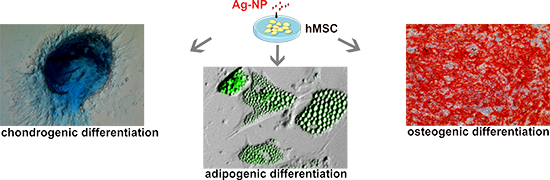
- phosphatase [50]. Metal ions are generally assumed to have a significant effect on the activation of redox-sensitive transcription factors such as NF-κB or AP-1 [51]. These transcription factors are involved in inflammatory responses and are important for processes such as differentiation and cell growth [52


Carbon-based smart nanomaterials in biomedicine and neuroengineering
Beilstein J. Nanotechnol. 2014, 5, 1849–1863, doi:10.3762/bjnano.5.196
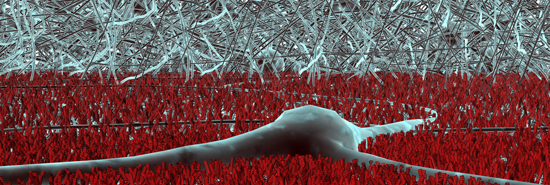
- substrates for cell growth, by virtue of their peerless optical, electrical, thermal, and mechanical properties. In this review we discuss the state-of-the-art in the applications of nanomaterials in biological and biomedical fields, with a particular emphasis on neuroengineering. Keywords: carbon nanotubes
- -regulated for hNSCs grown on graphene. Akhavan et al. [145] studied the differentiation of hNSCs on GO nanogrids deposited on a substrate made of TiO2 nanoparticles over SiO2, which made them photosensitive. The authors observed an increase in cell growth and alignment along the geometrical pattern of the


Biocompatibility of cerium dioxide and silicon dioxide nanoparticles with endothelial cells
Beilstein J. Nanotechnol. 2014, 5, 1795–1807, doi:10.3762/bjnano.5.190
- Chemie GmbH, Germany)); or endothelial cell growth medium (Ready-to-use, PromoCell GmbH, Germany; supplemented with SupplementMix, PromoCell GmbH, Germany; FBS 2% (v/v))). Cell culture experiments The experiments were performed with immortalized human microvascular endothelial cells (HMEC-1; Centers for
- , Germany), GlutaMAXTM I 100X (1% (v/v), Life Technologies GmbH, Germany), hydrocortisone (1 µg/mL; Sigma-Aldrich Chemie GmbH, Germany) and epidermal growth factor (10 ng/mL; Life Technologies GmbH, Germany). HUVEC were cultivated in endothelial cell growth medium (Ready-to-use, PromoCell GmbH, Germany


Precise quantification of silica and ceria nanoparticle uptake revealed by 3D fluorescence microscopy
Beilstein J. Nanotechnol. 2014, 5, 1616–1624, doi:10.3762/bjnano.5.173
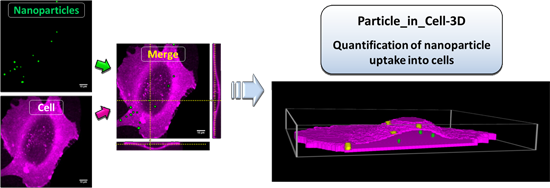
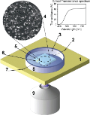
- 1.1 × 10⁴ cells·cm−2. HeLa and HUVEC cells were incubated with silica nanoparticles as described before [4]. HMEC-1 cells were incubated with ceria nanoparticles in humidified 5% CO2 atmosphere at 37 °C. The 10 µg·mL−1 solution of ceria nanoparticles was prepared in the same cell medium used for cell
- growth. Before addition to cells, the solution was vortexed for 10 s, treated in an ultrasonic bath for 10 min and vortexed again for 10 s. After the incubation time, and just before measurements, the cell membrane was stained with a solution of 10 µg·mL−1 wheat germ agglutinin, Alexa Fluor® 488 (Life


Growth and structural discrimination of cortical neurons on randomly oriented and vertically aligned dense carbon nanotube networks
Beilstein J. Nanotechnol. 2014, 5, 1575–1579, doi:10.3762/bjnano.5.169
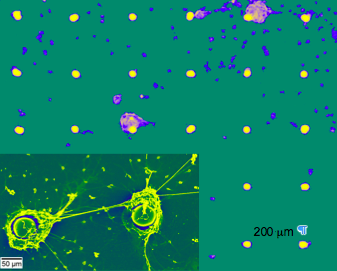
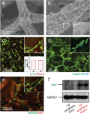
- poly-D-lysine) prior to cell cultivation was performed. The cell growth behaviour in vitro was studied by scanning electron microscopy (SEM) on pristine vertically aligned CNT arrays and compared to growth of cortical neurons on islands of randomly oriented CNTs under the same conditions. The cells had
- reported ability to tailor the hydrophilicity and hydrophobicity of such 3D aligned CNT structures over a wide range from superhydrophilic to superhydrophobic [29] the directional cell growth on such structures should be possible and would thus allow understanding these observed preferences from a surface
- chemistry viewpoint in future work. In conclusion, pristine randomly and vertically aligned CNTs architectures were studied with respect their use as substrates for neuron cell growth. Both CNT architectures are unique hierarchical structures to direct and control neural cell growth. To the best of our


Current state of laser synthesis of metal and alloy nanoparticles as ligand-free reference materials for nano-toxicological assays
Beilstein J. Nanotechnol. 2014, 5, 1523–1541, doi:10.3762/bjnano.5.165
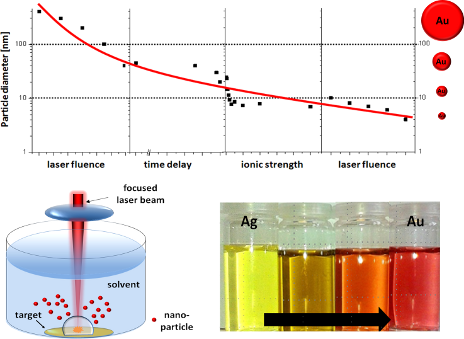
- nanoscopic wear debris [6][7][8] which have been reported to accumulate in lymph nodes, bone marrow, liver and spleen [9]. In that context toxicological effects, including impaired DNA replication and cell growth as well as inflammatory responses, are meant to originate from release of toxic heavy metal ions


The softening of human bladder cancer cells happens at an early stage of the malignancy process
Beilstein J. Nanotechnol. 2014, 5, 447–457, doi:10.3762/bjnano.5.52
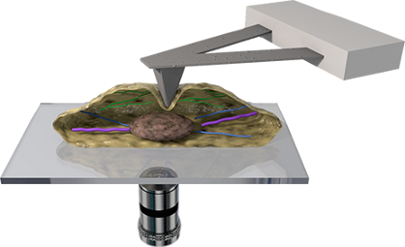
- , cancer progression changes its role by using it as a tool to alter cell growth, stiffness, movement and invasiveness [26]. The actin cytoskeleton serves as a scaffold for signaling, as a connection to the extracellular environment, and as a mechanosensor. However, there is no general evidence that


Near-infrared dye loaded polymeric nanoparticles for cancer imaging and therapy and cellular response after laser-induced heating
Beilstein J. Nanotechnol. 2014, 5, 313–322, doi:10.3762/bjnano.5.35
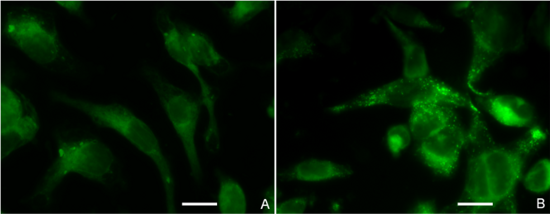
- significantly impact cell growth. It is also noteworthy that NP concentrations equivalent to 5 µM IR820 had a slight cell growth inhibition effect on MES-SA cells. This is in line with our previous observations on the cytotoxicity effects of free IR820 on MES-SA, and seems to be related to the fact that drug
- publications [24][42]. The effect of each treatment on cell growth was normalized to the growth of the control group, which did not receive any treatment. Cell-based assays for the detection of ROS, HIF-1 and VEGF expression Study of ROS expression Intracellular ROS level was measured by using the fluorescent


Growth behaviour and mechanical properties of PLL/HA multilayer films studied by AFM
Beilstein J. Nanotechnol. 2012, 3, 778–788, doi:10.3762/bjnano.3.87

- ]. Engler et al. reported a similar spreading behaviour for smooth-muscle cells [3]. An enhanced cell growth was observed also for cross-linked chitosan/hyaluronan multilayer films, as compared to the native ones [8]. These reports suggest that polyelectrolyte multilayer films are ideal matrices for bio


Colloidal lithography for fabricating patterned polymer-brush microstructures
Beilstein J. Nanotechnol. 2012, 3, 397–403, doi:10.3762/bjnano.3.46
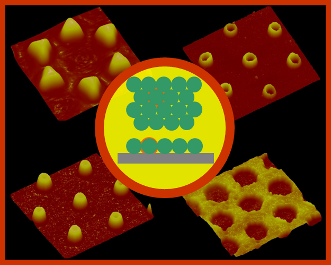
- brushes [13] are of increasing importance especially for array-based platforms because of their ability to modify surface properties and their potential applications in surface-based technologies, such as protein-resistant coatings, switchable sensors, substrates for cell-growth control, and for the
- array-based platforms and applications in surface-based technologies, such as protein-resistant coatings, switchable sensors, substrates for cell-growth control, and for separation of biological molecules. We note that for convenience and proof-of-concept of our approach, we used PS microspheres to


Approaches to nanostructure control and functionalizations of polymer@silica hybrid nanograss generated by biomimetic silica mineralization on a self-assembled polyamine layer
Beilstein J. Nanotechnol. 2011, 2, 760–773, doi:10.3762/bjnano.2.84
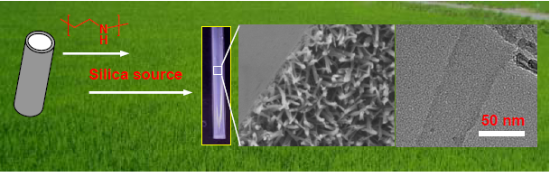
- , nanostructured thin films on substrates with tunable nanostructure and surface morphology are of great importance for various applications, such as photoelectronics [1], high-efficiency sensing and bioanalysis [2][3], protein adsorption [4], cell growth [5], surface wettability control [6] and liquid





