


Search results
Search for "chemical synthesis" in Full Text gives 86 result(s) in Beilstein Journal of Nanotechnology.
Influence of particle size and fluorination ratio of CFx precursor compounds on the electrochemical performance of C–FeF2 nanocomposites for reversible lithium storage
Beilstein J. Nanotechnol. 2013, 4, 705–713, doi:10.3762/bjnano.4.80
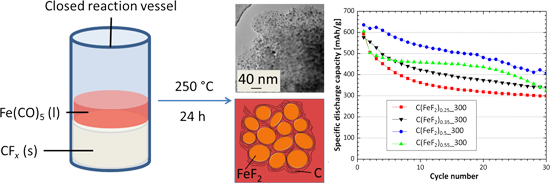
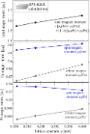
- iron nanoparticles in the carbon matrix, their specific capacity was about 250 mAh/g, which is only one third of the theoretical value. To improve the capacity and to still benefit from a stabilizing and tightly attached carbon matrix, a new solid-state chemical synthesis, which is based on a reaction


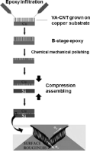
Functionalization of vertically aligned carbon nanotubes
Beilstein J. Nanotechnol. 2013, 4, 129–152, doi:10.3762/bjnano.4.14
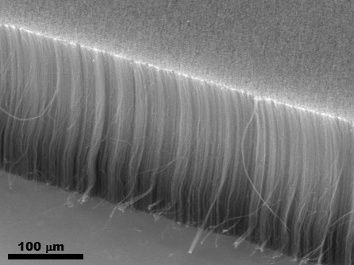
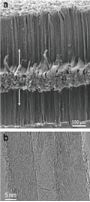
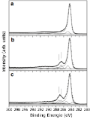
- , fluorinated non-aligned carbon nanotubes have been intensively investigated because of their potential applications [76]. Fluorination has been reported to impact on the morphology and on the physical and chemical properties of the CNTs, which can be used, for instance, as new precursors for chemical
- synthesis due to their better solubility and the creation of weaker C–F bonds [76]. Fluorinated CNTs are better electron acceptors, i.e., more prone to interact than pristine CNTs because both the Fermi energy level and conduction bands shift towards lower energy upon fluorination. Regarding VA-CNTs








Current–voltage characteristics of single-molecule diarylethene junctions measured with adjustable gold electrodes in solution
Beilstein J. Nanotechnol. 2012, 3, 798–808, doi:10.3762/bjnano.3.89
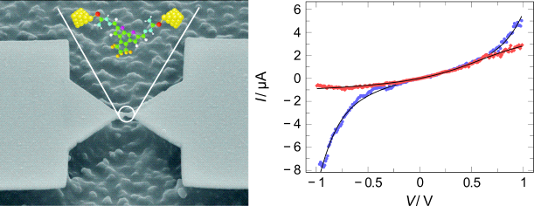
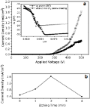
- suitable for applications. Results and Discussion We investigate charge transport through the species labeled TSC, 4Py and MN, shown in Figure 1c, contacted by adjustable Au electrodes (Figure 1a) in a MCBJ system operating at room temperature in a liquid environment [33][35][36]. The chemical synthesis


Surface functionalization of aluminosilicate nanotubes with organic molecules
Beilstein J. Nanotechnol. 2012, 3, 82–100, doi:10.3762/bjnano.3.10
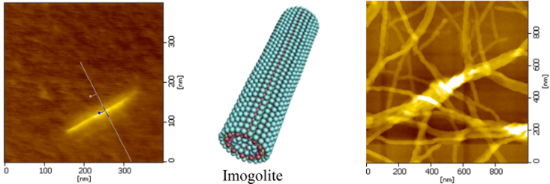
- imogolites are observed in the initial stage of synthesis, and the average length of the nanotubes increases rapidly with reaction time [28]. Imogolite nanotubes through chemical synthesis and natural resource The synthesis of imogolite was first reported by Farmer et al. in 1977 [25]. As a typical


Extended X-ray absorption fine structure of bimetallic nanoparticles
Beilstein J. Nanotechnol. 2011, 2, 237–251, doi:10.3762/bjnano.2.28
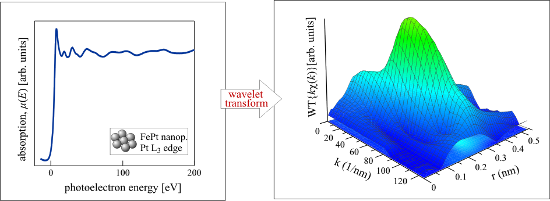
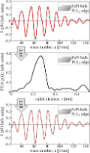
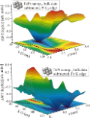
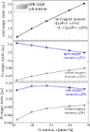
- and other contaminations on the investigated structure, EXAFS of in situ cleaned and oxide-free FePt nanoparticles seems to be a suitable tool to study the intrinsic structural properties of pure metallic nanoparticles. Wet-chemical synthesis A possible organometallic route to synthesise FePt





Magnetic nanoparticles for biomedical NMR-based diagnostics
Beilstein J. Nanotechnol. 2010, 1, 142–154, doi:10.3762/bjnano.1.17
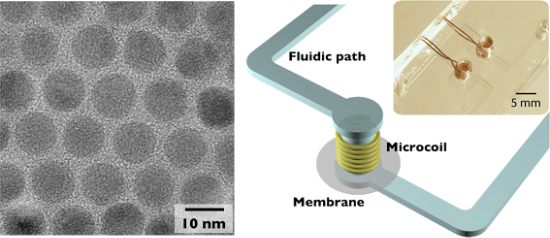
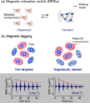
- tremendous potential in the field of biomedical applications, primarily on account of their similar size to biological molecules, and because their properties can be fine-tuned during chemical synthesis. In particular, MNPs can be synthesized in such a way as to possess unique superparamagnetic properties


Ultrafine metallic Fe nanoparticles: synthesis, structure and magnetism
Beilstein J. Nanotechnol. 2010, 1, 108–118, doi:10.3762/bjnano.1.13
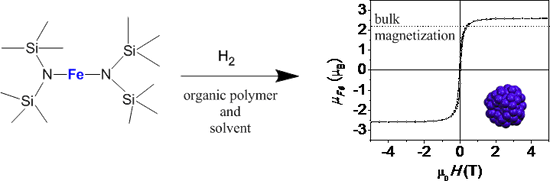
- organometallic approach [17]. We have, for example, shown that cobalt NPs prepared by the decomposition of an organometallic precursor under mild conditions in the presence of a stabilising polymer exhibit physical properties similar to those of free cobalt clusters [18]. In this article, we report the chemical
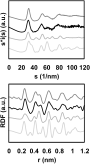
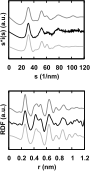
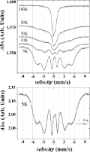
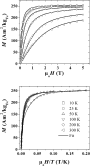
- synthesis of well-isolated Fe NPs embedded in a polymer, with diameters of less than 2 nm. The structural and chemical properties have been investigated by transmission electron microscopy, wide angle X-ray scattering (WAXS), and X-ray absorption near-edge structure (XANES). Preliminary results of this work





Magnetic coupling mechanisms in particle/thin film composite systems
Beilstein J. Nanotechnol. 2010, 1, 101–107, doi:10.3762/bjnano.1.12
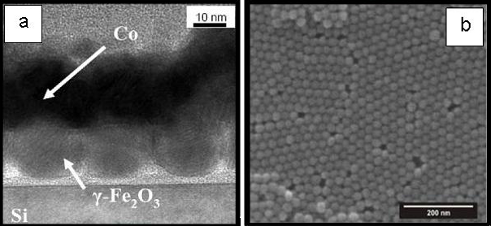
- the use of both chemical and physical growth methods. The composite material can be successfully prepared over areas larger than 100 mm2 and is obtained by combining chemical synthesis of the NPs, their mechanical self-assembly on top of a substrate, and ion-beam sputtering of a magnetic layer. All


Review and outlook: from single nanoparticles to self-assembled monolayers and granular GMR sensors
Beilstein J. Nanotechnol. 2010, 1, 75–93, doi:10.3762/bjnano.1.10
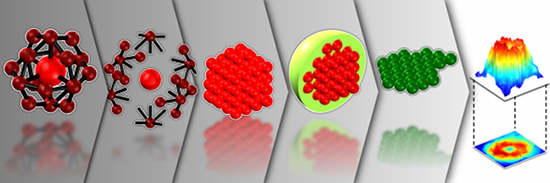
- mentioned in the preliminary section, bottom-up synthesis methods are well suited for these requirements. In addition, particle size distributions can be further refined via sedimentation or by magnetic separation subsequent to chemical synthesis [15]. 2.1 Driving forces to self-assemblies The organization





Aerosol assisted fabrication of two dimensional ZnO island arrays and honeycomb patterns with identical lattice structures
Beilstein J. Nanotechnol. 2010, 1, 71–74, doi:10.3762/bjnano.1.9
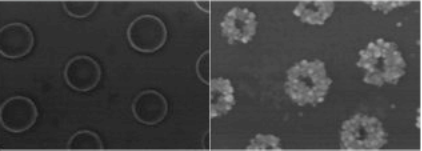
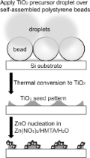
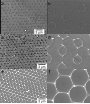
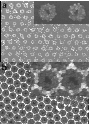
- honeycomb patterns consisting of ZnO nanocrystal clusters were fabricated on predefined TiO2 seed patterns prepared by vacuum free, aerosol assisted wet-chemical synthesis. The TiO2 seed patterns were prepared by applying an aerosol of a water soluble titanium complex on hexagonally close-packed polystyrene

Flash laser annealing for controlling size and shape of magnetic alloy nanoparticles
Beilstein J. Nanotechnol. 2010, 1, 55–59, doi:10.3762/bjnano.1.7
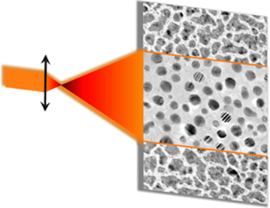
- applications depend on the ability to synthesize NPs with a very good control over the size distribution and the chemical composition. Up to now, only chemical synthesis is able to produce monodisperse CoPt [6] and FePt [7][8] NPs with a polydispersity (that is, standard deviation divided by the mean size) as





