


Search results
Search for "composite materials" in Full Text gives 130 result(s) in Beilstein Journal of Nanotechnology.
Synthesis of metal-fluoride nanoparticles supported on thermally reduced graphite oxide
Beilstein J. Nanotechnol. 2017, 8, 2474–2483, doi:10.3762/bjnano.8.247
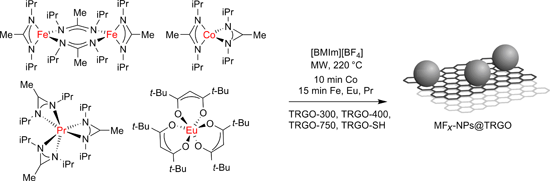
- important technical applications [15][16][17][18][19][20][21][22]. They can be used as composite materials [23][24], in chemical sensors [25], electrodes for fuel cells [26][27][28], for catalysis [29][30][31][32] or for hydrogen storage [33]. Because of their high ionic charge, polarity and dielectric


Laser-assisted fabrication of gold nanoparticle-composed structures embedded in borosilicate glass
Beilstein J. Nanotechnol. 2017, 8, 2454–2463, doi:10.3762/bjnano.8.244
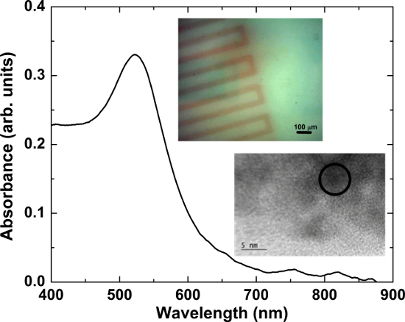
- glass; laser nanostructuring; optical properties of composite materials; Introduction The unique optical properties of noble-metal nanoparticles continue to attract the attention of researchers, especially in view of the potential industrial applications. The basic characteristics of the interaction of
- mainly directed at studying and describing the properties of single nanoparticles and their two-dimensional ensembles, in recent years, research has tended to deal with more complex systems, including three-dimensional architectures, composite materials consisting of nanoparticles, and three-dimensional


High-stress study of bioinspired multifunctional PEDOT:PSS/nanoclay nanocomposites using AFM, SEM and numerical simulation
Beilstein J. Nanotechnol. 2017, 8, 2069–2082, doi:10.3762/bjnano.8.207
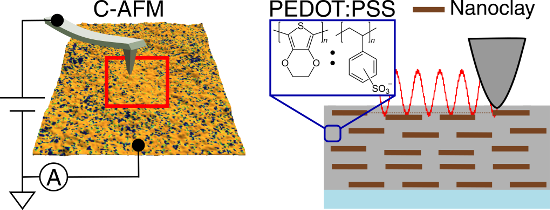
- dimensions and geometry of the tip. Nevertheless, the measured nanoclay dimensions are in both cases near the expected range (25 ± 4 nm [11]). Composite materials based on nanoclays have a distinctive fractured surface morphology. One way of verifying the layered structure of the nanocomposites is to image
- can be estimated using models for composite materials’ Young’s modulus and stress behavior (σ = Eε). When the yield strength is considered as the limit of the linear response, the modified Pukánszky model [65] describes the stress. This model has been optimized for describing the yield strength of


A systematic study of the controlled generation of crystalline iron oxide nanoparticles on graphene using a chemical etching process
Beilstein J. Nanotechnol. 2017, 8, 2017–2025, doi:10.3762/bjnano.8.202
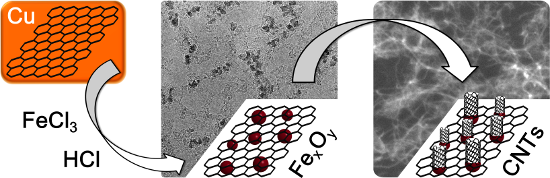
- detail and analyzed different parameters determining the etching outcome. Interestingly we could pinpoint conditions which allow control of the iron oxide particle formation on graphene. With that, we were able to devise a method for graphene/metal oxide composite materials by controlling the Faradaic


Enhancement of mechanical and electrical properties of continuous-fiber-reinforced epoxy composites with stacked graphene
Beilstein J. Nanotechnol. 2017, 8, 1909–1918, doi:10.3762/bjnano.8.191
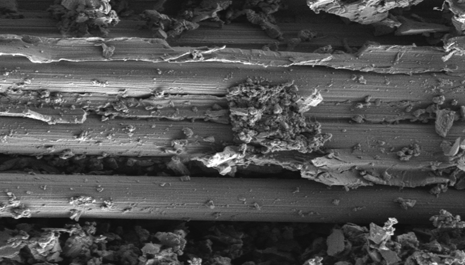
- of graphene, along with the high electrical conductivity, promote percolation thresholds much lower than with metallic powders, carbon fibers or carbon black [13]. Epoxy resins are used as a matrix in high-performance composite materials for aerospace structures, coatings and adhesives for a variety
- formulation (by weight) was as follows: epoxy: 100 parts; SAA: 1 pph; expanded graphite (EG): 2.5 pph (or 2.1 wt %); hardener TETA: 14.1 pph. Fabrication of composite materials Composite laminates were prepared using carbon fiber (CF) fabric, Kevlar fabric alone or a combination of CF/Kevlar combinations, and
- surface and volume, was determined with an electrometer (Keithley 6517D). Typically, the characterization comprised five specimens with standard deviations of 5–8%. Morphology of the composite materials was characterized with high-resolution scanning electron microscopy (Zeiss). Specimens were cut from


Oxidative stabilization of polyacrylonitrile nanofibers and carbon nanofibers containing graphene oxide (GO): a spectroscopic and electrochemical study
Beilstein J. Nanotechnol. 2017, 8, 1616–1628, doi:10.3762/bjnano.8.161
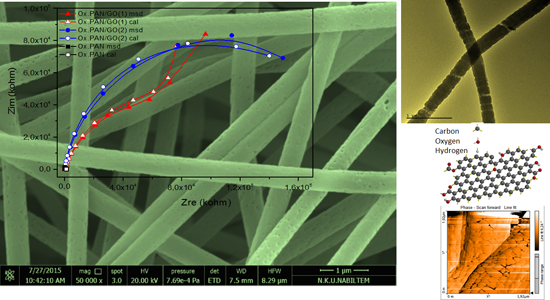
- micrometers and exhibit a high surface area and a high electrical conductivity. Also, nanofibers can be used with polymeric structures to generate composite materials to improve the electrochemical properties of polymeric structures [1][2][3]. Nanofiber-reinforced polymeric structures present improved


Two-dimensional carbon-based nanocomposites for photocatalytic energy generation and environmental remediation applications
Beilstein J. Nanotechnol. 2017, 8, 1571–1600, doi:10.3762/bjnano.8.159
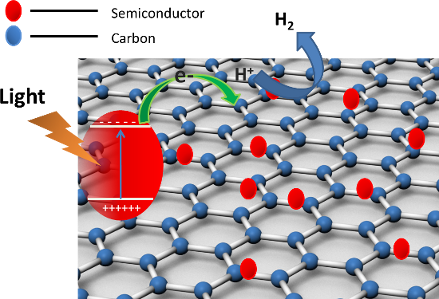
- photocatalysis [47]. As graphene is a zero band gap material and susceptible to oxidative reactions, it is often combined with other semiconductors and metallic nanostructures to form composite materials suitable for various applications, including photocatalysis. Furthermore, due to the exceptional electrical


Synthesis of [Fe(Leq)(Lax)]n coordination polymer nanoparticles using blockcopolymer micelles
Beilstein J. Nanotechnol. 2017, 8, 1318–1327, doi:10.3762/bjnano.8.133
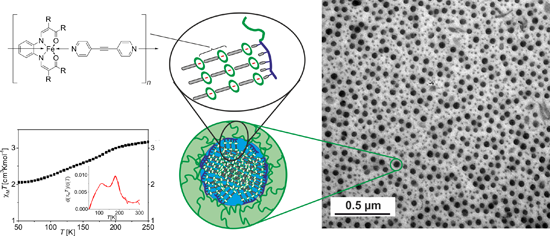
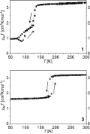
- temperature. Applications demand compounds with defined properties concerning the size and switchability that are maintained when the compound is integrated into composite materials. Here, we report the synthesis of [Fe(Leq)(Lax)]n coordination polymer (CP) nanoparticles using self-assembled polystyrene-block
- (low iron content) and soft (low Lamb–Mössbauer factor) composite materials, only the more crystalline samples with a high CP amount (d and e) showing spin crossover were characterised. The corresponding spectra are given in Figure 3 (1d and 3e) and in Supporting Information File 1, Figure S5. The
- Mössbauer parameters are summarised in Supporting Information File 1, Table S2. For the composite materials, different iron species are possible due to the coordination of the starting complex [Fe(Leq)] to the vinylpyridine parts of the equatorial ligand, which can be distinguished using Mössbauer



Recombinant DNA technology and click chemistry: a powerful combination for generating a hybrid elastin-like-statherin hydrogel to control calcium phosphate mineralization
Beilstein J. Nanotechnol. 2017, 8, 772–783, doi:10.3762/bjnano.8.80
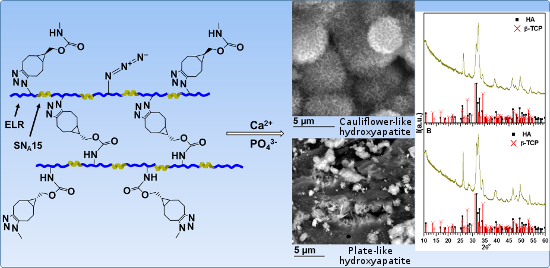
- in (composite) materials for bone regeneration [2][8]. Due to the correlation between the (crystal) structure and properties of CP, it is important to be able to control its nanostructures [9][10][11]. For example, hollow and mesoporous CP particles can be used for drug delivery due to their high



Synthesis of graphene–transition metal oxide hybrid nanoparticles and their application in various fields
Beilstein J. Nanotechnol. 2017, 8, 688–714, doi:10.3762/bjnano.8.74
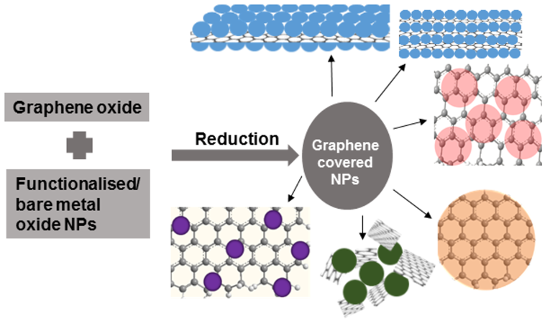
- comprehensively discuss the different methods for the synthesis of graphene and graphene–NP hybrid systems, but do not cover graphene–NPs composite materials. We then separately review the synthesis, the morphology of graphene–TMO NP hybrids of first row, d-block element oxides, and their applications in various
- deposition methods [195][196]. Like other graphene–metaloxide hybrid systems, NiO–graphene hybrids are largely used for LIB applications [197][198][199]. Monolayer graphene/NiO nanosheet composite materials also have large application for supercapacitors [200][201][202]. 3D NiO/ultrathin derived graphene






Carbon nanotube-wrapped Fe2O3 anode with improved performance for lithium-ion batteries
Beilstein J. Nanotechnol. 2017, 8, 649–656, doi:10.3762/bjnano.8.69
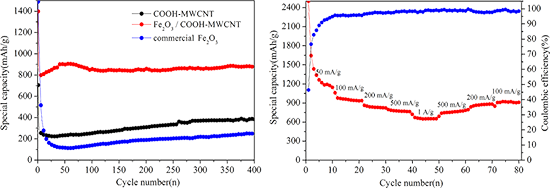
- . of composite materials. In this method, an Fe-based metal organic framework [MIL-88B (Fe)] was used as a precursor for the synthesis of spindle-like α-Fe2O3 nanoparticles with a mesoporous structure of less than 20 nm. When used as anode material for LIBs, these nanoparticles demonstrated a capacity


Graphene functionalised by laser-ablated V2O5 for a highly sensitive NH3 sensor
Beilstein J. Nanotechnol. 2017, 8, 571–578, doi:10.3762/bjnano.8.61
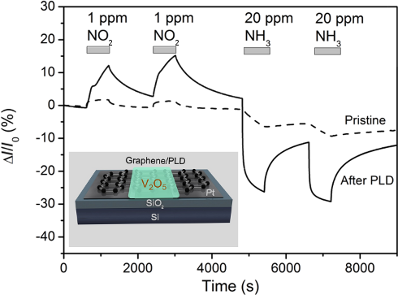
- many advanced composite materials have been produced for diverse applications [13]. The possibility to evaporate practically any solid material, tune the kinetic energy of particles between 0.1 to 1000 eV, as well as the ability to control the amount of deposited material from about 1/100th of a


The longstanding challenge of the nanocrystallization of 1,3,5-trinitroperhydro-1,3,5-triazine (RDX)
Beilstein J. Nanotechnol. 2017, 8, 452–466, doi:10.3762/bjnano.8.49
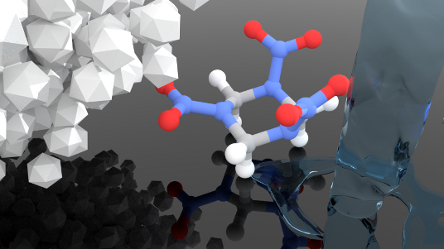
- advantages of this simple technique to process energetic compounds as pure and composite materials. The process sprays a solution containing a dissolved compound or particles in suspension into a hot gaseous stream (air or nitrogen) thus crystallizing into particles and/or drying the granules. van der
- method. However, the SFE clearly demonstrated the feasibility of faster and quite efficient crystallization of inorganic particles from precursors. Le Brize and Spitzer [120] processed energetic composite materials by SFE: a sub-micrometer structure was evidenced from SEM pictures and an higher degree of


Biological and biomimetic materials and surfaces
Beilstein J. Nanotechnol. 2017, 8, 403–407, doi:10.3762/bjnano.8.42

- siliceous teeth consist of composite materials with silica-based cap-like structures situated on chitin-bearing cuticle sockets that are connected through flexible resilient areas containing resilin protein. This composite architecture contributes to the performance of the siliceous teeth in damaging
Graphene–polymer coating for the realization of strain sensors
Beilstein J. Nanotechnol. 2017, 8, 21–27, doi:10.3762/bjnano.8.3
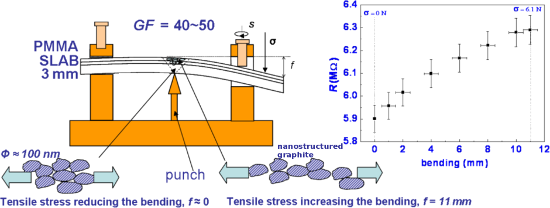
- various composite materials. Electrical current variation due to the mechanical stress as measured on a PMMA/graphene sample. Time dependence of the electrical current for PMMA/graphene. A constant voltage bias V = 5 V is applied to the sample while the applied force varies cyclically between unload (F


Nanostructured SnO2–ZnO composite gas sensors for selective detection of carbon monoxide
Beilstein J. Nanotechnol. 2016, 7, 2045–2056, doi:10.3762/bjnano.7.195
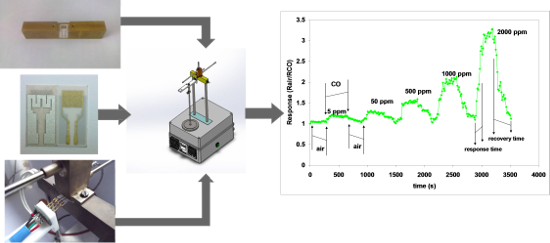
- sensors must be selective towards a specific gas in a given gaseous environment. This is still a challenging issue for the commercially available gas sensors. As it was discussed in the introduction section of this article, selectivity towards a specific gas may be tuned by using composite materials. For




Layered composites of PEDOT/PSS/nanoparticles and PEDOT/PSS/phthalocyanines as electron mediators for sensors and biosensors
Beilstein J. Nanotechnol. 2016, 7, 1948–1959, doi:10.3762/bjnano.7.186
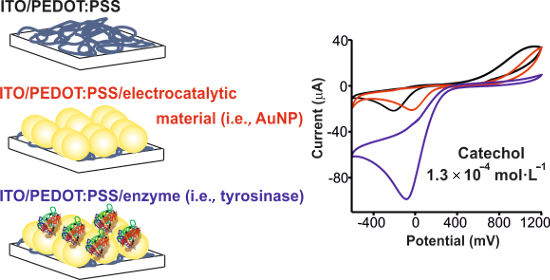
- biosensors containing tyrosinase and laccase, and they combine the recognition and biocatalytic properties of biomolecules with the unique catalytic features of composite materials. The observed increase in the intensity of the responses allowed detection limits of 1 × 10⁻⁷ mol·L−1 to be attained. Keywords


3D printing of mineral–polymer bone substitutes based on sodium alginate and calcium phosphate
Beilstein J. Nanotechnol. 2016, 7, 1794–1799, doi:10.3762/bjnano.7.172
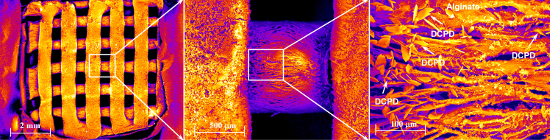
- diameter ≈800 μm) and were found to possess compressive strengths from 0.45 to 1.0 MPa. This new approach can be effectively applied for fabrication of biocompatible scaffolds for bone tissue engineering constructions. Keywords: 3D printing; bone graft; calcium phosphate; composite materials; sodium
- the carboxylate group of alginate. This physical bonding translates to mixtures that are rich in electronic pairs leading to a higher reactivity and mineralization potential that can be transformed into composite materials [13]. According to X-ray diffraction data, synthesis in the presence of
- properties of 3D printed samples are relatively low due to the weak bonding between different printed layers. However, the compressive strength of composite materials increased with alginate concentration from 0.45 MPa up to about 1.0 MPa at p ≤ 0.005. The increase in the compressive strength can be


Effective intercalation of zein into Na-montmorillonite: role of the protein components and use of the developed biointerfaces
Beilstein J. Nanotechnol. 2016, 7, 1772–1782, doi:10.3762/bjnano.7.170
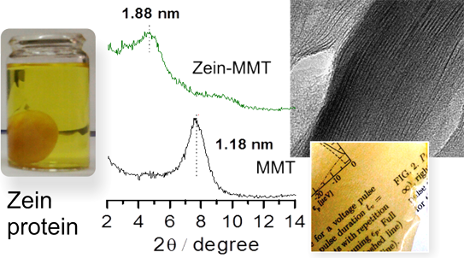
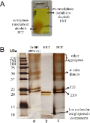
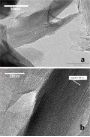
- zein becomes essential for the preparation of materials based on this protein. In this sense, there are reports on zein–montmorillonite composite materials prepared by thermo-plasticization and blown-extrusion techniques [20][21], or from protein solved in ethanol/water mixtures [22]. However, in these




Properties of Ni and Ni–Fe nanowires electrochemically deposited into a porous alumina template
Beilstein J. Nanotechnol. 2016, 7, 1709–1717, doi:10.3762/bjnano.7.163
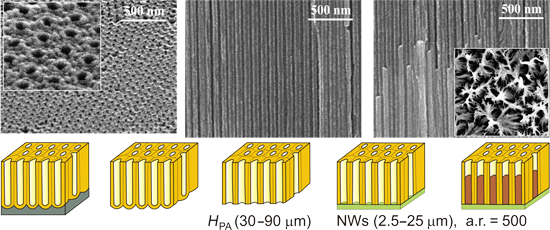
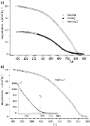
- the alumina template are presented in Table 4. Further, the investigations of magnetic properties of the obtained composite materials, such as Curie temperature (TC) and specific magnetization as a function of temperature σ(T) have been performed and analyzed. The temperature dependence of σ(T) was


A composite structure based on reduced graphene oxide and metal oxide nanomaterials for chemical sensors
Beilstein J. Nanotechnol. 2016, 7, 1421–1427, doi:10.3762/bjnano.7.133
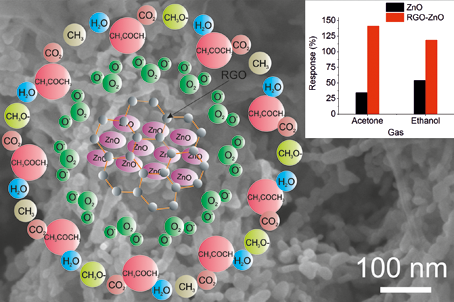
- , sensitivity and selectivity) with respect to the application of ZnO nanomaterials in chemical gas sensors that need to be overcome [7][14]. Hybrid structures composed of two or more different materials with diverse functional properties are of great interest to develop advanced composite materials for


Fabrication and characterization of branched carbon nanostructures
Beilstein J. Nanotechnol. 2016, 7, 1260–1266, doi:10.3762/bjnano.7.116
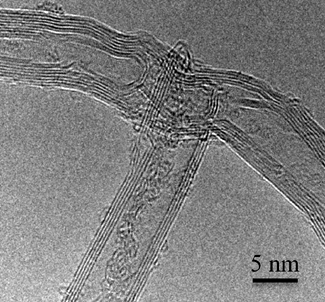
- improve the structural behavior of composite materials through reinforcement. This arises from two well-known, long standing problems in this research field: (a) inhomogeneous dispersion of the filler, which can lead to aggregation and (b) insufficient reinforcement arising from bonding interactions
- opens promising avenues for the development and manufacturing of nanocarbon composites for a variety of commercial applications. The fabrication and testing of composite materials with branched MWCNTs as well as measurements of electrical conductivity are currently in progress. Experimental The MWCNTs


Manufacturing and investigation of physical properties of polyacrylonitrile nanofibre composites with SiO2, TiO2 and Bi2O3 nanoparticles
Beilstein J. Nanotechnol. 2016, 7, 1141–1155, doi:10.3762/bjnano.7.106
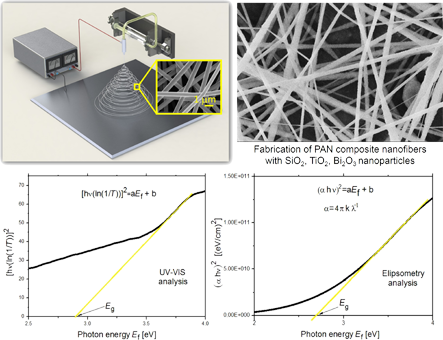
- , thermal and tribological design properties of the obtained composite materials can be controlled. The studies carried out hitherto have shown [14][15][16][17] that using SiO2 or TiO2 nanoparticles in a polymer matrix as the reinforcing phase (in the case of SiO2 even amounts as low as 1 wt % and without



Photocurrent generation in carbon nanotube/cubic-phase HfO2 nanoparticle hybrid nanocomposites
Beilstein J. Nanotechnol. 2016, 7, 1075–1085, doi:10.3762/bjnano.7.101
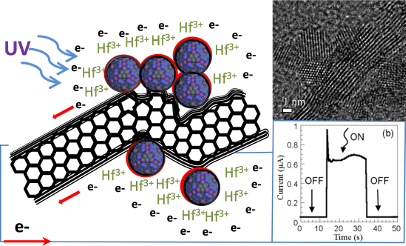
- properties compared to their bulk counterparts. During the last decade, composite materials have spurred large interest, and with the rise of nanotechnology, the development of new nanocomposite materials promoting new properties has taken a step forward. These nanocomposite materials will be the key


Plasticity-mediated collapse and recrystallization in hollow copper nanowires: a molecular dynamics simulation
Beilstein J. Nanotechnol. 2016, 7, 228–235, doi:10.3762/bjnano.7.21
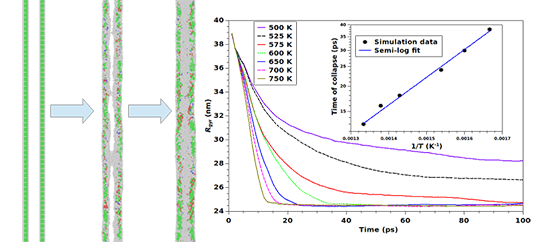
- presence of an additional surface. Hollow nanostructures are being used industrially as fillers for the manufacturing of lightweight composite materials. Besides this structural function, they have also been demonstrated to function as the active elements of recoverable catalysts and highly sensitive





