Search results
Search for "confocal microscopy" in Full Text gives 96 result(s) in Beilstein Journal of Nanotechnology.
Synthesis and characterization of fluorescence-labelled silica core-shell and noble metal-decorated ceria nanoparticles
Beilstein J. Nanotechnol. 2014, 5, 2413–2423, doi:10.3762/bjnano.5.251
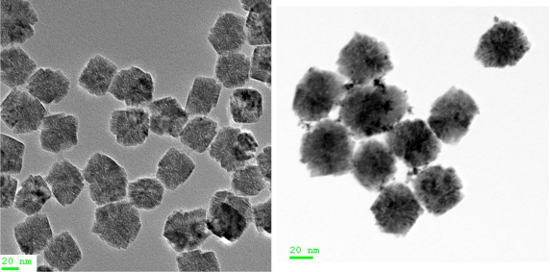
- As principal means of investigation by our physicochemical and medicinal partners, confocal microscopy and other fluorescence-based methods were envisaged. Consequently, a proper choice of the fluorescent label is crucial. We first experimented with commercial dyes Cy3 and Cy5 having an emission in a


Functionalized polystyrene nanoparticles as a platform for studying bio–nano interactions
Beilstein J. Nanotechnol. 2014, 5, 2403–2412, doi:10.3762/bjnano.5.250
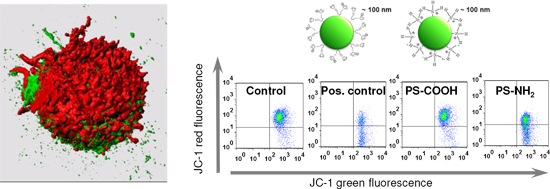
- new drug delivery systems and predict functionalization-dependent health hazards that nanoparticles might exhibit. Polystyrene synthesis. Spinning disc confocal microscopy of acute monocytic leukemia THP-1 cells, differentiated THP-1 cells, and human macrophages. Cell membranes are stained with
- -COOH or PS-NH2 nanoparticles (each 100 µg/mL) and analyzed by flow cytometry or confocal microscopy (24 h). Results are given as mean ± SEM, n = 3, *p < 0.05, **p < 0.01. Nuclei are labeled with HCS NuclearMask™ (blue), nanoparticles are stained with PMI (green), lysosomes are labeled with LysoTracker


Nanoparticle interactions with live cells: Quantitative fluorescence microscopy of nanoparticle size effects
Beilstein J. Nanotechnol. 2014, 5, 2388–2397, doi:10.3762/bjnano.5.248
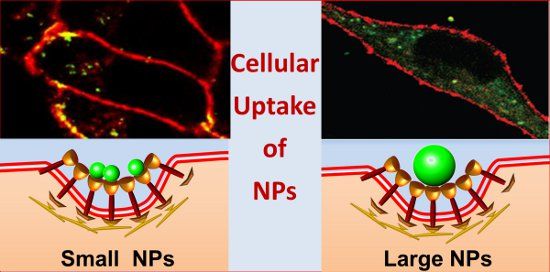
- . By using spinning disk confocal microscopy in combination with quantitative image analysis, we studied the time courses of NP association with the cell membrane and subsequent internalization. NPs with diameters of less than 10 nm were observed to accumulate at the plasma membrane before being
- capable of providing enough ligand–receptor binding strength to initiate internalization. As observed with our experiments (Figure 4), accumulation on the membrane is not required. Conclusion By using spinning disk confocal microscopy, we have systematically investigated the in situ internalization
- ; cationic and NPS, 7.5 µg/mL). AuNCs were suspended in serum-free DMEM at 20 µg/mL. Live cell imaging was performed for up to 2 h with our spinning disk laser scanning confocal microscopy systems [29][31]. Images were acquired in two separate color channels. NP emission was collected through a bandpass


Interaction of dermatologically relevant nanoparticles with skin cells and skin
Beilstein J. Nanotechnol. 2014, 5, 2363–2373, doi:10.3762/bjnano.5.245
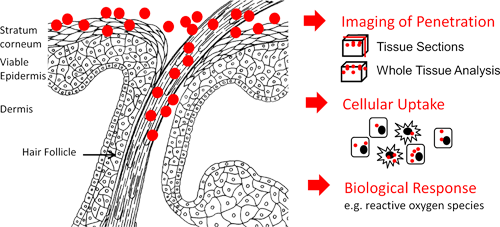
- that enable studies on the whole skin, ideally under in vivo conditions, e.g., in vivo confocal microscopy and multiphoton microscopy [9]. In earlier studies using mice, we were able to monitor the penetration of fluorescent 200 nm particles in hair follicles and diffusion into perifollicular tissues


Anticancer efficacy of a supramolecular complex of a 2-diethylaminoethyl–dextran–MMA graft copolymer and paclitaxel used as an artificial enzyme
Beilstein J. Nanotechnol. 2014, 5, 2293–2307, doi:10.3762/bjnano.5.238
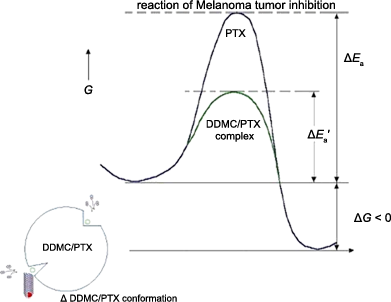
- cellular distribution of micelles is required to enable the selective delivery of a drug to a specific target at the subcellular level [4]. By means of triple-labeling confocal microscopy of living cells, Savic et al. identified the exact cellular targets of block copolymer micelles, i.e., several


Nanomanipulation and environmental nanotechnology
Beilstein J. Nanotechnol. 2014, 5, 2079–2080, doi:10.3762/bjnano.5.216

- based on polyethylene oxide. The surface reactivity of minerals in contact with aqueous solutions can be investigated by laser confocal microscopy, as shown on the example of dissolution of the mineral biotite in solutions with acid and basic pH. Recent nanofiltration techniques are reviewed with
Carbon nano-onions (multi-layer fullerenes): chemistry and applications
Beilstein J. Nanotechnol. 2014, 5, 1980–1998, doi:10.3762/bjnano.5.207
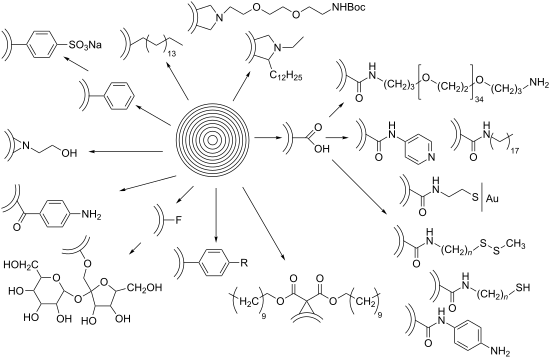
- 2011 John Wiley and Sons. High-resolution TEM images of pristine CNOs (left). AFM topographs of pristine CNOs deposited on mica (center). Confocal microscopy of C57BL/6 BMDCs incubated in the presence of fluorescein-labelled-CNOs and stained with wheat germ agglutinin-Alexa Fluor594 (red), fluorescein


Influence of surface-modified maghemite nanoparticles on in vitro survival of human stem cells
Beilstein J. Nanotechnol. 2014, 5, 1732–1737, doi:10.3762/bjnano.5.183
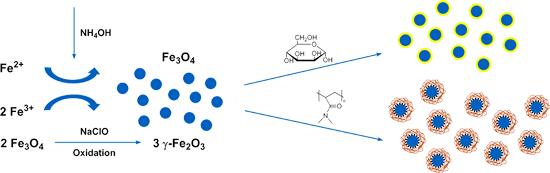
- -Fe2O3. The beneficial effect of coating (diminishing particle cytotoxic activity for the cells) was thus demonstrated. By using confocal microscopy, D-mannose- and PDMAAm-coated γ-Fe2O3 nanoparticles were detected in vacuoles inside the cytoplasm of the cells (Figure 3a,c). PDMAAm-coated particles were


Precise quantification of silica and ceria nanoparticle uptake revealed by 3D fluorescence microscopy
Beilstein J. Nanotechnol. 2014, 5, 1616–1624, doi:10.3762/bjnano.5.173
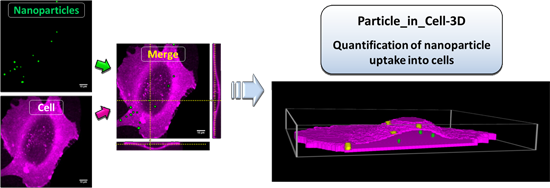
- are normally assessed via qualitative and semi-quantitative analyses of images. The need for a method to rapidly quantify the absolute number of nanoparticles internalized by cells led us to the development of a highly innovative method that integrates high resolution confocal microscopy with
- measured through confocal microscopy in a time series between 1 and 24 h. The concentration of nanoparticles was 39.5 µg·mL−1 (or 30000 nanoparticles per cell) in all experiments. We found that within the first 4 h of incubation the number of intracellular particles was up to 10 times higher for HUVEC than
- 417 nm and 316 nm agglomerates, respectively. Nanoparticles at a concentration of 10 µg·mL−1 were incubated with human microvascular endothelial cells (HMEC-1) for 3, 24, 48 and 72 h and imaged through live-cell confocal microscopy. Cytotoxicity assays performed on similar nanoparticles have shown


Silica nanoparticles are less toxic to human lung cells when deposited at the air–liquid interface compared to conventional submerged exposure
Beilstein J. Nanotechnol. 2014, 5, 1590–1602, doi:10.3762/bjnano.5.171
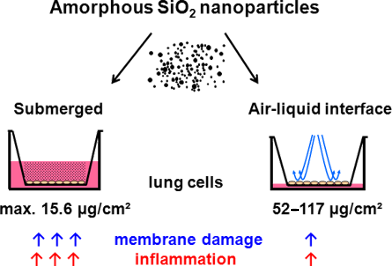
- reasons for the different sensitivity remain unknown. Future studies need to address the relevance of changes in the dose rate as a critical parameter for cellular toxicity. Moreover, more detailed analysis of particle uptake (e.g., by confocal microscopy or TEM) under ALI and submerged conditions will be


The cell-type specific uptake of polymer-coated or micelle-embedded QDs and SPIOs does not provoke an acute pro-inflammatory response in the liver
Beilstein J. Nanotechnol. 2014, 5, 1432–1440, doi:10.3762/bjnano.5.155
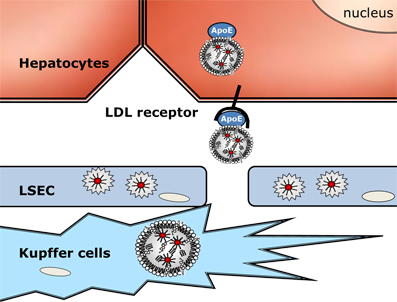
- apolipoprotein E for the uptake of QDs-micelles into liver cells (Figure 5). In order to visualize sinusoids of the unfixed liver, we performed confocal microscopy using the reflection mode and marked the liver sinusoids by dashed lines. In wild type mice, QDs-micelles (red) were detected with star-shaped cells


Model systems for studying cell adhesion and biomimetic actin networks
Beilstein J. Nanotechnol. 2014, 5, 1193–1202, doi:10.3762/bjnano.5.131
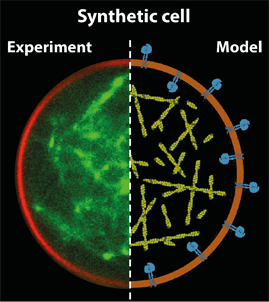
- . The successful incorporation of partly fluorescently labelled integrin αIIbβ3 into the GUVs was confirmed by confocal microscopy. Binding experiments of integrin-GUVs on surfaces and quantum dots coated with RGD ligands revealed that the incorporated integrins were biologically active. In reflection


Optimizing the synthesis of CdS/ZnS core/shell semiconductor nanocrystals for bioimaging applications
Beilstein J. Nanotechnol. 2014, 5, 919–926, doi:10.3762/bjnano.5.105
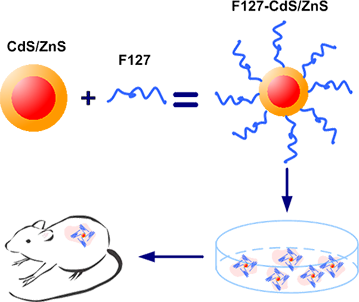
- pancreatic cancer. In our study, in vitro confocal microscopy studies were performed to re-confirm the uptake of F127-CdS/ZnS QDs bioconjugates in Panc-1 cells. Panc-1 cells were treated with F127-CdS/ZnS QDs for 2 h. Subsequently, the cells were rinsed with a PBS buffer to remove free nanocrystals and
- imaged by using confocal microscopy. Figure 11 shows robust cellular uptakes of the ternary nanocrystal samples. The red singnal is from F127-CdS/ZnS QDs, and background fluorescence and autofluorescence from the cells have been successfully suppressed. We can see that there is no damage to the cells
- (FBS, Hyclone) and cultured at 37 °C in a humidified atmosphere with 5% CO2. For cell imaging, cells were treated with F127-CdS/ZnS micelles formulations for 2 h. The cells were then washed with PBS for three times and imaged using a Leica confocal microscopy system (TCS SP2). For the cell viability


Injection of ligand-free gold and silver nanoparticles into murine embryos does not impact pre-implantation development
Beilstein J. Nanotechnol. 2014, 5, 677–688, doi:10.3762/bjnano.5.80
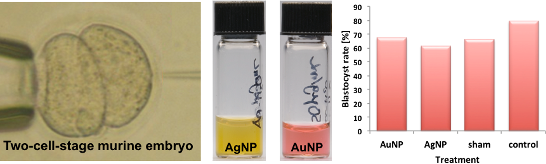
- remained particle-free. To appreciate the amount of injected nanoparticles, it has to be taken into account that only particles and particle agglomerates with a diameter >60 nm can be visualized by confocal microscopy [55]. The injected dispersion contained such particles only to 2.6 and 2.2% for AuNP and
- , Hamburg, Germany). Laser scanning confocal microscopy (LSCM) For nanoparticle imaging purposes, embryos were transferred onto a glass slide within a droplet of PBS without further fixation and examined immediately. Light microscopical visualization of AuNP was performed as previously described by using an
- nanoparticles, exposure to comparable Ag+-ion concentrations resulted in an immediate arrest of embryo development. In conclusion, the results do not indicate any detrimental effect of colloidal gold or silver nanoparticles on the development of murine embryos. Keywords: biomedical application; confocal




The softening of human bladder cancer cells happens at an early stage of the malignancy process
Beilstein J. Nanotechnol. 2014, 5, 447–457, doi:10.3762/bjnano.5.52
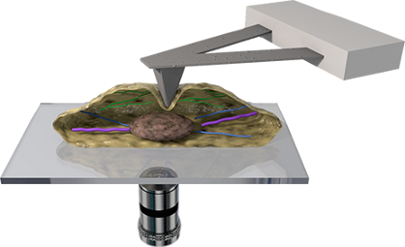
- confocal microscopy of early and late stages of ovarian cancer progression [22]. Here, we study the correlation between the elastic properties and the expression and organization of the actin cytoskeleton in human bladder cancer cells. We have chosen four cell lines with various histological grades. Those


Near-field effects and energy transfer in hybrid metal-oxide nanostructures
Beilstein J. Nanotechnol. 2013, 4, 306–317, doi:10.3762/bjnano.4.34
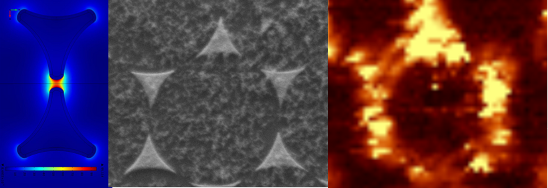
- Eu fluorescence can be suppressed by covering the nanoantennas with a 10 nm thick SiOx layer. Keywords: confocal microscopy; energy transfer; field enhancement; light harvesting; luminescence; nano-antennas; nanosphere lithography; nanostructures; plasmonics; simulation; TiO2 nanoparticles
- stage of the CVR machine (see Figure 1). A big advantage of the regular nanoantenna patterns generated in this way is that the positions of the individual antennas can be identified in confocal microscopy, even though the details of the antenna itself may not be resolved. We have used confocal
- fluorescence generated by conversion of the excitation light to photons with 618 nm from the Eu3+ ions. Figure 10a and Figure 10b show two confocal microscopy images of the same area of the sample. Figure 10a was obtained by using the wavelength region of 530–535 nm, which contains mainly elastically or quasi








Plasmonic oligomers in cylindrical vector light beams
Beilstein J. Nanotechnol. 2013, 4, 57–65, doi:10.3762/bjnano.4.6
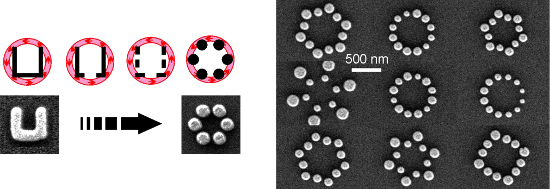
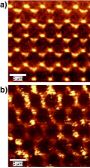
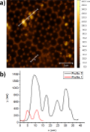
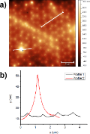
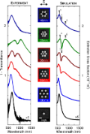
- = 0.998. The detection was performed by confocal microscopy and the collected signal is one-photon photoluminescence. Figure 7 depicts examples of these kinds of measurements on closed and open oligomer ring structures. One observes a strong interaction of the light field with the plasmonic nanostructures




Diamond nanophotonics
Beilstein J. Nanotechnol. 2012, 3, 895–908, doi:10.3762/bjnano.3.100
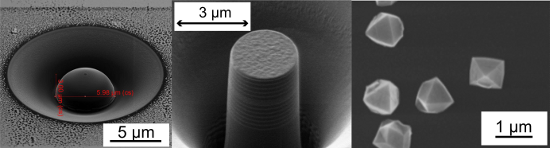
- . Subsequently, diamond nanocrystals are spin coated onto the substrate. By using a dual atomic force microscope (AFM) and confocal microscopy setup, diamond nanocrystals that contain single color centers are then identified by fluorescence microscopy and second-order photon autocorrelation, and their position
- addressed individually afterwards by confocal microscopy [27]. The nanodiamonds acted as seed crystals in the subsequent overgrowth in the MWPECVD plasma process. In this manner, we produced particles with diameters up to 700 nm, as shown in Figure 15a. Because of the harsh plasma environment the silicon





Assessing the plasmonics of gold nano-triangles with higher order laser modes
Beilstein J. Nanotechnol. 2012, 3, 674–683, doi:10.3762/bjnano.3.77
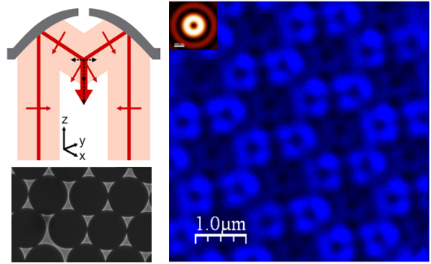
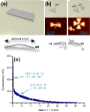
- -triangles in particular [3][4][5][6] has been investigated both directly and indirectly. Likewise, the plasmonic behaviour of metallic nano-triangle arrays, namely Fischer patterns [7] made by colloid lithography, has been studied to some extent. Optical extinction spectroscopy [8], confocal microscopy [9


The oriented and patterned growth of fluorescent metal–organic frameworks onto functionalized surfaces
Beilstein J. Nanotechnol. 2012, 3, 570–578, doi:10.3762/bjnano.3.66
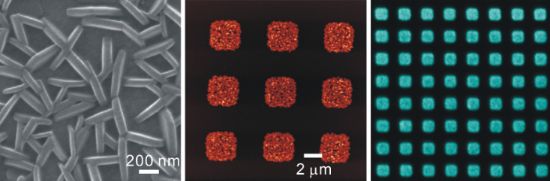
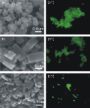
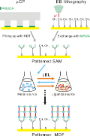
- spectrometer. Epifluorescence images were recorded on an Olympus BX51 fluorescence system. Laser scanning confocal microscopy (LSCM) was carried out on a Zeiss LSM 510 META microscope. (a) The crystallographic cell of [Zn2(adc)2(dabco)]. The directionality of the attachment of carboxylate and monodentate Lewis





Characterization of protein adsorption onto FePt nanoparticles using dual-focus fluorescence correlation spectroscopy
Beilstein J. Nanotechnol. 2011, 2, 374–383, doi:10.3762/bjnano.2.43
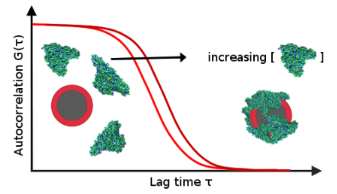
- . 2fFCS setup The 2fFCS setup is based on a time-resolved confocal microscopy system (Microtime 200, PicoQuant, Berlin, Germany). Instead of using a single excitation laser, the light from two identical, orthogonally polarized pulsed 640 nm diode lasers (LDH-P-C-640B, Picoquant, Berlin, Germany) was