


Search results
Search for "controlled release" in Full Text gives 84 result(s) in Beilstein Journal of Nanotechnology.
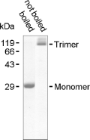
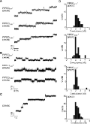
Reconstitution of the membrane protein OmpF into biomimetic block copolymer–phospholipid hybrid membranes
Beilstein J. Nanotechnol. 2016, 7, 881–892, doi:10.3762/bjnano.7.80
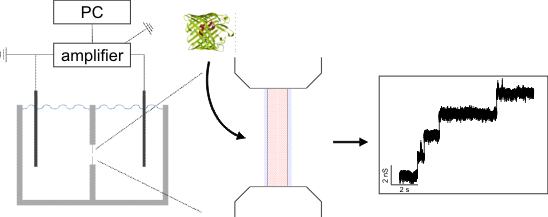
- high potential in technical applications, for example the desalination of water using aquaporins or the controlled release of antibiotics from OmpF-functionalized nanoreactors [11][12][13][14][15]. Although the chemical and physical properties of natural phospholipid bilayers are optimized for the



pH-Triggered release from surface-modified poly(lactic-co-glycolic acid) nanoparticles
Beilstein J. Nanotechnol. 2015, 6, 2504–2512, doi:10.3762/bjnano.6.260
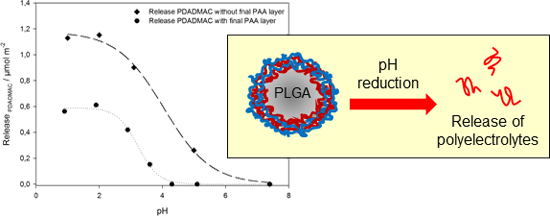
- modified by successive adsorption of four polyelectrolyte layers in total, containing in particular the weak polyanion PAA. We demonstrate that an appropriate pH stimulus induces a controlled release of the polycationic species poly(diallyldimethylammonium chloride) (PDADMAC). The successful pH-triggered


Fabrication of hybrid nanocomposite scaffolds by incorporating ligand-free hydroxyapatite nanoparticles into biodegradable polymer scaffolds and release studies
Beilstein J. Nanotechnol. 2015, 6, 2217–2223, doi:10.3762/bjnano.6.227
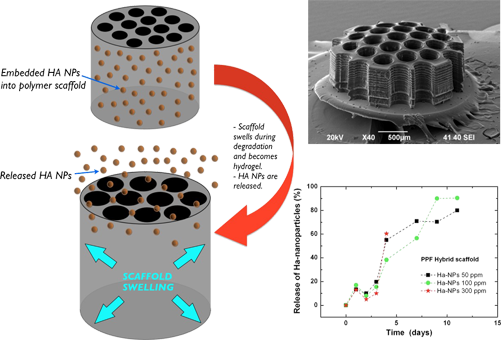
- methods (PLA and MPExSL) to incorporate hydroxyapatite nanoparticles (HA NPs) into a biodegradable polymer resin. Ligand-free production of NPs can be considered a green route of NP synthesis that is beneficial for biological applications. HA NP release test was performed and showed that a controlled
- release of HA NPs is feasible and highly favorable since the HA is widely utilized along with prosthetics these days and can only supply the particles for a few days before the pure, sprayed-up HA layer completely disperses into the surrounding tissue. With the PPF-HA NP resin, a stable dosing can be


Analyzing collaboration networks and developmental patterns of nano-enabled drug delivery (NEDD) for brain cancer
Beilstein J. Nanotechnol. 2015, 6, 1666–1676, doi:10.3762/bjnano.6.169
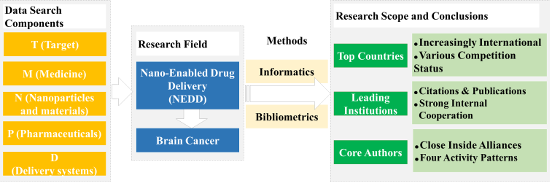
- exposure of the pharmaceutical through controlled release. Thus, NEDD provides a novel approach to medical therapy, including treatment of chronic diseases and genetic disorders [5]. At the present, various kinds of nanoparticles have been developed as drug carriers, such as liposomes, micelles, polymeric


PLGA nanoparticles as a platform for vitamin D-based cancer therapy
Beilstein J. Nanotechnol. 2015, 6, 1306–1318, doi:10.3762/bjnano.6.135
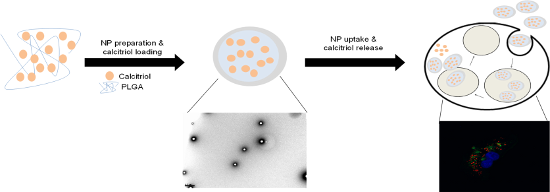
- to work as cytoplasmic delivery vehicles. Also, because calcitriol has a short half-life, its entrapment in PLGA NPs allows vitamin protection, sustained and controlled delivery, thus avoiding drug degradation and inactivation. The sustained and controlled release of the prepared PLGA NPs explains


Silica micro/nanospheres for theranostics: from bimodal MRI and fluorescent imaging probes to cancer therapy
Beilstein J. Nanotechnol. 2015, 6, 546–558, doi:10.3762/bjnano.6.57
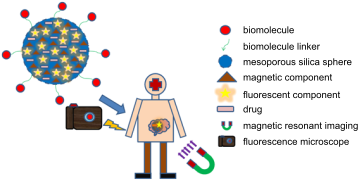
- materials [8], for controlled delivery [9], and in biotechnology for the controlled release of biomolecules such as small drugs [10], therapeutic proteins [11], antibiotics [12], and antibodies [13]. In MRI, the relative difference of the signal intensity between two adjoining tissues can be improved by


Pulmonary surfactant augments cytotoxicity of silica nanoparticles: Studies on an in vitro air–blood barrier model
Beilstein J. Nanotechnol. 2015, 6, 517–528, doi:10.3762/bjnano.6.54
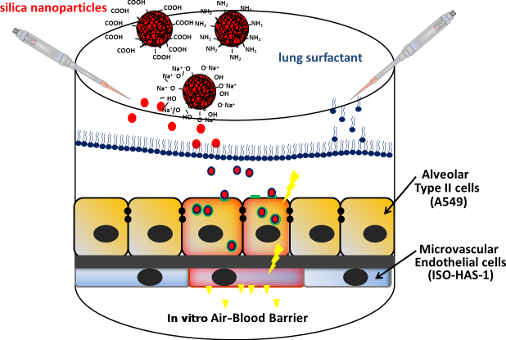
- as drug delivery vehicles for the controlled release of drugs [28][29]. However, others have shown that the toxicity of functionalized NPs is cell type-dependent, as they were able to demonstrate that carboxyl-functionalized NPs caused toxic effects in a macrophage cell line, RAW264.7, and a human


Release behaviour and toxicity evaluation of levodopa from carboxylated single-walled carbon nanotubes
Beilstein J. Nanotechnol. 2015, 6, 243–253, doi:10.3762/bjnano.6.23
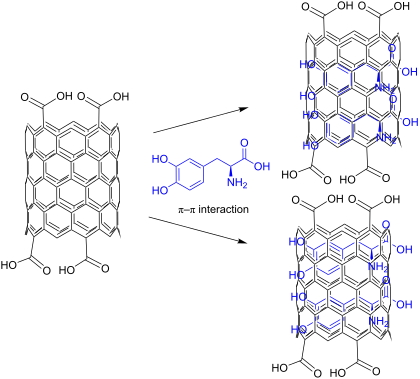
- nanohybrid possessed favourable sustained and controlled release properties as a drug carrier. In vitro bioassay PC12 cell lines PC12 is one of the most widely applied neuronal cell lines and can be used as a model to study secretory activity and catecholamine metabolism and regulation. In this study, we
- controlled release properties of the material using a Lambda 35 spectrophotometer (Perkin Elmer, Boston, MA). In order to study the functional groups present in the materials, Fourier transform infrared (FTIR) spectra of the samples were recorded over the range of 4000–500 cm−1 on a 1752X FTIR (Perkin Elmer




Microfluidic anodization of aluminum films for the fabrication of nanoporous lipid bilayer support structures
Beilstein J. Nanotechnol. 2011, 2, 104–109, doi:10.3762/bjnano.2.12
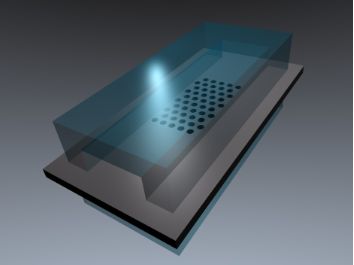
- as template structures in nanofabrication technology [9][10][11][12][13][14][15][16][17][18][19][20] to their direct use as functional interfaces for controlled release of molecules [21][22][23], co-culture development [24], or biosensing [25]. For example, Steinem et al. have demonstrated the


Other Beilstein-Institut Open Science Activities



