


Search results
Search for "electrospinning" in Full Text gives 79 result(s) in Beilstein Journal of Nanotechnology.
A catechol biosensor based on electrospun carbon nanofibers
Beilstein J. Nanotechnol. 2014, 5, 346–354, doi:10.3762/bjnano.5.39
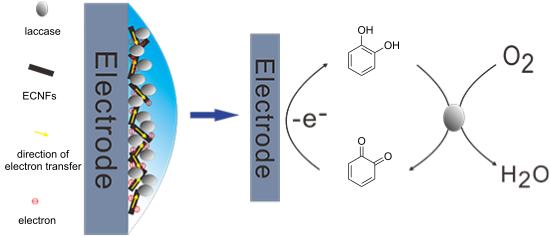
- Dawei Li Zengyuan Pang Xiaodong Chen Lei Luo Yibing Cai Qufu Wei Key Laboratory of Eco-Textiles of Ministry of Education, Jiangnan University, Wuxi 214122, P. R. China 10.3762/bjnano.5.39 Abstract Carbon nanofibers (CNFs) were prepared by combining electrospinning with a high-temperature
- water samples. Keywords: biosensor; carbon nanofibers; catechol; electrospinning; laccase; Introduction Nowadays, carbon nanomaterials attract a great deal of attention due to their high surface area, excellent electronic conduction and biocompatibility. Among these, mesoporous carbon [1][2][3][4][5
- development, various methods used for CNFs preparation are established, such as arc-discharge [21], laser ablation [22], chemical vapor deposition (CVD) methods [23]. Electrospinning, which is known as a facile and convenient process, can produce nanofibers or microfibers with different diameters while using


High-resolution nanomechanical analysis of suspended electrospun silk fibers with the torsional harmonic atomic force microscope
Beilstein J. Nanotechnol. 2013, 4, 243–248, doi:10.3762/bjnano.4.25
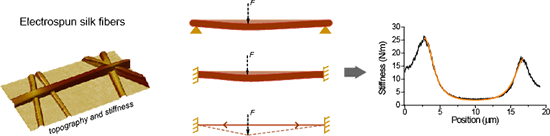
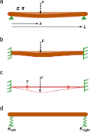
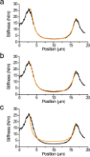
- electrospinning process. This size scale is readily accessible by atomic force microscopy for topographical and mechanical characterization. When several fiber layers are deposited to form fibrous tissue scaffolds, these branches form suspended structures. We have limited our experiments to samples that are


Electrospinning preparation and electrical and biological properties of ferrocene/poly(vinylpyrrolidone) composite nanofibers
Beilstein J. Nanotechnol. 2013, 4, 189–197, doi:10.3762/bjnano.4.19

- 200433, PR China 10.3762/bjnano.4.19 Abstract Nanofibers containing ferrocene (Fc) have been prepared for the first time by electrospinning. In this paper, Fc was dispersed uniformly throughout the poly(vinypyrrolidone) (PVP) matrix for the purpose of combining the properties of PVP and Fc. The effects
- PVP nanofibers. X-ray diffraction (XRD) results showed that the crystalline structure of Fc in the fibers was amorphous after the electrospinning process. A biological evaluation of the antimicrobial activity of Fc/PVP nanofibers was carried out by using Gram-negative Escherichia coli (E. coli) as
- inside PVP nanofibers retian their electrochemical activity. The properties and facile preparation method make the Fc/PVP nanofibers promising for antibacterial and sensing applications. Keywords: composites; electrochemistry; electrospinning; membranes; porous materials; Introduction Electrospinning


Template-assisted formation of microsized nanocrystalline CeO2 tubes and their catalytic performance in the carboxylation of methanol
Beilstein J. Nanotechnol. 2011, 2, 776–784, doi:10.3762/bjnano.2.86
- Chemistry II, Technische Universität Darmstadt, Petersenstr. 20, 64287 Darmstadt, Germany 10.3762/bjnano.2.86 Abstract Polymethylmethacrylate (PMMA)/ceria composite fibres were synthesized by using a sequential combination of polymer electrospinning, spray-coating with a sol, and a final calcination step
- additive. Keywords: activation of CO2; ceria; electrospinning; exotemplating; nanotubes; Introduction Ceria, CeO2, is known as a semiconducting ceramic material with unique electronic properties, exhibiting a broad range of functional properties with potential for application in various areas [1][2][3
- functional properties [16]. Electrospinning is a technology that allows the formation of polymer fibres with nanoscale dimensions [17][18][19][20]. Such nanofibres and nanotubes based on electrospun polymers offer a broad range of applications in areas such as photonics, sensorics, catalysis, medicine


Other Beilstein-Institut Open Science Activities



