


Search results
Search for "force" in Full Text gives 1143 result(s) in Beilstein Journal of Nanotechnology. Showing first 200.
Probing the potential of rare earth elements in the development of new anticancer drugs: single molecule studies
Beilstein J. Nanotechnol. 2025, 16, 187–194, doi:10.3762/bjnano.16.15
- , Minas Gerais, Brazil Departamento de Ciências Naturais, Universidade Federal do Acre, Rio Branco, Acre, Brazil 10.3762/bjnano.16.15 Abstract We use optical tweezers and atomic force microscopy to investigate the potential of rare earth elements to be used as anticancer agents in the development of new
- what occurs with classical DNA condensing agents such as polycations and depletants. Keywords: DNA; optical tweezers; rare earth elements; single molecule force spectroscopy; Introduction The development of new drugs to treat human diseases is a field of singular importance that usually involves
- -molecule force spectroscopy using optical tweezers (OT) on DNA complexes formed with the three rare earths at various concentrations. The mechanical properties of these complexes were then determined as a function of the element concentration. From these data, the physical chemistry of the interaction was


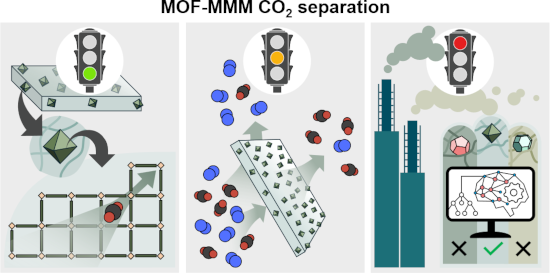
A review of metal-organic frameworks and polymers in mixed matrix membranes for CO2 capture
Beilstein J. Nanotechnol. 2025, 16, 155–186, doi:10.3762/bjnano.16.14




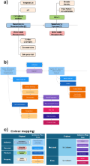
Instance maps as an organising concept for complex experimental workflows as demonstrated for (nano)material safety research
Beilstein J. Nanotechnol. 2025, 16, 57–77, doi:10.3762/bjnano.16.7



Advanced atomic force microscopy techniques V
Beilstein J. Nanotechnol. 2025, 16, 54–56, doi:10.3762/bjnano.16.6

- 10.3762/bjnano.16.6 Keywords: AFM; atomic force microscopy; conductivity; drift correction; force spectroscopy; NC-AFM; non-contact atomic force microscopy; resistivity; tip–surface interaction; With the restrictions on travelling and social distancing lifted, we were delighted to continue two series of
- meetings on atomic force microscopy (AFM), the 23rd International Conference on Non-Contact Atomic Force Microscopy (NC-AFM) held in Nijmegen (Netherlands) and the 6th International Workshop on Advanced Atomic Force Microscopy Techniques held in Potsdam (Germany). The strong advance in the field and the
- high quality of the presentations motivated us to establish this thematic issue in the Beilstein Journal of Nanotechnology for compiling the latest results on developments and applications of atomic force microscopy techniques. Atomic force microscopy, a technique soon celebrating its 40th anniversary
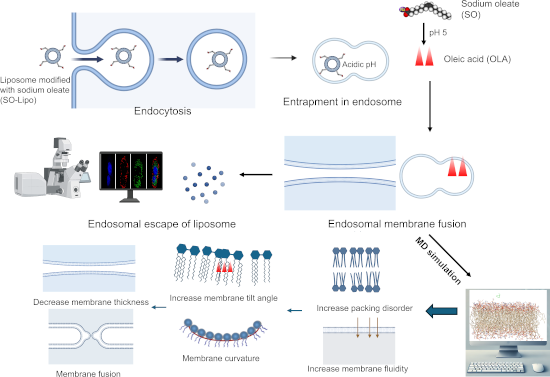
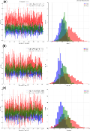
Mechanistic insights into endosomal escape by sodium oleate-modified liposomes
Beilstein J. Nanotechnol. 2024, 15, 1667–1685, doi:10.3762/bjnano.15.131




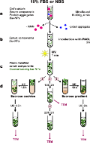
Attempts to preserve and visualize protein corona on the surface of biological nanoparticles in blood serum using photomodification
Beilstein J. Nanotechnol. 2024, 15, 1654–1666, doi:10.3762/bjnano.15.130

- . The former is tightly linked the surface of the NPs and is stable when isolating the NPs, which allows for determining its protein composition [4][5][6][7]. In contrast, the components of the soft corona are weakly bonded to the underlying hard one and are easily separated by the slightest force. The



Heterogeneous reactions in a HFCVD reactor: simulation using a 2D model
Beilstein J. Nanotechnol. 2024, 15, 1627–1638, doi:10.3762/bjnano.15.128
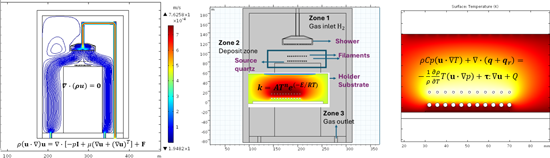
- density (kg·m−3), p is the pressure (Pa), F is the volume force vector (N·m−3), Cp is the specific heat capacity at constant pressure (J·kg−1·K−1), T is the absolute temperature (K), q is the heat flux vector (W·m−2), qr is the heat flux vector by radiation (W·m−2), I is the identity matrix (unitless


Natural nanofibers embedded in the seed mucilage envelope: composite hydrogels with specific adhesive and frictional properties
Beilstein J. Nanotechnol. 2024, 15, 1603–1618, doi:10.3762/bjnano.15.126
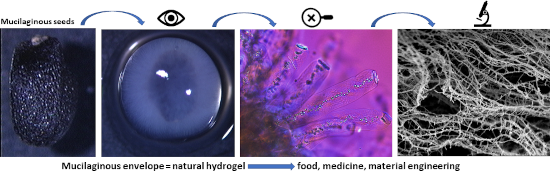
- atomic force microscopy (AFM), transmission electron microscopy (TEM), SEM, or cryo-SEM [45][57][63][64][65][66]. Very often, the procedures for preparing mucilage envelope samples can destroy and/or influence the organisation of polysaccharides, making the analysis of spatial structure of the mucilage
- brasilianum [121] or the human-mediated dispersal of Plantago asiatica seeds [122]. The mucilage envelope reveals its adhesive properties in a hydrated state. However, just after the seed hydration and mucilage envelope formation, the adhesion force is very low. With the loss of water, adhesion increases and
- cemented to the substrate (glass, soil, or animals) [29]. The results of our studies on adhesive force measurements of dried-in-contact seed mucilage gave us rather unexpected results. The mucilage (of individual seed samples) demonstrated adhesive properties even better than the commercial UHU glue (UHU


Ultrablack color in velvet ant cuticle
Beilstein J. Nanotechnol. 2024, 15, 1554–1565, doi:10.3762/bjnano.15.122

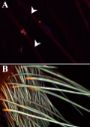
- most predators fear their panful stings and venom, but also because of their hard exoskeleton [29][30]. The sculptured cuticle may have a similar structure and force-resisting mechanisms as other wasps [34]. In some wasp species, the sculpturing of the cuticle and the lamellae terraces may form an



The round-robin approach applied to nanoinformatics: consensus prediction of nanomaterials zeta potential
Beilstein J. Nanotechnol. 2024, 15, 1536–1553, doi:10.3762/bjnano.15.121
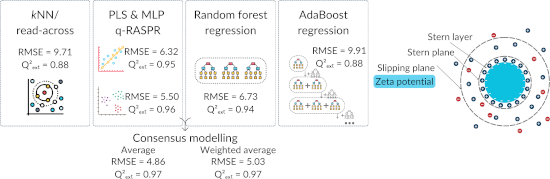
- the ZP values of particles (expressing their electrostatic repulsion) controls the stability of colloidal dispersions according to the Derjaguin–Landau–Verwey–Overbeek (DLVO) theory [39]. For the computational analysis, the TIP3P force field was employed for water, while the DREIDING force field was


Integrating high-performance computing, machine learning, data management workflows, and infrastructures for multiscale simulations and nanomaterials technologies
Beilstein J. Nanotechnol. 2024, 15, 1498–1521, doi:10.3762/bjnano.15.119
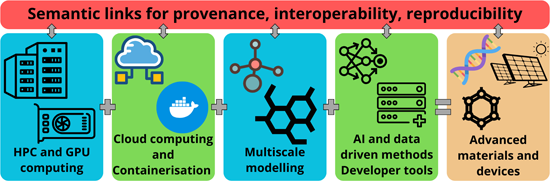
- molecules based on force-field molecular dynamics (MD). While simple, this workflow exhibits the main features of more complex simulations. The consistent representation of this workflow within MAMBO can therefore be instructive of the approach pursued and gives possible hints of the ability to formalize


Effect of radiation-induced vacancy saturation on the first-order phase transformation in nanoparticles: insights from a model
Beilstein J. Nanotechnol. 2024, 15, 1453–1472, doi:10.3762/bjnano.15.117

- thermodynamic stimulus for phase change, (ii) the contribution of surface energy due to a high percentage of surface atoms, (iii) interfaces acting as sinks for radiation-induced point defects, (iv) the accumulation of defects (saturation of vacancies) in the material as a driving force of phase changes, and (v
- , which is represented by the bulk driving force for the phase transition and the surface energy term, can be expressed as follows: ΔGbulk represents the bulk Gibbs free energy change, which serves as the bulk thermodynamic stimulus for the phase transition from one phase to another. ΔGsurf denotes the
- example, at 1500 K, it is nearly 7.92·1028 m−3 for the β phase and 7.94·1028 m−3 for the α phase). Both the driving force of the transformation, Δgbulk = gβ − gα, and the density, n, are functions of the temperature [33][37][38][39][40][41][45]. The model parameters for irradiation include a defect


Strain-induced bandgap engineering in 2D ψ-graphene materials: a first-principles study
Beilstein J. Nanotechnol. 2024, 15, 1440–1452, doi:10.3762/bjnano.15.116
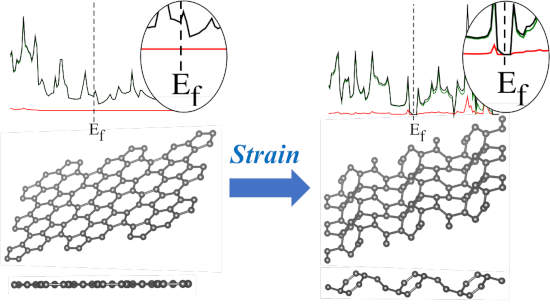
- graphene to a piezoelectric substrate, by shrinking or elongating the substrate by applying a bias voltage, or by using the tip of an atomic force microscope (AFM) to push graphene over a hole created in the substrate [29]. A wealth of literature on strain engineering of graphene and other 2D materials


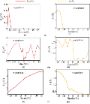
Nanotechnological approaches for efficient N2B delivery: from small-molecule drugs to biopharmaceuticals
Beilstein J. Nanotechnol. 2024, 15, 1400–1414, doi:10.3762/bjnano.15.113

- microfluidics and high-shear-force homogenization [110]. As DDS, nanoemulsions can be reservoirs for encapsulating hydrophobic substances [111]. Moreover, emulsions of emulsions or double emulsions can be prepared by dispersing the droplets of primary emulsion into another liquid phase. Double emulsions can be


A biomimetic approach towards a universal slippery liquid infused surface coating
Beilstein J. Nanotechnol. 2024, 15, 1376–1389, doi:10.3762/bjnano.15.111
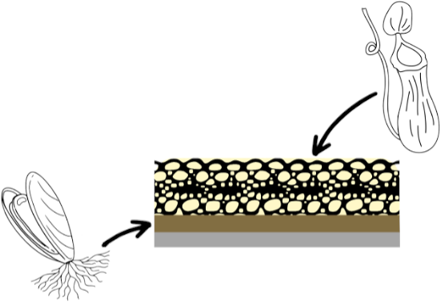
- force microscopy (AFM), sum frequency generation spectroscopy (SFG), and X-ray photoelectron spectroscopy (XPS). Measuring static water contact angles is a straightforward method to determine the relative wettability of a material and allows for a quick check if our surface modifications were successful
- measurements were conducted with the sessile drop method. Droplets of 5 µL were pipetted onto the surface, and an image was captured. Eight images from two duplicates of each sample type were acquired on a smartphone device and processed in ImageJ (NIH). Atomic force microscopy AFM was conducted on a Veeco di




Hymenoptera and biomimetic surfaces: insights and innovations
Beilstein J. Nanotechnol. 2024, 15, 1333–1352, doi:10.3762/bjnano.15.107
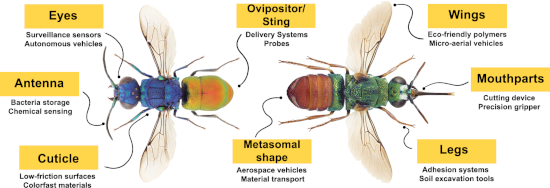
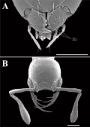
- joint axis and the tilt in the mandibular axis, provide insights for designing more efficient gripping devices [66]. Recently, a commercially available endoscopic needle holder was developed based on the morphology of Formica rufa, resulting in a remarkable increase in force amplification by up to 296
- . Additionally, when threatened, these ants possess the remarkable ability to jump several centimeters propelled by the force of their mandibles [69]. Engineers and material scientists can draw inspiration from these natural designs to develop lightweight yet durable components that enhance energy absorption and
- essential functions, insect wings must effectively transmit force from the muscles at their base to the surrounding air, generate lift, and uphold structural integrity without deformation [102]. Hence, wings need to be lightweight, flexible, and resilient, rendering them captivating subjects for biomimetic





Interaction of graphene oxide with tannic acid: computational modeling and toxicity mitigation in C. elegans
Beilstein J. Nanotechnol. 2024, 15, 1297–1311, doi:10.3762/bjnano.15.105

- complete characterization of the GO sample is available in [36]. Atomic force microscopy (AFM), Raman spectroscopy, and X-ray photoelectron spectroscopy (XPS) were used to assess size, morphology, number of layers, and surface chemistry of GO. The GO sample used in this study consists of single layers with
- Agency (EPA), herein named EPA medium, in absence and presence of TA. Atomic force microscopy AFM has been extensively used to characterize the distribution and morphology of biomolecules on the surface of nanomaterials, especially 2D materials [37]. Figure 1a and Figure 1b show AFM images of GO sheets
- mechanisms of toxicity mitigation, we employed a computational workflow that involved studying the interactions between GO and TA at different theoretical levels. Molecular dynamics (MD) simulations were performed using the ReaxFF reactive force field to examine the evolution of TA conformation on the


The role of a tantalum interlayer in enhancing the properties of Fe3O4 thin films
Beilstein J. Nanotechnol. 2024, 15, 1253–1259, doi:10.3762/bjnano.15.101

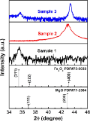
- morphological, structural, and magnetic properties of the deposited samples were characterized with atomic force microscopy, X-ray diffractometry, and vibrating sample magnetometry. The polycrystalline Fe3O4 film grown on MgO/Ta/SiO2/Si(100) presented very interesting morphology and structure characteristics
- films on three different types of substrates, namely an amorphous SiO2/Si(100) substrate, a single crystal MgO(100) substrate, and a buffer layer consisting of MgO/Ta/SiO2/Si(100). The properties of Fe3O4 thin films were analyzed using atomic force microscopy (AFM), X-ray diffractometry (XRD), and
- annealed at a temperature of 723 K for a duration of 2 h under a base pressure of 2.3 × 10⁻⁸ Torr. The Fe3O4 films were analyzed regarding their surface morphology, magnetic properties, and structural properties using atomic force microscopy (EasyScan2, Nanosurf), vibration sample magnetometry (Quantum


AI-assisted models to predict chemotherapy drugs modified with C60 fullerene derivatives
Beilstein J. Nanotechnol. 2024, 15, 1170–1188, doi:10.3762/bjnano.15.95
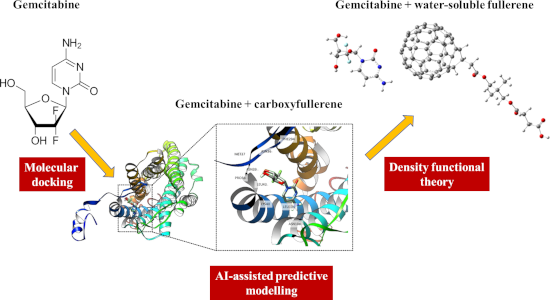
- genetic algorithms and final optimization at the DFTB3 level, respectively. London dispersion forces were considered in the DFTB3 and global optimization procedures by Lennard-Jones potentials, as implemented in UFF and MMFF94 force fields, respectively. The solvent effect was included by the Born
- structure, as in the study of Muthiah and coworkers [45], was validated using PROCHECK [46] to check the quality of the protein structure. The PDB produced with the previous step was subsequently optimized by an energy minimization through Amber force fields using the USCF Chimera 1.14 toolkit [47]. The
- the carbonyl group is the more nucleophilic center, whereas there are two positive-density regions near the carbonyl group and in the C–C bond next to the amine-substituted carbon atom. Both pharmaceutical agents are susceptible to interaction with fullerenes to form a force dispersion complex as it


Quantum-to-classical modeling of monolayer Ge2Se2 and its application in photovoltaic devices
Beilstein J. Nanotechnol. 2024, 15, 1153–1169, doi:10.3762/bjnano.15.94
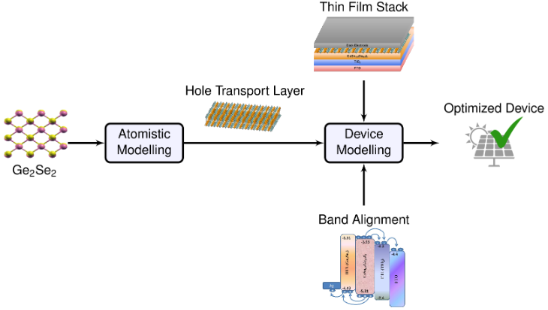
- has been sampled into 13 × 13 × 1 K-mesh points (using the Monkhorst–Pack scheme [72]) and high-energy/force convergence criteria of 10−10 eV/10−10 eV/Å3, respectively, have been set for two consecutive self-consistent cycles. A sufficiently high vacuum of 23 Å is applied perpendicularly to avoid
- force constant using the relation [73]: To maintain high accuracy, a large plane-wave mesh cutoff of 120 Ry is considered throughout the calculations. Extraction of device-relevant parameters To design a solar cell, we can derive some parameters from the DOS and E–k dispersion curves, such as the
- of the effective masses. The elastic constant C can be derived by knowing the interatomic force constant, calculated applying a uniaxial strain δ in the direction of lattice vector a: where A0 is the surface area of the unit cell.The deformation potential Edp can be calculated using a band edge




Photocatalytic methane oxidation over a TiO2/SiNWs p–n junction catalyst at room temperature
Beilstein J. Nanotechnol. 2024, 15, 1132–1141, doi:10.3762/bjnano.15.92
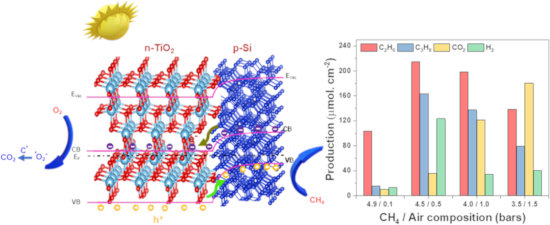
- recombination of charge carriers is mainly attributed to the anisotropic movement of generated electron–hole pairs in semiconductors. Therefore, the implementation of a driving force could remarkably accelerate the oriented motion of electrons and holes, which could suppress recombination and eventually improve
- formed at the interface have emerged, which effectively force charge carriers to move in opposite directions and hinder recombination [31][32][33]. Very recently, Cu2O/BiVO4, Ag2O/Bi12O17Cl2 and CuFe2O4/Bi4Ti3O12 composite powders have shown improved efficiencies in water treatment based on p–n


Local work function on graphene nanoribbons
Beilstein J. Nanotechnol. 2024, 15, 1125–1131, doi:10.3762/bjnano.15.91
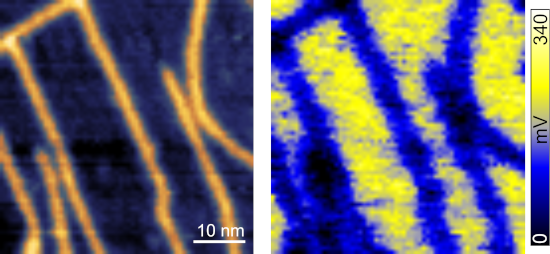
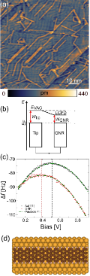
- exotic nature of the charge carriers and to local confinement as well as atomic-scale structural details. The local work function provides evidence for such structural, electronic, and chemical variations at surfaces. Kelvin prove force microscopy can be used to measure the local contact potential
- nanoribbons; Kelvin probe force microscopy; local contact potential difference; Introduction Graphene’s electronic properties are determined by its two-dimensionality as well as by its semimetallic gapless conical band structure [1]. Its electronic behavior depends strongly on the location of the Fermi level
- surfaces, all related to charge differences; for a review, see [14]. Kelvin probe force microscopy (KPFM), a method derived from scanning force microscopy (SFM), allows one to study the local work function difference of a sample with great accuracy and with atomic resolution [15][16][17][18][19][20]. In

![[Graphic 1]](/bjnano/content/inline/2190-4286-15-91-i4.svg?max-width=637&scale=1.18182)
Unveiling the potential of alginate-based nanomaterials in sensing technology and smart delivery applications
Beilstein J. Nanotechnol. 2024, 15, 1077–1104, doi:10.3762/bjnano.15.88
- wall [60]. Another important morphological feature of polymers is the surface of the polymers, and atomic force microscopy (AFM) can be utilized to detect surface features of polymeric nanoparticles. It is very useful tool that offers high-resolution images in three dimensions at the nanometer scale


Signal generation in dynamic interferometric displacement detection
Beilstein J. Nanotechnol. 2024, 15, 1070–1076, doi:10.3762/bjnano.15.87
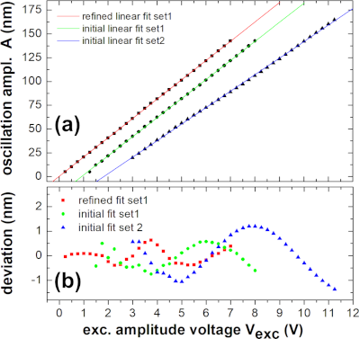
- . In a non-contact atomic force microscope (NC-AFM), it facilitates the force measurement by recording the periodic displacement of an oscillating microcantilever. To understand signal generation in a NC-AFM-based Michelson-type interferometer, we evaluate the non-linear response of the interferometer
- . Keywords: amplitude calibration; displacement detection; force microscopy; interferometer signal; NC-AFM; Introduction Optical interferometry is a reliable technique utilizing light waves to measure distance and displacement with high precision [1][2]. With the light wavelength as the length standard, a
- highly stable interferometer can detect displacements with an accuracy far beyond nanometer resolution [3], where the final physical limit is set by the photon emission statistics of the light source [4]. In non-contact atomic force microscopy (NC-AFM), interferometry is used to measure the periodic


Can neutral clusters: a two-step G0W0 and DFT benchmark
Beilstein J. Nanotechnol. 2024, 15, 1010–1016, doi:10.3762/bjnano.15.82
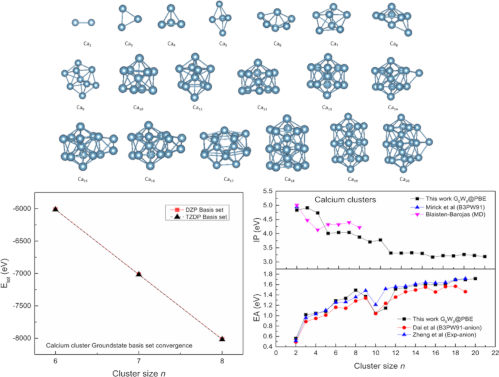
- functionals, as it can be more efficient in terms of computational resources and time. The threshold for the force was set at 0.1 eV/Angstrom for better convergence, whereas the charge density difference tolerance, which is essential for convergence, was set at a value of 10−9. The ABACUS code employs the





