Search results
Search for "infrared" in Full Text gives 568 result(s) in Beilstein Journal of Nanotechnology. Showing first 200.
Nanoarchitectonics with cetrimonium bromide on metal nanoparticles for linker-free detection of toxic metal ions and catalytic degradation of 4-nitrophenol
Beilstein J. Nanotechnol. 2024, 15, 1312–1332, doi:10.3762/bjnano.15.106
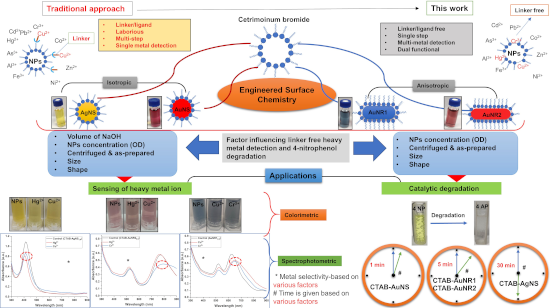
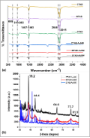
- used for measurement. The functionalization of AgNS, AuNS, AuNR1, and AuNR2 with CTAB was validated through Fourier-transform infrared spectroscopy (Thermo Scientific, Nicolet iS5, USA). 10 mg of the air-dried nanoparticles were placed over a diamond and measured in the range of 400–4000 cm−1




Interaction of graphene oxide with tannic acid: computational modeling and toxicity mitigation in C. elegans
Beilstein J. Nanotechnol. 2024, 15, 1297–1311, doi:10.3762/bjnano.15.105
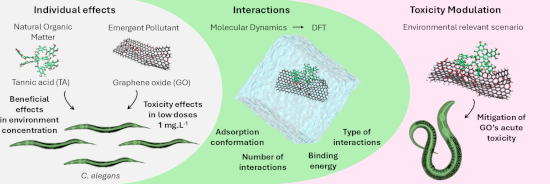
- biological medium. In the Fourier-transform infrared spectroscopy (FTIR) analysis (Figure 2a), we observed bands between 3000 and 4000 cm−1 related to –OH strength in all spectra. GO spectra presented fingerprint bands at 1734, 1625, 1390, 1230, and 1068 cm−1, which correspond to C=O stretching vibrations


Mn-doped ZnO nanopowders prepared by sol–gel and microwave-assisted sol–gel methods and their photocatalytic properties
Beilstein J. Nanotechnol. 2024, 15, 1283–1296, doi:10.3762/bjnano.15.104
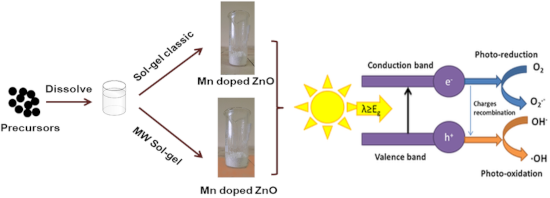
- methods. Fourier-transform infrared spectroscopy Figure 1 shows the FTIR spectra of as-prepared gels obtained by SG and MW. The broad band in the 3600–2500 cm−1 region can be assigned to overlapping characteristic vibrations of C–H, N–H, and O–H bonds. The small bands at 2972, 2866, and 2747 cm−1 are
- the SG sample (Figure 4a), while larger, well-defined prismatic particles are found in the MW sample. EDX analysis highlights the presence of Mn in both samples. Fourier-transform infrared spectroscopy Figure 5 presents the FTIR spectra of the thermally treated samples, revealing the absence of bands
- /min. Characterization Fourier transform infrared spectra (FTIR) were recorded with a Nicolet 6700 apparatus in the range of 400–4000 cm−1. The resolution was 4 cm−1. The powders were pressed in KBr pellets, and the spectra were recorded in absorbance mode. Differential thermal analysis (DTA) and


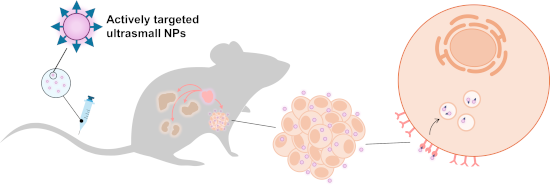
Realizing active targeting in cancer nanomedicine with ultrasmall nanoparticles
Beilstein J. Nanotechnol. 2024, 15, 1208–1226, doi:10.3762/bjnano.15.98
- ’ dots) composed of encapsulated Cy5 near-infrared (NIR) dyes, a protective PEG layer, the drug exatecan conjugated via a cathepsin-B cleavable linker, and folic acid targeting molecules (Figure 3A) [115]. The multifunctional C’ dot particles contained on average 21 exatecan and 13 folic acid molecules
- -infrared (NIR) dye MPA. Tumor-bearing mice were employed to assess the tumor specificity of AuNC-MPA, AuNC-MPA-cRGD, and AuNC-MPA-cRGD-AS1411 using in vivo NIR fluorescence imaging. Both targeted AuNCs accumulated in the tumor, while the control AuNC-MPA showed negligible accumulation. However, the


Synthesis, characterization and anticancer effect of doxorubicin-loaded dual stimuli-responsive smart nanopolymers
Beilstein J. Nanotechnol. 2024, 15, 1189–1196, doi:10.3762/bjnano.15.96
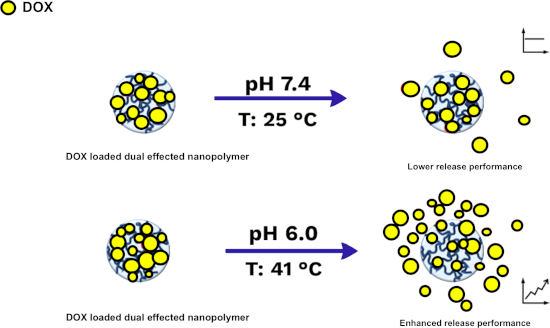
- . Characterizations of the synthesized nanostructures were carried out including zeta potential measurements, Fourier-transform infrared spectroscopy, and scanning electron microscopy. The loading capacity of the nanopolymers for DOX was investigated, and encapsulation and release studies were carried out. In a final
- Centrifugen, USA). The precipitated nanostructures were redispersed in distilled water utilizing a sonicator and dried with a lyophilizer. Then, the nanostructures were stored at 4 °C. Characterization studies Functional group analysis was carried out by Fourier-transform infrared (FTIR) spectroscopy


Unveiling the potential of alginate-based nanomaterials in sensing technology and smart delivery applications
Beilstein J. Nanotechnol. 2024, 15, 1077–1104, doi:10.3762/bjnano.15.88
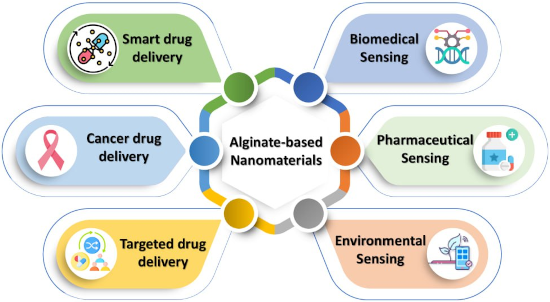
- solvent using the Doppler approach, which measures particle velocity as a function of voltage. The determination of the zeta potential is crucial in understanding the mechanism of drug–nanoparticle interactions [66]. In addition to the methods described above, Fourier-transform infrared spectroscopy is


Bolometric IR photoresponse based on a 3D micro-nano integrated CNT architecture
Beilstein J. Nanotechnol. 2024, 15, 1030–1040, doi:10.3762/bjnano.15.84
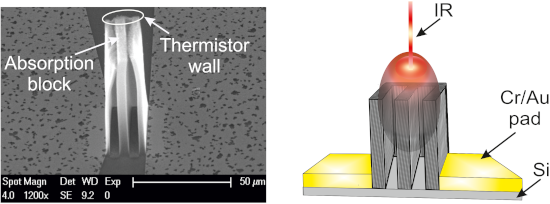
- resistance (TCR). These properties are advantageous for new bolometric sensors with high voltage responsivity and broadband absorption from the infrared (IR) to the terahertz spectrum. Preliminary performance evaluations have shown current and voltage responsivities of 2 mA/W and 30 V/W, respectively, in
- integration techniques make it important for real-time broadband imaging systems. Keywords: 3D micro-nano architecture; blackbody absorption; CNT microbolometer; high responsivity; high spatial resolution; Introduction Non-cryogenic infrared (IR) microbolometers represent a cutting-edge technology with
- [8], the effective reflection from the forest decreased very rapidly. MWCNTs have also been used as absorbers in the infrared region (2–20 μm) with an optical absorption coefficient above 90% [10]. Similar values were achieved for different synthesis temperatures (500–700 °C) with different CNT


Therapeutic effect of F127-folate@PLGA/CHL/IR780 nanoparticles on folate receptor-expressing cancer cells
Beilstein J. Nanotechnol. 2024, 15, 954–964, doi:10.3762/bjnano.15.78
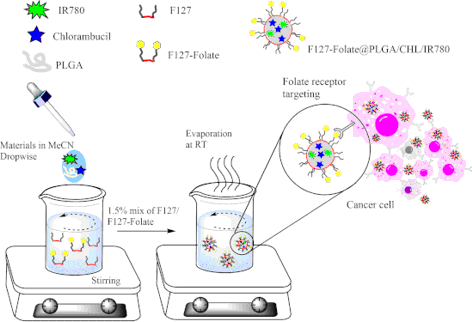
- discovered to have exceptional inherent tumor-targeting characteristics without any modification, and it is a fluorophore enabling near-infrared imaging. However, IR780 iodide has low water stability and photostability [23] and shows acute toxicity at high doses [24], which limits its clinical application
- fluorescent dye used to visualize particle location using infrared light [25]. Researchers have also found that F127-folate helps the nanoparticle to penetrate cancer cells through the folate receptor. This makes the treatment work better [12][13][14][34][35][36][37]. Our nanoparticles were also modified with
- and treatment. The term is not new to nanoscience, but it is always preferable to create a drug carrier that serves both goals; that was also the aim of the nanoparticle design in our study. In our study, the imaging agent is the near-infrared fluorescent dye IR780, while the treatment medication is



Facile synthesis of Fe-based metal–organic frameworks from Fe2O3 nanoparticles and their application for CO2/N2 separation
Beilstein J. Nanotechnol. 2024, 15, 897–908, doi:10.3762/bjnano.15.74
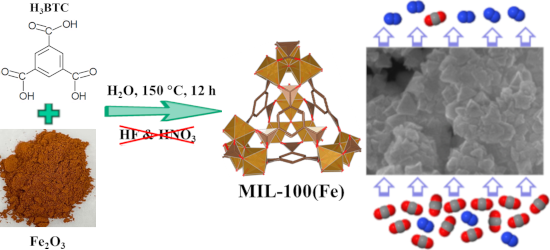
- and yield of the as-prepared MIL-100(Fe) materials, including thermogravimetric analysis (TGA), Fourier-transform infrared (FTIR) spectroscopy, powder X-ray diffraction (PXRD) measurements, determination of textural properties, scanning electron microscopy (SEM), and X-ray photoelectron spectroscopy
- -100Fe@Fe2O3 materials was collected using a field-emission scanning electron microscope Leo-Supra 55 (Carl Zeiss STM, Germany). An attenuated total reflectance (ATR) setup was adopted to record the Fourier-transform infrared (FTIR) spectra of all samples on a Frontier spectrometer (PerkinElmer, USA) in





Electrospun polysuccinimide scaffolds containing different salts as potential wound dressing material
Beilstein J. Nanotechnol. 2024, 15, 781–796, doi:10.3762/bjnano.15.65
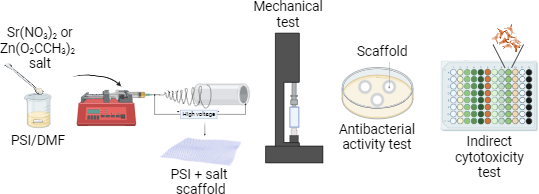
- polymer-based systems (<500 nm). Fourier-transform infrared spectroscopy was applied to verify the presence of salts in the scaffolds and to determine the interaction between the salt and the polymer. Another analysis, energy-dispersive X-ray spectroscopy, was carried out to determine strontium and zinc
- scanning electron microscopy (SEM), Fourier-transform infrared spectroscopy (FTIR), mechanical tests, investigation of salt dissolution from the scaffolds, examination of their antibacterial activity against four different bacterial strains (Escherichia coli, Pseudomonas aeruginosa, Bacillus subtilis, and
- , which was placed on a slow rotary drum (10 rpm). The distance between the needle of the syringe and the collector was 15 cm in all cases. The applied voltages (direct current power supply, ES 30 Model, Gamma High Voltage Inc., USA) and flow rates are in Table 1. Fourier-transform infrared spectroscopy



Green synthesis of biomass-derived carbon quantum dots for photocatalytic degradation of methylene blue
Beilstein J. Nanotechnol. 2024, 15, 755–766, doi:10.3762/bjnano.15.63
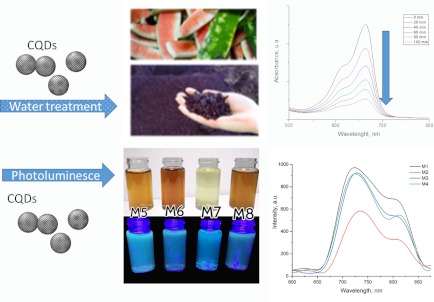
- 24 h, CQDs were successfully synthesized. A comprehensive characterization of the CQDs was performed using UV–visible spectroscopy, Fourier-transform infrared spectroscopy, dynamic light scattering, Raman spectroscopy, and luminescence spectroscopy, confirming their high quality. The photocatalytic
- catalytic activity in MB degradation, while those prepared with water as a solvent did not show significant catalytic activity. The samples were also characterized using UV–visible spectra, Fourier-transform infrared spectroscopy (FTIR), Raman spectroscopy, dynamic light scattering (DLS), and
- length quartz cell was used for the measurements, and deionized water was used as the blank in the measurement to account for background signals. Fourier-transform infrared spectra were measured on a Spectrum Two FT-IR/Sp 10 S/W spectrometer (USA) with a LiTaO3 type detector, the wavelength used ranged


Gold nanomakura: nanoarchitectonics and their photothermal response in association with carrageenan hydrogels
Beilstein J. Nanotechnol. 2024, 15, 678–693, doi:10.3762/bjnano.15.56

- into heat energy is an intrinsic optical property of metal nanoparticles when irradiated using near-infrared radiation. However, the impact of size and shape on the photothermal behaviour of gold nanomakura particles possessing optical absorption within 600–700 nm as well as on incorporation in
- gold nanomakura within a 600–700 nm wavelength. The aspect ratio as well as anisotropy of synthesized gold nanomakura can influence photothermal response upon near-infrared irradiation. The role of carbon tail length was evident via absorption peaks obtained from longitudinal surface plasmon resonance
- . Plasmon resonance in spherical nanoparticles can be stretched over a relatively small wavelength range by changing the diameter, whereas casting anisotropy serves an extra degree of freedom for controlling the plasmon band over a range of visible to infrared (IR) spectrum [4]. Gold nanoparticles are well






Functional fibrillar interfaces: Biological hair as inspiration across scales
Beilstein J. Nanotechnol. 2024, 15, 664–677, doi:10.3762/bjnano.15.55
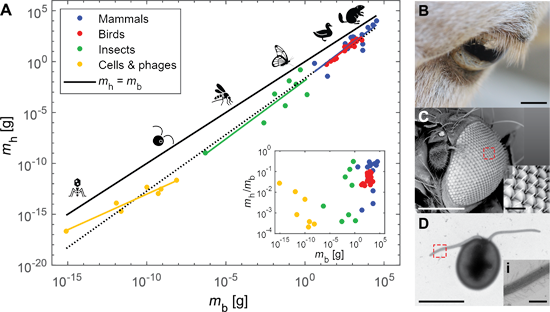
- , also known as a peg-in-pit sensillum [154]. The protruding hair-like receptors help to absorb thermal radiation, since the penetration depth of infrared radiation into insect cuticle is quite shallow [155]. Additionally, the hair-like sensillum possesses electron-dense filaments that may improve


Exfoliation of titanium nitride using a non-thermal plasma process
Beilstein J. Nanotechnol. 2024, 15, 631–637, doi:10.3762/bjnano.15.53
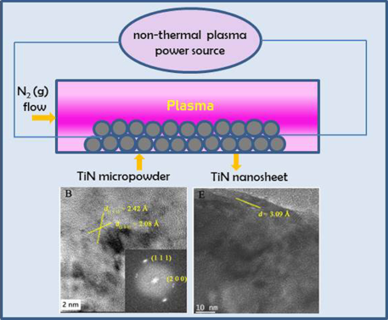
- exfoliation methods, offering promising prospects for applications in photoacoustic imaging and photothermal therapy of tumors because of their satisfactory absorption characteristics in the second near-infrared (NIR-II) region [5]. The non-thermal plasma (NTP) synthesis method enables the fabrication of 2D


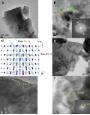

AFM-IR investigation of thin PECVD SiOx films on a polypropylene substrate in the surface-sensitive mode
Beilstein J. Nanotechnol. 2024, 15, 603–611, doi:10.3762/bjnano.15.51
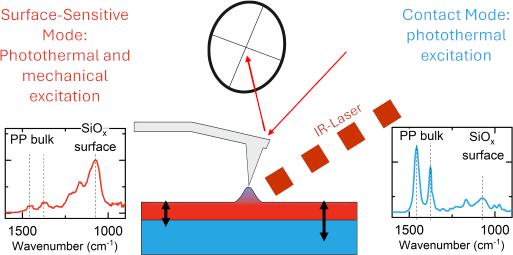
- /bjnano.15.51 Abstract Thin silicon oxide films deposited on a polypropylene substrate by plasma-enhanced chemical vapor deposition were investigated using atomic force microscopy-based infrared (AFM-IR) nanospectroscopy in contact and surface-sensitive mode. The focus of this work is the comparison of
- Photothermal AFM-IR nanospectroscopy is a technique that combines the chemical information from infrared (IR) spectroscopy with the high spatial resolution of atomic force microscopy (AFM). For this, the sample is illuminated with a tunable IR laser [1]. When a suitable IR wavelength is chosen, resonant
- crystal microbalance (QCM) during deposition. Samples were prepared with a SiOx thickness of 5 nm and 50 nm. The PECVD process is described elsewhere [16]. Surface and thin film analysis The infrared spectroscopic studies were performed using an Anasys NanoIR 3s system from Bruker Nano GmbH, Germany


Radiofrequency enhances drug release from responsive nanoflowers for hepatocellular carcinoma therapy
Beilstein J. Nanotechnol. 2024, 15, 569–579, doi:10.3762/bjnano.15.49
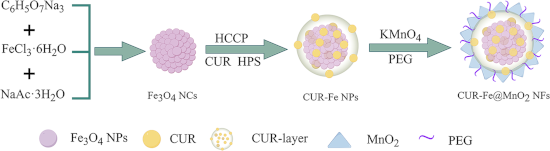
- hydrated state [31]. The DLS depicted size is the closest to that in vivo. The Fourier-transform infrared (FTIR) spectrum of CUR exhibited vibrational absorption peaks at 1207 cm−1 and 3330 cm−1 corresponding to C=O and –OH, respectively, in the phenolic hydroxy group (Figure 2f). Similarly, for bis(4
- measured by a Malvern Zetasizer Nano ZS instrument (Nano ZS90, Malvern, UK). A 2 mg NF sample was added into 1 mL of deionized water and directly detected by ZS90. The detection angle was 90 degrees. The compositions were also analyzed using Fourier-transform infrared spectroscopy (Nicolet iS50, Thermo


Photocatalytic degradation of methylene blue under visible light by cobalt ferrite nanoparticles/graphene quantum dots
Beilstein J. Nanotechnol. 2024, 15, 475–489, doi:10.3762/bjnano.15.43
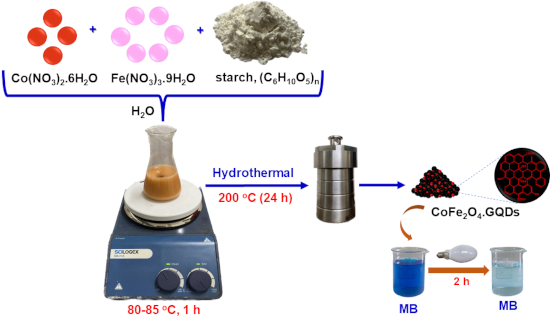
- electron microscopy, transmission electron microscopy, ultraviolet–visible diffuse reflectance spectroscopy, Fourier-transform infrared spectroscopy, photoluminescence spectroscopy, vibrating-sample magnetometry, and nitrogen adsorption/desorption isotherms. Cobalt ferrite crystals of around 8–10 nm and
- infrared (FTIR) spectra were recorded on a IR-Prestige-21 (Shimadzu). Raman spectra were recorded on an Xplora Plus instrument (Horiba, Japan) in a frequency range from 200 to 2000 cm−1 and with an excitation wavelength of 785 nm. The nitrogen adsorption/desorption isotherms were recorded by using a




Vinorelbine-loaded multifunctional magnetic nanoparticles as anticancer drug delivery systems: synthesis, characterization, and in vitro release study
Beilstein J. Nanotechnol. 2024, 15, 256–269, doi:10.3762/bjnano.15.24
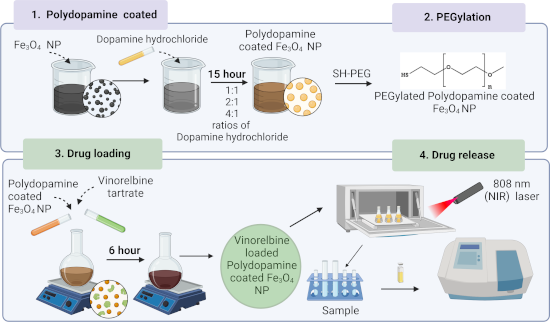
- an infrared thermal imaging camera. Additionally, the photothermal stability of both PDA/Fe3O4 NPs and VNB/PDA/Fe3O4 NPs (at a concentration of 0.1 mg/mL and in a total volume of 1 mL) was assessed through a 5 min interaction with an 808 nm (1 W/cm2) NIR laser followed by a cooling process, for four
- Pro) using Cu Kα radiation (λ = 0.15418 nm) in a 2θ range of 10° to 90°. Fourier-transform infrared (FTIR, Thermo, Nicolet Is 10) spectra of the nanostructures were obtained in the range of 4000–400 cm−1. The amounts of released drug were obtained using a UV–vis spectrophotometer (Shimadzu Scientific
- multifunctional PEGylated magnetic nanoparticles coated with polydopamine (PDA) exhibit strong near-infrared absorption because of the PDA layer and have the ability to deliver drugs under a magnetic field owing to their superparamagnetism [51]. During the drug loading studies, the anticancer drug vinorelbine was


Nanocarrier systems loaded with IR780, iron oxide nanoparticles and chlorambucil for cancer theragnostics
Beilstein J. Nanotechnol. 2024, 15, 180–189, doi:10.3762/bjnano.15.17
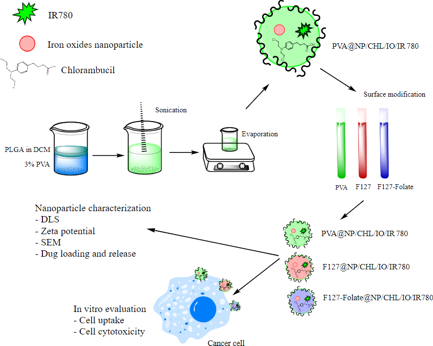
- nanocarrier that can be loaded with the chemotherapeutic medication chlorambucil and magnetic resonance imaging agents (e.g., iron oxide nanoparticles and near-infrared fluorophore IR780) for theragnostics. Poly(lactic-co-glycolic acid) was combined with the aforementioned ingredients to generate poly(vinyl
- diagnostics, near-infrared (NIR) fluorescent dyes are a potential alternative for the diagnosis and excision of residual malignant cancer, which is invisible by conventional visual examination and palpation [16][17][18]. Indocyanine green is the only NIR dye permitted for clinical use [19]. Dyes such as IR780
- oleic acid was added to the solution and heated to 70 °C for 30 min. The synthesized IO NPs were washed three times with 50 mL of DCM and stored at −80 °C for further experiments. Synthesis of folate-F127 The synthesis was done as previously described [13]. The Fourier-transform infrared spectroscopy


Modification of graphene oxide and its effect on properties of natural rubber/graphene oxide nanocomposites
Beilstein J. Nanotechnol. 2024, 15, 168–179, doi:10.3762/bjnano.15.16
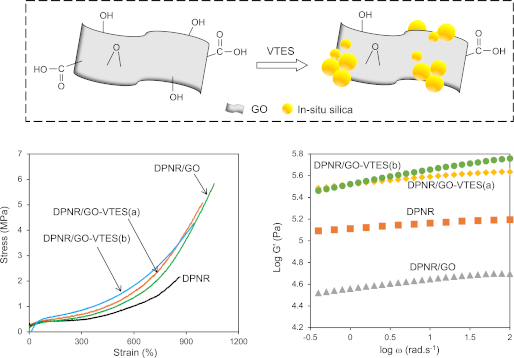
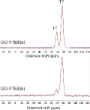
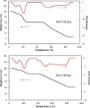
- characterized by X-ray diffraction (XRD), Fourier-transform infrared spectroscopy, contact angle, thermal gravimetric analysis, and scanning electron microscopy. The XRD results showed the appearance of an amorphous region of silica particles at a diffraction angle of 22°. The formation of silica was
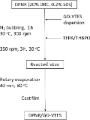
- conditions to determine the ideal condition to modify GO for grafting onto NR. The GO-VTES products were characterized using X-ray diffraction (XRD), contact angle, 29Si NMR, Fourier-transform infrared spectroscopy (FTIR), and morphology analysis. The GO-VTES was expected to improve the mechanical properties
- -VTES(a). Attenuated total reflection–Fourier-transform infrared spectroscopy results The attenuated total reflection–Fourier-transform infrared spectroscopy (ATR–FTIR) results of GO, GO-VTES(a), and GO-VTES(b) are shown in Figure 5. The absorption values ranging from 3100 to 3700 cm−1 corresponded to






In situ optical sub-wavelength thickness control of porous anodic aluminum oxide
Beilstein J. Nanotechnol. 2024, 15, 126–133, doi:10.3762/bjnano.15.12
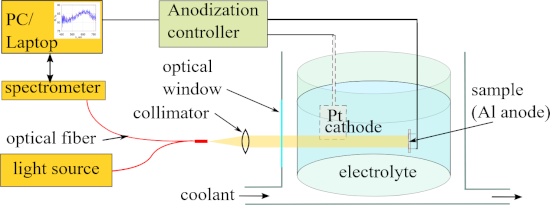
- different wavelengths. The usable wavelength range was limited primarily by the low intensity of the incandescent light source in the violet part of the spectrum and the sensitivity of the detector in the infrared. Other materials (fiber, glass, electrolyte, and coolant) in the optical path can further


Assessing phytotoxicity and tolerance levels of ZnO nanoparticles on Raphanus sativus: implications for widespread adoptions
Beilstein J. Nanotechnol. 2024, 15, 115–125, doi:10.3762/bjnano.15.11
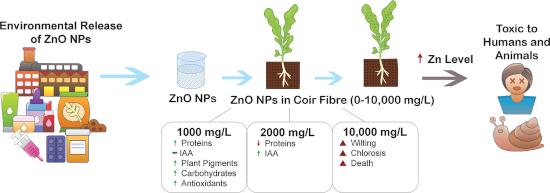
- on Raphanus sativus (R. sativus) concerning its tolerance levels, toxicity, and accumulation. ZnO NPs were synthesized by the wet chemical method and characterized by powder X-ray diffraction (PXRD), Fourier-transform infrared (FTIR) spectroscopy, ultraviolet–visible (UV–vis) spectroscopy, dynamic
- synthesized ZnO NPs were characterized via several techniques such as powder X-ray diffraction (PXRD), Fourier-transform infrared (FTIR) spectroscopy, solid-UV–vis spectroscopy, dynamic light scattering (DLS), and scanning electron microscopy (SEM). Then the potential phytotoxicity of the synthesized ZnO NPs


Berberine-loaded polylactic acid nanofiber scaffold as a drug delivery system: The relationship between chemical characteristics, drug-release behavior, and antibacterial efficiency
Beilstein J. Nanotechnol. 2024, 15, 71–82, doi:10.3762/bjnano.15.7
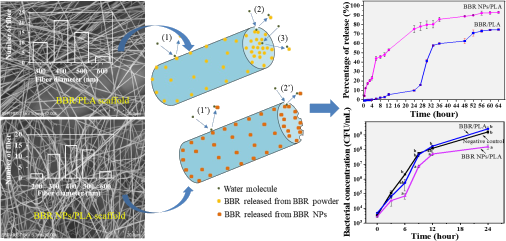
- bonds, Fourier transform infrared spectroscopy (FTIR) was used to examine the differences in chemical characteristics of BBR-loaded PLA nanofiber scaffolds (Figure 2A). The FTIR spectrum of PLA nanofiber scaffold shows the adsorption peaks at 1751 cm−1 resulting from the stretching vibrations of the C=O
- ImageJ software as an image analysis tool. Fourier-transform infrared spectroscopy was performed in a Nicolet NEXUS 670 spectrometer. The resulting spectra were recorded in transmission mode in the wavelength range of 500–4000 cm−1. A Raman spectrometer (MacroRAM, Horiba) was used to investigate the


Influence of conductive carbon and MnCo2O4 on morphological and electrical properties of hydrogels for electrochemical energy conversion
Beilstein J. Nanotechnol. 2024, 15, 57–70, doi:10.3762/bjnano.15.6
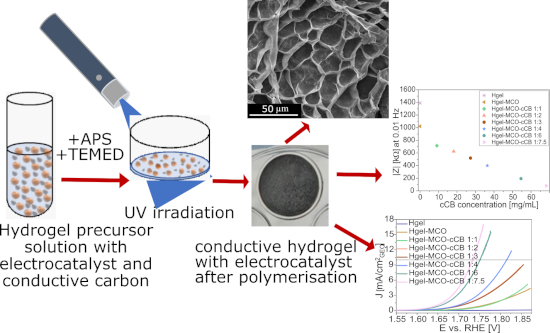
- MCO and cCB particles in the hydrogel precursor solution to obtain a more homogeneous distribution of these particles in the structure of the polymer matrix and on its surface. The Fourier-transform infrared spectroscopy (FTIR) results of the hydrogel compositions and their pure components are shown


Curcumin-loaded albumin submicron particles with potential as a cancer therapy: an in vitro study
Beilstein J. Nanotechnol. 2023, 14, 1127–1140, doi:10.3762/bjnano.14.93
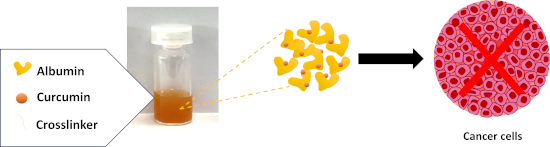
- . SEM images were obtained under high-vacuum conditions at an operation voltage of 15 kV. Fourier-transform infrared spectroscopy Chemical characteristics of CUR, HSA, HSA-MPs, and CUR-HSA-MPs were examined using Fourier-transform infrared spectroscopy (FTIR, Thermo Scientific, NICOLET IS5, Waltham, MA