Search results
Search for "macrophages" in Full Text gives 92 result(s) in Beilstein Journal of Nanotechnology.
The distribution and degradation of radiolabeled superparamagnetic iron oxide nanoparticles and quantum dots in mice
Beilstein J. Nanotechnol. 2015, 6, 111–123, doi:10.3762/bjnano.6.11
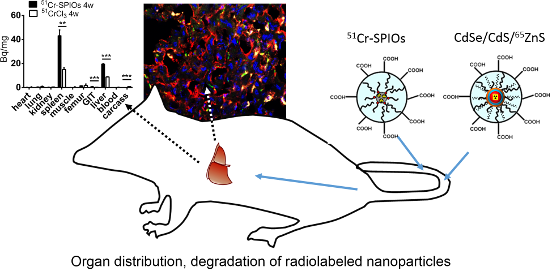
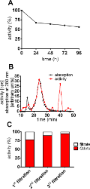
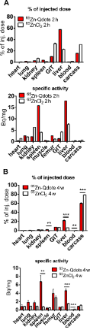
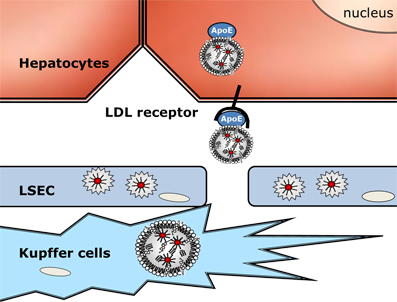
- the Zn pool was observed. Confocal microscopy of rat liver cryosections (prepared 2 h after intravenous injection of polymer-coated Qdots) revealed a colocalization with markers for Kupffer cells and liver sinusoidal endothelial cells (LSEC), but not with hepatocytes. In J774 macrophages, fluorescent
- endosomal membrane by the divalent metal ion transporter, DMT1 [26]. During iron homeostasis, excess iron would then be released by, for example, macrophages via ferroportin, bound to apotransferrin and transported to cells in need for iron. The intracellular processing of Cr3+ is more or less unknown, and
- function by expressing several types of scavenger receptors and that Kupffer cells (KCs) belong to the family of macrophages and form part of the reticuloendothelial system. Thus, the sections were analyzed by immunofluorescence and stained for hepatic endothelial cells and Kupffer cells, which are known





Intake of silica nanoparticles by giant lipid vesicles: influence of particle size and thermodynamic membrane state
Beilstein J. Nanotechnol. 2014, 5, 2468–2478, doi:10.3762/bjnano.5.256
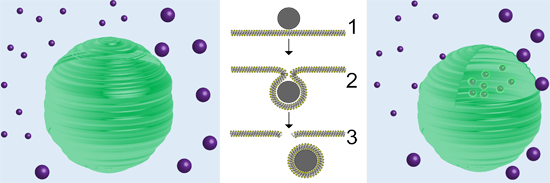
- . Scavenger receptors are known to mediate the uptake of a big diversity of negatively charged cargo. For instance, Lunov et al. [50] show that scavenger receptor A plays a crucial role in the uptake of 20 nm iron oxide particles by macrophages. They derive from their data, that up to 20 receptors are


Proinflammatory and cytotoxic response to nanoparticles in precision-cut lung slices
Beilstein J. Nanotechnol. 2014, 5, 2440–2449, doi:10.3762/bjnano.5.253
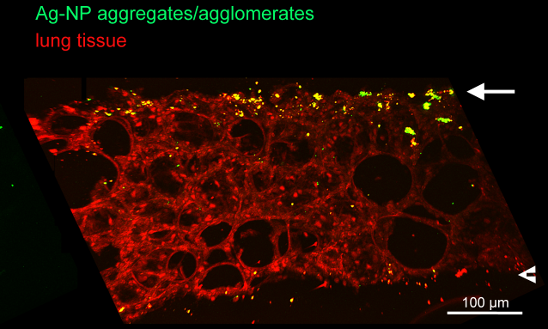
- efficient tool in nanotoxicology. PCLS can be prepared from several species such as mouse or rat, but also from human lung tissue [6]. A major advantage of this tissue model is the retention of the lung architecture. The conservation of intact cells, including alveolar epithelial cells, alveolar macrophages
- vivo [28][31][32][33]. In particular, Beyerle et al. have demonstrated that quartz particles (the same as those in the present study) induced a loss in membrane integrity in vitro in murine alveolar epithelial cells and macrophages after 24 h of incubation [31]. Furthermore, cytotoxicity elicited by


Functionalized polystyrene nanoparticles as a platform for studying bio–nano interactions
Beilstein J. Nanotechnol. 2014, 5, 2403–2412, doi:10.3762/bjnano.5.250
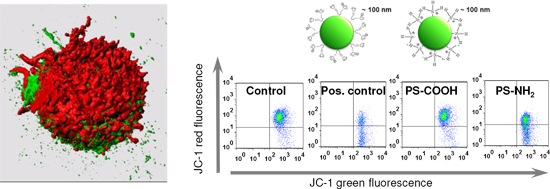
- used superparamagnetic iron oxide nanoparticles. Keywords: amino groups; apoptosis; carboxyl groups; cell proliferation; leukemia cell lines; macrophages; mTOR; polystyrene nanoparticles; Review Applications of polystyrene Polystyrene, one of the most extensively used types of plastic [1], is an
- induce lung injury. Changes in material, size or the surface of the particles results in alternation of the toxicity, which makes it unlikely to integrate nanoparticle toxicology in a single unifying concept [24]. Macrophages are phagocytes that are equipped with specific receptors, which enable the
- recognition and internalization of particulate matter including nanoparticles. As a consequence, macrophages accumulate with time a main portion of nanoparticles incorporated by the body [25]. Thus, the clinically approved superparamagnetic iron oxide (SPIO) MRI contrast agent ResovistTM is taken up after


Nanoparticle interactions with live cells: Quantitative fluorescence microscopy of nanoparticle size effects
Beilstein J. Nanotechnol. 2014, 5, 2388–2397, doi:10.3762/bjnano.5.248
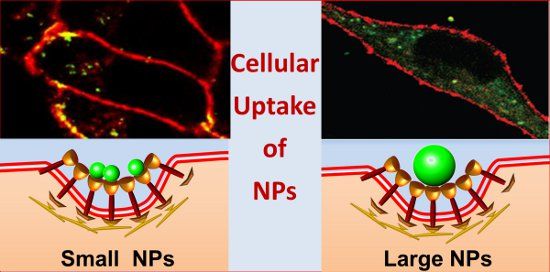
- machinery. Depending on the details of their interactions, proteins adsorbed onto NPs may enhance or reduce internalization of the so disguised NPs. Specialized cells, such as macrophages, neutrophils, and monocytes are capable of phagocytosis (eating by cells), a form of endocytosis in which the cell
- via a high affinity to their receptors. Lunov et al. [44] investigated the uptake of CPS and NPS NPs by human macrophages and by undifferentiated and PMA-differentiated monocytic THP-1 tumor cells in great detail and could show that uptake of the same kind of PS NPs into different cells lines occurred
- normal differentiated cells. They also found that only the NPS NPs triggered NLRP3 inflammasome activation and subsequent release of proinflammatory interleukin 1β (IL-1β) by human macrophages [45]. Overall, these studies stress that cellular uptake pathways crucially depend on specific interactions of


Anticancer efficacy of a supramolecular complex of a 2-diethylaminoethyl–dextran–MMA graft copolymer and paclitaxel used as an artificial enzyme
Beilstein J. Nanotechnol. 2014, 5, 2293–2307, doi:10.3762/bjnano.5.238
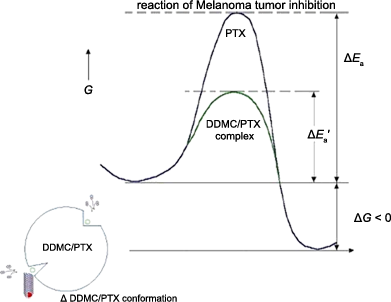
- . The DDMC/PTX complex reacts better to melanoma cells at the point of metastasis. This seemed to be reflected by the hemorrhagic necrosis of the tumor, which was considered to be caused by the discharge of the tumor necrosis factor alpha (TNF-α) cytokine by M1 macrophages. Later, the increase in TNF-α
- /RISK” of high polymer DDMC/PTX [49]. It is known that the TLR3/TICAM-1 pathway of M1 macrophages in a tumor is the key to TNF-α production [50]. PTX reportedly affects the native or acquired immune response, thereby inducing M1 macrophages, which secrete NO and proinflammatory cytokines such as IL-1β
- , GM-CSF, and TNF-α [51]. Although it has been thought that M1 and M2 macrophages are important factors for cancer recovery, it was noted recently that the grade of malignancy was high when many M2 macrophages infiltrate a tumor [52]. This is why M2 macrophages have an important role in the


Nanoencapsulation of ultra-small superparamagnetic particles of iron oxide into human serum albumin nanoparticles
Beilstein J. Nanotechnol. 2014, 5, 2259–2266, doi:10.3762/bjnano.5.235
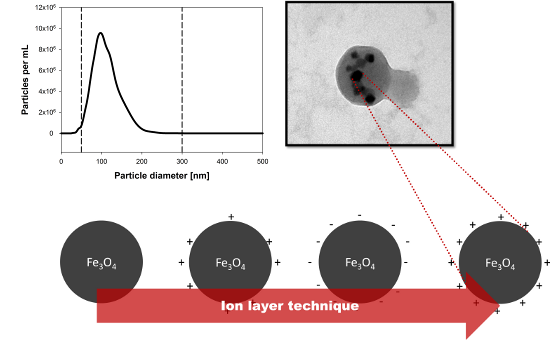
- tumors due to the enhanced permeability and retention effect [5]. While circulating through the blood stream, these colloids undergo an opsonization by the immune system followed by endocytosis into macrophages. Particles of greater diameters are rapidly cleared from the plasma and smaller colloidal


PVP-coated, negatively charged silver nanoparticles: A multi-center study of their physicochemical characteristics, cell culture and in vivo experiments
Beilstein J. Nanotechnol. 2014, 5, 1944–1965, doi:10.3762/bjnano.5.205
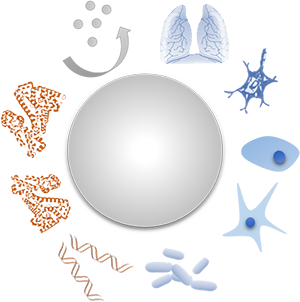
- types (alveolar epithelial cells, macrophages, and dendritic cells), adverse effects were also only found at high silver concentrations. The silver ions that are released from silver nanoparticles may be harmful to skin with disrupted barrier (e.g., wounds) and induce oxidative stress in skin cells
- of the human airway/alveolar epithelial barrier. The human 3D cell culture model consists of three cell types, i.e., alveolar epithelial cells, macrophages, and dendritic cells as described in [127]. To imitate the lung organ structure, an A549 cell layer was cultured on porous membranes with human
- monocyte-derived macrophages (MDMs) on top on the apical side and monocyte-derived dendritic cells (MDDCs) underneath on the basal side. This 3D co-culture system was further cultivated at the air–liquid interface to approximate the in vivo situation in the lungs [128]. Although essential parts are missing


Different endocytotic uptake mechanisms for nanoparticles in epithelial cells and macrophages
Beilstein J. Nanotechnol. 2014, 5, 1625–1636, doi:10.3762/bjnano.5.174
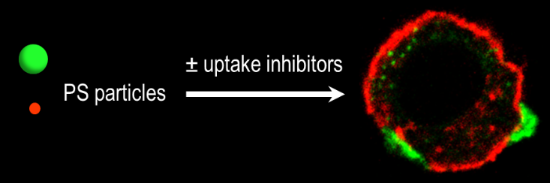
- caveolin-1. A549 cells expressed clathrin heavy chain and caveolin-1, but no flotillin-1 uptake-related proteins. Our data revealed an impeded uptake of 40 nm polystyrene nanoparticles by J774A.1 macrophages when actin polymerization and clathrin-coated pit formation was blocked. From this result, it is
- membranes [22]. Phagocytosis and macropinocytosis are both dependent on actin [15][23]. Phagocytosis is carried out by professional phagocytes (i.e., monocytes/macrophages, neutrophils and dendritic cells), which in turn form intracellular phagosomes. Macromolecule and particle uptake is triggered via the
- suitable for biomedical applications [47][48] since they are considered non-toxic at applied physiological concentrations [49]. Finally, two of the most relevant cell types in regard to uptake and interaction of (nano) particles at any barrier system (i.e., macrophages and epithelial) [50][51] were



Silica nanoparticles are less toxic to human lung cells when deposited at the air–liquid interface compared to conventional submerged exposure
Beilstein J. Nanotechnol. 2014, 5, 1590–1602, doi:10.3762/bjnano.5.171
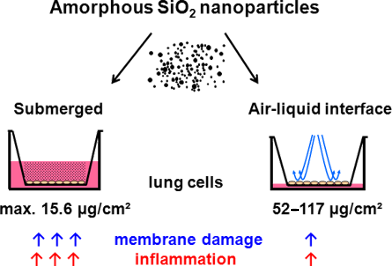
- ]. Meanwhile there are numerous reports which also demonstrate adverse effects of amorphous silica NPs in vitro, e.g., in macrophages [3][4][5], in lung epithelial cells [5][6][7][8] and in co-cultures of both cell types [9]. However, in vitro exposure of lung cells under submerged conditions does not reflect
- helpful to unravel the different responses. This study is one of only a handful of similar attempts to directly compare biological effects of NPs under ALI and submerged conditions. In a triple-culture comprised of human lung epithelial cells, macrophages and dendritic cells were exposed to similar doses


In vitro interaction of colloidal nanoparticles with mammalian cells: What have we learned thus far?
Beilstein J. Nanotechnol. 2014, 5, 1477–1490, doi:10.3762/bjnano.5.161
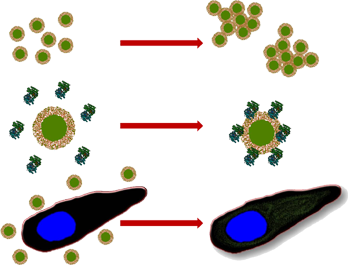
- metal NP may not, which leads to different interaction with cells. Furthermore, all of these different NPs can be exposed to different cells (e.g., macrophages, endothelia, and tumor cells) under different exposure scenarios (in vitro and in vivo), which as a consequence culminates in a large, but


The cell-type specific uptake of polymer-coated or micelle-embedded QDs and SPIOs does not provoke an acute pro-inflammatory response in the liver
Beilstein J. Nanotechnol. 2014, 5, 1432–1440, doi:10.3762/bjnano.5.155
- injected nanocrystals was found to depend strongly on the size and to some extent on the surface. For direct renal excretion the upper size limit in the series was a hydrodynamic diameter of 5.6 nm [6]. Larger nanocrystals apparently remain within the circulation before they are taken up by macrophages of
- the mononuclear phagocytic system (MPS) [7]. Consequently, larger nanocrystals are exposed to cellular degradation mechanisms of macrophages, e.g., the acidic environment of lysosomes and even more harsh conditions in phagosomes containing also hydrogen peroxide [8]. This might disrupt the surface
- endothelial cells. In contrast, nanocrystals transported by lipid micelles are detected within hepatic macrophages, the Kupffer cells, and within liver parenchymal cells, the hepatocytes. Intriguingly, even 48 h after injection, neither changing the embedding procedure nor the cellular targeting provoked any


Mimicking exposures to acute and lifetime concentrations of inhaled silver nanoparticles by two different in vitro approaches
Beilstein J. Nanotechnol. 2014, 5, 1357–1370, doi:10.3762/bjnano.5.149
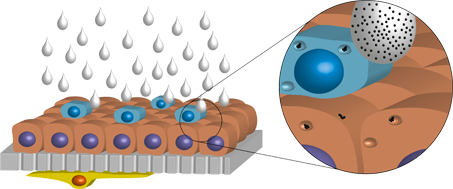
- [1][11][15]. It has been reported that cytotoxicity and (pro)-inflammatory cytokine release could be observed upon in vitro exposures of Ag NPs to a variety of cell types including immune cells (such as macrophages and monocytes [19][20][21]) and epithelial lung cells [22][23][24]. Furthermore
- -derived macrophages (MDMs) and dendritic cells (MDDCs) [39]. The model is reflecting a realistic cellular scenario in the lung, as it is designed for direct exposure of cells to an aerosol [40]. Together with a dose-controlled air–liquid interface cell exposure (ALICE) system [41] the possible adverse
- with additional supplementation of 10 ng/mL IL-4 (R&D Systems Europe Ltd., Abingdon, UK) and 10 ng/mL GM-CSF (R&D Systems). Monocyte-derived macrophages (MDMs) were obtained by culturing the monocytes for 7 d in RPMI complete containing 10 ng/mL M-CSF (R&D Systems). The triple cell co-cultures were set



Manipulation of isolated brain nerve terminals by an external magnetic field using D-mannose-coated γ-Fe2O3 nano-sized particles and assessment of their effects on glutamate transport
Beilstein J. Nanotechnol. 2014, 5, 778–788, doi:10.3762/bjnano.5.90
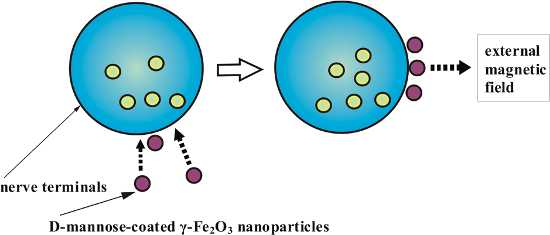
- cells possess receptors for D-mannose on their membranes, that is, MMR on dendritic cells subsets, macrophages, lymphatic and hepatic endothelium, Endo 180 on subsets of endothelial cells, DC-SIGNR on hepatic and lymphatic endothelial cells as well as serum contains mannose binding lectines (MBL) [10



Cytotoxic and proinflammatory effects of PVP-coated silver nanoparticles after intratracheal instillation in rats
Beilstein J. Nanotechnol. 2013, 4, 933–940, doi:10.3762/bjnano.4.105
- alveolar region [10][11][12]. Once deposited there, nanoparticles are found to interact with the epithelial lining fluid including pulmonary surfactant, lung macrophages and epithelial cells [13][14][15]. Depending on their physico-chemical properties, a small portion of the inhaled nanomaterials may even
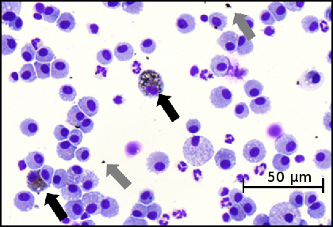
- neutrophils that did not reach statistical significance, the instillation of 250 µg PVP-AgNP produced a significant influx (60-fold) of neutrophils into the lungs (Figure 7). Representative images of BAL cells show the presence of PVP-AgNP both in alveolar macrophages and free particles/agglomerates in BALF
- macrophages with AgNP was stated to be a trigger for immune responses [32] and responsible for the production of IL-8 [33]. AshaRani and co-workers demonstrated the involvement of the NFκB and MAP kinase pathways after exposure of human lung cells (IMR-90) to AgNP. Consequently, the activation of these




Synthesis of boron nitride nanotubes from unprocessed colemanite
Beilstein J. Nanotechnol. 2013, 4, 843–851, doi:10.3762/bjnano.4.95
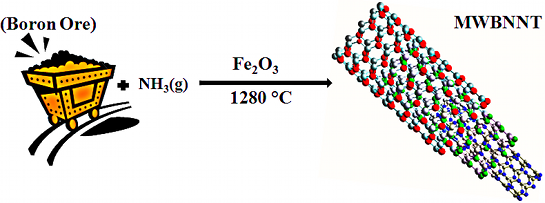
- develop nanoscale microfluodic devices [12]. Although there are different conflicting reports about the toxicity of BNNTs, it has been shown in a recent study with human embryonic kidney cells (HEK293), lung epithelial cells (A549), fibroblast cells (3T3-L1), and alveolar macrophages (RAW 264.7) that


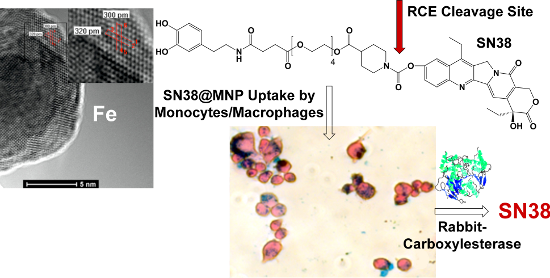
Magnetic-Fe/Fe3O4-nanoparticle-bound SN38 as carboxylesterase-cleavable prodrug for the delivery to tumors within monocytes/macrophages
Beilstein J. Nanotechnol. 2012, 3, 444–455, doi:10.3762/bjnano.3.51