Search results
Search for "membrane" in Full Text gives 563 result(s) in Beilstein Journal of Nanotechnology. Showing first 200.
Fabrication and evaluation of BerNPs regarding the growth and development of Streptococcus mutans
Beilstein J. Nanotechnol. 2025, 16, 308–315, doi:10.3762/bjnano.16.23
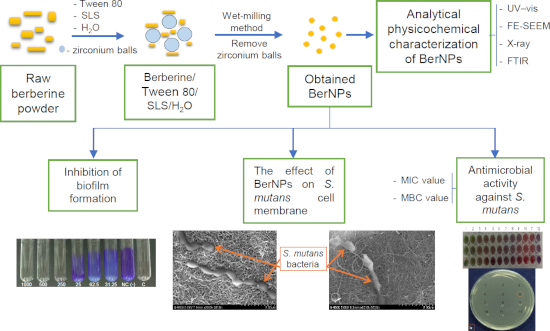
- minimum inhibitory concentration and minimum bactericidal concentration values of 78.1 and 312.5 µg/mL, respectively. BerNPs caused significant damage to S. mutans cells, disrupting the cell membrane structure, and leading to cell lysis and death. Additionally, BerNPs effectively inhibited the biofilm
- wrinkles (Figure 4A). However, after exposure to BerNPs, significant alterations in bacterial cell morphology were observed (Figure 4B). The cell membrane was severely compromised, exhibiting wrinkled and disrupted borders, leading to membrane rupture. This damage caused the release of intracellular
- , ultimately triggering cell death [32]. The findings of Peng et al. on Streptococcus agalactiae indicated that berberine significantly disrupted the cell membrane structure. SDS-PAGE electrophoresis results showed that some protein bands were blurred or absent, suggesting that berberine led to complete or




Enhancing mechanical properties of chitosan/PVA electrospun nanofibers: a comprehensive review
Beilstein J. Nanotechnol. 2025, 16, 286–307, doi:10.3762/bjnano.16.22

- membrane can be tricky in terms of handling and thickness measurements used for stress calculations [132]. Preparation of specimens requires attention to prevent damage, pretension, or slipping from grips during testing. Maccaferri et al. [133] demonstrated the use of a paper frame to hold the specimen in
- because of the less favorable mechanical properties of chitosan compared to PVA. For the chitosan/PVA membrane, the stiffer nature of chitosan tends to reduce flexibility, while toughness tends to decrease because of the brittleness of chitosan. In support of these observations, the effects of different
- compared to pure PVA nanofibers, said to be due to hydrogen bond formation between chitosan and PVA. Olvera Bernal et al. [58] studied different concentrations of chitosan between 2.5% and 4% (w/w) in the chitosan/PVA membrane, while keeping the PVA concentration constant at 5% (w/w). The Young’s modulus


Emerging strategies in the sustainable removal of antibiotics using semiconductor-based photocatalysts
Beilstein J. Nanotechnol. 2025, 16, 264–285, doi:10.3762/bjnano.16.21
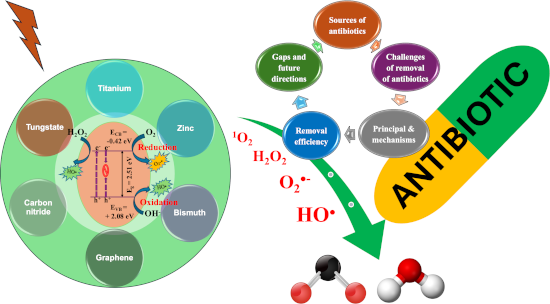
- activated sludge process and biological membrane technologies, are commonly applied in wastewater treatment [21]. However, these technologies have come under scrutiny because of certain limitations, such as extended processing times and the generation of heat [22]. Conversely, chemical methods such as
- oxidation or membrane filtration may be effective, they are energy-intensive and expensive to implement on a large scale [28]. Limited public awareness Many people may be unaware of how improper antibiotic disposal harms the environment or of the importance of antibiotic removal, which leads to poor



Radiosensitizing properties of dual-functionalized carbon nanostructures loaded with temozolomide
Beilstein J. Nanotechnol. 2025, 16, 229–251, doi:10.3762/bjnano.16.18
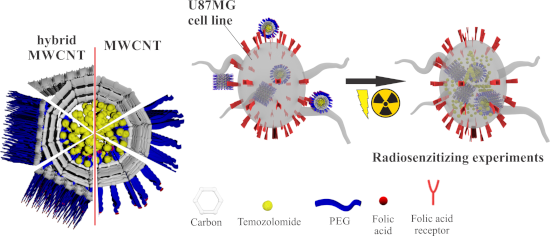
- aim to prepare nanocarriers with the potential to prolong the drug circulation time, cross the blood–brain–tumor barrier (BBTB), and provide targeted and controlled drug release in the brain tumor cells. Cytotoxicity and effects on cell membrane integrity of the blank and TMZ-loaded dual
- for active agent loading and functionalization with (intra)cellular component targeting ligands, and extremely small size for crossing the blood–brain barrier (BBB) and targeted delivery to the brain. The hydrophobic nature of the CNs offers good membrane permeability. Through chemical modifications
- apoptosis via activation of reactive oxygen species (ROS)-, caspase-, and mitochondrion-dependent pathways, such as p53-mPTP [13][17][18], and reduce the expression of voltage-dependent ion channel genes and extracellular receptors in glioma cells, damaging the cell membrane and changing its potential [19




Recent advances in photothermal nanomaterials for ophthalmic applications
Beilstein J. Nanotechnol. 2025, 16, 195–215, doi:10.3762/bjnano.16.16
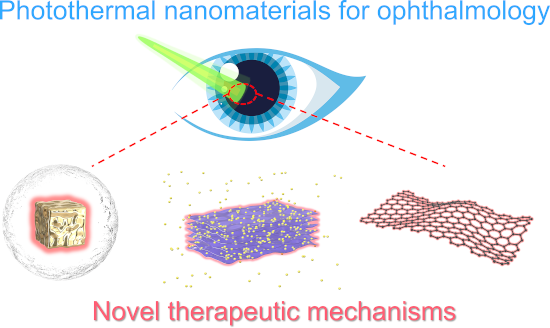
- (primarily intravitreal, subretinal, and suprachoroidal injections) is a common strategy for alleviating retinal disorders; however, the ocular tissue barriers (primarily the vitreous, inner limiting membrane, retinal pigment epithelium, and blood–retina barriers) and defense mechanisms impede drug
- achieve customized treatment and reduce the required number of injections [106]. The inner limiting membrane (ILM) is a major obstacle preventing effective drug delivery to the retina after intravitreal injection [166]. Considering that the ILM is not necessary for adults, using photothermal nanomaterials


A review of metal-organic frameworks and polymers in mixed matrix membranes for CO2 capture
Beilstein J. Nanotechnol. 2025, 16, 155–186, doi:10.3762/bjnano.16.14
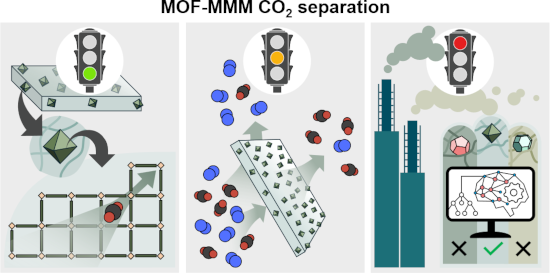
- the gas separation potential of MOF-based MMMs in CO2 capture applications are highlighted. Keywords: CO2 capture; gas separation; inorganic filler; metal-organic framework (MOF); mixed matrix membrane (MMM); Review 1 Introduction The continuous rise in global CO2 emissions has unfolded an era of
- , including regenerative solvent-based absorption [2][6], fixed-bed adsorption [7], cryogenic separation techniques [8], and membrane separation methods [9][10][11][12]. Of these, membrane technology offers advantages such as exceptional stability, high efficiency, low energy consumption, and ease of
- operation [5]. However, a significant drawback of membrane separation is the inherent trade-off between permeability (pressure-normalized flux) and selectivity (αA/B) for gases A and B, as described by the relationship in Equation 1 [5][12][13][14]. where PA is the steady-state permeability of the more




Clays enhanced with niobium: potential in wastewater treatment and reuse as pigment with antibacterial activity
Beilstein J. Nanotechnol. 2025, 16, 141–154, doi:10.3762/bjnano.16.13
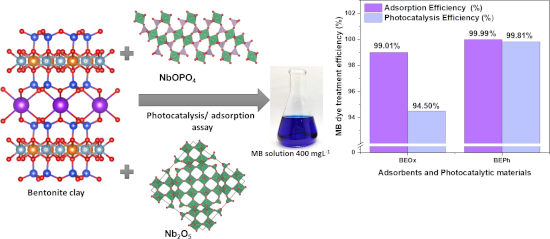
- inhibiting Gram-negative bacteria, which typically exhibit increased resistance due to the presence of an outer membrane that protects them from certain antimicrobial agents [29]. Therefore, the preliminary results indicate that bentonite clay modification with niobium oxide (BEOx) and niobium phosphate

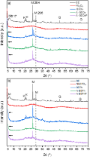

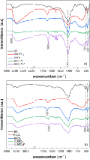
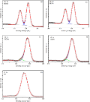

Nanocarriers and macrophage interaction: from a potential hurdle to an alternative therapeutic strategy
Beilstein J. Nanotechnol. 2025, 16, 97–118, doi:10.3762/bjnano.16.10


Advanced atomic force microscopy techniques V
Beilstein J. Nanotechnol. 2025, 16, 54–56, doi:10.3762/bjnano.16.6

- calculations. Eftekari et al. measure the local surface photovoltage generated in a silicon photodiode integrated with a piezoelectric membrane [8]. The design of such a device allows for the laterally resolved simultaneous quantification of the photovoltage generated by the photodiode as well as the
- mechanical oscillation of the piezoelectric membrane with highest resolution in real time. In addition to the measurement of surface potentials or photovoltages, Navarro-Rodriguez et al. investigate the dynamics of surface charges and how they couple to the detection system [9]. They describe in detail how
Mechanistic insights into endosomal escape by sodium oleate-modified liposomes
Beilstein J. Nanotechnol. 2024, 15, 1667–1685, doi:10.3762/bjnano.15.131
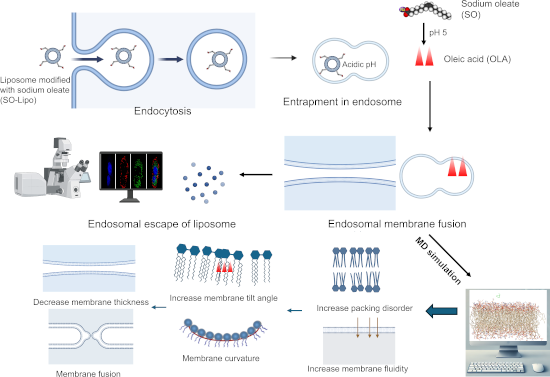
- membrane. Results demonstrated that SO-Lipo exhibited superior endosomal escape compared to Unmodified-Lipo, as evidenced by reduced colocalization with lysosomal markers, and achieved comparable efficacy to AUR-Lipo with lower cytotoxicity. Lipid mixing assays confirmed the potential fusogenic effect of
- SO with endosomal membrane models. MD simulations revealed that under acidic endosomal conditions, SO is protonated to oleic acid, which integrates into the membrane, enhancing fluidity and promoting fusion events essential for cytosolic release. SO-Lipo enhance endosomal escape through a fusogenic
- developed. Cell-penetrating peptides (CPPs), renowned for their ability to traverse biological membranes, have been extensively studied for their potential to enhance endosomal escape by causing membrane disruption [5]. However, the broad utility of CPPs is limited by their non-specific nature, which often




Attempts to preserve and visualize protein corona on the surface of biological nanoparticles in blood serum using photomodification
Beilstein J. Nanotechnol. 2024, 15, 1654–1666, doi:10.3762/bjnano.15.130

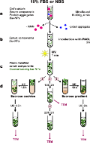
- observed contamination originated from NBS; sucrose clusters were not detected. However, despite the heavy pollution, the content of bio-NPs was comparable to that of the FBS samples. The particles were scattered individually, and in some the membrane could be seen (Figure 6h–j). In these same polluted
- ) Chylomicrons. LPs associated with bio-NPs are designated with (#). The arrows show sucrose clusters; the dotted arrows show the dust-like substance; the arrowheads show the membrane envelope of EVs; the white arrowheads show the protein corona (electron-dense layer) on the surface of chylomicrons. TEM



Biomimetic nanocarriers: integrating natural functions for advanced therapeutic applications
Beilstein J. Nanotechnol. 2024, 15, 1619–1626, doi:10.3762/bjnano.15.127

- -described for nanoparticles, and this process entails three steps: obtaining membrane-derived vesicles from a cellular source (1); generating the nanoparticles (2); and fusing the vesicles with the particles (3) [34][35][36][37]. Obtaining membrane vesicles requires the lysis of donor cells, necessitating
- an adequate number of cells [37]. Cells may be sourced from specific tissues or clonally expanded in the laboratory. Once sufficient cells are available, membrane vesicle isolation begins. Target cells are subjected to freeze–thaw cycles or hypotonic environments to induce cell lysis and release
- intracellular components [38][39]. The resulting product is then washed in a buffer solution containing protease inhibitors to eliminate cellular debris [40]. Subsequent sonication yields vesicles of 1 to 2 µm, and size homogenization can be achieved using a micro-extruder with a nanoscale membrane [41]. Once


Liver-targeting iron oxide nanoparticles and their complexes with plant extracts for biocompatibility
Beilstein J. Nanotechnol. 2024, 15, 1593–1602, doi:10.3762/bjnano.15.125
- activity, membrane leakage, and morphological changes. Toxic NPs can adversely affect cell viability, proliferation rate, and metabolic activity; also, they can reduce the therapeutic efficiency of the treatment [55]. The toxicity of NPs on biological entities fundamentally depends on the characteristics
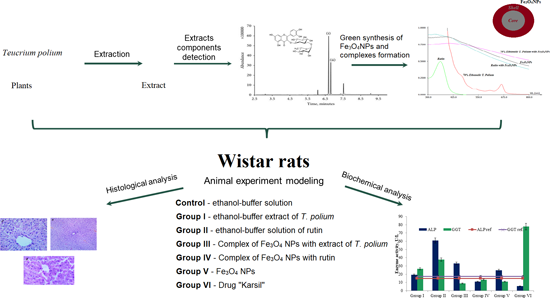
- the agents were administered after being passed through antibacterial membrane filters (pore diameter 0.45 μm). All interventions were performed in accordance with the principles of laboratory animal care of the Ethics Committee of Yerevan State Medical University (Yerevan, Armenia) and in accordance


Polymer lipid hybrid nanoparticles for phytochemical delivery: challenges, progress, and future prospects
Beilstein J. Nanotechnol. 2024, 15, 1473–1497, doi:10.3762/bjnano.15.118
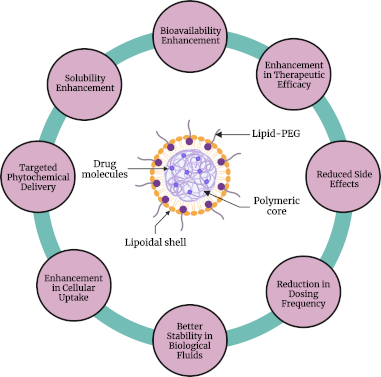
- can be released under specific biological conditions. Further, the polymer coating provides better colloidal stability, sustained drug release, and high loading capacity to the hybrid nanocarriers [54][55][56]. Cell membrane-camouflaged PLHNPs PLHNPs have been coated with cell membranes (e.g
- ., erythrocytes) to develop membrane-camouflaged PLHNPs. These hybrid nanocarriers are also called biomimetic hybrid nanocarriers because their surface chemistry mimics natural cell membranes [57]. The PLHNPs are coated with cell membranes via the extrusion technique. The coating of PLHNPs with red blood cells
- yields a natural vehicle for drug delivery, and these nanocarriers can easily escape the uptake by macrophages. In this system, the drugs are encapsulated in the lipophilic polymeric core, and the lipids in the outer natural membrane enhance the sustained release of drugs. With the development of these


Nanotechnological approaches for efficient N2B delivery: from small-molecule drugs to biopharmaceuticals
Beilstein J. Nanotechnol. 2024, 15, 1400–1414, doi:10.3762/bjnano.15.113
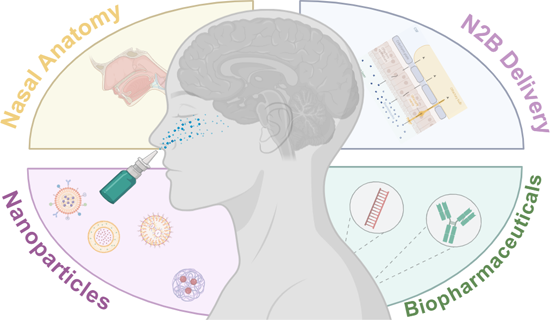
- epithelium. It consists of three primary parts, namely, olfactory epithelium, lamina propria, and the basement membrane [49]. The olfactory epithelium is the specialized epithelial tissue mainly formed by basal, supporting, and olfactory sensory neurons [50]. The olfactory sensory neurons are bipolar neurons
- oligomeric chitosan for the co-delivery of alpha-cyano-4-hydroxycinnamic acid and the monoclonal antibody cetuximab to the brain for glioblastoma therapy. The cetuximab conjugation on the NP surface improved the cytotoxicity profile, and a chicken chorioallantoic membrane assay showed enhanced antiangiogenic
- cells are joined by tight junctions to form a barrier for metabolic functions. The barrier is surrounded by a basal membrane, pericytes, and astrocytes. Figure 1 was redrawn from [14] and created in BioRender. Akpinar, S. (2023) https://BioRender.com/c51s574. This content is not subject to CC BY 4.0


Green synthesis of carbon dot structures from Rheum Ribes and Schottky diode fabrication
Beilstein J. Nanotechnol. 2024, 15, 1369–1375, doi:10.3762/bjnano.15.110
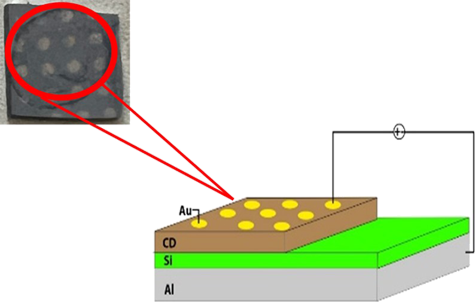
- autoclave and hydrothermal synthesis was carried out at 125 °C for 12 h. After the reaction was completed, the aqueous suspension was brought to room temperature and filtered with ordinary filter paper. The filtrate was passed through a 0.22 µm membrane filter and centrifuged at 10000 rpm for 30 min. The




Hymenoptera and biomimetic surfaces: insights and innovations
Beilstein J. Nanotechnol. 2024, 15, 1333–1352, doi:10.3762/bjnano.15.107
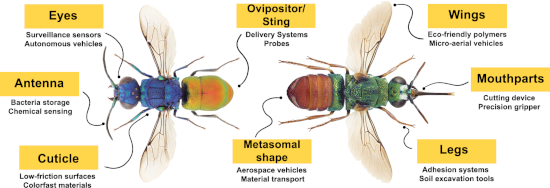
- applications for the development of micro-aerial vehicles [118][119]. The wing-to-wing coupling mechanism in Hymenoptera functions as a multifaceted joint, linking the forewing’s rolled membrane to the hindwing’s hook structures, enabling synchronized movement and improved aerodynamic performance [121][122
- ]. This mechanism is composed of a rolled membrane positioned at the trailing edge of the forewing, accompanied by small hooks (or hamuli) arranged in a line along the leading edge of the hind wing, all attached to a vein at the leading edge of the hind wing where the hooks are embedded [123]. These hooks




New design of operational MEMS bridges for measurements of properties of FEBID-based nanostructures
Beilstein J. Nanotechnol. 2024, 15, 1273–1282, doi:10.3762/bjnano.15.103
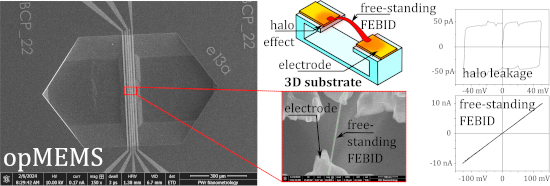
- stresses in thin films by deflecting a cantilever of defined size from a uniform membrane. We see a need for such experiments for future improvement of our proposed RoI spacing tuning method. The proposed approach allowed us to evaluate the leakage currents separately from the nanodevice properties. It was


Dual-functionalized architecture enables stable and tumor cell-specific SiO2NPs in complex biological fluids
Beilstein J. Nanotechnol. 2024, 15, 1238–1252, doi:10.3762/bjnano.15.100
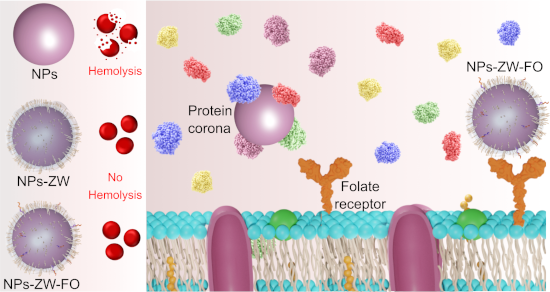
- receptor expression, the Western blot technique was used, which consists of transferring proteins from a polyacrylamide gel to an adsorbent membrane [37]. The identification of the target protein is performed through the specific recognition of a specific secondary antibody. To identify the folate receptor
- proteins in the cell lysate, 20 μg of total protein per sample was mixed with Laemmli buffer with DTT (50 mM) and separated by an SDS-PAGE assay. Proteins were transferred to a nitrocellulose membrane (Bio-Rad transfer system) using transfer buffer (2.5 mM TrisHCl, 20 mM glycine, 0.01% SDS and 20% methanol
- -functionalized SiO2NPs involves their capability to generate reactive species of oxygen, along with electrostatic interactions of deprotonated silanol groups with membrane proteins and tetra alkyl ammonium groups, which are also present in red blood cell membranes [47][48][49][50]. The addition of the ZW


Synthesis, characterization and anticancer effect of doxorubicin-loaded dual stimuli-responsive smart nanopolymers
Beilstein J. Nanotechnol. 2024, 15, 1189–1196, doi:10.3762/bjnano.15.96
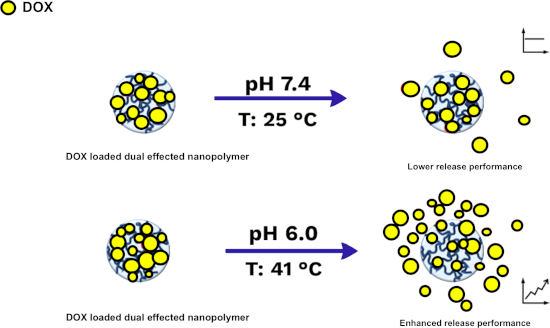
- . Physicochemical features such as size, shape, and surface charge play an extremely important role in the internalization of nanostructures. The uptake of nanoparticles into cells requires two steps. The first is the binding to the cell membrane, and the second is the uptake into the cell [34]. The zeta potential


AI-assisted models to predict chemotherapy drugs modified with C60 fullerene derivatives
Beilstein J. Nanotechnol. 2024, 15, 1170–1188, doi:10.3762/bjnano.15.95
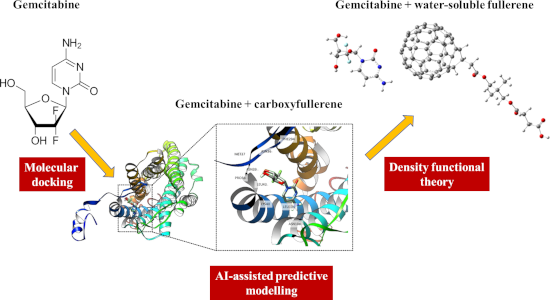
- are HER2-positive, overexpressing Erb-B2 receptor tyrosine kinase 2 (ERBB2) in the cell membrane. HER2 tumors are usually more aggressive than other ones, but the advantage is that their treatment is very effective [15]. Another chemotherapy target is the chemokine C-X-C motif receptor 7 (CXCR7) [16


Introducing third-generation periodic table descriptors for nano-qRASTR modeling of zebrafish toxicity of metal oxide nanoparticles
Beilstein J. Nanotechnol. 2024, 15, 1142–1152, doi:10.3762/bjnano.15.93
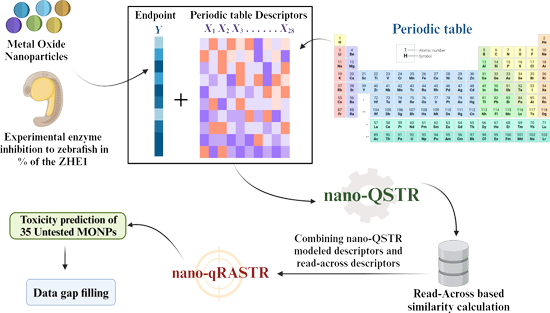
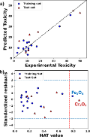
- of the nano-qRASTR model. MONPs with higher metal electronegativity may interfere more strongly with cellular functions of zebrafish, but this does not invariably heighten toxicity; in some instances, it may mitigate oxidative stress and membrane disruption, thereby diminishing toxic effects


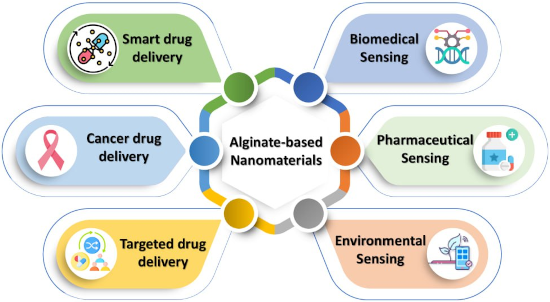
Unveiling the potential of alginate-based nanomaterials in sensing technology and smart delivery applications
Beilstein J. Nanotechnol. 2024, 15, 1077–1104, doi:10.3762/bjnano.15.88


Entry of nanoparticles into cells and tissues: status and challenges
Beilstein J. Nanotechnol. 2024, 15, 1017–1029, doi:10.3762/bjnano.15.83
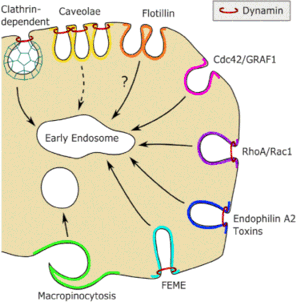
- types of molecules. It is now common to include vesicles originating from cells as being NPs. During the last decade there has been an amazing increase in studies of exosomes, small vesicles secreted by fusion of multivesicular bodies (late endosomes) with the plasma membrane of cells. Also, release of
- other types of vesicles, for instance from the plasma membrane, may play a role in the transfer of information between cells. For a list of various types of extracellular vesicles (EVs), see [5]. For therapeutic purposes, EVs may not only be loaded with drugs after the release from cells, but incubation
- phagocytes [7][8][9][10]). Endophilin is a player when it comes to both clathrin-mediated endocytosis (CME) and FEME, which is an endocytic mechanism induced by growth factors [7][8]. It should be noted that FEME is dependent on the formation of endophilin-positive assemblies on the plasma membrane, and this


Recent progress on field-effect transistor-based biosensors: device perspective
Beilstein J. Nanotechnol. 2024, 15, 977–994, doi:10.3762/bjnano.15.80
- sensing membrane is accommodated between the contact of the metal gate and the insulator part. The carrier concentration in the body channel might change as a result of an accumulation, depletion, or inversion process when an external voltage is applied [51]. This results in the formation of a band