


Search results
Search for "nanocarriers" in Full Text gives 89 result(s) in Beilstein Journal of Nanotechnology.
Atomic-level characterization and cilostazol affinity of poly(lactic acid) nanoparticles conjugated with differentially charged hydrophilic molecules
Beilstein J. Nanotechnol. 2018, 9, 1328–1338, doi:10.3762/bjnano.9.126
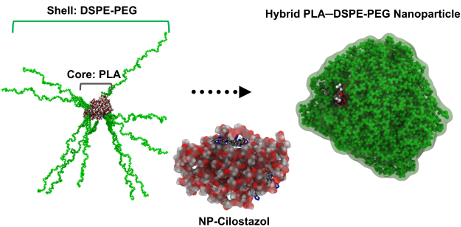
- these nanocarriers and the prediction of the polymer–drug interactions, which provided a better insight into structural features that could affect the effectiveness of drug loading. We employed blind docking to predict NP–drug affinity testing on an antiaggregant compound, cilostazol. The results


Development of polycationic amphiphilic cyclodextrin nanoparticles for anticancer drug delivery
Beilstein J. Nanotechnol. 2017, 8, 1457–1468, doi:10.3762/bjnano.8.145
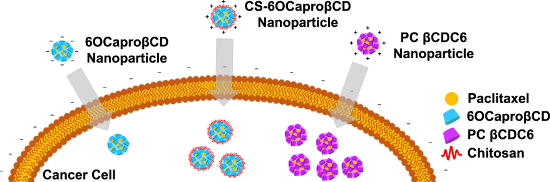
- , delivering the drug bound to the nanocarriers in a considerably lower dose to target tissue. Cyclodextrins (CDs) are cyclic oligosaccharides obtained through enzymatic degradation of starch. The most frequently used CDs in the pharmaceutical field are α-CD, β-CD and γ-CD having 6, 7 and 8 subunits
- optimized for selection of organic solvent, ratio of organic phase to aqueous phase and surfactant concentration to obtain monodisperse particles with a diameter range around 80 to 125 nm. Intended as chemotherapeutic nanocarriers, various PCX-loaded amphiphilic CD nanoparticles were also evaluated for


Carbon nanomaterials sensitize prostate cancer cells to docetaxel and mitomycin C via induction of apoptosis and inhibition of proliferation
Beilstein J. Nanotechnol. 2017, 8, 1307–1317, doi:10.3762/bjnano.8.132
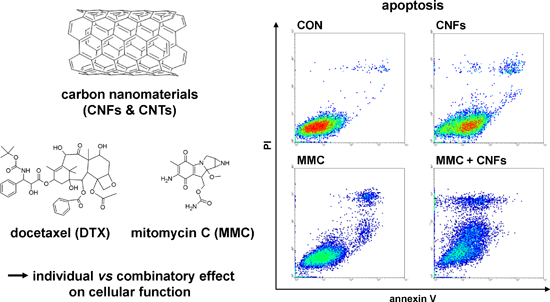
- blood flow, leaky vasculature and impaired lymphatic drainage of the tumor tissue [9][10]. Therefore, a combination of low-molecular chemotherapeutics with suitable nanocarriers could enhance the drug accumulation and retention in the tumor tissue. Furthermore, a local and precise administration of such
- can probably be further diminished for in vivo testing. Furthermore, the toxicity of carbon nanomaterials might depend on the route of administration with systemically applied nanocarriers being the most toxic [33][42]. In in vivo animal studies the adverse effects of systemically applied CNTs


Tight junction between endothelial cells: the interaction between nanoparticles and blood vessels
Beilstein J. Nanotechnol. 2016, 7, 675–684, doi:10.3762/bjnano.7.60
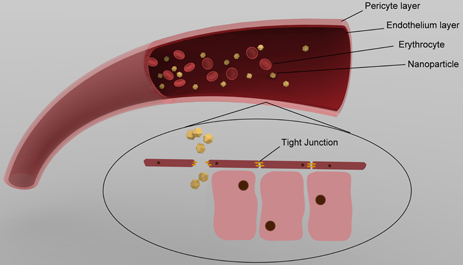
- , while a significant change occurred in myoblasts after 4 h [87]. Recent studies revealed that hydrodynamic conditions influence the endothelial endocytosis of nanocarriers. By using nanocarriers targeted to PECAM-1, the authors found a flow-stimulated endocytosis of nanocarriers through eliciting

Novel roles for well-known players: from tobacco mosaic virus pests to enzymatically active assemblies
Beilstein J. Nanotechnol. 2016, 7, 613–629, doi:10.3762/bjnano.7.54
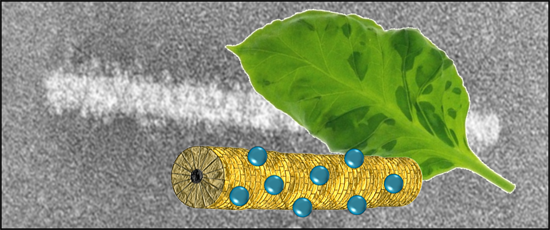
- enzyme and antibody moieties installed [87][132][134] or engineered [133] at high surface densities on TMV nanocarriers, miniaturized sensor devices might be among the layouts worth extensive testing. Research on microfluidic lab-on-a-chip biodetection systems started in the end of the 20th century, and
- procedure might lead towards tight spatial control over the positions of the enzyme nanocarriers, which could be of high interest also for basic research on prerequisites for efficient enzymatic cooperation. Fast, sensitive and cost-saving biosensors often employ label-free read-out, in which signal
- methods in plants used as bioreactors [181] may be expected to promote the integration of viral nanocarriers in diagnostic systems and biosensor devices. Among those, the rigid TMV rods excel in their stable adjustable shape and durability. After simple conjugation of biotin linkers, they could be


Comparison of the interactions of daunorubicin in a free form and attached to single-walled carbon nanotubes with model lipid membranes
Beilstein J. Nanotechnol. 2016, 7, 524–532, doi:10.3762/bjnano.7.46
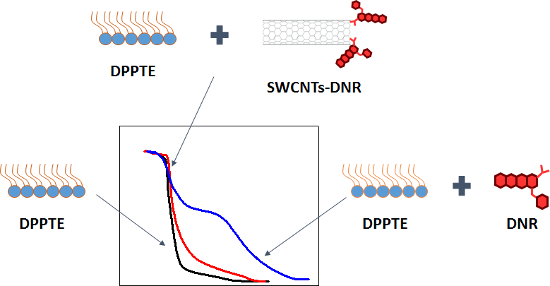
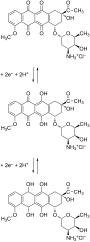
- transport daunorubicin to cancer cells [5]. Drug delivery systems are aimed at providing enhanced transport of therapeutic agents directly to the targeted organs and tissues, which enables the elimination or significant decrease in the side effects of a drug. One of the most common type of drug nanocarriers




Predicting cytotoxicity of PAMAM dendrimers using molecular descriptors
Beilstein J. Nanotechnol. 2015, 6, 1886–1896, doi:10.3762/bjnano.6.192
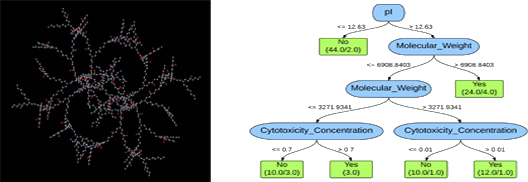
- acceptor count. The third analysis used only molecular descriptors selected by expert advice: molecular weight, atom count, pI, and molecular polarizability. In this paper we refer to selected by expert advice as the properties that an experienced researcher in nanocarriers, Dr. Ghandehari, expected to be


PLGA nanoparticles as a platform for vitamin D-based cancer therapy
Beilstein J. Nanotechnol. 2015, 6, 1306–1318, doi:10.3762/bjnano.6.135
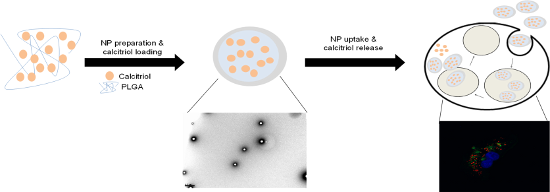
- nanocarriers for vitamin D3 delivery towards cancer treatment. Vitamin D3 vectorisation to guarantee specific action on malignant cells that avoids side effects such as hypercalcemia has been proposed. Nguyen et al. developed a formulation based on poly(vinyl neodecanoate-crosslinked-ethyleneglycol
- NPs were prepared as nanocarriers, and for the purpose of formulating and characterizing the designed system, the inactive form of vitamin D3, cholecalciferol, was also used as drug model along with calcitriol. We evaluated the effect of calcitriol-loaded PLGA NPs on normal and tumor cells in terms of


Hematopoietic and mesenchymal stem cells: polymeric nanoparticle uptake and lineage differentiation
Beilstein J. Nanotechnol. 2015, 6, 383–395, doi:10.3762/bjnano.6.38
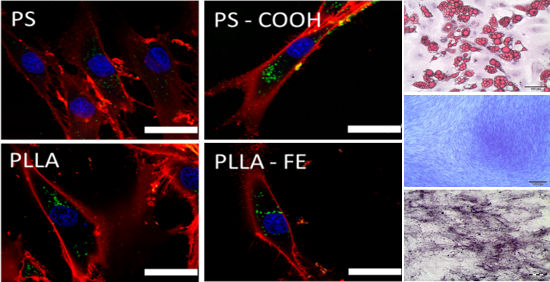
- therapy and nanoparticles promises to enhance the effect of cellular therapies by using nanocarriers as drug delivery devices to guide the further differentiation or homing of stem cells. The impact of nanoparticles on primary cell types remains much more elusive as most groups study the nanoparticle–cell


Release behaviour and toxicity evaluation of levodopa from carboxylated single-walled carbon nanotubes
Beilstein J. Nanotechnol. 2015, 6, 243–253, doi:10.3762/bjnano.6.23
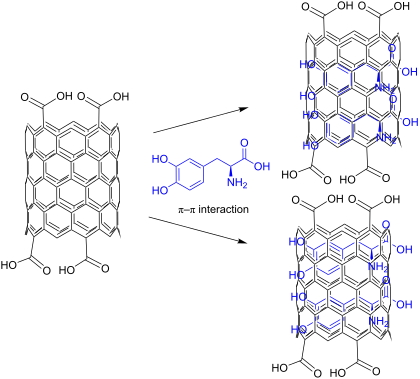
- , 43400 UPM Serdang, Selangor, Malaysia 10.3762/bjnano.6.23 Abstract This work explores the potential use of commercially obtained, carboxylated, single-walled carbon nanotubes (SWCNT–COOH) as nanocarriers for the antiparkinson drug, levodopa (LD). The resulting nanohybrid was characterized using




Synthesis of boron nitride nanotubes and their applications
Beilstein J. Nanotechnol. 2015, 6, 84–102, doi:10.3762/bjnano.6.9
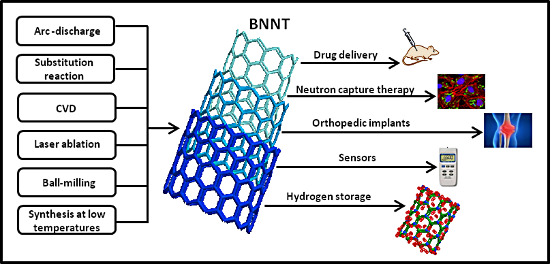
- the BNNTs via a targeting protein could generate smart and selective nanocarriers to be used in nanomedicine [67]. Physical modifications For these types of modifications, weak interactions such as π–π, hydrophobic, and van der Waals forces are utilized to coat the BNNTs with mostly a polymeric




Nanoencapsulation of ultra-small superparamagnetic particles of iron oxide into human serum albumin nanoparticles
Beilstein J. Nanotechnol. 2014, 5, 2259–2266, doi:10.3762/bjnano.5.235
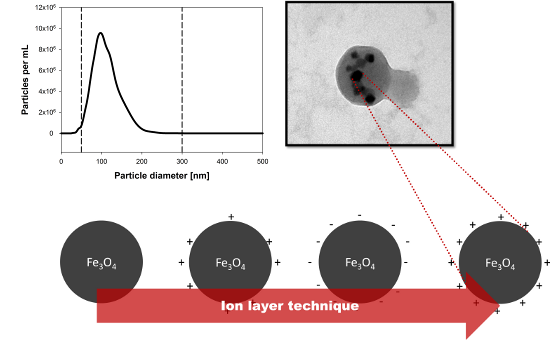
- the past decades, nanocarriers have been utilized for a variety of different applications. In the area of pharmaceuticals these versatile drug delivery devices enabled the directed transport of drug substances to specific tissues after modification of the particle surface with drug targeting ligands
- the present study, nanoparticles consisting of HSA were formed by ethanolic desolvation [9]. These nanocarriers were used matrix system for the encapsulation of USPIO. USPIO have been efficiently applied as contrast agents for magnetic resonance imaging and allow the tracking of nanoparticles in vivo
- [10][11]. Nanocarriers of this size range have been modified by adsorptive binding or incorporation of drug substances earlier [12][13][14]. Unspecific interactions with the matrix material enabled the binding of drugs such as obidoxime [13], or the binding of hydrophilic complexes of poorly soluble


Optimizing the synthesis of CdS/ZnS core/shell semiconductor nanocrystals for bioimaging applications
Beilstein J. Nanotechnol. 2014, 5, 919–926, doi:10.3762/bjnano.5.105
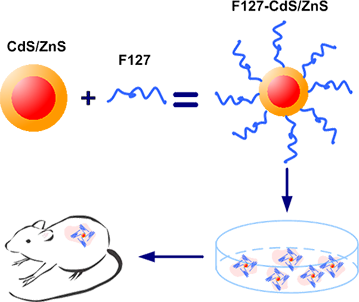
- biocompatible polymer nanocarriers for in vivo studies there are Pluronic F127 triblock-copolymer micelle nanoparticles [20][21]. They can serve as a candidate for therapeutic and biomedical applications in vitro and in vivo. A particular material for QDs, CdS, is an important direct-band semiconductor with a


Plasma-assisted synthesis and high-resolution characterization of anisotropic elemental and bimetallic core–shell magnetic nanoparticles
Beilstein J. Nanotechnol. 2014, 5, 466–475, doi:10.3762/bjnano.5.54
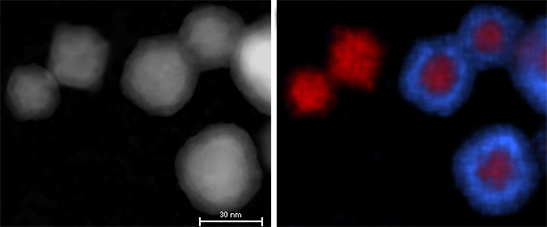
- as powerful nanotools in many areas of biology, biophysics and medicine [1]. Possible applications include their use as contrast agents for cell tracking via magnetic resonance imaging (MRI) [2], as colloidal mediators in cancer therapy (hyperthermia) [3] or as nanocarriers for targeted drug delivery





