


Search results
Search for "nucleic acids" in Full Text gives 81 result(s) in Beilstein Journal of Nanotechnology.
In vitro interaction of colloidal nanoparticles with mammalian cells: What have we learned thus far?
Beilstein J. Nanotechnol. 2014, 5, 1477–1490, doi:10.3762/bjnano.5.161
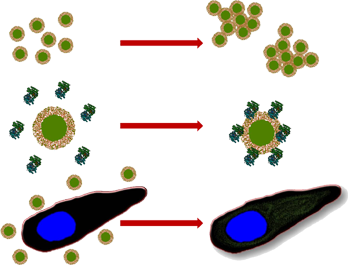
- case of positively charged NPs adsorb to the NPs. As a consequence of counter ion adsorption the local ion concentration around the NPs surface is different from the bulk [54][87][106][107]. ii) Also nucleic acids, such as mRNA or siRNA, which are negatively charged due to their phosphate groups attach


The protein corona protects against size- and dose-dependent toxicity of amorphous silica nanoparticles
Beilstein J. Nanotechnol. 2014, 5, 1380–1392, doi:10.3762/bjnano.5.151
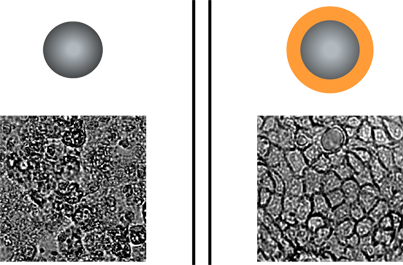
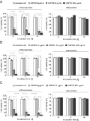
- membrane of living cells, and only enters cells with damaged membranes. Here, it undergoes a 40 fold enhancement of fluorescence upon binding to nucleic acids, thereby producing a bright red fluorescence characteristic for dead cells. As shown in Figure 4, employing our assay as an additional independent




Molecular biology approaches in bioadhesion research
Beilstein J. Nanotechnol. 2014, 5, 983–993, doi:10.3762/bjnano.5.112
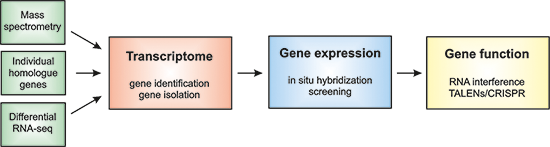
- to detect various types of nucleic acids [34][35][36][37]. In this review we will focus on the visualization of specific transcript expression in the form of mRNA in whole mount specimen and tissue sections. ISH provides a powerful tool to map candidate transcripts from a transcriptome dataset to a


FTIR nanobiosensors for Escherichia coli detection
Beilstein J. Nanotechnol. 2012, 3, 485–492, doi:10.3762/bjnano.3.55
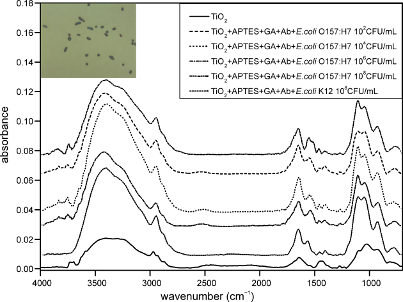
- –800 cm−1 (signals of nucleic acids of the bacterium), which unfortunately in this region overlapped with the spectrum of the Ab and of the functionalized titania. The peaks in the 1630–1697 cm−1 region are due to amide I bands of the proteins in the cell and to their secondary structure. In the region
- 1402–1457 cm−1, bands due to carbohydrates, glycoproteins, lipids and their characteristic C–O–H in-plane bending peaks and C(CH3)2 symmetric stretching were present. Finally, in the range 900–1100 cm−1, peaks due to the DNA/RNA backbone and phosphate groups of nucleic acids due to the symmetric and


Glassy carbon electrodes modified with multiwalled carbon nanotubes for the determination of ascorbic acid by square-wave voltammetry
Beilstein J. Nanotechnol. 2012, 3, 388–396, doi:10.3762/bjnano.3.45
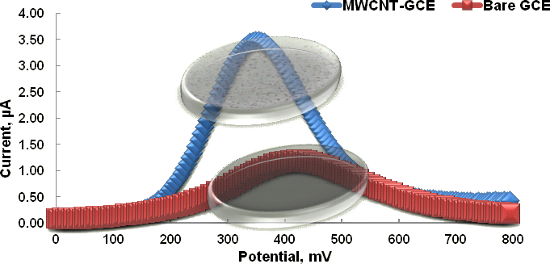
- in the presence of AA [17]. Jacobs et al. [19] reviewed the use of MWCNTs to obtain enhanced signals in the detection of substances such as carbohydrates, nucleic acids, glucose, pesticides, and serotonin, with similar reports relating to trace metals [20] and nitroaromatic compounds [21]. This study


Towards multiple readout application of plasmonic arrays
Beilstein J. Nanotechnol. 2011, 2, 501–508, doi:10.3762/bjnano.2.54
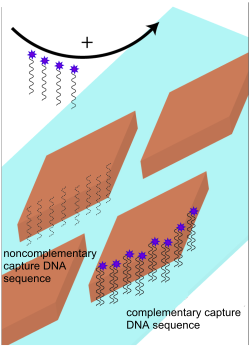
- investigations on a single-molecule level [1]. Fluorescence in bioanalytics is mostly used for tracking intrinsic fluorophors (autofluorescence) or special fluorescence labels, which selectively bind to special cellular functional groups, such as proteins or nucleic acids [2][3]. However, the broad emission


Other Beilstein-Institut Open Science Activities



