Search results
Search for "photocatalytic degradation" in Full Text gives 86 result(s) in Beilstein Journal of Nanotechnology.
Effects of the preparation method on the structure and the visible-light photocatalytic activity of Ag2CrO4
Beilstein J. Nanotechnol. 2014, 5, 658–666, doi:10.3762/bjnano.5.77
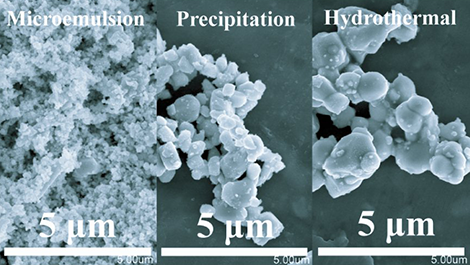
- . The performance of the developed Ag2CrO4 is evaluated by the photocatalytic degradation of methylene blue under visible-light irradiation. The effect of the three preparation methods on the structure, optical properties and photocatalytic activity are investigated and discussed. Results and Discussion
- photocatalytic activity under visible-light irradiation. But it is not surprising that the rate constant for P25 is only 0.007 min−1 because the other phase anatase (75%) is not active in the visible region. Generally, the photocatalytic degradation of dyes in water is mainly attributed to the photogenerated
- holes, and the active oxygen species, including superoxide radicals (O2•−) and hydroxyl radicals (OH•). In order to understand the possible mechanism of the photocatalytic degradation of MB over Ag2CrO4, we have determined the CB and VB position at the point of zero charge by a widely accepted approach


Enhanced photocatalytic activity of Ag–ZnO hybrid plasmonic nanostructures prepared by a facile wet chemical method
Beilstein J. Nanotechnol. 2014, 5, 639–650, doi:10.3762/bjnano.5.75
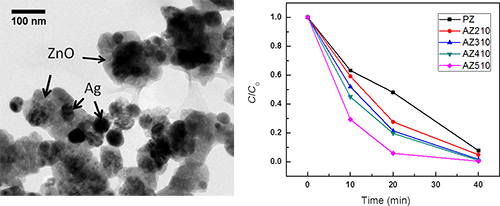
- photocatalytic degradation efficiency, which has been found to increase with the extent of Ag nanoparticle loading. Keywords: Ag–ZnO; hybrid plasmonic nanostructures; photocatalysis; Introduction The removal of hazardous materials such as dyes and organic compounds from waste water has attracted ever
- increased efficiency for separation of photogenerated electrons and holes. It has been shown that Ag–ZnO nanostructures take 80 min for the complete photocatalytic degradation of 0.2 μM crystal violet dye under UV irradiation. Liu et al. [30] have studied the effects of Ag loading on ZnO on the
- photocatalytic degradation of rhodamine B (RhB) and showed that the degradation of RhB over pure Ag nanowires was negligible as compared to ZnO, the degradation efficiency of which further was increased due to the decoration with Ag nanoparticles. Deng et al. [19] fabricated Ag nanoparticles decorated ZnO


Mesoporous cerium oxide nanospheres for the visible-light driven photocatalytic degradation of dyes
Beilstein J. Nanotechnol. 2014, 5, 517–523, doi:10.3762/bjnano.5.60
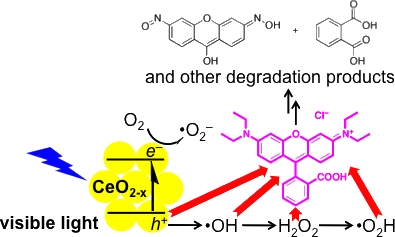
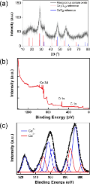
- reported for the purpose of the photocatalytic degradation of organic dyes and future applications in sustainable energy research. The earth-abundant, relatively affordable, mixed valence cerium oxide sample, which consists of predominantly Ce7O12, has been characterized by powder X-ray diffraction, X-ray
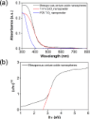
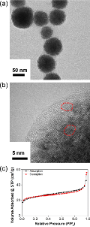
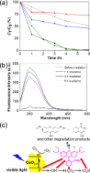
- photoelectron and UV–vis spectroscopy, and transmission electron microscopy. Together with N2 sorption experiments, the data confirms that the new cerium oxide material is mesoporous and absorbs visible light. The photocatalytic degradation of rhodamin B is investigated with a series of radical scavengers
- semiconductors have been explored for the visible-light driven photocatalytic degradation of pollutants and microbes, such as bismuth oxides [5][6] and cerium oxides [12][13]. CeO2 specifically has been applied in a number of sustainable energy applications lately, including oxidative catalysis, hydrogen storage

Applicability and costs of nanofiltration in combination with photocatalysis for the treatment of dye house effluents
Beilstein J. Nanotechnol. 2014, 5, 476–484, doi:10.3762/bjnano.5.55
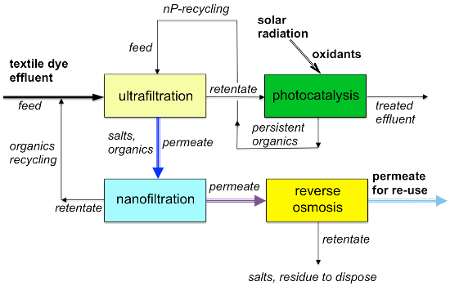
- high resistance to biological degradation. Dyes are made to be stable to light, oxidizing agents, and aerobic digestion to fulfil the quality demands of textile products. Fundamental principles and applications of photocatalytic degradation of dyes in homogeneous or heterogeneous systems can be found
- a major cost factor. The exclusive costs of NF will range from 1 to 6 US$ per m3 of treated effluent. But as a result, NF will ascertain high qualities of the treated effluents and can be synergistically combined with a photocatalytic degradation facility. General pre-treatment steps prior to


Study of mesoporous CdS-quantum-dot-sensitized TiO2 films by using X-ray photoelectron spectroscopy and AFM
Beilstein J. Nanotechnol. 2014, 5, 68–76, doi:10.3762/bjnano.5.6
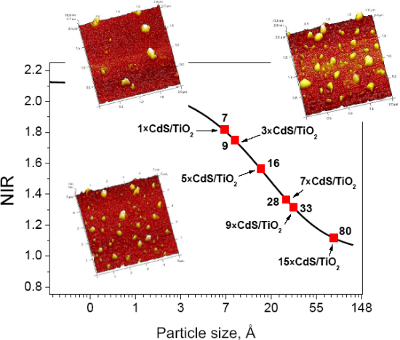
- photosensitized solar cells with high quantum yields [1][2][3][4] and the photocatalytic degradation of pollutants [5][6]. CdS, currently used as an efficient visible-light sensitizer, is a semiconductor that possesses a small band gap (2.4 eV) and suitable potential energies. The electron transfer between QDs


Structural, optical and photocatalytic properties of flower-like ZnO nanostructures prepared by a facile wet chemical method
Beilstein J. Nanotechnol. 2013, 4, 763–770, doi:10.3762/bjnano.4.87
- these toxic chemicals. Photocatalytic degradation, in which the organic pollutants are degraded through photocatalytic oxidation and reduction reactions in the presence of a photocatalyst, is one of the most promising and clean processes used for water purification. Nanostructured semiconductor
- environmental pollutants. ZnO nanostructures with different morphologies have been synthesized by wet chemical methods [9][10][11][12][13] and used for various applications such as photocatalytic degradation of organic dyes [14][15][16][17][18][19][20][21][22][23][24], dye sensitized solar cells [25][26][27][28
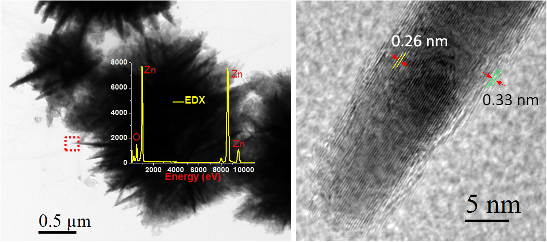
- decrease in the efficiency of the sunlight driven photocatalytic degradation of MB. Results and Discussion Figure 1 shows the XRD patterns of the as-synthesized samples S1, S2 and S3 (see Experimental section for the naming scheme). The observed well-defined peaks in the spectra can be indexed to the


Modulation of defect-mediated energy transfer from ZnO nanoparticles for the photocatalytic degradation of bilirubin
Beilstein J. Nanotechnol. 2013, 4, 714–725, doi:10.3762/bjnano.4.81
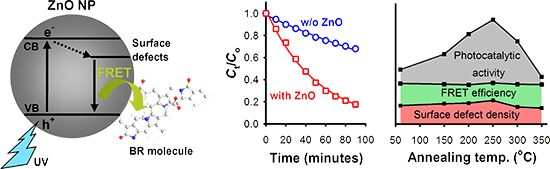
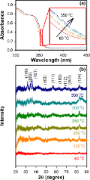
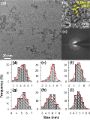
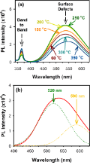
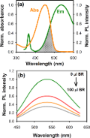
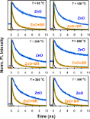
- of the heme catabolism that can cause jaundice when its excretion is impaired. The photocatalytic degradation of BR activated by ZnO nanoparticles through a non-radiative energy transfer pathway can be influenced by the surface defect-states (mainly the oxygen vacancies) of the catalyst nanoparticles
- photocatalytic degradation and time-correlated single photon counting studies revealed that the defect-engineered ZnO nanoparticles that were obtained through post-annealing treatments led to an efficient decomposition of BR molecules that was enabled by Förster resonance energy transfer. Keywords: bilirubin
- molecular transformation of water-insoluble BR through photocatalysis is limited, a few studies are available on the photocatalytic degradation of BR adsorbed on nanostructured hydroxyapatite coatings [23] or molecularly imprinted titania films [24]. The current study focuses on the efficient utilization of


Paper modified with ZnO nanorods – antimicrobial studies
Beilstein J. Nanotechnol. 2012, 3, 684–691, doi:10.3762/bjnano.3.78
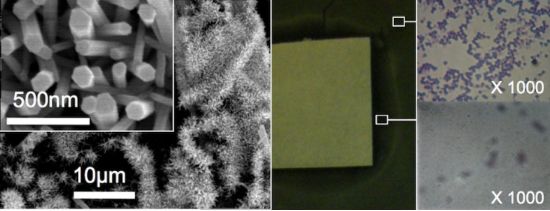
- offer large surface-to-volume ratios. Hydrothermally grown ZnO nanorods possess inherent defects in the form of oxygen vacancies and zinc interstitials, which shift its optical absorption from the ultraviolet to the visible region [20]. We previously reported the visible-light photocatalytic degradation


Mesoporous MgTa2O6 thin films with enhanced photocatalytic activity: On the interplay between crystallinity and mesostructure
Beilstein J. Nanotechnol. 2012, 3, 123–133, doi:10.3762/bjnano.3.13
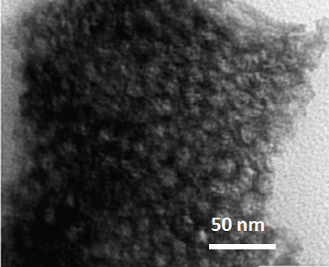
- films. Photocatalytic degradation of RhB in water roughly follows a pseudo-first-order reaction [22][23][24], where c/c0 is the normalized RhB concentration, t is the illumination time, and k is the apparent reaction rate in terms of min−1. All of the data demonstrated good linearity for all the curves






Self-assembled monolayers and titanium dioxide: From surface patterning to potential applications
Beilstein J. Nanotechnol. 2011, 2, 845–861, doi:10.3762/bjnano.2.94
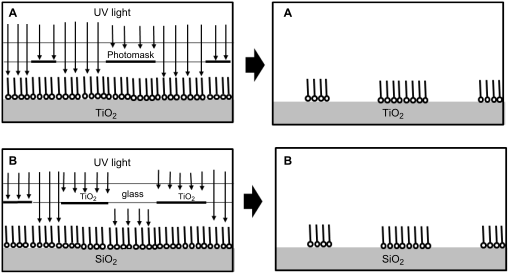
- ; Introduction Photocatalytic degradation of pollutants is attracting increasing attention. In this context, anatase-phase titanium dioxide is regarded as the photocatalyst of choice, due to its low cost, nontoxicity, and relatively high efficiency, which make it suitable not only for air and water
- are trapped by H2O or OH– adsorbed at the surface, thus forming hydroxyl radicals. In parallel, the electrons reduce adsorbed oxygen [4] to form superoxide radicals. The first step in the photocatalytic degradation of most organic compounds is an oxidative attack by the hydroxyl radicals, which
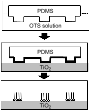
- many ways, from the study of fundamental issues in TiO2 photocatalysis to the growth of supramolecular structures; from serving as a tool for patterning to suggesting means to obtain the selective photocatalytic degradation of highly toxic contaminants. This potential for synergism between self



Enhanced visible light photocatalysis through fast crystallization of zinc oxide nanorods
Beilstein J. Nanotechnol. 2010, 1, 14–20, doi:10.3762/bjnano.1.3
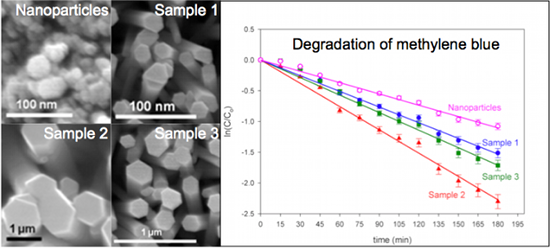
- crystallization temperatures, homogenous nucleation and fast supersaturation by rapid dissolution [22][23][24][25][26][27]. In this work a study is conducted on the improvement of visible light photocatalytic degradation of a model organic dye, methylene blue, with ZnO nanorods grown by a rapid growth process
- (3 cm2). The photocatalytic degradation of MB could be fitted using Equation 2 and the apparent rate constants (k = ab) were calculated from the linear curves using Equation 3: The nanoparticle film demonstrated minimum photocatalytic activity as expected owing to lower surface (SA ≈ 6 cm2) exposed
- . Comparative results of photocatalytic degradation studies on methylene blue with visible light irradiation demonstrated that ZnO nanorods are 12–24% more active than nanoparticulate films. An enhancement of 8% in the photocatalytic activity of ZnO nanorods was achieved through engineered creation of oxygen