Search results
Search for "sunlight" in Full Text gives 96 result(s) in Beilstein Journal of Nanotechnology.
Role of RGO support and irradiation source on the photocatalytic activity of CdS–ZnO semiconductor nanostructures
Beilstein J. Nanotechnol. 2016, 7, 1684–1697, doi:10.3762/bjnano.7.161
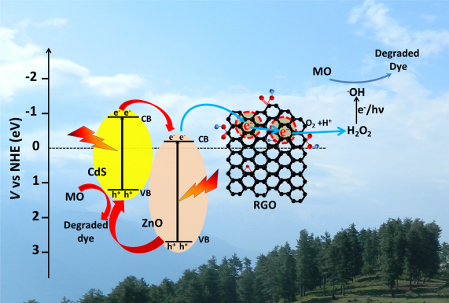
- characterized using different spectroscopic and microscopic techniques. The photocatalytic activity was evaluated by studying the degradation of a model dye (methyl orange, MO) under visible light (only) irradiation and under natural sunlight. The results reveal that the RGO-supported CdS–ZnO photocatalyst
- performs considerably better than the unsupported CdS–ZnO nanostructures. In addition, both the catalysts perform significantly better under natural sunlight than under visible light (only) irradiation. In essence, this work paves way for tailoring the photocatalytic activity of semiconductor
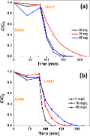
- −2) having a UV cut-off filter (λ > 420 nm) was used for visible light illumination. Another set of experiments were performed under natural sunlight and the light intensity was measured using a LX-101A digital luxmeter. At periodic time intervals, the photo-reacted suspension (ca. 1 mL) was analyzed




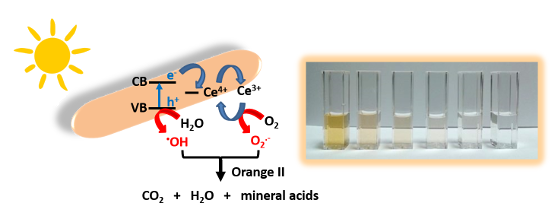
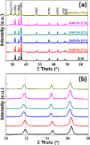
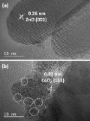
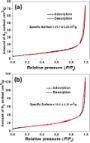
High performance Ce-doped ZnO nanorods for sunlight-driven photocatalysis
Beilstein J. Nanotechnol. 2016, 7, 1338–1349, doi:10.3762/bjnano.7.125







Selective photocatalytic reduction of CO2 to methanol in CuO-loaded NaTaO3 nanocubes in isopropanol
Beilstein J. Nanotechnol. 2016, 7, 776–783, doi:10.3762/bjnano.7.69
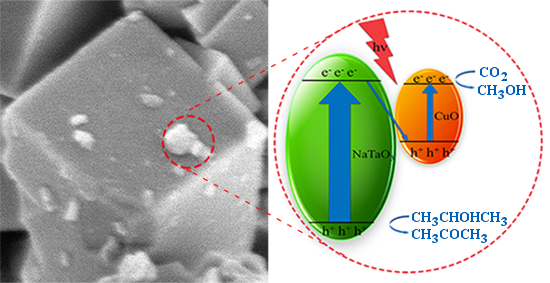
- ]. To date, many methods have been proposed to reduce the emitted CO2 concentration. A particularly advantageous approach is the capture of CO2 from the atmosphere for the conversion to fuel by using a sustainable source of energy like sunlight. In this way, global warming and energy shortage problems


Synthesis and applications of carbon nanomaterials for energy generation and storage
Beilstein J. Nanotechnol. 2016, 7, 149–196, doi:10.3762/bjnano.7.17















Green and energy-efficient methods for the production of metallic nanoparticles
Beilstein J. Nanotechnol. 2015, 6, 2354–2376, doi:10.3762/bjnano.6.243
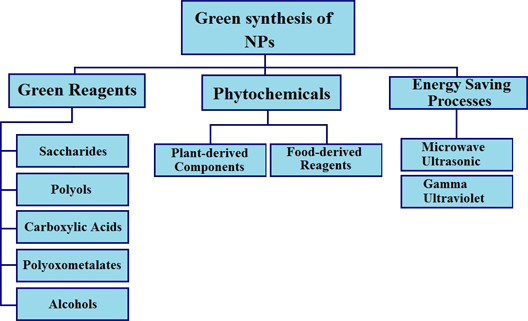
- Ag NPs with the size of around 20 nm at room temperature within 2–5 min. They conducted two different experiments under sunlight and in dark and observed that sunlight does not have any significant effect on the formation of Ag NPs [67]. In the same work, Saxena et al. employed the leaf extract of


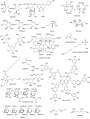
Light-powered, artificial molecular pumps: a minimalistic approach
Beilstein J. Nanotechnol. 2015, 6, 2096–2104, doi:10.3762/bjnano.6.214
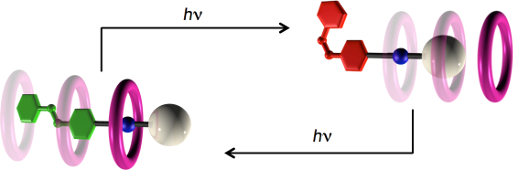
- limit for the energy conversion efficiency of 9 × 10⁻⁵. Despite such a low conversion efficiency, this study clearly demonstrates that the synergy between photochemical reactions and self-assembly processes can lead to innovative methods for the conversion of sunlight into chemical energy [35


Nanostructures for sensors, electronics, energy and environment II
Beilstein J. Nanotechnol. 2015, 6, 1937–1938, doi:10.3762/bjnano.6.197

- characterization of functional objects. The existing energy crisis could be mediated not only by new and more efficient methods of collecting sunlight, but also by saving resources by applying developments in storage, electronics and sensors. Conventional energy sources are limited and most of them generate
PLGA nanoparticles as a platform for vitamin D-based cancer therapy
Beilstein J. Nanotechnol. 2015, 6, 1306–1318, doi:10.3762/bjnano.6.135
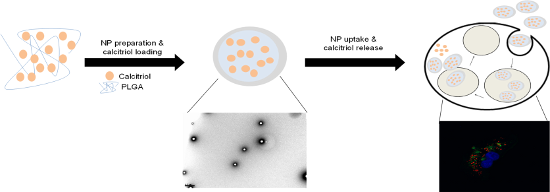
- cell morphological features. Keywords: 1α,25-dihydroxyvitamin D3; calcitriol; cancer therapy; drug delivery; poly(lactic-co-glycolic acid); Introduction Vitamin D3, a secosteroid hormone produced through sunlight exposure [1], can be found with different chemical structures: calciol or


Palladium nanoparticles anchored to anatase TiO2 for enhanced surface plasmon resonance-stimulated, visible-light-driven photocatalytic activity
Beilstein J. Nanotechnol. 2015, 6, 428–437, doi:10.3762/bjnano.6.43
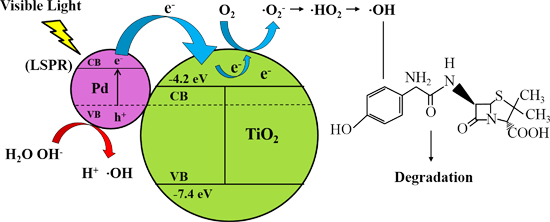
- Lumpur, Malaysia 10.3762/bjnano.6.43 Abstract Freely assembled palladium nanoparticles (Pd NPs) on titania (TiO2) nano photocatalysts were successfully synthesized through a photodeposition method using natural sunlight. This synthesized heterogeneous photocatalyst (Pd/TiO2) was characterized through
- ; nano photocatalysts; noble metal; photodeposition; sunlight; Introduction Heterogeneous photocatalysts that employ TiO2 as metal oxide photocatalyst have raised the interest of many researchers since the discovery of the photocatalytic splitting of water under UV light irradiation by Fujishima and
- plasmonic Au nanoparticles deposited on top of TiO2 [27]. While Mohapatra et al. had synthesized TiO2 nanotubes with palladium (Pd) NPs for the photocatalytic decomposition of azo dyes under sunlight irradiation. Pd/TiO2 nanotubes showed a faster degradation time (150 min) to completely decompose azo dye as


Interaction of dermatologically relevant nanoparticles with skin cells and skin
Beilstein J. Nanotechnol. 2014, 5, 2363–2373, doi:10.3762/bjnano.5.245
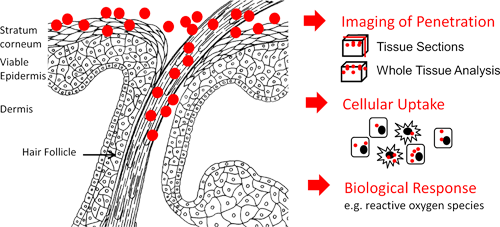
- found in patients with inflammatory skin diseases, structural defects of the barrier and open wounds or barrier dysfunction in response to excessive sunlight exposure. We show that toxic effects of particles per se have to be differentiated from secondary effects, e.g., ion release from silver particles


Nanobioarchitectures based on chlorophyll photopigment, artificial lipid bilayers and carbon nanotubes
Beilstein J. Nanotechnol. 2014, 5, 2316–2325, doi:10.3762/bjnano.5.240
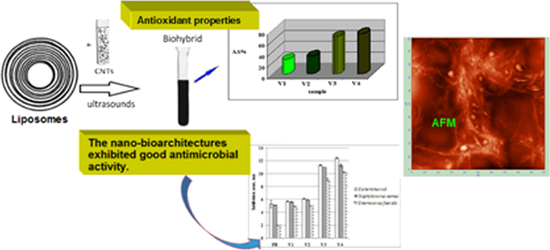
- , which has been exploited in the preparation of anti-aging cosmetics and sunscreen creams to protect skin against free radicals formed by the body or by UV sunlight [10]. The goal of this work is to achieve antioxidant and antibacterial bionanomaterials based on liposomes and carbon nanotubes, which


Growth and characterization of CNT–TiO2 heterostructures
Beilstein J. Nanotechnol. 2014, 5, 946–955, doi:10.3762/bjnano.5.108
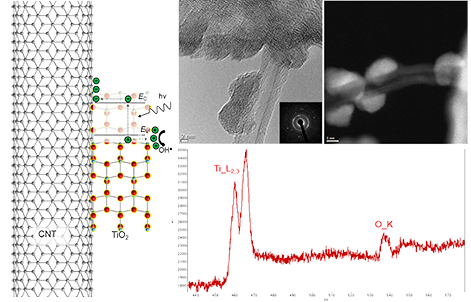
- -effectively and environmentally friendly, is a good candidate for electrochemical photocatalysis [6], recent research shows that its limited absorption of only the UV part of the sunlight spectrum can be extended to visible light when forming a nanocomposite with CNTs [7][8][9]. This can significantly


Biomolecule-assisted synthesis of carbon nitride and sulfur-doped carbon nitride heterojunction nanosheets: An efficient heterojunction photocatalyst for photoelectrochemical applications
Beilstein J. Nanotechnol. 2014, 5, 770–777, doi:10.3762/bjnano.5.89
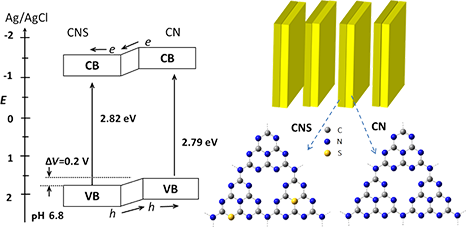
- different light source and the EQE spectra. Figure 6c exhibits the photoresponse of CN, CNS and CN/CNS under different light sources. It can be observed that the photocurrent can be reproducibly produced under AM 1.5G simulated sunlight or visible light (λ > 420 nm) with the same trend following the order
- solution. (b) Current density–voltage (J–V) curves for CN, CNS and CN/CNS electrodes under simulated sunlight (AM 1.5, 100 mW/cm2). All experiments were performed in 0.2 M Na2SO4 aqueous solution at a scan rate of 10 mV/s. (c) Current density–time (J–t) curves for CN, CNS and CN/CNS electrodes with 0.4 V
- bias vs Ag/AgCl under simulated sunlight (AM 1.5, 100 mW/cm2) and visible light (λ > 420 nm). (d) External quantum efficiency (EQE) of CN, CNS and CN/CNS photoelectrodes. Supporting Information Supporting Information File 50: Additional experimental data. Acknowledgements The authors acknowledge


Visible light photooxidative performance of a high-nuclearity molecular bismuth vanadium oxide cluster
Beilstein J. Nanotechnol. 2014, 5, 711–716, doi:10.3762/bjnano.5.83

- the photooxidative performance of the cluster at various wavelengths in the visible region to evaluate cluster application for sunlight-driven oxidation reactions. Further, initial mechanistic catalysis studies are discussed where reactive intermediates and effects of oxygen in the reaction mixture


Nanostructure sensitization of transition metal oxides for visible-light photocatalysis
Beilstein J. Nanotechnol. 2014, 5, 696–710, doi:10.3762/bjnano.5.82
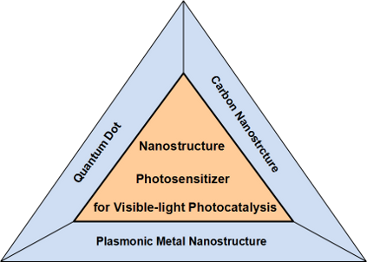
- Hongjun Chen Lianzhou Wang Nanomaterials Centre, School of Chemical Engineering, The University of Queensland, St. Lucia, Brisbane, QLD, 4072, Australia 10.3762/bjnano.5.82 Abstract To better utilize the sunlight for efficient solar energy conversion, the research on visible-light active
- bandgap, which is, narrower and has a higher CB minimum or lowest unoccupied molecular orbital (LUMO) in comparison with wide-bandgap transition metal oxides. Because a photosensitizer normally has a narrow bandgap, it can absorb the visible sunlight and even the infrared sunlight to generate electron
- carbon nanodots can effectively harness the broad spectrum of sunlight to improve the photocatalytic activities of monoclinic bismuth vanadate (m-BiVO4) for the photodegradation of methylene blue [133]. The carbon nanodots play a twofold role in this photocatalytic process. Firstly, carbon nanodots




Artificial sunlight and ultraviolet light induced photo-epoxidation of propylene over V-Ti/MCM-41 photocatalyst
Beilstein J. Nanotechnol. 2014, 5, 566–576, doi:10.3762/bjnano.5.67
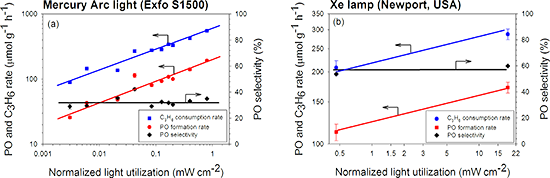
- photocatalyst by using artificial sunlight (Xe lamp with/without an Air Mass 1.5 Global Filter at 1.6/18.5 mW·cm−2) and ultraviolet light (Mercury Arc lamp with different filters in the range of 0.1–0.8 mW·cm−2). This is the first report of using artificial sunlight to drive the photo-epoxidation of propylene
- . Over V-Ti/MCM-41 photocatalyst, the propylene oxide (PO) formation rate is 193.0 and 112.1 µmol·gcat−1·h−1 with a PO selectivity of 35.0 and 53.7% under UV light and artificial sunlight, respectively. A normalized light utilization (NLU) index is defined and found to correlate well with the rate of
- tested in this study. Keywords: artificial sunlight; light irradiation effects; photo-epoxidation; ultraviolet (UV) light; V-Ti/MCM-41 photocatalyst; Introduction It is agreed that light, especially its wavelength spectrum and intensity, is a crucial factor for efficient photocatalysis. A




Structural, optical and photocatalytic properties of flower-like ZnO nanostructures prepared by a facile wet chemical method
Beilstein J. Nanotechnol. 2013, 4, 763–770, doi:10.3762/bjnano.4.87
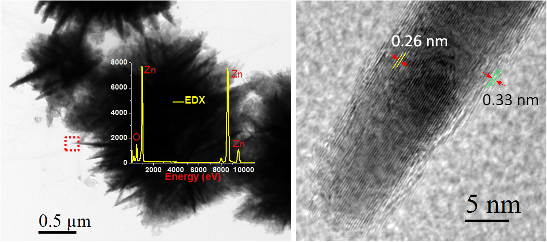
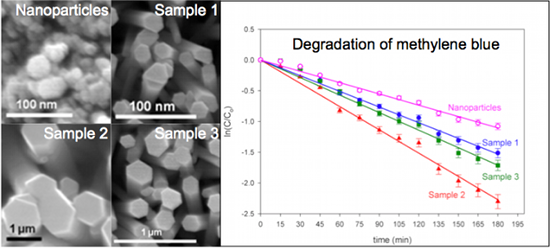
- decrease in the efficiency of the sunlight driven photocatalytic degradation of MB. Results and Discussion Figure 1 shows the XRD patterns of the as-synthesized samples S1, S2 and S3 (see Experimental section for the naming scheme). The observed well-defined peaks in the spectra can be indexed to the
- Figures 4a–c show the UV–vis absorption spectra of an aqueous solution of 22.4 μM MB with either photocatalyst S1, S2 or S3 after irradiation with sunlight for different durations of time. The characteristic absorption peak of MB at 664 nm is monitored as a function of the sunlight exposure time. It can
- is still clearly visible even after 120 min of irradiation. No new absorption peaks appear in the UV–vis region, which clearly indicates the complete photocatalytic degradation of MB. It must be pointed out here that an adsorption of MB onto the ZnO nanostructures in dark prior to sunlight exposure


Near-field effects and energy transfer in hybrid metal-oxide nanostructures
Beilstein J. Nanotechnol. 2013, 4, 306–317, doi:10.3762/bjnano.4.34
- supplying sufficient energy to present and future generations lies in techniques for using renewable energies, such as wind, water and direct sunlight. Direct conversion of sunlight by photovoltaics is an extremely attractive method of energy conversion, since the “final product” is supplied already in a
- most useful form. On the other hand, the storage of energy is a particularly important issue in this case, since the energy supplied by photovoltaics depends on the local and temporal availability of sunlight. There is again general agreement on the fact that the use of renewable energy sources


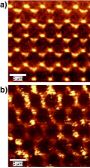


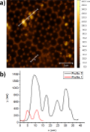


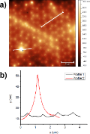


Self-assembled monolayers and titanium dioxide: From surface patterning to potential applications
Beilstein J. Nanotechnol. 2011, 2, 845–861, doi:10.3762/bjnano.2.94
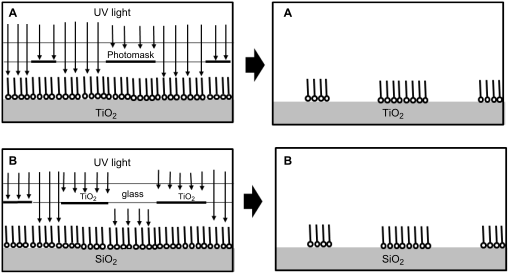



Biomimetic materials
Beilstein J. Nanotechnol. 2011, 2, 135–136, doi:10.3762/bjnano.2.16
- ) and radiation (e.g., sunlight). Boundary layers and, in particular, superhydrophobic surfaces and their interactions with the environment were thus the focus of this Thematic Series on Biomimetic materials. The most interesting phenomena happen on boundary layers: from the biosphere at the boundary
Enhanced visible light photocatalysis through fast crystallization of zinc oxide nanorods
Beilstein J. Nanotechnol. 2010, 1, 14–20, doi:10.3762/bjnano.1.3
- ][3][4]. Optical absorption in the ultraviolet region (peaking around 220 nm) [5] and low photoefficiency [6][7] are factors that deter the wide scale use of TiO2 for photocatalytic activities under sunlight. Zinc oxide (ZnO), with a high surface reactivity owing to a large number of native defect