


Search results
Search for "tissue engineering" in Full Text gives 91 result(s) in Beilstein Journal of Nanotechnology.
Nanofibers for drug delivery – incorporation and release of model molecules, influence of molecular weight and polymer structure
Beilstein J. Nanotechnol. 2015, 6, 1939–1945, doi:10.3762/bjnano.6.198
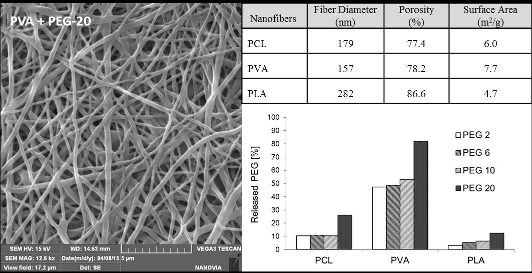
- internal architecture, nanofibers are well suited for various medicinal applications, such as carriers for cell cultivation [4][5], tissue engineering scaffolds [6] or wound dressings [7]. The incorporation of biologically or pharmacologically active compounds into the nanofibers may be very useful for

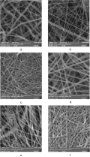


Synthesis, characterization and in vitro biocompatibility study of Au/TMC/Fe3O4 nanocomposites as a promising, nontoxic system for biomedical applications
Beilstein J. Nanotechnol. 2015, 6, 1677–1689, doi:10.3762/bjnano.6.170
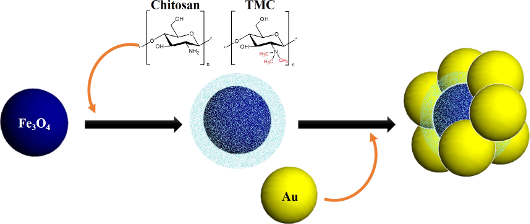
- paramagnetism, super saturation, and having free electrons, magnetic nanoparticles have emerged as promising candidates for various medical and biological applications including magnetic resonance imaging (MRI) (as a contrast agent), smart drug delivery (as drug carriers), gene therapy, hyperthermia and tissue
- engineering, as well as the in the design of sensors and biosensors [11][12][13][14][15][16][17]. Although all nanoparticles containing a magnetic core are considered as magnetic nanoparticles, the most commonly used are iron oxide nanoparticles, which are mostly synthesized in the form of magnetite (Fe3O4




Self-assembled anchor layers/polysaccharide coatings on titanium surfaces: a study of functionalization and stability
Beilstein J. Nanotechnol. 2015, 6, 617–631, doi:10.3762/bjnano.6.63
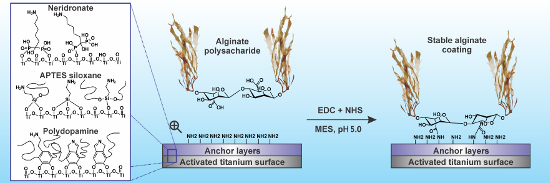
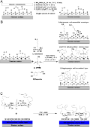
- and a thin, alginate hydrogel could be used in bone tissue engineering as a scaffold material that provides biologically active molecules. The main objective of this contribution is to characterize the activation and the functionalization of titanium surfaces by the covalent immobilization of
- performance especially when biomedical and tissue engineering applications are in question. The deterioration of these surface confluent layers could affect the surface concentration of free carboxylic end groups that are essential in the envisaged applications. Furthermore, the instability of the layers that
- siloxane network led to a higher deterioration tendency of the ALG/APTES double layer. The presented surface modification strategy of titanium can be an effective path for the formation of ALG-based hydrogel coatings enriched with bioactive compounds for bone tissue engineering applications. Experimental


Filling of carbon nanotubes and nanofibres
Beilstein J. Nanotechnol. 2015, 6, 508–516, doi:10.3762/bjnano.6.53
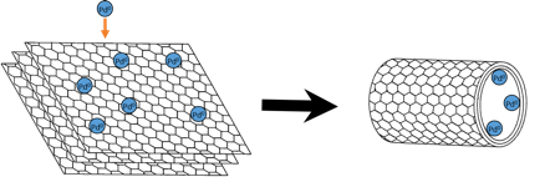
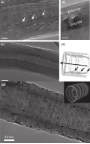
- developing a scalable method for producing larger quantities of nanowires has been undertaken. As TCNSs have shown promise in the field of tissue engineering, with further development, this method may be used to produce channels for cell growth. Filled with appropriate drugs and medium, TCNSs may provide a


Hematopoietic and mesenchymal stem cells: polymeric nanoparticle uptake and lineage differentiation
Beilstein J. Nanotechnol. 2015, 6, 383–395, doi:10.3762/bjnano.6.38
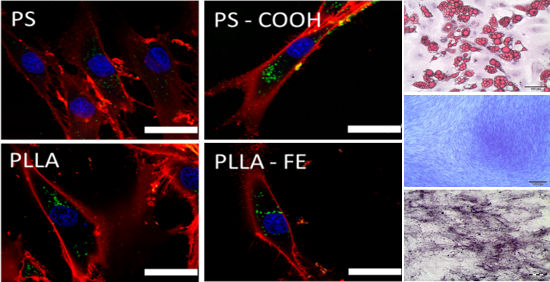
- great interest for tissue engineering approaches (e.g., for defects of bone or cartilage). Over 100 clinical trials employing hMSCs for regenerative medicine, for instance, after stroke and myocardial infarction [17], demonstrate that the clinical use of these cells is of utmost interest. Therefore, the


Oxygen-plasma-modified biomimetic nanofibrous scaffolds for enhanced compatibility of cardiovascular implants
Beilstein J. Nanotechnol. 2015, 6, 254–262, doi:10.3762/bjnano.6.24
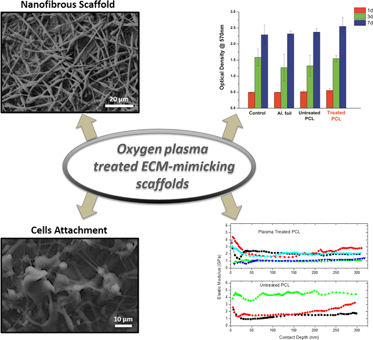
- biomedical applications for tissue engineering due to their morphological resemblance to the extracellular matrix (ECM). Especially, there is a need for the cardiovascular implants to exhibit a nanostructured surface that mimics the native endothelium in order to promote endothelialization and to reduce the
- of these biomimetic tissue-engineering constructs as efficient coatings for enhanced compatibility of cardiovascular implants. Keywords: cardiovascular implants; electrospun nanofibers; plasma treatment; scaffold; tissue engineering; Introduction Cardiovascular diseases represent one of the major
- applied [4][5][6][7]. To date, various sophisticated tissue-engineering structures that mimic the extracellular matrix (ECM) have been proposed, which aim to induce the highly desirable in situ endothelialization of vascular biomaterials while minimizing thrombogenicity and inflammation [8][9][10]. In the


Functionalization of α-synuclein fibrils
Beilstein J. Nanotechnol. 2015, 6, 124–133, doi:10.3762/bjnano.6.12
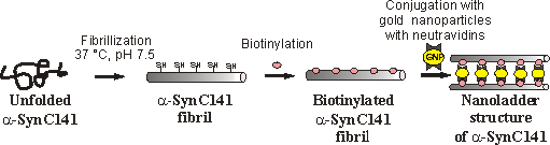
- tissue engineering [27][28], as well as use as a template for fibril metallization [29][30][31][32][33][34][35] or for the biomineralization of fibrils [36]. Nanostructures are usually designed by modifying proteins or peptides prior to fibril assembly [21][37][38][39][40][41]. Although post-assembly


Carbon-based smart nanomaterials in biomedicine and neuroengineering
Beilstein J. Nanotechnol. 2014, 5, 1849–1863, doi:10.3762/bjnano.5.196
- level of the interfaces between artificial transducers/actuators and living cells. Nowadays, fundamental research in neuroengineering aims to open up new frontiers in tissue engineering through reconstructive/repairing strategies that will ultimately be able to provide a functional bridge to the damaged
- stimulation and functional scaffolds for tissue engineering). Nanodiamonds (NDs): As a result of the complete sp3 hybridisation of its carbon atoms and its characteristic tetrahedral configuration, diamond shows interesting and peculiar properties such as an extreme hardness, low friction coefficient, high
- [54], in hyperthermia therapy for tumours [55][56], in tissue engineering [57], for in vivo [58] and in vitro [59] imaging. The electrical conductivity of CNTs lies at the foundation of the proposal for employing CNTs as smart-scaffolds for excitable cells such as neurons [60] and cardiac cells [61


Current state of laser synthesis of metal and alloy nanoparticles as ligand-free reference materials for nano-toxicological assays
Beilstein J. Nanotechnol. 2014, 5, 1523–1541, doi:10.3762/bjnano.5.165
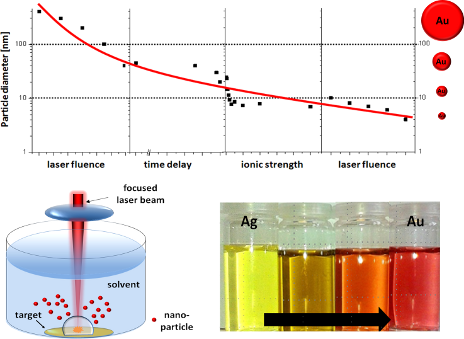
- properties such as superelasticity and shape memory effect, which was reported to occur even on a nanoscopic scale [115]. These characteristics make NiTi alloys particularly suitable, e.g., as stent material [116][117][118] and scaffolds in bone tissue engineering [119]. Synthesis of NiTi nanoparticles by


Biocalcite, a multifunctional inorganic polymer: Building block for calcareous sponge spicules and bioseed for the synthesis of calcium phosphate-based bone
Beilstein J. Nanotechnol. 2014, 5, 610–621, doi:10.3762/bjnano.5.72
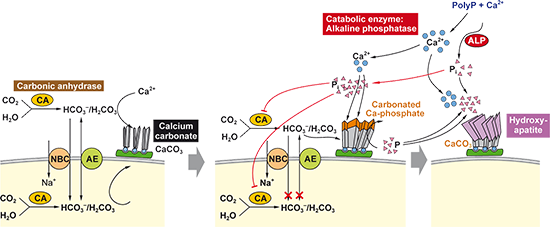
- /glutamic acid-rich sponge-specific protein. The discovery that calcium carbonate crystals act as bioseeds in human bone formation may allow the development of novel biomimetic scaffolds for bone tissue engineering. Na-alginate hydrogels, enriched with biosilica, have recently been demonstrated as a
- for bioprinting and construction of bioartificial tissues or organs. In a first step we have encapsulated separately bone-forming (SaOS-2) and bone-degrading (RAW 264.7) cells to develop a biomimetic synthetic scaffold suitable for tissue engineering [75]. In the alginate matrix applied the SaOS-2
- RAW 264.7 cells show a reduced capacity to express the gene for tartrate-resistant acid phosphatase. For rapid prototyping bioprinting we are using a computer-aided tissue engineering printer (3D-Bioplotter; Corporate EnvisionTEC GmbH, Gladbeck; Germany). With this technology we succeeded to embed

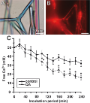


Exploring the complex mechanical properties of xanthan scaffolds by AFM-based force spectroscopy
Beilstein J. Nanotechnol. 2014, 5, 365–373, doi:10.3762/bjnano.5.42
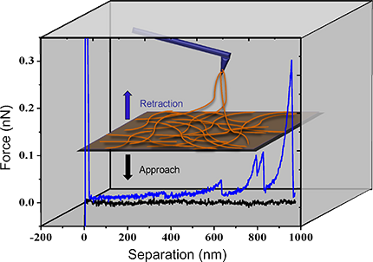
- 10.3762/bjnano.5.42 Abstract The polysaccharide xanthan has been extensively studied owing to its potential application in tissue engineering. In this paper, xanthan scaffold structures were investigated by atomic force microscope (AFM) in liquid, and the mechanical properties of the complex xanthan
- ; Introduction In general, a scaffold is composed of small units including sheet-like, cylinder-like, tube-like, sphere-like and sponge-like structures. Scaffold structures formed by various biopolymers have attracted more and more attention due to their potential applications in tissue engineering [1], such as


Mechanical and thermal properties of bacterial-cellulose-fibre-reinforced Mater-Bi® bionanocomposite
Beilstein J. Nanotechnol. 2013, 4, 325–329, doi:10.3762/bjnano.4.37
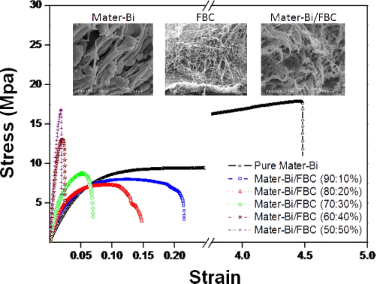
- ][12][13]. Meanwhile, the modulus of a single BC fibre estimated by Raman spectroscopy techniques is 130 GPa [14][15]. Therefore BC has been used extensively in many fields including wound dressings, optical displays, implants, drug delivery and tissue engineering. Until now there have been no reports


High-resolution nanomechanical analysis of suspended electrospun silk fibers with the torsional harmonic atomic force microscope
Beilstein J. Nanotechnol. 2013, 4, 243–248, doi:10.3762/bjnano.4.25
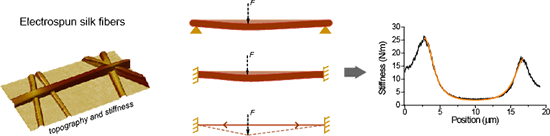
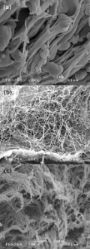
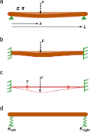
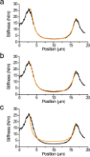
- analysis of mechanical measurements and topography, as well as comparison of various mechanical models. In this work we investigate the mechanical behavior of electrospun silk fibers, which are used for making scaffolds for bone-tissue engineering [35]. Mechanical characteristics of these structures are


Forming nanoparticles of water-soluble ionic molecules and embedding them into polymer and glass substrates
Beilstein J. Nanotechnol. 2012, 3, 267–276, doi:10.3762/bjnano.3.30
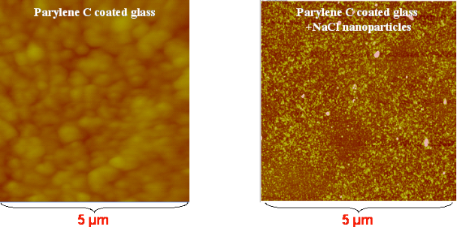
- area of nanostructured composites is aimed at studying their fundamental properties as well as applications in tissue engineering, nanooptics and nanoelectronics [1][2][3][4][5]. Unlike the synthesis of NPs of metal oxides, metal chalcogenides, and even some metal fluorides, the synthesis of NPs of




Fabrication of multi-parametric platforms based on nanocone arrays for determination of cellular response
Beilstein J. Nanotechnol. 2011, 2, 545–551, doi:10.3762/bjnano.2.58
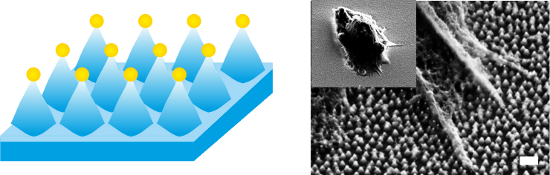
- materials are still required in order to control the interaction between cells and materials, and which can find applications in the fields of tissue engineering, implants, cell-based biosensors, and basic cell biology [21]. In this work, a multiparametric platform for the determination of cellular response


Dynamics of capillary infiltration of liquids into a highly aligned multi-walled carbon nanotube film
Beilstein J. Nanotechnol. 2011, 2, 311–317, doi:10.3762/bjnano.2.36
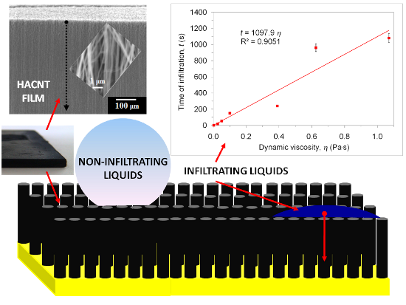
- for non-polar liquids [5]. One of the cutting edge areas of research exploiting CNTs is nanomedicine where the interface of CNTs with a liquid environment is essential, e.g., subcutaneous glucose sensors [6], microcatheters [7] or tissue engineering materials [8]. Until now, physical compatibility of





