Search results
Search for "topology" in Full Text gives 87 result(s) in Beilstein Journal of Nanotechnology.
Atomic force microscopy recognition of protein A on Staphylococcus aureus cell surfaces by labelling with IgG–Au conjugates
Beilstein J. Nanotechnol. 2013, 4, 743–749, doi:10.3762/bjnano.4.84
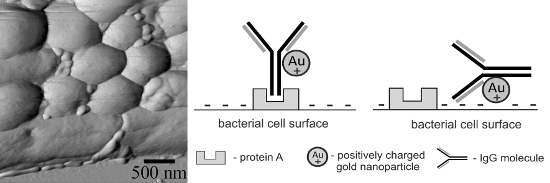
- operating conditions [4]. These benefits allow for the development of highly sensitive high-resolution methods for the detection of individual structures or labels on the surface of microorganisms. These, in turn, open wide prospects for the estimation of the exact quantity of bound markers, their topology


Large-scale atomistic and quantum-mechanical simulations of a Nafion membrane: Morphology, proton solvation and charge transport
Beilstein J. Nanotechnol. 2013, 4, 567–587, doi:10.3762/bjnano.4.65
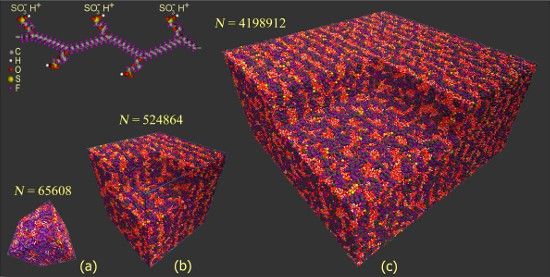
- formation of conductive channels and their topology was obtained from analysis of slices through the hydrophilic subphase (for more detail, see [27]). It was found that the hydrophilic subphase is organized like a sponge-like network and the global membrane morphology can be classified as bicontinuous: both


Ferromagnetic behaviour of Fe-doped ZnO nanograined films
Beilstein J. Nanotechnol. 2013, 4, 361–369, doi:10.3762/bjnano.4.42
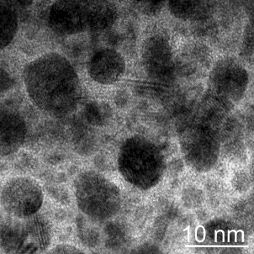
- and Co concentration is different for the Mn- and Co-doped nanograined ZnO manufactured by different methods. It is most probably controlled by the topology of the GB network (ferromagnetic GB foam) in the ZnO polycrystals. Our findings strongly suggest that GBs and related vacancies are the intrinsic
- can tailor the thickness of the amorphous intergranular layer and, thus, increase or decrease the Js value [70]. It is well known that GBs with different character possess different adsorption ability [72][73]. If the GB networks have different topology, the GBs having various adsorption ability will


Revealing thermal effects in the electronic transport through irradiated atomic metal point contacts
Beilstein J. Nanotechnol. 2012, 3, 703–711, doi:10.3762/bjnano.3.80
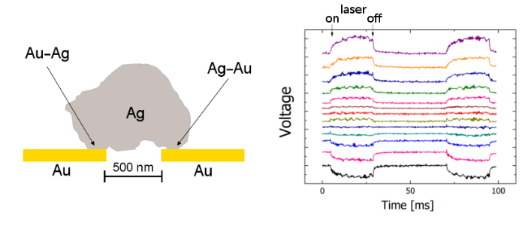
- topology of the electrochemically closed contact is taken into account, as sketched in Figure 8a. Actually, one is not dealing with a single, but rather with two point contacts, namely an Au–Ag and an Ag–Au contact in series. These act as a thermocouple in which the sensor and the reference contact are





Parallel- and serial-contact electrochemical metallization of monolayer nanopatterns: A versatile synthetic tool en route to bottom-up assembly of electric nanocircuits
Beilstein J. Nanotechnol. 2012, 3, 134–143, doi:10.3762/bjnano.3.14
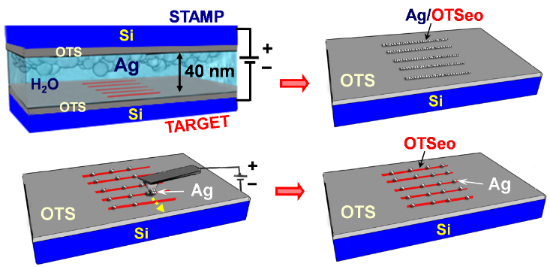
- nucleate and grow only on monolayer-template surfaces exposing chemically active functions that bind the respective metal ions, the morphology and lateral distribution of the resulting metal features thus depending on the local dimensions and topology of the template features on which the metal grains


Electron-beam patterned self-assembled monolayers as templates for Cu electrodeposition and lift-off
Beilstein J. Nanotechnol. 2012, 3, 101–113, doi:10.3762/bjnano.3.11
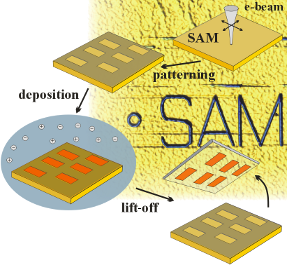
- patterned SAM, Z0 becomes a function of the exposed topology. For aromatic SAMs, such as MBP0, which exhibit negative-resist behaviour, the density of nucleation sites Z0 is determined by the extent of cross-linking of the molecules. While the exact relationship between the defect size in the SAM and the





Size-dependent phase diagrams of metallic alloys: A Monte Carlo simulation study on order–disorder transitions in Pt–Rh nanoparticles
Beilstein J. Nanotechnol. 2012, 3, 1–11, doi:10.3762/bjnano.3.1
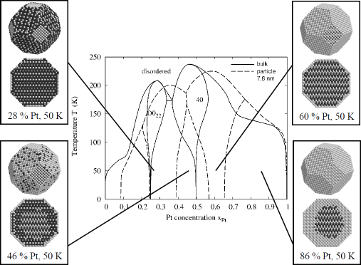
- redeveloped on a more intuitive foundation [7] under the term “nanothermodynamics” [8] by the same author. Recent microcanonical approaches pioneered by Gross et al. [9][10] explore the topology of the entropy surface S(E,Ni) as a function of the energy E and the particle number N. Studying the entropy


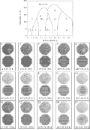


![[Graphic 37]](/bjnano/content/inline/2190-4286-3-1-i43.png?max-width=637&scale=1.18182) up to 8th neighbors for a Pt...
up to 8th neighbors for a Pt...

![[Graphic 28]](/bjnano/content/inline/2190-4286-3-1-i34.png?max-width=637&scale=1.18182) (lower points) and
(lower points) and ![[Graphic 29]](/bjnano/content/inline/2190-4286-3-1-i35.png?max-width=637&scale=1.18182) (upper points) WC-order parameters versus temperature for di...
(upper points) WC-order parameters versus temperature for di...


![[Graphic 31]](/bjnano/content/inline/2190-4286-3-1-i37.png?max-width=637&scale=1.18182) (lower points) and
(lower points) and ![[Graphic 32]](/bjnano/content/inline/2190-4286-3-1-i38.png?max-width=637&scale=1.18182) (upper points). The Pt concentration is ...
(upper points). The Pt concentration is ...

![[Graphic 33]](/bjnano/content/inline/2190-4286-3-1-i39.png?max-width=637&scale=1.18182) (lower points) and
(lower points) and ![[Graphic 34]](/bjnano/content/inline/2190-4286-3-1-i40.png?max-width=637&scale=1.18182) (upper points) constrained to a core region...
(upper points) constrained to a core region...

![[Graphic 39]](/bjnano/content/inline/2190-4286-3-1-i45.png?max-width=637&scale=1.18182) and
and ![[Graphic 38]](/bjnano/content/inline/2190-4286-3-1-i44.png?max-width=637&scale=1.18182) of three different particle sizes and bulk material a...
of three different particle sizes and bulk material a...

When “small” terms matter: Coupled interference features in the transport properties of cross-conjugated molecules
Beilstein J. Nanotechnol. 2011, 2, 862–871, doi:10.3762/bjnano.2.95
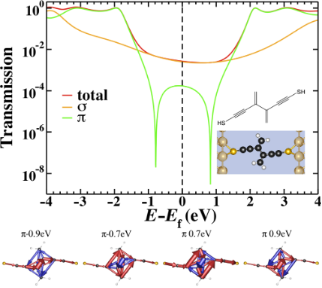
- electronics; quantum interference; thermoelectrics; topology; Introduction Destructive interference effects, such as nodes in the transmission function, are a signature of coherence and offer a possible avenue for tuning the transport properties of single-molecule junctions. While not present in all systems
- investigate the transport through several acyclic cross-conjugated molecules and show that maintaining degenerate interference features in these systems may be challenging. As a basis for comparison, we use Hückel theory transport calculations to understand what can be expected from the topology alone. Using
- calculate the transport with an atomistic model of the system, going beyond simple topology to include the through-space interactions that arise from the three-dimensional nature of chemical structures. Molecular geometries were obtained by optimizing the isolated molecule using Q-Chem 3.0 [26] with density




Deconvolution of the density of states of tip and sample through constant-current tunneling spectroscopy
Beilstein J. Nanotechnol. 2011, 2, 607–617, doi:10.3762/bjnano.2.64
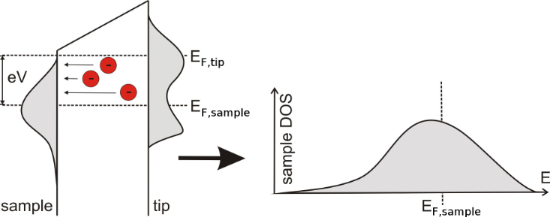
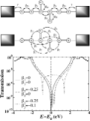
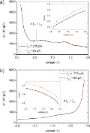
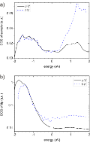
- developing a reliable deconvolution scheme shifts the focus towards how to access the actual transmission probability function. Keywords: deconvolution; Nb DOS; STM; STS; Introduction Undoubtedly, the power of scanning tunneling microscopy (STM) is based on its capability to map the surface topology of a




Micro to nano: Surface size scale and superhydrophobicity
Beilstein J. Nanotechnol. 2011, 2, 327–332, doi:10.3762/bjnano.2.38
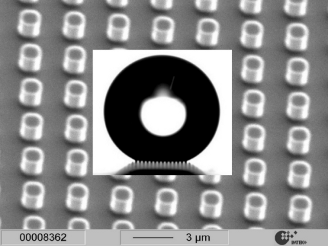
- following lines: I) We compare the dewetting process for a surface with a large size scale with that for a surface with a smaller size scale, both with the same solid fraction and the same topology. For the surface with the larger roughness features, the receding meniscus has to dewet from fewer, but larger


![[Graphic 1]](/bjnano/content/inline/2190-4286-2-38-i2.png?max-width=637&scale=1.18182) are in...
are in...


The description of friction of silicon MEMS with surface roughness: virtues and limitations of a stochastic Prandtl–Tomlinson model and the simulation of vibration-induced friction reduction
Beilstein J. Nanotechnol. 2010, 1, 163–171, doi:10.3762/bjnano.1.20
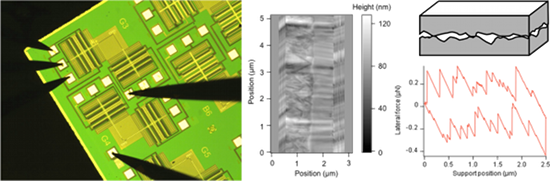
- in the literature as the ‘surface topology model of stick-slip’ [23]. Based on this notion that ξ(x) is proportional to the surface roughness in MEMS, a measurement of the typical topology of the sidewall surface is required. We have made a special MEMS tribometer to do this, in which the counter


On the reticular construction concept of covalent organic frameworks
Beilstein J. Nanotechnol. 2010, 1, 60–70, doi:10.3762/bjnano.1.8
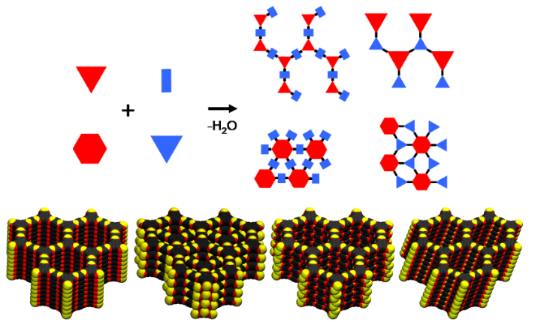
- [H] (connector IV), and the linkers between linear [l] (linkers a, b, e) and trigonal [t] (linkers c, d). Topology of the layer is determined by the geometries of the connector and linker molecules, and typically a hexagonal pattern is formed due to the D3h symmetry of the connector moieties. Based
- and the corresponding linkers. This process requires a release of three or six water molecules in case of t or l topology, respectively. Co-condensation of the above molecular units with compounds such as 2,3,6,7,10,11-hexahydroxytriphenylene (HHTP), hexahydroxybenzene (HHB) and dodecahydroxycoronene