


Search results
Search for "water splitting" in Full Text gives 80 result(s) in Beilstein Journal of Nanotechnology.
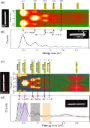
Near-field effects and energy transfer in hybrid metal-oxide nanostructures
Beilstein J. Nanotechnol. 2013, 4, 306–317, doi:10.3762/bjnano.4.34
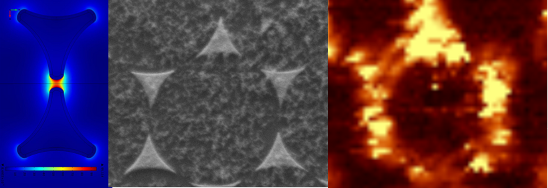
- . Plasmonic-metal nanostructures are also promising for increasing the conversion efficiency of solar energy directly into chemical energy (see review in [7]), such as in plasmon-enhanced water splitting. These systems depend on the close interaction between metallic nanoparticles and semiconductors


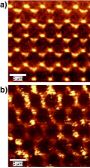


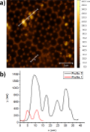


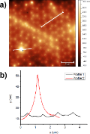


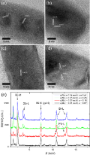
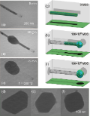
Characterization and properties of micro- and nanowires of controlled size, composition, and geometry fabricated by electrodeposition and ion-track technology
Beilstein J. Nanotechnol. 2012, 3, 860–883, doi:10.3762/bjnano.3.97
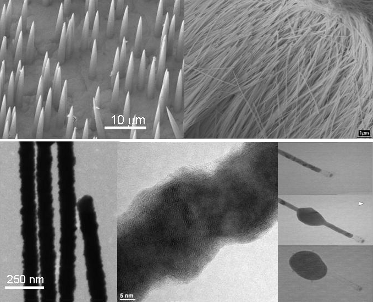
- attracted an enormous interest due to a large variety of promising applications in areas such as nanoelectronics, biotechnology, magnetism, thermoelectrics, solar cells, and water splitting, among others [1][2][3][4]. Their reduced size, elongated geometry, and high surface-to-volume ratio turn nanowires
- phonon scattering come into play. 2.5 Semiconductor nanowires Semiconductor nanowires are excellent candidates to be functional elements in applications as diverse as optics, sensorics, and electronics, and energy applications such as thermoelectrics and hydrogen generation by water splitting [2][3][4
- and conical geometry are promising electrodes for field emission, photovoltaic applications, water splitting, or surface-enhanced Raman spectroscopy [112][113]. The individual cones potentially combine the advantages offered by the reduced dimensions of the tip with the enhanced mechanical stability








Distribution of functional groups in periodic mesoporous organosilica materials studied by small-angle neutron scattering with in situ adsorption of nitrogen
Beilstein J. Nanotechnol. 2012, 3, 428–437, doi:10.3762/bjnano.3.49
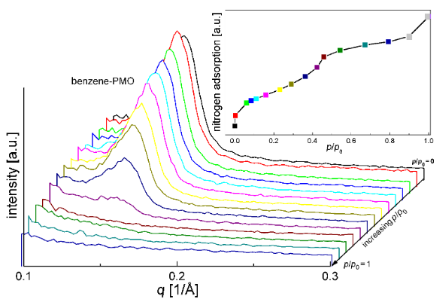
- -groups; such material shows a high proton conductivity [27] and has potential to create proton-conducting hybrid membranes for applications in fuel cells [28][29], electrodialysis for water purification [30], or photoelectrochemical cells for water splitting with solar light in order to separate the


Reduced electron recombination of dye-sensitized solar cells based on TiO2 spheres consisting of ultrathin nanosheets with [001] facet exposed
Beilstein J. Nanotechnol. 2012, 3, 378–387, doi:10.3762/bjnano.3.44
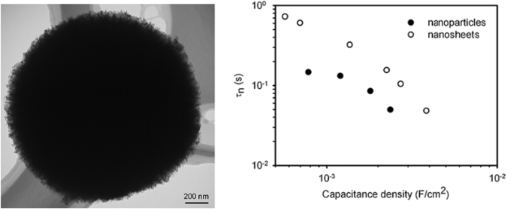
- applications such as water splitting and lithium-ion batteries [6][7][8]. Further investigation shows that the [001] surface is more beneficial to the photooxidization process through the O− centers compared to the [101] surface, which contains more Ti3+ centers [9]. The different surface properties of the


Mesoporous MgTa2O6 thin films with enhanced photocatalytic activity: On the interplay between crystallinity and mesostructure
Beilstein J. Nanotechnol. 2012, 3, 123–133, doi:10.3762/bjnano.3.13
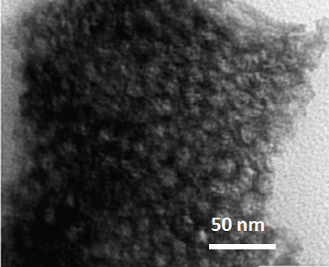
- the ability to assist photoinduced water-splitting, their activities are not promising [10][11]. The successful synthesis of the present novel nanoarchitectured MgTa2O6 film significantly promoted the potential property of MgTa2O6 as a photocatalyst, which we believe could find practical applications
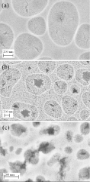
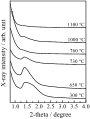
- in heterogeneous photocatalysts and solar-induced water splitting. Conclusion Well-crystallized MgTa2O6 films with ordered mesoporous structures, imposed by randomly but homogeneously distributed round concaves, were synthesized through evaporation-induced self-assembly followed by calcination at






Other Beilstein-Institut Open Science Activities



