


Search results
Search for "UV–vis spectroscopy" in Full Text gives 165 result(s) in Beilstein Journal of Nanotechnology.
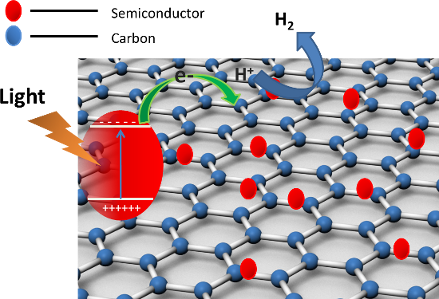
Two-dimensional carbon-based nanocomposites for photocatalytic energy generation and environmental remediation applications
Beilstein J. Nanotechnol. 2017, 8, 1571–1600, doi:10.3762/bjnano.8.159


Calcium fluoride based multifunctional nanoparticles for multimodal imaging
Beilstein J. Nanotechnol. 2017, 8, 1484–1493, doi:10.3762/bjnano.8.148
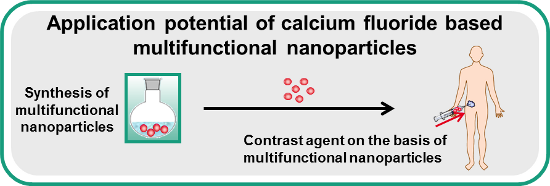
- Melpers®2450-stabilized NPs dispersed in cell-culture medium containing fetal calf serum (FCS) (cf. Figure 6a), bare NPs start to sediment after 24 h and the stabilized sample remains clear. Additionally, the colloidal stability was monitored by UV–vis spectroscopy. The absorbance measurements (λabs = 700


Deposition of exchange-coupled dinickel complexes on gold substrates utilizing ambidentate mercapto-carboxylato ligands
Beilstein J. Nanotechnol. 2017, 8, 1375–1387, doi:10.3762/bjnano.8.139
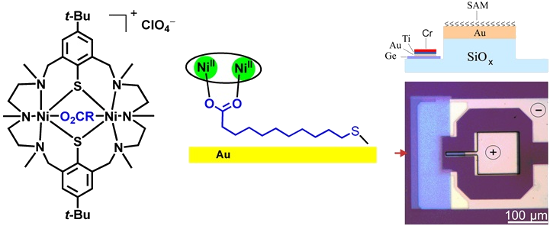
- HS(C6H4)2CO2− (8)), and their ability to adsorb on gold surfaces is reported. Besides elemental analysis, IR spectroscopy, electrospray ionization mass spectrometry (ESIMS), UV–vis spectroscopy, and X-ray crystallography (for 6 and 7), the compounds were also studied by temperature-dependent magnetic
- synthesis of [Ni2L(O2C(CH2)5SH)](ClO4) (6), [Ni2L(O2C(CH2)10SH)](ClO4) (7), and [Ni2L(O2C(C6H4)2SH)](ClO4) (8) was successfully realized. The coligands act invariably in a bridging mode as established by IR and UV–vis spectroscopy, ESIMS, and X-ray crystallography (for 6 and 7). The structures of the
- clarity). Selected UV–vis spectroscopy, IR spectroscopy, and ESIMS data and their assignments for compounds 6–8. The data for the reference compounds (1–5, 9–11) have been included for comparison. Water contact angles, AFM roughness, and optical thickness obtained for Au(111) surfaces modified with


Synthesis, spectroscopic characterization and thermogravimetric analysis of two series of substituted (metallo)tetraphenylporphyrins
Beilstein J. Nanotechnol. 2017, 8, 1191–1204, doi:10.3762/bjnano.8.121
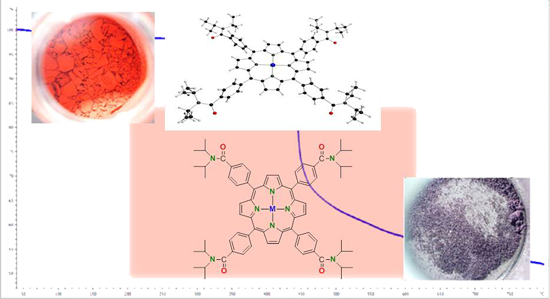
- elevated temperatures. Metalloporphyrins 2a–d and 3a–d were obtained in yields exceeding 60% and have been, as well as 2 and 3, characterized by elemental analysis, electrospray ionization mass spectrometry (ESIMS) and IR and UV–vis spectroscopy. Porphyrins 2, 2a–d and 3, 3a–d are not suitable for organic
- NMR, IR and UV–vis spectroscopy as well as by ESI mass-spectrometry. The comparison of the obtained analytical results revealed only minor differences in vibrational and optical spectra, both with respect to the varied transition metal ions as well as the terminal organic substituent R. That provides
- molecular beam deposition (OMBD), which is attributed to their comparatively low thermal stability as determined by thermogravimetric analysis (TG) of selected representatives. Keywords: electrospray ionization mass spectrometry; IR spectroscopy; metalloporphyrin; porphyrin; thermogravimetry; UV–vis


Fully scalable one-pot method for the production of phosphonic graphene derivatives
Beilstein J. Nanotechnol. 2017, 8, 1094–1103, doi:10.3762/bjnano.8.111
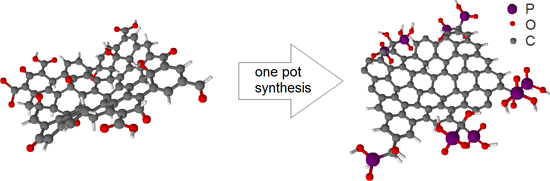
- GO contains carboxyl or carbonyl functional groups connected with C=C bonds, which are also known to absorb light in the UV range. Thus, the UV–vis spectroscopy can be used to monitor structural changes of GO upon functionalization and/or reduction [15][16][17]. The UV–vis spectra of aqueous


Study of the correlation between sensing performance and surface morphology of inkjet-printed aqueous graphene-based chemiresistors for NO2 detection
Beilstein J. Nanotechnol. 2017, 8, 1023–1031, doi:10.3762/bjnano.8.103
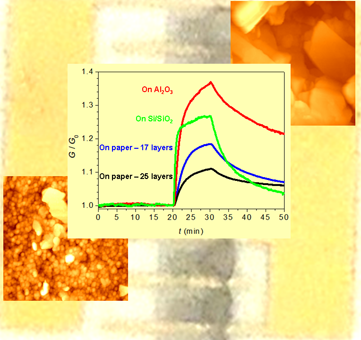
- 500 nm [8]. The concentration of the as-prepared few-layer graphene suspension, estimated through UV–vis spectroscopy, is 0.09 mg/mL (details about the UV–vis calibration curve are provided in Figure S1 of Supporting Information File 1). This value is expected because liquid-phase exfoliation


Selective detection of Mg2+ ions via enhanced fluorescence emission using Au–DNA nanocomposites
Beilstein J. Nanotechnol. 2017, 8, 762–771, doi:10.3762/bjnano.8.79
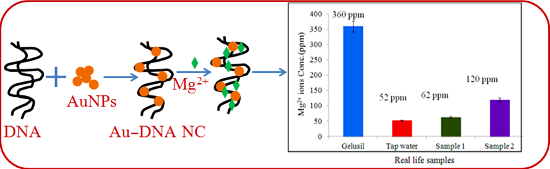
- alkanethiol double-stranded DNA from solution and re-dispersed in fresh, sterile, deionized water. Various techniques such as UV–vis spectroscopy (using a Specord 205 spectrophotometer), circular dichroism (CD) spectroscopy (Jasco, 815), atomic force microscopy (AFM), and fluorescence spectroscopy were used




α-((4-Cyanobenzoyl)oxy)-ω-methyl poly(ethylene glycol): a new stabilizer for silver nanoparticles
Beilstein J. Nanotechnol. 2017, 8, 627–635, doi:10.3762/bjnano.8.67

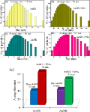
- reaction) size distribution. Moreover, the interaction of the cyano group with the silver surface is reasonably strong [36][38][39][40][41][42][43] and provides a good attachment of CBAmPEG to the NP surface. UV–vis spectroscopy suggests that a smaller fraction of the nanoparticles may aggregate upon


Investigation of the photocatalytic efficiency of tantalum alkoxy carboxylate-derived Ta2O5 nanoparticles in rhodamine B removal
Beilstein J. Nanotechnol. 2017, 8, 604–613, doi:10.3762/bjnano.8.65
- . The distribution of particles is more uniform in the nanoparticles derived from carboxylato alkoxides than in those derived from alkoxides. UV–vis spectroscopy The optical properties of synthesized Ta2O5 nanoparticles were studied by UV–vis diffuse reflectance spectroscopy (DRS). The synthesized Ta2O5
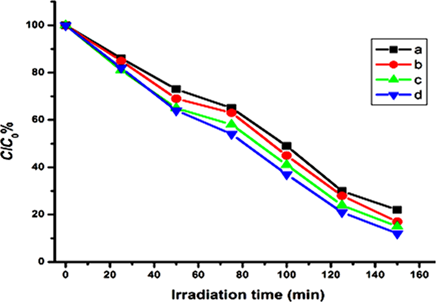
- –hole pairs migrate to the surface and react with adsorbed water molecules or hydroxide ions to produce hydroxyl radicals. These hydroxyl radicals decompose the dye molecule into CO2 and water. The concentration of remaining dye in the solution is measured by using UV–vIS spectroscopy. The formula


Uptake of the proteins HTRA1 and HTRA2 by cells mediated by calcium phosphate nanoparticles
Beilstein J. Nanotechnol. 2017, 8, 381–393, doi:10.3762/bjnano.8.40
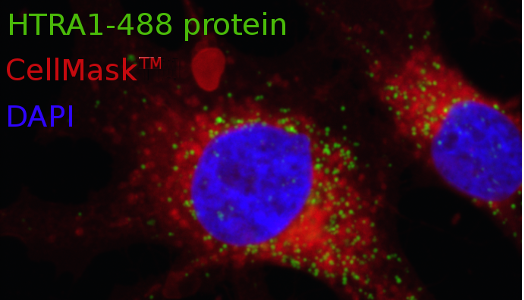
- /HTRA1 and 2.7·10−23 m3 for CaP/PEI/HTRA1; m(NP) = 7.5·10−19 kg for CaP/CMC/HTRA1 and 8.3·10−20 kg for CaP/PEI/HTRA1. The concentration of molecules on the nanoparticles was calculated by subtraction of the protein concentration in the supernatant by quantitative UV–vis spectroscopy using a calibration
- dispersion in biological media containing proteins (like RPMI/10% FCS) is much better due to the formation of a protein corona [48][49]. The concentration of the labelled proteins was determined by UV–vis spectroscopy (Table 2). Table 3 gives the quantification data of the functionalized nanoparticles, where
- inhibitors. Mock: Untreated cells. Endocytosis inhibitors used in the cell culture experiments. Characterization of protein-loaded nanoparticles by dynamic light scattering (DLS) and UV–vis spectroscopy (all data recorded in pure water). The particles functionalized with carboxymethylcellulose (CMC) were


Comparison of four methods for the biofunctionalization of gold nanorods by the introduction of sulfhydryl groups to antibodies
Beilstein J. Nanotechnol. 2017, 8, 372–380, doi:10.3762/bjnano.8.39
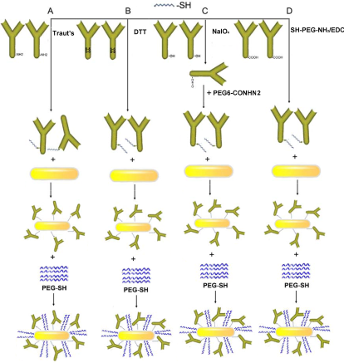
- at room temperature with stirring, which was then kept for 2 h. The excess reagents were removed by centrifugation and characterized by UV–vis spectroscopy and TEM. Measurement of conjugated anti-IgG by ELISA Standard ELISA was employed with human IgG as the antigen source to quantify the


A novel electrochemical nanobiosensor for the ultrasensitive and specific detection of femtomolar-level gastric cancer biomarker miRNA-106a
Beilstein J. Nanotechnol. 2016, 7, 2023–2036, doi:10.3762/bjnano.7.193
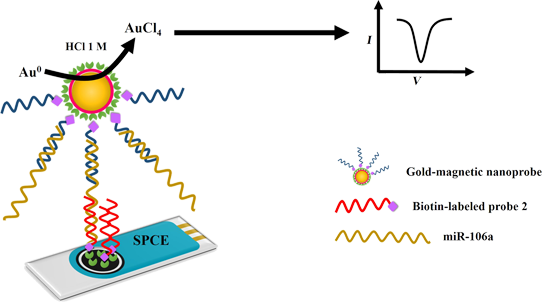
- (Zetasizer nano-ZS, Malvern, England). The NPs were also analyzed using UV–vis spectroscopy (Lambda 950 UV–vis spectrophotometer, Perkin Elmer, USA) at about 520 nm after each preparation step. The magnetic behavior of gold–magnetic NPs was investigated via vibrating sample magnetometer (VSM) (MAG-3110


Functionalized platinum nanoparticles with surface charge trigged by pH: synthesis, characterization and stability studies
Beilstein J. Nanotechnol. 2016, 7, 1822–1828, doi:10.3762/bjnano.7.175
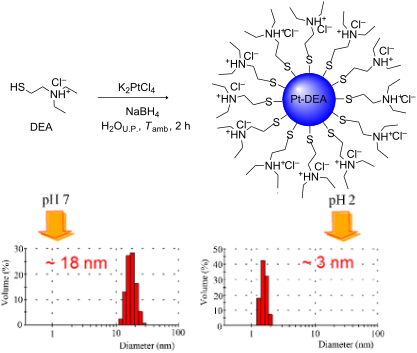
- (see Figure 1), suggesting that the band structure of the Pt nanoparticles is formed [34]. After careful purification by centrifugation, the colloidal product was characterized by DLS, UV–vis spectroscopy, FTIR, and ζ-potential measurements. A FESEM study was carried out on selected samples. In Figure
- bond on the PtNP surface. The DLS characterization demonstrated the long-term stability of the colloidal system up to three months and the possibility to tune the aggregation phenomenon of the PtNPs by varying the pH due to modulation of the metal surface charge. Experimental Instrumentation UV–vis
- spectroscopy was performed in H2O solutions using quartz cells with a Varian Cary 100 Scan UV–vis spectrophotometer. The diameter and the diameter distribution of MNPs in H2O solution were investigated at 25 ± 0.2 °C (pH 7 and pH 2) by means of dynamic light scattering (DLS) technique by using a Malvern Nano


Effective intercalation of zein into Na-montmorillonite: role of the protein components and use of the developed biointerfaces
Beilstein J. Nanotechnol. 2016, 7, 1772–1782, doi:10.3762/bjnano.7.170
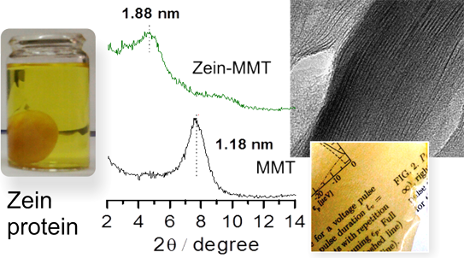
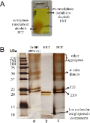
- biohybrids based on EXT show a lower amount of adsorbed protein than those prepared from PCT. This fact may be related to the adsorption of zein oligomers present in the PCT fraction, as shown by SDS-PAGE (Figure 1B). Adsorption of the components from EXT on MMT is confirmed from analysis by UV–vis
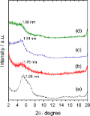
- spectroscopy of the supernatant separated after formation of the EXT–MMT biohybrids (Supporting Information File 1, Figure S6), which shows clearly the decrease of intensity in the bands ascribed to protein and carotenoid components with respect to those in the EXT phase. The X-ray diffractograms of the EXT




Hydrophilic silver nanoparticles with tunable optical properties: application for the detection of heavy metals in water
Beilstein J. Nanotechnol. 2016, 7, 1654–1661, doi:10.3762/bjnano.7.157
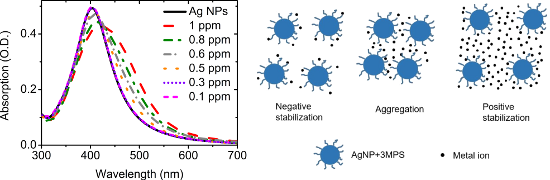
- one (synthesis a) the procedure was developed in analogy with previous work [22] and is reported in Scheme 1. This step leads to the hydrophilic character of silver nanoparticles. At the end of the synthesis and purification, the reaction product was analyzed by UV–vis spectroscopy to confirm the
- nanoparticles with an average diameter of 2.5 ± 0.3 nm were synthetized with a narrow distribution range and negative charge on the surface. These particles were fully characterized by means of different techniques, such as STM, DLS and UV–vis spectroscopy. The SPR signal of the AgNP-3MPS sample in water


Manufacturing and investigation of physical properties of polyacrylonitrile nanofibre composites with SiO2, TiO2 and Bi2O3 nanoparticles
Beilstein J. Nanotechnol. 2016, 7, 1141–1155, doi:10.3762/bjnano.7.106
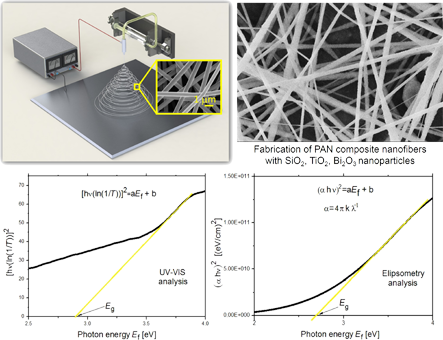
- properties of the obtained composite nanofibres with the participation of fibrous layers are scrutinized by means of ellipsometry and UV–vis spectroscopy. Experimental In order to prepare the spinning solution, the following were used: polyacrylonitrile (PAN purity 99%, Mw = 150 000 g/mol). The reinforcing
- fibrous mats, determined using ellipsometry studies and the UV–vis analysis. Each of the used methods showed that the energy gap width increased with increasing mass concentration of the reinforcing phase (Table 4). With the UV–vis spectroscopy measurements, the smallest energy gap width was recorded for



Sandwich-like layer-by-layer assembly of gold nanoparticles with tunable SERS properties
Beilstein J. Nanotechnol. 2016, 7, 1028–1032, doi:10.3762/bjnano.7.95
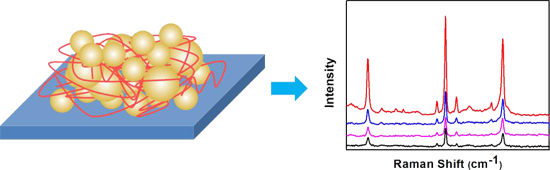
- -prepared substrate and left to dry in the air. The as-synthesized Au NP solution was characterized by UV–visible (UV–vis) spectroscopy (Cary 5000). Field emission scanning electron microscopy (FE-SEM, Hitachi S-4800) and transmission electron microscopy (TEM, JEOL JEM 1011) were used to image the LbL thin


Facile synthesis of water-soluble carbon nano-onions under alkaline conditions
Beilstein J. Nanotechnol. 2016, 7, 758–766, doi:10.3762/bjnano.7.67
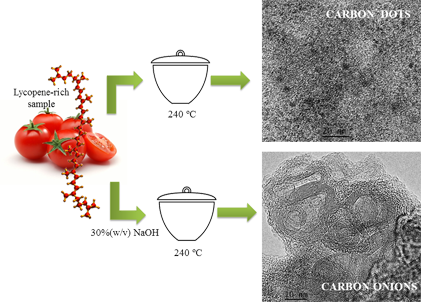
- leaves (acer saccharum), under the same temperature and alkaline conditions did not produce carbon onions. XRD, FTIR, HRTEM, UV–vis spectroscopy, and photoluminescence analyses were performed to characterize the as-synthesized carbon nanomaterials. Preliminary tests demonstrate a capability of the


Gold nanoparticles covalently assembled onto vesicle structures as possible biosensing platform
Beilstein J. Nanotechnol. 2016, 7, 655–663, doi:10.3762/bjnano.7.58
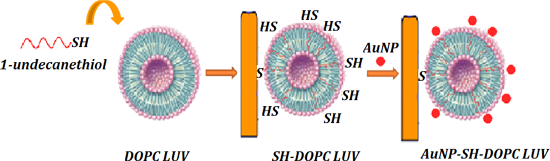
- order to covalently bind the AuNPs to the bilayer and to immobilize the vesicle on the Au electrode. This nanosystem was characterized by using UV–vis spectroscopy, transmission electron microscopy (TEM), dynamic light scattering (DLS) and cyclic voltammetry (CV). The results show that the vesicles were
- sensible to the conditions under which they are formed. As the irradiation time modifies the nanoparticle morphology we decided to irradiate for longer time, in this case, 13 min. Some techniques, such as UV–vis spectroscopy and TEM were used to perform the morphological characterization of the AuNPs
- measurements can be statistically significant for all the systems investigated. The algorithm used was CONTIN and the DLS experiments shown that the polydispersities of the LUVs were less than 5%. UV–vis spectroscopy In order to study the formation of AuNPs, UV–vis studies were performed by using Shimadzu 2401


Bacteriorhodopsin–ZnO hybrid as a potential sensing element for low-temperature detection of ethanol vapour
Beilstein J. Nanotechnol. 2016, 7, 501–510, doi:10.3762/bjnano.7.44
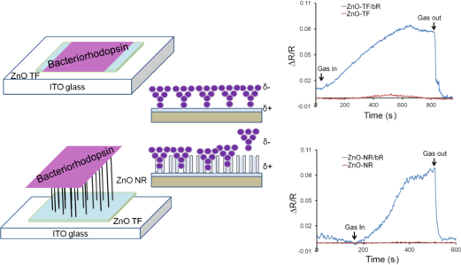
- nonhybrid structures, as is evident from Figure 2c,d. The structural and optical properties of ZnO-TF, ZnO-NR and their hybrid structures were assessed using UV–vis spectroscopy, photoluminescence spectroscopy (PL), Raman spectroscopy and Fourier transform infrared spectroscopy (FTIR). Figure 3 shows the


Hemolysin coregulated protein 1 as a molecular gluing unit for the assembly of nanoparticle hybrid structures
Beilstein J. Nanotechnol. 2016, 7, 351–363, doi:10.3762/bjnano.7.32
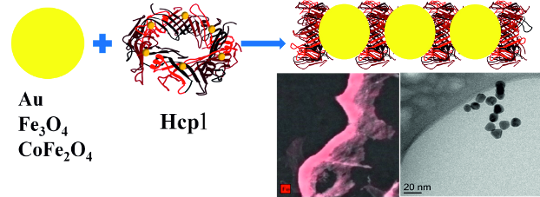
- gluing unit for the assembly of often linear, hybrid structures of plasmonic gold (Au NP), magnetite (Fe3O4 NP), and cobalt ferrite nanoparticles (CoFe2O4 NP). Furthermore, the assembly of Au NPs into linear structures using Hcp1_cys3 is investigated by UV–vis spectroscopy, TEM and cryo-TEM. One key
- nanomaterials. Furthermore, kinetic investigation of the formation of such 1D Au NP structures and the utilization of this structure, for example, as a SERS template and catalyst are also of great interest. The formation kinetics of Au NP networks triggered by Hcp1_cys3 is investigated using UV–vis spectroscopy
- chains, resulting in three protein-based NP hybrid structures on the meso- and micro-scale. The Au NP Hcp1_cys3 assemblies show the formation of short chains in the nanometer range which grow to longer branched chains in UV–vis spectroscopy and TEM/cryo-TEM kinetic investigations. Finally, a network




Time-dependent growth of crystalline Au0-nanoparticles in cyanobacteria as self-reproducing bioreactors: 2. Anabaena cylindrica
Beilstein J. Nanotechnol. 2016, 7, 312–327, doi:10.3762/bjnano.7.30
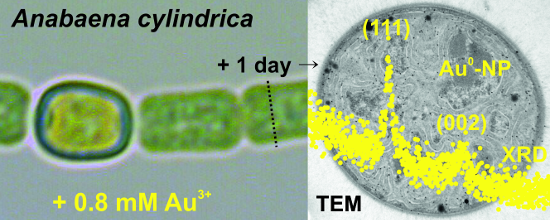
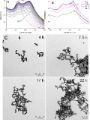
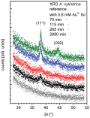
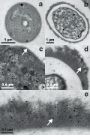
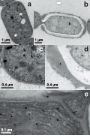
- electron microscope. These images reveal the spatial distribution of the nanoparticles inside the cells as it was in the moment when their biosynthesis was stopped. Laser-induced breakdown spectroscopy In recent years UV–vis spectroscopy has often been used for the in situ observation of nanoparticle or
- nanocluster development [46][47][48] of various metals, e.g., palladium, gold and silver [46]. Although UV–vis spectroscopy based methods have been developed to determine the size of nanoparticles resp. nanoclusters in solution [47][48]. UV–vis spectroscopy was also tested for the type of system used here in



Single-molecule mechanics of protein-labelled DNA handles
Beilstein J. Nanotechnol. 2016, 7, 138–148, doi:10.3762/bjnano.7.16
- kb DNA ladder (NEB & Promega). We utilized UV–vis spectroscopy (Nanodrop spectrophotometer ND-1000, Fisher Scientific, Dublin, Ireland) to measure the concentration of the DHs and PDH constructs. These measurements were also indicative for the presence of protein after 90 min of incubation and the



Impact of ultrasonic dispersion on the photocatalytic activity of titania aggregates
Beilstein J. Nanotechnol. 2015, 6, 2423–2430, doi:10.3762/bjnano.6.250
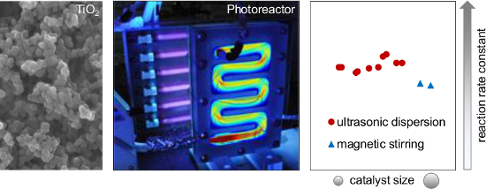
- , the transmittance of the 100× diluted samples from the original 1 g/L suspensions were measured. In order to measure the amount of MB remaining in the solution for the discoloration tests, we measured the absorbance in the supernatant suspensions through 10 mm optical path length by UV–vis
- spectroscopy. The MB concentrations were calibrated from the absorbance at λ = 664 nm [19] (the calibration curve can be found in Figure S2 of Supporting Information File 1) and are plotted as a function of irradiation time. Results and Discussion Verification of the kinetic model In essence, an increase of


Green synthesis, characterization and catalytic activity of natural bentonite-supported copper nanoparticles for the solvent-free synthesis of 1-substituted 1H-1,2,3,4-tetrazoles and reduction of 4-nitrophenol
Beilstein J. Nanotechnol. 2015, 6, 2300–2309, doi:10.3762/bjnano.6.236
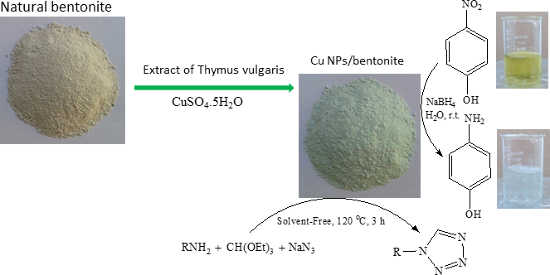
- concentration of 4-NP was monitored at given intervals by using UV–vis spectroscopy and the results are shown in Figure 9. The original absorption peak of 4-NP is centered at about 320 nm and shifts to 400 nm after addition of the NaBH4 solution. This is due to the formation of p-nitrophenolate ions under





