Search results
Search for "biodegradable" in Full Text gives 112 result(s) in Beilstein Journal of Nanotechnology.
Comparison of the interactions of daunorubicin in a free form and attached to single-walled carbon nanotubes with model lipid membranes
Beilstein J. Nanotechnol. 2016, 7, 524–532, doi:10.3762/bjnano.7.46
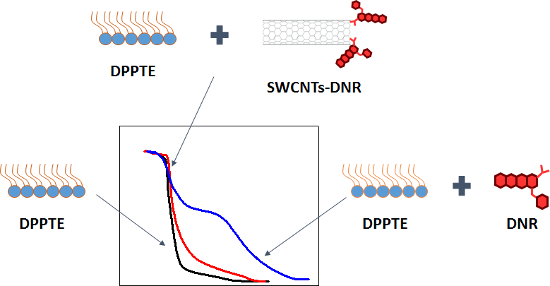
- employed in case of other DDS such as biodegradable polymers, which co-assemble into composite micelles [10]. Another type of common drug carriers includes nanoparticles. Magnetic Fe3O4 nanoparticles are often employed because they give possibility to control the transport by applying external magnetic




pH-Triggered release from surface-modified poly(lactic-co-glycolic acid) nanoparticles
Beilstein J. Nanotechnol. 2015, 6, 2504–2512, doi:10.3762/bjnano.6.260
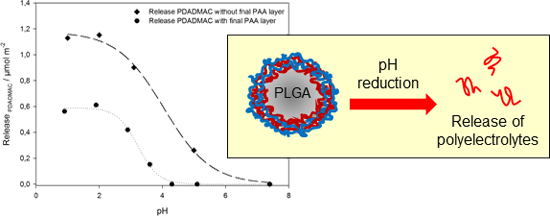
- Nanoparticles (NP) of poly(lactic-co-glycolic acid) (PLGA) represent a promising biodegradable drug delivery system. We suggest here a two-step release system of PLGA nanoparticles with a pH-tunable polymeric shell, providing an initial pH-triggered step, releasing a membrane-toxic cationic compound. PLGA
- idea is that this mechanism might in the future trigger a disruption of endosomal membranes and therefore enhance the intracellular distribution of the nanoparticles and the drug that is incorporated in the particle core. In the present work, we employ biodegradable PLGA nanoparticles, which are


Green and energy-efficient methods for the production of metallic nanoparticles
Beilstein J. Nanotechnol. 2015, 6, 2354–2376, doi:10.3762/bjnano.6.243
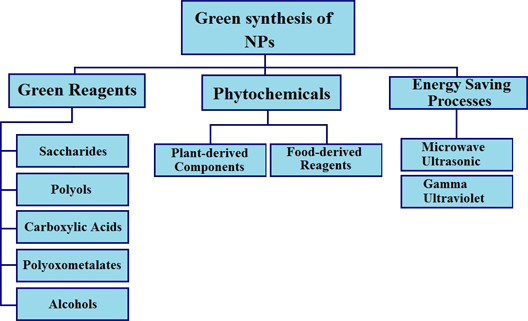
- products should not be long-standing in the environment and therefore chemists should design them so that at the end of their life span, they can easily cleave into simpler and non-toxic molecules [135]. For example, using edible and biodegradable polymers, such as gum ghatti for stabilizing NPs ensures a


Fabrication of hybrid nanocomposite scaffolds by incorporating ligand-free hydroxyapatite nanoparticles into biodegradable polymer scaffolds and release studies
Beilstein J. Nanotechnol. 2015, 6, 2217–2223, doi:10.3762/bjnano.6.227
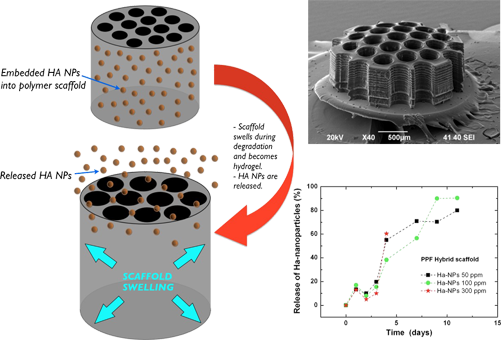
- composite thin films of hydroxyapatite (HA) and biodegradable polymers by combining pulsed laser ablation in liquid and mask-projection excimer laser stereolithography (MPExSL). Ligand-free HA nanoparticles were prepared by ultrafast laser ablation of a HA target in a solvent, and then the nanoparticles
- were dispersed into the liquid polymer resin prior to the photocuring process using MPExSL. The resin is poly(propylene fumarate) (PPF), a photo-polymerizable, biodegradable material. The polymer is blended with diethyl fumarate in 7:3 w/w to adjust the resin viscosity. The evaluation of the structural
- gradual release of the hydroxyapatite nanoparticles over thin film biodegradation is reported. Keywords: biodegradable scaffolds; biodegradation; hydroxyapatite; laser ablation in liquid; stereolithography; Introduction Interfaces between osteochondral prosthetics and the surrounding bone tissue are of


Synthesis, characterization and in vitro biocompatibility study of Au/TMC/Fe3O4 nanocomposites as a promising, nontoxic system for biomedical applications
Beilstein J. Nanotechnol. 2015, 6, 1677–1689, doi:10.3762/bjnano.6.170
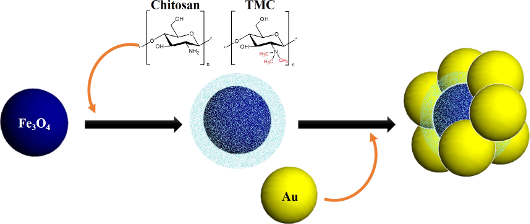
- distribution, facile and low cost synthesis process, and ease of surface modification, biological and medical applications using uncoated iron oxide nanoparticles are limited because of their tendency to aggregate and oxidize [9][19]. Covering their surface with organic molecules (e.g., biodegradable polymers
- interactions with cells and proteins [12]. Biodegradable polymers that are generally used for coating magnetic nanoparticles include poly(ethylene glycol) (PEG), poly(vinyl alcohol) (PVA), polyethyleneimine (PEI), poly(D,L-lactide), poly(lactic acid), poly(D,L-glycolide), poly(lactide-co-glycolide




Hematopoietic and mesenchymal stem cells: polymeric nanoparticle uptake and lineage differentiation
Beilstein J. Nanotechnol. 2015, 6, 383–395, doi:10.3762/bjnano.6.38
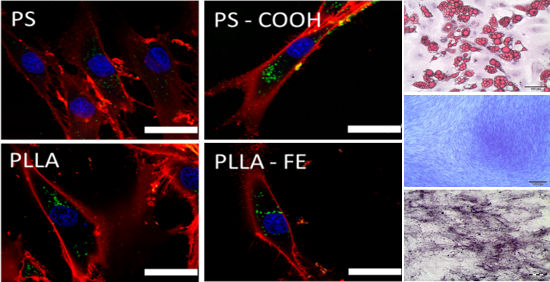
- capacity of hHSCs and hMSCs to obtain a deeper knowledge of the interaction of stem cells and nanoparticles. As model systems of nanoparticles, two sets of either bioinert (polystyrene without carboxylic groups on the surface) or biodegradable (PLLA without magnetite) particles were analyzed. Flow
- were chosen for this study: non-functionalized polystyrene (PS) and carboxy-functionalized polystyrene (PS–COOH). PS–COOH particles are biocompatible, but nondegradable particles whereas poly(L-lactide) particles without (PLLA) and with magnetite (PLLA–Fe) are biocompatible and biodegradable. All
- previously demonstrated [18]. In addition to the good uptake properties, the polystyrene particles did not have any cytotoxic effect (Figure 1B). The biodegradable PLLA nanoparticles also showed good uptake and no cytotoxic effects (Figure 1A,B). This was also true for nanoparticles with iron oxide


Oxygen-plasma-modified biomimetic nanofibrous scaffolds for enhanced compatibility of cardiovascular implants
Beilstein J. Nanotechnol. 2015, 6, 254–262, doi:10.3762/bjnano.6.24
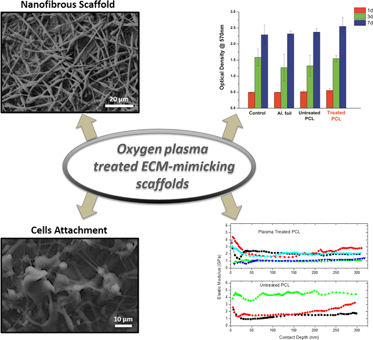
- treatments [17]. Similarly, polycaprolactone (PCL) represents a commonly used biodegradable synthetic polymer for the fabrication of electrospun nanofibrous scaffolds [18], because of its beneficial bulk properties but lacks the proper surface environment for cellular attachment, mainly due to its strongly


Functionalized polystyrene nanoparticles as a platform for studying bio–nano interactions
Beilstein J. Nanotechnol. 2014, 5, 2403–2412, doi:10.3762/bjnano.5.250
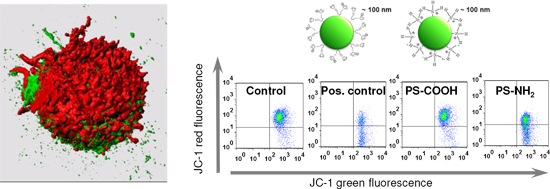
- molded or expanded to foams. Such a thermoplastic polymer has an atactic conformation without crystalline regions. Hence, the homopolymer is transparent, durable, and can be colored very easily. Polystyrene is hardly biodegradable facilitating its use in the food and medical product and devices industry
- extremely low rendering polystyrene basically non-biodegradable [6][7]. Non-recycled polystyrene disposables pose a great problem due to the long-lasting environmental pollution [5]. Polystyrene safety The toxicity of polystyrene, as a material in so many objects of daily use, is controlled by various
- % of PS-NH2 particles left. Neither THP-1, nor macrophages release nanoparticles back into the culture media, as measured during the six days of cell culture. This indicates that in macrophages, which do not proliferate, the amount of internalized non-biodegradable nanoparticles is not reduced with


Interaction of dermatologically relevant nanoparticles with skin cells and skin
Beilstein J. Nanotechnol. 2014, 5, 2363–2373, doi:10.3762/bjnano.5.245
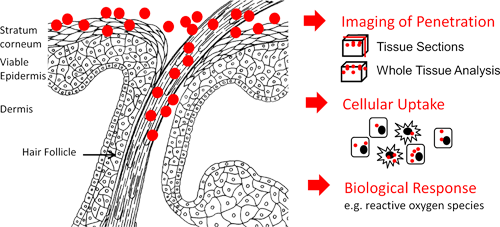
- cell culture conditions are not always predictive for ex vivo or in vivo tissue studies. For example, in previous studies on skin interactions with biodegradable poly(lactic acid) (PLA) particles loaded with different fluorescent dyes, we found that although mono-dispersed and stable in aqueous


Imaging the intracellular degradation of biodegradable polymer nanoparticles
Beilstein J. Nanotechnol. 2014, 5, 1905–1917, doi:10.3762/bjnano.5.201
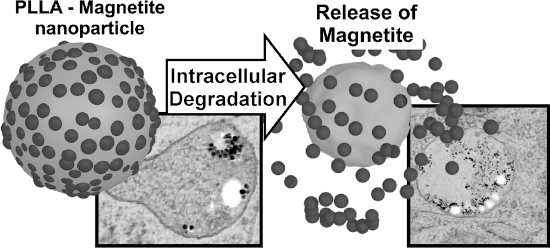
- ), University Medical Center of the Johannes Gutenberg-University Mainz, Langenbeckstraße 1, 55131 Mainz, Germany 10.3762/bjnano.5.201 Abstract In recent years, the development of smart drug delivery systems based on biodegradable polymeric nanoparticles has become of great interest. Drug-loaded nanoparticles
- can be introduced into the cell interior via endocytotic processes followed by the slow release of the drug due to degradation of the nanoparticle. In this work, poly(L-lactic acid) (PLLA) was chosen as the biodegradable polymer. Although common degradation of PLLA has been studied in various
- nanoparticles; transmission electron microscopy; Introduction Nowadays biocompatible and biodegradable polymers are customary materials in daily medical routine. By tailoring their macromolecular architecture, it is possible to precisely adjust mechanical properties as well as features for interaction with


Near-infrared dye loaded polymeric nanoparticles for cancer imaging and therapy and cellular response after laser-induced heating
Beilstein J. Nanotechnol. 2014, 5, 313–322, doi:10.3762/bjnano.5.35
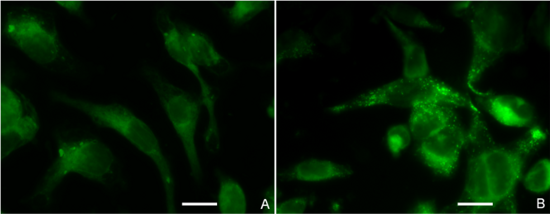
- that combine imaging and therapeutic agents. In our study, we use a new biocompatible and biodegradable polymer, termed poly(glycerol malate co-dodecanedioate) (PGMD), for the synthesis of nanoparticles (NPs) and loading of near-infrared (NIR) dyes. IR820 was chosen for the purpose of imaging and
- manuscript is based on experiments completed as a partial fulfillment of the requirements for Tingjun Lei’s PhD thesis [5]. Biocompatible and biodegradable PGMD polymers were synthesized through the thermal condensation method by mixing glycol, malic acid and 1,12-dodecanedioic acid (DDA). Following the


Mechanical and thermal properties of bacterial-cellulose-fibre-reinforced Mater-Bi® bionanocomposite
Beilstein J. Nanotechnol. 2013, 4, 325–329, doi:10.3762/bjnano.4.37
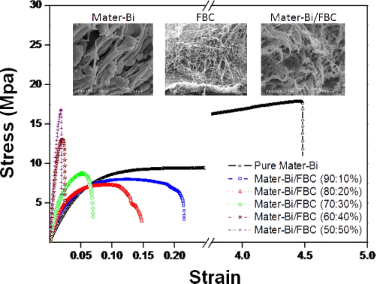
- renewable raw materials of agricultural origin and non-genetically modified starch. Mater-Bi is biodegradable and compostable in soil, and fresh and salt water. Mater-Bi is a commercially available thermoplastic starch/polyethylene-vinyl alcohol (PEVOH) [3] produced by Novamont, a leading European company
- environment. Composites of Mater-Bi with biodegradable fibres, particularly plant cellulose, have been developed. The use of flax cellulose pulp with Mater-Bi produces better mechanical properties and higher thermal stability [4]. Short fibres of sisal added in the range from 5 to 20% have been able to raise