Search results
Search for "carbon" in Full Text gives 1261 result(s) in Beilstein Journal of Nanotechnology. Showing first 200.
Enhancing mechanical properties of chitosan/PVA electrospun nanofibers: a comprehensive review
Beilstein J. Nanotechnol. 2025, 16, 286–307, doi:10.3762/bjnano.16.22

- entanglement and promoting fiber formation [58]. A summary of the applications of chitosan/PVA nanofibers is provided in Table 2. PVA is a synthetic polymer widely utilized in various industries because of its versatile properties. Its water solubility allows for a wide range of applications, while its carbon


Emerging strategies in the sustainable removal of antibiotics using semiconductor-based photocatalysts
Beilstein J. Nanotechnol. 2025, 16, 264–285, doi:10.3762/bjnano.16.21
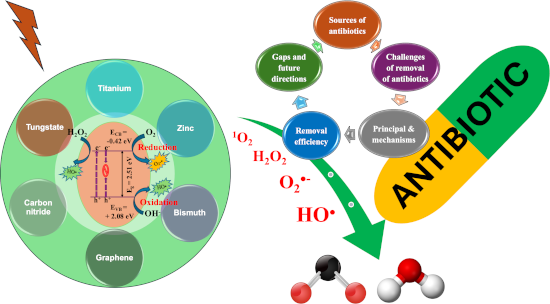
- , oxides of titanium, zinc, bismuth, and tungsten, as well as graphene, graphitic carbon nitride (g-C3N4), and their substitute materials are commonly synthesized and used as photocatalysts for the removal of antibiotics from contaminated sources. These materials are synthesized through a variety of
- or other transition metals through doping can potentially improve Bi2WO6 light absorption capabilities and increase the antibiotic degradation efficiency [98]. Some metal-doped bismuth photocatalysts and their antibiotic degradation efficiency are summarized below in Table 3. Graphitic carbon nitride
- -based materials Graphitic carbon nitride (g-C3N4) is a metal-free semiconductor material with distinct optical, electrical, structural, and physicochemical characteristics [99]. These properties make it well-suited for applications in energy and environmental fields. Because of its narrow bandgap of 2.7



Preferential enrichment and extraction of laser-synthesized nanoparticles in organic phases
Beilstein J. Nanotechnol. 2025, 16, 254–263, doi:10.3762/bjnano.16.20
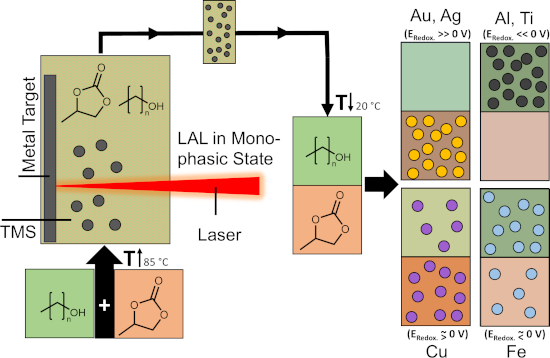
- modify the nanomaterials in situ via chemical reactions of the nanoparticles with the molecules or solutes of the liquid. Particularly when organic solvents are used as liquids, photothermally induced C–C cleavage, addition or dehydrogenation reactions of the solvents, as well as (carbon
- system. The abundance of nanoparticles in PC or alcohol was found to correlate with the electrochemical reduction potential of the respective metal, where the noble metals were enriched within the more polar solvents. The polarity of the solvents (as function of the carbon chain length of the alcohol
- formed nanoparticles [1][2][3]. However, the formed nanoparticles also interact with the used liquid during the process; thus, chemical reactions such as oxidation [3][4][5][6] or carbon shell formation [7][8][9] occur depending on the solvent’s properties, allowing for alterations of the structural




Radiosensitizing properties of dual-functionalized carbon nanostructures loaded with temozolomide
Beilstein J. Nanotechnol. 2025, 16, 229–251, doi:10.3762/bjnano.16.18
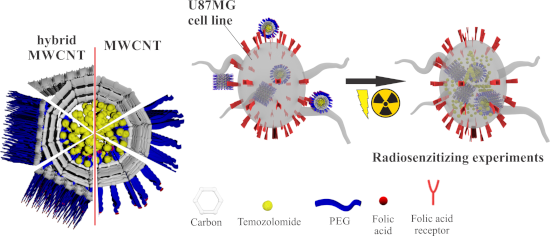
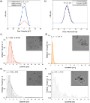
- , temozolomide (TMZ), a drug used for the treatment of anaplastic astrocytoma and glioblastoma multiforme (GBM), was incorporated into multiwalled carbon nanotubes (MWCNTs) and a MWCNTs–graphene (MWCNTs-G) hybrid compound, covalently functionalized with polyethylene glycol (PEG) 6000 and folic acid (FA), with an
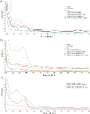
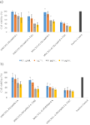
- -functionalized carbon nanostructures (CNs) were evaluated in vitro on a GBM cell line (U87MG), as well as their radiosensitizing properties after exposure of the pre-treated GBM cells to gamma radiation with a standard clinical dose for patients with GBM. All prepared formulations underwent biopharmaceutical and
- promotes more intense contact with the cells and rupture of cell membranes. Overall, the findings demonstrate the radiosensitizing properties of not only TMZ but also of CNs and point to a clinical benefit from combined treatment with carbon nanocarriers of TMZ and radiotherapy in GBM. Keywords: carbon




Synthesis and the impact of hydroxyapatite nanoparticles on the viability and activity of rhizobacteria
Beilstein J. Nanotechnol. 2025, 16, 216–228, doi:10.3762/bjnano.16.17
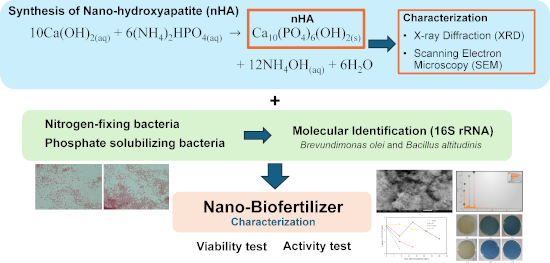
- . Furthermore, they require only small quantities for utilization [8]. Several types of nanoparticles have been employed as carriers for rhizobacteria inoculants, including silica nanoparticles [9], clay nanoparticles [8], carbon nanoparticles [10], zinc oxide nanoparticles [11], and calcium carbonate
- the elemental composition of the rhizobacteria-nHA comprising Ca, P, O, and C. Ca, P, and O constitute the components of the nHA carrier material, while C originates from the rhizobacteria. The percentage of carbon in the Pd-nHA sample is notably higher, reaching 59.04%, compared to the 46.14% of the


Recent advances in photothermal nanomaterials for ophthalmic applications
Beilstein J. Nanotechnol. 2025, 16, 195–215, doi:10.3762/bjnano.16.16
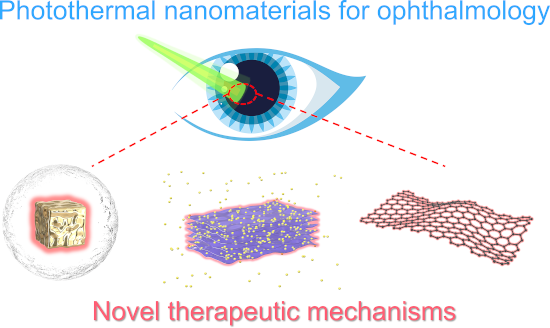
- categorized into three distinct types based on their different photothermal conversion mechanisms, which arise from their unique electronic structures [23][24]. The types include metals exhibiting localized surface plasmon resonance (LSPR), carbon and polymer materials undergoing molecular thermal vibration
- biological tissues, thereby minimizing photothermal damage to non-pathological areas [54]. 2.2 Carbon and polymer materials Carbon and polymer materials primarily undergo photothermal conversion through a mechanism known as molecular thermal vibration. This process is initiated when the energy of incident
- heat (see below in Figure 2d) [57]. The presence of a high density of loosely bound electrons and the narrow energy level spacing of the π electrons endow carbon materials (such as graphene, carbon nanotubes, carbon quantum dots, and fullerenes) and polymer materials (like polydopamine, polyaniline


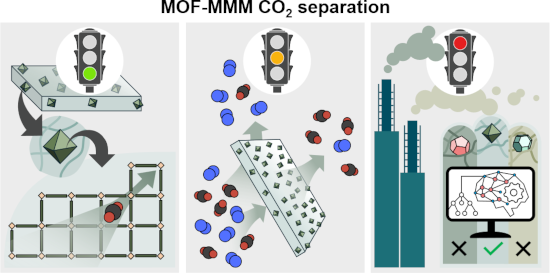
A review of metal-organic frameworks and polymers in mixed matrix membranes for CO2 capture
Beilstein J. Nanotechnol. 2025, 16, 155–186, doi:10.3762/bjnano.16.14





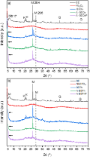
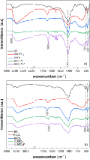
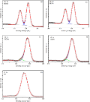
Clays enhanced with niobium: potential in wastewater treatment and reuse as pigment with antibacterial activity
Beilstein J. Nanotechnol. 2025, 16, 141–154, doi:10.3762/bjnano.16.13
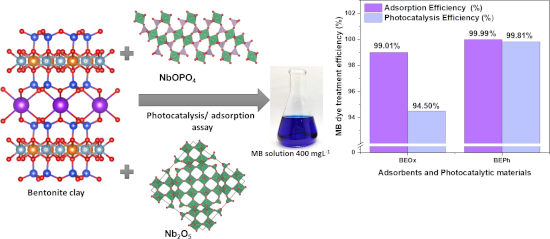
- regeneration of the adsorbent. Various adsorbents including chitosan, cellulose, organophilic clays, kaolinite and montmorillonite clays, and activated carbon have been used for removing toxic compounds from polluted water [6]. Among these adsorbents, bentonite and smectite clays exhibit advantageous



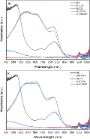

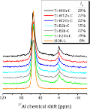
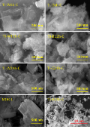
TiO2 immobilized on 2D mordenite: effect of hydrolysis conditions on structural, textural, and optical characteristics of the nanocomposites
Beilstein J. Nanotechnol. 2025, 16, 128–140, doi:10.3762/bjnano.16.12
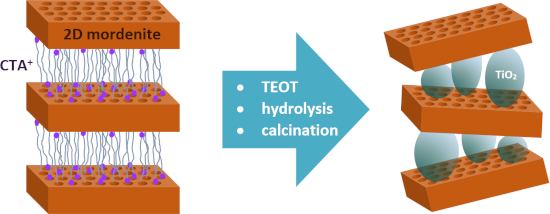
- immobilization of TiO2 nanoparticles is of great importance. Many materials are considered as a possible support for immobilization, including porous ceramics [15], glass [16][17], porous carbon materials [18][19], mesoporous silica [20][21][22][23], and zeolites [24][25][26][27]. Recent studies have confirmed
- accuracy of the experiment). Therefore, this step is immediately followed by condensation: The final composition of the hydrolysis products of alkoxides of titanium roughly corresponds to TiO1.5(OR)·yROH, where y = 0.15–1.00 depending on the nature of the alcohol. The residual carbon during thermal



Comparison of organic and inorganic hole transport layers in double perovskite material-based solar cell
Beilstein J. Nanotechnol. 2025, 16, 119–127, doi:10.3762/bjnano.16.11
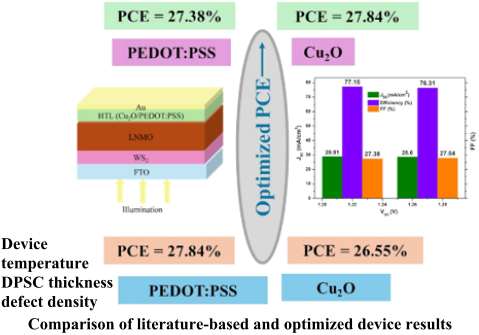
- Karapinar [2] fabricated a dye-sensitized solar cell (DSSC) with selenium@activated carbon (Se@AC) composites as an alternative to the Pt counter electrode (CE) via chemical activation. The fabricated DSSC showed a power conversion efficiency (PCE) of 5.67%, an open-circuit voltage (VOC) of 0.648 V, a short


Nanocarriers and macrophage interaction: from a potential hurdle to an alternative therapeutic strategy
Beilstein J. Nanotechnol. 2025, 16, 97–118, doi:10.3762/bjnano.16.10

- demonstrated by Ji and colleagues in a mouse model of carbon tetrachloride (CCl4)-induced fibrosis, where they inhibited the proliferation of fibroblasts [46]. An alternative to depletion is the inhibition of KCs through chloroquine, an antimalaria agent that inhibits macrophage-specific endocytosis, or


Modeling and simulation of carbon-nanocomposite-based gas sensors
Beilstein J. Nanotechnol. 2025, 16, 90–96, doi:10.3762/bjnano.16.9
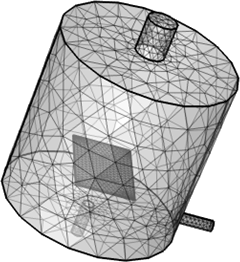
- Roopa Hegde Punya Prabha V Shipra Upadhyay Krishna S B Electronics and Communication Engineering, Ramaiah Institute of Technology, MSRIT Post, M S Ramaiah Nagar, MSR Nagar, Bengaluru, Karnataka 560054, India 10.3762/bjnano.16.9 Abstract This paper reports simulation of a carbon monoxide gas
- sensor using COMSOL Multiphysics whose active sensing material used is a carbon nanocomposite (i.e., 0.1 wt % of single-walled carbon nanotubes along with PEDOT:PSS (poly(3,4-ethylenedioxythiophene):poly(styrenesulfonate)) in an equal volume ratio of 1:1. Given the high cost associated with the
- development of these sensors, it becomes imperative to establish a mathematical model for economically predicting their behavior. The simulation using COMSOL Multiphysics is performed to obtain the surface coverage of the sensor by introducing carbon monoxide gas through a Gaussian pulse feed inlet at




Characterization of ZnO nanoparticles synthesized using probiotic Lactiplantibacillus plantarum GP258
Beilstein J. Nanotechnol. 2025, 16, 78–89, doi:10.3762/bjnano.16.8
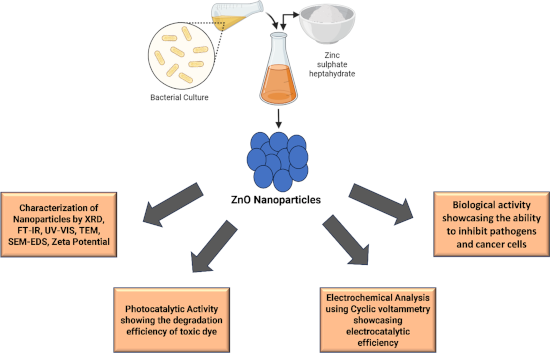
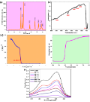
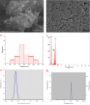
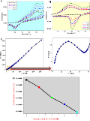
- -electrode setup (carbon paste with ZnO NPs as the working electrode, platinum as the counter electrode, and Ag/AgCl as the reference electrode) in 0.1 M KCl. EIS measurements were carried out in a frequency range of 1 Hz to 1 MHz with a 5 mV AC amplitude, while CV studies were carried out on the same



Advanced atomic force microscopy techniques V
Beilstein J. Nanotechnol. 2025, 16, 54–56, doi:10.3762/bjnano.16.6

- different origins. The authors assign one type of defects to a possible defect in the Ir surface. The other type is identified as four missing carbon atoms corroborated by a higher reactivity with the tip. We thank all authors who contributed to this thematic issue and we are grateful to all reviewers for
Bioinspired nanofilament coatings for scale reduction on steel
Beilstein J. Nanotechnol. 2025, 16, 25–34, doi:10.3762/bjnano.16.3

- surfaces. The elemental composition in Figure 4B shows the silicon emission expected for the SNF film, which is not present on the bare steel surface. Oxygen and carbon, additional components of the SNF coating, are also detected for the SNFs. At the same time, these elements are also observed on the bare


A nanocarrier containing carboxylic and histamine groups with dual action: acetylcholine hydrolysis and antidote atropine delivery
Beilstein J. Nanotechnol. 2025, 16, 11–24, doi:10.3762/bjnano.16.2

- electron microscopy (TEM) images were taken with a Libra 120 EFTEM (A Carl Zeiss SMT AG Company, Oberkochen, Carl Zeiss, Germany) at 100 kV. Samples were spread on a 300 mesh copper grid with a carbon/formvar support film. 1H and 13C NMR spectra were obtained using a Bruker Avance 600 spectrometer with an


Orientation-dependent photonic bandgaps in gold-dust weevil scales and their titania bioreplicates
Beilstein J. Nanotechnol. 2025, 16, 1–10, doi:10.3762/bjnano.16.1
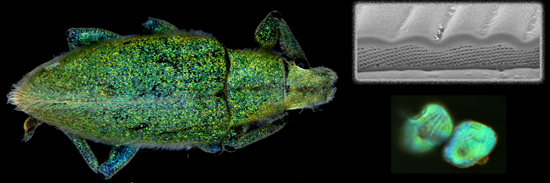
- microscope (Zeiss, Oberkochen, Germany) using an in-lens secondary electron detector at 5 kV acceleration voltage. The scales and replicas were attached to an aluminum holder via a conductive carbon tape. These samples were coated with gold using a Sputter Coater 108 (Cressington Scientific Instruments


Mechanistic insights into endosomal escape by sodium oleate-modified liposomes
Beilstein J. Nanotechnol. 2024, 15, 1667–1685, doi:10.3762/bjnano.15.131





Fabrication of hafnium-based nanoparticles and nanostructures using picosecond laser ablation
Beilstein J. Nanotechnol. 2024, 15, 1639–1653, doi:10.3762/bjnano.15.129
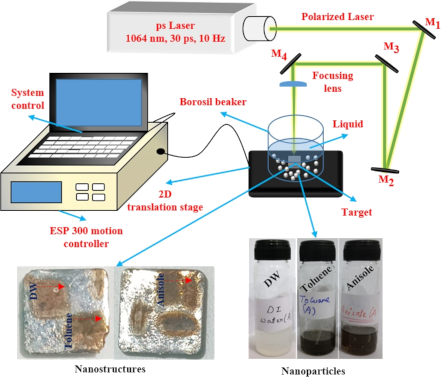
- techniques The synthesised NPs were drop-cast on carbon-coated copper grids to record transmission electron microscopy (TEM) images and selected area electron diffraction (SAED) patterns using a FEI Tecnai G2 S-Twin operating at 200 kV. Further, these NPs were drop-cast on cleaned Si substrates, and their
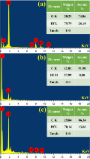
- , we did not notice such a structure in the case of NPs fabricated in DW (Figure 4a). Shell-like structures in Figure 4b and Figure 4c are indicated with red arrows. These structures are multilayered carbon shells around the NPs. Similar formations were noticed in other studies where carbon-rich
- liquids were used [34][35][36]. The d-spacing of the carbon shells was determined from the zoomed images in Figure 5. It was estimated to be ≈0.34 nm, confirming the outer shell to be made of graphite [37][38][39]. A similar analysis was conducted on the nanofibre-like structures formed when Hf was




Electrochemical nanostructured CuBTC/FeBTC MOF composite sensor for enrofloxacin detection
Beilstein J. Nanotechnol. 2024, 15, 1522–1535, doi:10.3762/bjnano.15.120
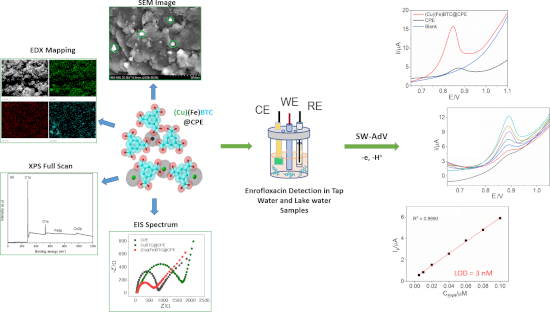
- /bjnano.15.120 Abstract A novel electrochemical sensor for the detection of enrofloxacin (ENR) in aqueous solutions has been developed using a carbon paste electrode modified with a mixture of metal-organic frameworks (MOFs) of CuBTC and FeBTC. These MOFs were successfully synthesized via a solvothermal
- sensors has some limitations associated with the low conductivity of MOFs. Therefore, the coupling with conducting materials, such as carbon-based materials, metal nanoparticles, and polymers, has been performed to enhance the electron charge transfer of MOFs [23][24]; single MOFs combined with carbon
- -based materials have been extensively studied [12][25][26][27][28]. A sensitive and simplified electrochemical sensor using a Cu3(BTC)2-modified carbon paste electrode for detecting 2,4-dichlorophenol was reported by Dong and his group [29]. Owing to the large specific surface area, high absorption






Integrating high-performance computing, machine learning, data management workflows, and infrastructures for multiscale simulations and nanomaterials technologies
Beilstein J. Nanotechnol. 2024, 15, 1498–1521, doi:10.3762/bjnano.15.119

- suggests, silver, copper oxide, and titanium oxide [73]. ASCOT assists in the generation of high-quality digital twins of materials and the computation of relevant molecular descriptors. Nanotube Modeler is a software tool designed to create three-dimensional coordinates for various nanoscale carbon


Effect of radiation-induced vacancy saturation on the first-order phase transformation in nanoparticles: insights from a model
Beilstein J. Nanotechnol. 2024, 15, 1453–1472, doi:10.3762/bjnano.15.117

- comparison, in SiC, the energy of silicon vacancy migration is nearly 2.4 eV, and the energy of carbon vacancy migration is about 3.6 eV [42][43][44]. We focus on vacancy migration energies at the end of the paper and detail the findings. The surface energies σα and σβ of an iron-like nanoparticle are


Strain-induced bandgap engineering in 2D ψ-graphene materials: a first-principles study
Beilstein J. Nanotechnol. 2024, 15, 1440–1452, doi:10.3762/bjnano.15.116
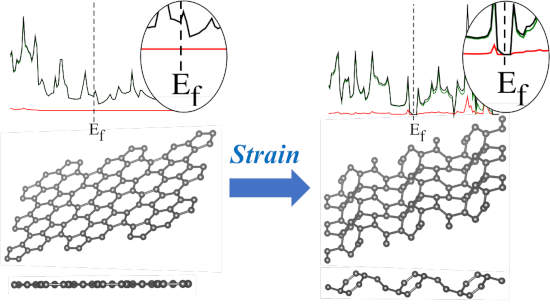
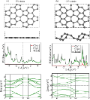
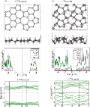
- applications. However, the metallic nature of these materials restricts their applications in specific domains. Strain engineering is a versatile technique to tailor the distribution of energy levels, including bandgap opening between the energy bands. ψ-Graphene is a newly predicted 2D nanosheet of carbon
- two-dimensional (2D) material, consisting of a single layer of sp2-hybridized carbon atoms arranged together in a hexagonal lattice [1]. Because of its extraordinary electrical and thermal conductivity, large surface area, and easy chemical functionalization, it provides a variety of applications in
- % compressive uniaxial strain [34]. At 6% strain, a maximum bandgap of 389 meV and 379 meV was observed for uniaxial and biaxial strains, respectively. When the applied strain exceeds a threshold of 8%, the bandgap of silicene disappears [34]. In 2017, Li et al. predicted a new 2D allotrope of carbon atoms


Ion-induced surface reactions and deposition from Pt(CO)2Cl2 and Pt(CO)2Br2
Beilstein J. Nanotechnol. 2024, 15, 1427–1439, doi:10.3762/bjnano.15.115

- depositions at elevated temperatures to induce Pt deposition and to remove carbon by hydrogenation to volatile hydrocarbons or oxidation to form H2O, CO, and CO2 as volatile products. In contrast, this precursor results in Pt purities of less than 20% in FEBID [30][31], while FIBID has been shown to provide
- ion beam. For Pt deposits, although MeCpPtMe3 meets the volatility and stability requirements, the inability to directly desorb the cyclopentadienyl ligands results in significant carbon contamination upon ion irradiation [21]. Alternatives to the carbon-rich MeCpPtMe3 complex are the four coordinate
- , Pt(CO)2Br2 [55] and Pt(CO)2Cl2 [55][57] have been explored as FEBID precursors. The compositions of deposits from these precursors varied with the deposition conditions. Under UHV conditions, the deposits were carbon-free but contained significant halogen contamination, which could be removed only



A biomimetic approach towards a universal slippery liquid infused surface coating
Beilstein J. Nanotechnol. 2024, 15, 1376–1389, doi:10.3762/bjnano.15.111
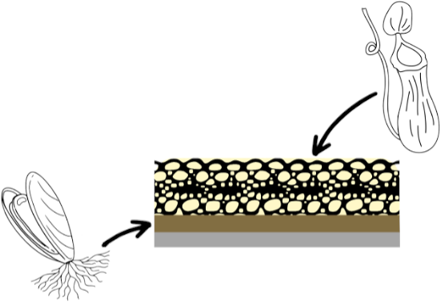
- substrates and were representative of a covalent carbon-sulfur bond [43]. AFM highlighted the level of roughness at each stage of the coating to show a rougher topography for the final layer. Results for each layer of the coating are shown in Supporting Information File 1, Figure S1 and reported as root mean
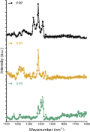
- 1s high-resolution scan, C–C carbon can be found at 285 eV and the fluorinated groups, CF2 and CF3, are observed at 290.6 and 293 eV, respectively. See Supporting Information File 1 for high-resolution S 2p XPS spectra. SFG spectra of the final layer in the SLIPs coating. SFG spectra from 1100 to