


Search results
Search for "cells" in Full Text gives 1104 result(s) in Beilstein Journal of Nanotechnology. Showing first 200.
Characterization of ZnO nanoparticles synthesized using probiotic Lactiplantibacillus plantarum GP258
Beilstein J. Nanotechnol. 2025, 16, 78–89, doi:10.3762/bjnano.16.8
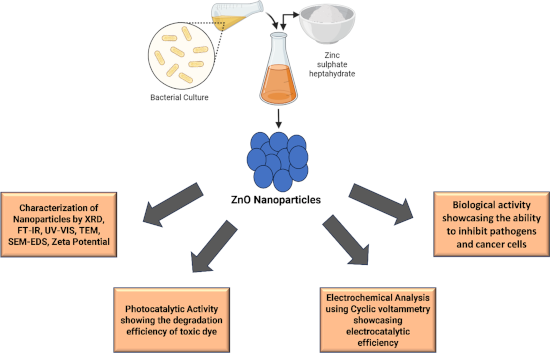
- . ZnO NPs are known to generate reactive oxygen species (ROS), including hydroxyl radicals and superoxide ions, upon interaction with bacterial cells. These ROS disrupt bacterial cell membranes, cause oxidative stress, and damage cellular components, ultimately leading to cell death. Additionally, ZnO
- NPs can release Zn2+ ions, which interact with bacterial enzymes and proteins, further compromising cellular functions. The small size and high surface area of the nanoparticles enhance their interaction with bacterial cells, improving antibacterial efficacy. Significant inhibitory effects against S
- the given bacteria. Regarding antiproliferative effects, our study exhibited an average IC50 value of 98.53 µg/mL against HT-29 cell lines. In contrast, Mohd Yusof et al. [9][23] evaluated cell viability using the MTT assay on Vero cells, revealing viability at concentrations from 100 µg/mL at 24 h



Instance maps as an organising concept for complex experimental workflows as demonstrated for (nano)material safety research
Beilstein J. Nanotechnol. 2025, 16, 57–77, doi:10.3762/bjnano.16.7

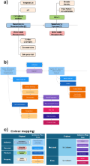
- professional antigen-presenting cell (APC) models using unmodified SiO2 nanomaterials [50] compared with differently surface-functionalised particles [51]. As a model for APCs, monocyte-derived dendritic cells were generated from human whole blood samples as a preliminary step, again building a BIODA-type of


Theoretical study of the electronic and optical properties of a composite formed by the zeolite NaA and a magnetite cluster
Beilstein J. Nanotechnol. 2025, 16, 44–53, doi:10.3762/bjnano.16.5
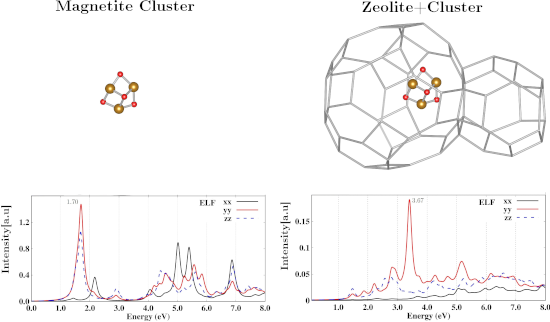
- in two different unit cells is possible because there exists a linear operator and its inverse that allow us to go from a trigonal to a cubic cell representation and vice versa. Figure 2a and Figure 2b display the structures and Fe–O bond distances of a magnetite cluster in both the isolated form and
- spectrum. Geometry and Fe–O bond lengths for a magnetite cluster under two different conditions: (a) outside the NaA zeolite and (b) inside the NaA zeolite. Bond lengths are in angstroms. The optimized NaA-M composite is represented by two different types of cells: (a) a trigonal cell and (b) a cubic cell




A nanocarrier containing carboxylic and histamine groups with dual action: acetylcholine hydrolysis and antidote atropine delivery
Beilstein J. Nanotechnol. 2025, 16, 11–24, doi:10.3762/bjnano.16.2

- , indicating no agglutination (K(−), Figure 3). The positive control (K(+), Figure 3) displayed agglutinated cells (mixture of erythrocytes of blood groups IV and II) evenly distributed in the well. The results revealed that CA-RA exposure to blood samples did not induce agglutination across a wide
- antidote delivery. Under healthy conditions, with a neutral pH and normal glucose concentrations, the nanocarrier is found to be stable. The employed resorcinarenes and the nanocarrier exhibit good hemocompatibility and low cytotoxicity with respect to human embryonic lung cells (WI38) and a healthy liver
- Cytell Cell Imaging multifunctional system (GE Healthcare Life Science, Sweden) [38]. The experiments utilized a Chang liver cell line (human liver cells) from the N.F. Gamaleya National Research Center for Epidemiology and Microbiology and a cell culture of WI-38 VA 13 subline 2RA (human embryo lung


Mechanistic insights into endosomal escape by sodium oleate-modified liposomes
Beilstein J. Nanotechnol. 2024, 15, 1667–1685, doi:10.3762/bjnano.15.131
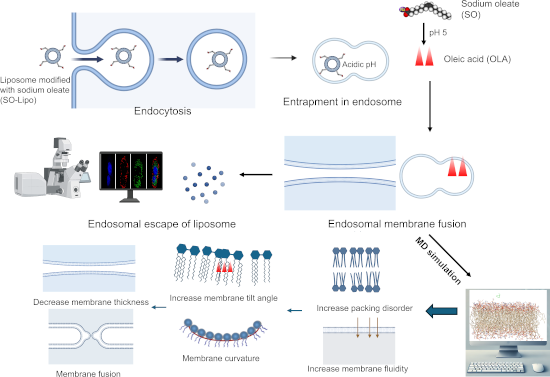
- .15.131 Abstract Endosomal entrapment significantly limits the efficacy of drug delivery systems. This study investigates sodium oleate-modified liposomes (SO-Lipo) as an innovative strategy to enhance endosomal escape and improve cytosolic delivery in 4T1 triple-negative breast cancer cells. We aimed to
- reduction of resazurin to resorufin by metabolically active cells. The data reveal that Unmodified-Lipo exhibited minimal cytotoxicity at lower lipid concentrations (15.625 to 250 µM), with no statistically significant differences compared to untreated control cells (p > 0.05). However, at a concentration
- candidate for drug delivery applications. The data support the use of SO as a safe modification in liposomal formulations, particularly in contexts where minimizing cytotoxicity is paramount. Cellular uptake The cellular uptake of DiD-labeled liposomes (Unmodified-Lipo, SO-Lipo, and AUR-Lipo) in 4T1 cells




Attempts to preserve and visualize protein corona on the surface of biological nanoparticles in blood serum using photomodification
Beilstein J. Nanotechnol. 2024, 15, 1654–1666, doi:10.3762/bjnano.15.130

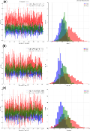
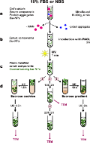
- are increasingly interested in studying the protein corona on extracellular vesicles (EVs), mainly exosomes, which play an important role in the transmission of molecular signals in the body. The influence of the protein corona on EVs on their interaction with body cells, including cells of the immune



Heterogeneous reactions in a HFCVD reactor: simulation using a 2D model
Beilstein J. Nanotechnol. 2024, 15, 1627–1638, doi:10.3762/bjnano.15.128
- –metal devices exhibiting blue and white electroluminescence [7][8]. It was found that these films exhibit photoconductive and photoelectric effects suitable for electroluminescence and photovoltaics applications [9][10], as well as for other applications such as solar cells and anodes for Li batteries


Biomimetic nanocarriers: integrating natural functions for advanced therapeutic applications
Beilstein J. Nanotechnol. 2024, 15, 1619–1626, doi:10.3762/bjnano.15.127

- Biomimetic nanocarriers, engineered to mimic the characteristics of native cells, offer a revolutionary approach in the treatment of various complex human diseases. This strategy enhances drug delivery by leveraging the innate properties of cellular components, thereby improving biocompatibility and
- replicating the characteristics or functions of native cells [19]. Nanoparticle coating involves obtaining nanoparticles (Figure 1-2A), which can be organic or inorganic in structure (Figure 2A), and conjugating them with functional ligands (Figure 1-2B) or biological structures, such as cell membranes
- -based nanocarriers is understanding the fundamental building blocks, size, shape, and biological properties to mimic real cells and enable their internalization [31][32]. One efficient strategy for producing biomimetic nanocarriers involves camouflage with biological membranes. The phospholipids


Natural nanofibers embedded in the seed mucilage envelope: composite hydrogels with specific adhesive and frictional properties
Beilstein J. Nanotechnol. 2024, 15, 1603–1618, doi:10.3762/bjnano.15.126
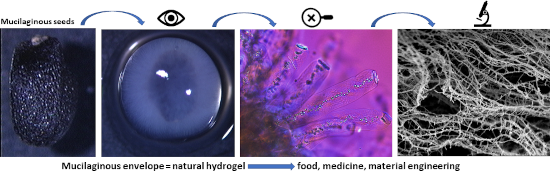
- . Macroscopically observable mucilage is often a transparent, gel-like capsule formed around the diaspore after hydration with water (Figure 1). At the microscale mucilage exhibits, before hydration, successive layers formed by adcrustation in the mucilaginous cells of the seed/fruit coat (the outermost covering of
- hydration [8][22][38]. Mucilage, which is produced by the mucilaginous cells of diaspores in a form of densely packed layers, has the ability of loosening its structure after hydration into an easily accessible 3D fibrillar network [7][13][14][39] (Figure 3 and Figure 4 below). One of the key components of
- typical part of plant cells, and its basic chemical composition includes cellulose, hemicelluloses, and pectic polysaccharides [44][45][46][47]. Cellulose is a linear polymer composed of β-1,4-linked ᴅ-glucose [47]. The cellulose chains are held together by intramolecular hydrogen bonds, forming cellulose


Liver-targeting iron oxide nanoparticles and their complexes with plant extracts for biocompatibility
Beilstein J. Nanotechnol. 2024, 15, 1593–1602, doi:10.3762/bjnano.15.125
- particles have been identified as 80–90% in the liver, 5–8% in the spleen, and 1–2% in the bone marrow [30]. One of the major organs where nanoparticles are likely to accumulate, depending on the route of administration, is the liver [31][32][33], where Kupffer cells can quickly uptake large nanoparticles
- , lysosomes, the Golgi apparatus, and the endoplasmic reticulum [44][45]. Wu and colleagues found that Fe3O4 NPs up to 5 nm in size can penetrate cells and initiate the Fenton reaction, resulting in the formation of genotoxic •OH radicals [20]. Moreover, iron overload in cells can lead to ferroptosis [46][47
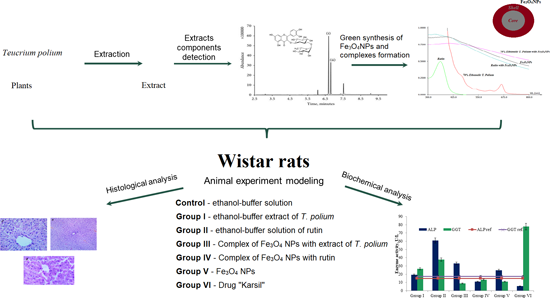
- Fe3O4 NPs on liver tissue revealed practically no direct hepatotoxic properties. Increases in ALT and AST activities in some groups (Figure 1 and Figure 2) may be associated with effects of these agents also on the mitochondria of other cell types. Toxicity in cells leads to weakened mitochondrial


Green synthesis of silver nanoparticles derived from algae and their larvicidal properties to control Aedes aegypti
Beilstein J. Nanotechnol. 2024, 15, 1566–1575, doi:10.3762/bjnano.15.123
- vectors are nanomaterials or nanomaterial-based formulations as so-called nanopesticides, providing new, modern, and low-cost formulations [9][10] with the ability to penetrate through the exoskeleton into mosquito cells, causing mortality after binding to proteins or DNA [11]. Nanomaterials provide
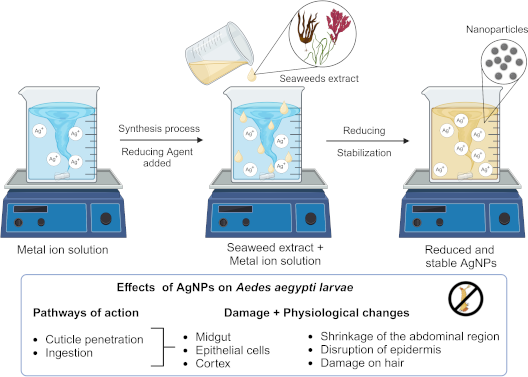
- of toxicity of AgNPs in mosquito larvae has recently been reported (Figure 3). The small size of AgNPs is linked to two pathways of action. First, AgNPs can pass through the insect cuticle and penetrate individual cells. The second way is the ingestion of AgNPs by larvae through their generalist
- eating habits. For both pathways, damage to the midgut, epithelial cells, and cortex in mosquito larvae can be observed, resulting in physiological changes such as shrinkage in the abdominal region, change in the shape of the thorax and loss of lateral hairs, oral brushes, and anal gills. These processes


Ultrablack color in velvet ant cuticle
Beilstein J. Nanotechnol. 2024, 15, 1554–1565, doi:10.3762/bjnano.15.122

- role in thermal regulation [32]. Additionally, previous studies have suggested a potential association between dark colors in velvet ants and photoprotection [16]. In this case, the dark cuticle would function as a radiation filter to prevent ultraviolet radiation from reaching the cells underneath



The round-robin approach applied to nanoinformatics: consensus prediction of nanomaterials zeta potential
Beilstein J. Nanotechnol. 2024, 15, 1536–1553, doi:10.3762/bjnano.15.121
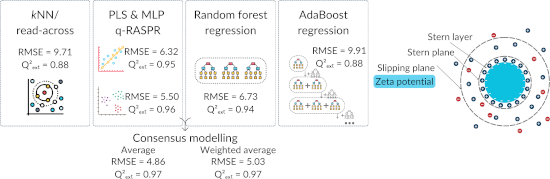
- -across and QSPR, has been recently introduced and applied to the prediction of NM cytotoxicity [44], power conversion efficiency of organic dyes in dye-sensitized solar cells [45][46], detonation heat for nitrogen containing compounds [47], and to the prediction of surface area of perovskite materials


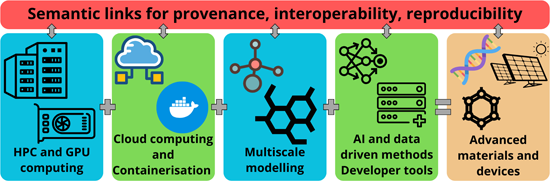
Integrating high-performance computing, machine learning, data management workflows, and infrastructures for multiscale simulations and nanomaterials technologies
Beilstein J. Nanotechnol. 2024, 15, 1498–1521, doi:10.3762/bjnano.15.119


Polymer lipid hybrid nanoparticles for phytochemical delivery: challenges, progress, and future prospects
Beilstein J. Nanotechnol. 2024, 15, 1473–1497, doi:10.3762/bjnano.15.118
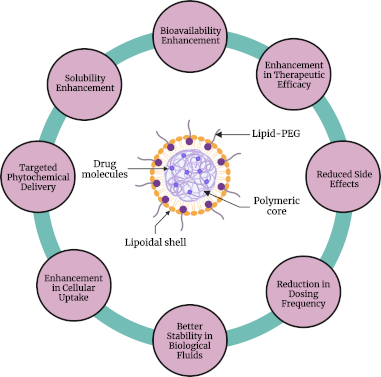
- improve the selective delivery of drugs/phytochemicals to specific tissues or cells. A site-specific targeting approach enhances the therapeutic efficacy of phytochemicals and reduces systemic toxicity. In addition to enhancing solubility and targeting, PLHNPs offer controlled release properties that are
- in the distribution of phytochemicals throughout the body rather than targeting specific tissues or cells. Non-specific distribution increases the risk of off-target effects and systemic toxicity, reducing the concentration of the phytochemical at the desired site of action and decreasing therapeutic
- , prolongs their circulation time in the body, and enhances their therapeutic effectiveness [42][43]. Additionally, surface engineering of PLHNPs with different ligands facilitates specific delivery of drug/phytochemicals to desired tissues or cells, reduces their adverse effects, and improves their


Effect of radiation-induced vacancy saturation on the first-order phase transformation in nanoparticles: insights from a model
Beilstein J. Nanotechnol. 2024, 15, 1453–1472, doi:10.3762/bjnano.15.117

- simulations reveals that the critical irradiation dose for nanocrystallinity collapse varies among different simulation cells. Not only the size, but also the crystallographic orientation, shape of the grains, and structure of the grain boundaries have a strong impact on the stability of the nanocrystalline
- phase [7]. In all cells, the grains undergo a phase transition from a pure high-density fcc phase to a mixture of fcc and bcc phases during prolonged irradiation. These simulations confirm that the phase transition occurs because of the ground-state energies of the compositions rather than the


Strain-induced bandgap engineering in 2D ψ-graphene materials: a first-principles study
Beilstein J. Nanotechnol. 2024, 15, 1440–1452, doi:10.3762/bjnano.15.116
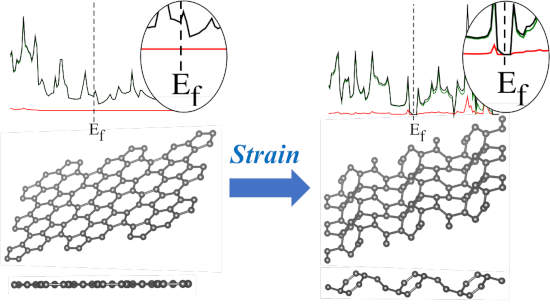
- unchanged under the influence of mechanical strain, preserving its initial characteristic of having a direct bandgap. This behavior offers opportunities for these materials in various vital applications in photodetectors, solar cells, LEDs, pressure and strain sensors, energy storage, and quantum computing
- that remains unchanged under mechanical strain. This outcome offers various critical applications of ψ-graphane in photodetectors, solar cells, LEDs, pressure and strain sensors, energy storage, and quantum computing. The mechanical strain tolerance of pristine and fully hydrogenated ψ-graphene is
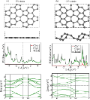
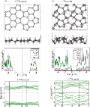
- space group P2mg [39]. The unit cell of ψ-graphene contains 12 carbon atoms. In comparison, the unit cells of ψ-graphone and ψ-graphane consist of 12 carbons and six hydrogens and 12 carbons and 12 hydrogen atoms, respectively (Figure 1) [38][39]. For the sampling of the Brillouin zone, we used a well


Lithium niobate on insulator: an emerging nanophotonic crystal for optimized light control
Beilstein J. Nanotechnol. 2024, 15, 1415–1426, doi:10.3762/bjnano.15.114
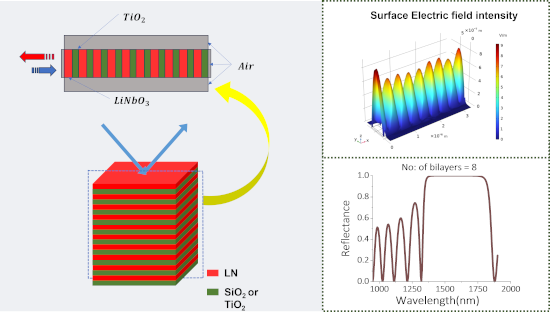
- wavelength-selective nature of DBRs makes them particularly attractive for solar cell applications, where the ability to control the absorption spectrum can lead to significant performance improvements [38][39][40]. Colloidal quantum dot (CQD) solar cells are attracting significant research due to their
- potential as a next-generation photovoltaic technology [41][42]. These cells offer a compelling alternative to traditional silicon solar cells because of the low manufacturing cost. Additionally, CQDs possess a unique property – their bandgap can be tuned by adjusting the size of the dots. This allows them
- to capture a wider range of sunlight compared to traditional materials, potentially leading to higher solar energy conversion efficiency [43]. Bae et al. focussed on lead sulfide (PbS) CQDs solar cells where they addressed the major challenge of charge carrier recombination which limits the


Nanotechnological approaches for efficient N2B delivery: from small-molecule drugs to biopharmaceuticals
Beilstein J. Nanotechnol. 2024, 15, 1400–1414, doi:10.3762/bjnano.15.113
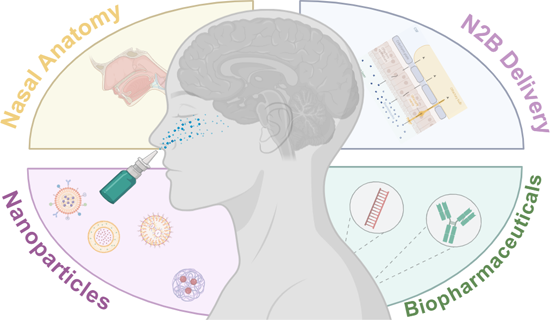
- considered a challenge because of the existence of the blood–brain barrier (BBB, Figure 1), which is composed of several cell types [7]. The BBB is a dynamic and selective interface between the systemic circulation and the brain [8]. The structure of the healthy BBB relies on the endothelial cells and the
- tight barrier formed using tight junctions [9][10][11]. These are surrounded by other cell types, such as astrocytes and pericytes. Astrocytes are crucial for the formation and maintenance of the BBB, which leads to an adequate association between the cells and the BBB. Pericytes are also important
- regulatory cells for the homeostasis of the BBB. The interaction between astrocytes and pericytes plays a vital role in brain vasculogenesis and the maintenance of the BBB [12]. Overall, the high selectivity of the BBB provides optimal conditions for CNS homeostasis [13]. Because of the presence of the BBB


Various CVD-grown ZnO nanostructures for nanodevices and interdisciplinary applications
Beilstein J. Nanotechnol. 2024, 15, 1390–1399, doi:10.3762/bjnano.15.112
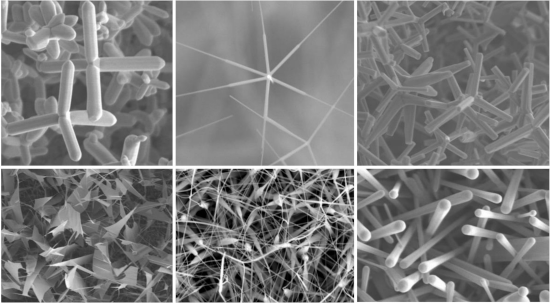
- ], radio-frequency magnetron sputtering [47], pulsed laser ablation [48], and electrodeposition methods [49]. They have many application potentials in dye-sensitized solar cells [46], self-powered energy-harvesting devices [47], photocatalysts [48], and turbid lenses [50]. It has been suggested that the



A biomimetic approach towards a universal slippery liquid infused surface coating
Beilstein J. Nanotechnol. 2024, 15, 1376–1389, doi:10.3762/bjnano.15.111
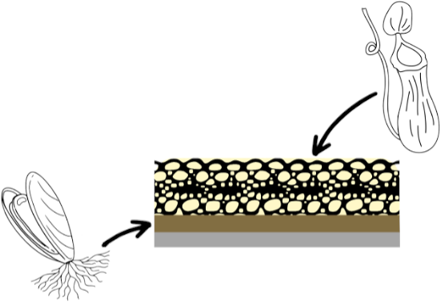
- in adherent platelets on PDA–FDT–PFD compared to glass (Figure 7). This suggests that the SLIPS coating is not completely omniphobic as adherent cells are observed. Fibrin generation time was determined on BSA, glass, bare COC, and PDA–FDT–PFD. We expected to observe a longer fibrin generation time




Hymenoptera and biomimetic surfaces: insights and innovations
Beilstein J. Nanotechnol. 2024, 15, 1333–1352, doi:10.3762/bjnano.15.107
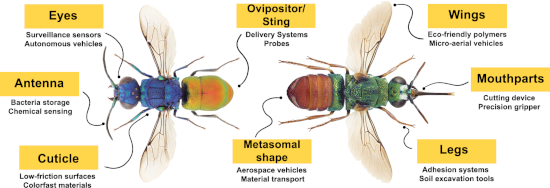
- antennal glands [100][101]. This association is unique in that the bacteria are grown in large reservoirs within the antennae, where they receive nutrients from the gland cells. When the beewolf constructs its subterranean brood cells, it secretes these bacteria into the cells, where they produce




Interaction of graphene oxide with tannic acid: computational modeling and toxicity mitigation in C. elegans
Beilstein J. Nanotechnol. 2024, 15, 1297–1311, doi:10.3762/bjnano.15.105
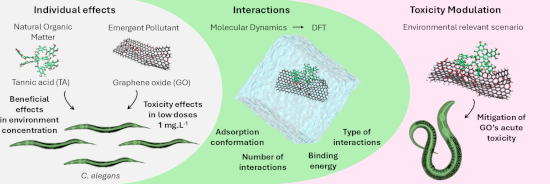
- to GO causes significant damage to intestinal microvilli cells . Furthermore, Dou et al. [53] showed that GO triggers cell autophagy as a protective response to the material. Apoptosis was observed in germline cells, indicating that GO can damage gonad development and reduce the reproduction rate of


Dual-functionalized architecture enables stable and tumor cell-specific SiO2NPs in complex biological fluids
Beilstein J. Nanotechnol. 2024, 15, 1238–1252, doi:10.3762/bjnano.15.100
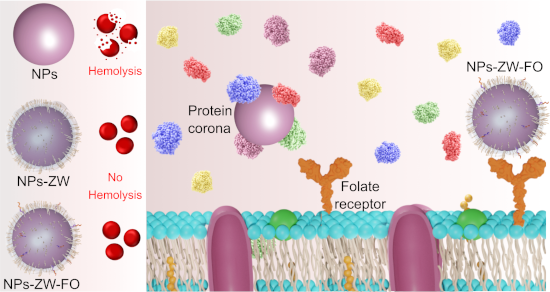
- nanoparticles are not hemolytic. Remarkably, the functionalized SiO2NPs are more internalized by tumor cells than their healthy counterparts. Investigations of this nature play a crucial role in garnering results with greater reliability, allowing the development of nanoparticle-based pharmaceutical drugs that
- [1][2][3][4]. Consequently, the scientific community has focused on improving the targeting of nanoparticles (NPs) to tumor cells through surface functionalization with active groups (e.g., folate, monoclonal antibodies) [5][6][7]. However, according to the literature, only 0.7% of the injected dose
- of NPs accumulates in tumors and <0.0014% are internalized by the cells [8][9][10][11]. Once in contact with blood, NPs interact with a series of physiological components (e.g., amino acids, salts, and proteins), which can induce poor colloidal stability or changes in the original chemical and


Realizing active targeting in cancer nanomedicine with ultrasmall nanoparticles
Beilstein J. Nanotechnol. 2024, 15, 1208–1226, doi:10.3762/bjnano.15.98
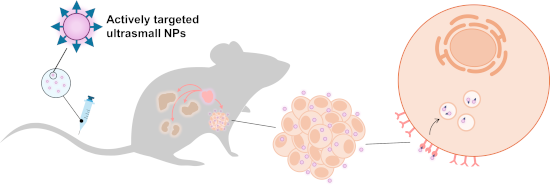
- primarily occurs via transendothelial transport pathways [6][7]. Regardless of the mode of NP extravasation, active targeting strategies have been widely explored to further enhance NP accumulation in tumors and NP internalization by cancer cells [8][9]. Active targeting involves the modification of NPs
- incorporation of active targeting strategies is expected to further enhance the selectivity and performance of usNPs for cancer treatment. By designing usNPs to target surface receptors on cancer cells, tumor retention can be improved by minimizing particle intravasation back to tumor blood vessels. Active
- interaction with cell surface receptors on cancer cells, the incorporation of targeting ligands onto usNPs must optimize the exposure, orientation, and conformation of the functional portion. For small molecules and peptides in particular, the functional moiety must circumvent both steric hindrance from the





