Search results
Search for "degradation" in Full Text gives 563 result(s) in Beilstein Journal of Nanotechnology. Showing first 200.
Integrating high-performance computing, machine learning, data management workflows, and infrastructures for multiscale simulations and nanomaterials technologies
Beilstein J. Nanotechnol. 2024, 15, 1498–1521, doi:10.3762/bjnano.15.119
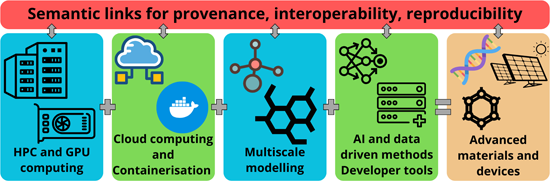
- ]. The digital twin serves as a powerful tool for predictive modelling, optimization, and design of materials, allowing researchers to assess performance under different conditions, predict degradation mechanisms, and optimize material properties. It also facilitates virtual experimentation, reducing the


Polymer lipid hybrid nanoparticles for phytochemical delivery: challenges, progress, and future prospects
Beilstein J. Nanotechnol. 2024, 15, 1473–1497, doi:10.3762/bjnano.15.118
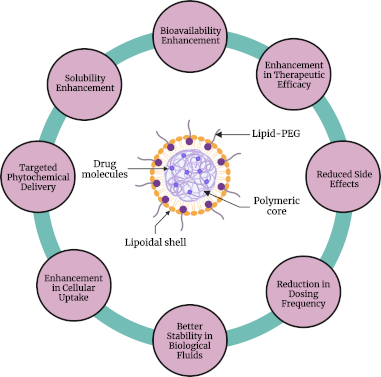
- polyethylene glycol (PEG), poly(lactic-co-glycolic acid) (PLGA), polycaprolactone (PCL), and chitosan (CHS), provides structural integrity, controlled release properties, and protection against premature degradation [14][15]. This hybrid structure improves the encapsulation efficiency of phytochemicals/drugs
- metabolism, and degradation in the physiological fluids. This necessitates higher doses to achieve therapeutic effects, which may increase the risk of side effects and toxicity [26][27]. Chemical instability is also a critical challenge. Phytochemicals can be chemically unstable and degrade under
- physiological conditions, such as varying pH levels, temperature, and enzymatic activity. Degradation reduces the effective concentration of the phytochemical, diminishing its therapeutic potential [28][29]. Rapid metabolism and clearance further complicate phytochemical delivery. Phytochemicals are often


Nanotechnological approaches for efficient N2B delivery: from small-molecule drugs to biopharmaceuticals
Beilstein J. Nanotechnol. 2024, 15, 1400–1414, doi:10.3762/bjnano.15.113
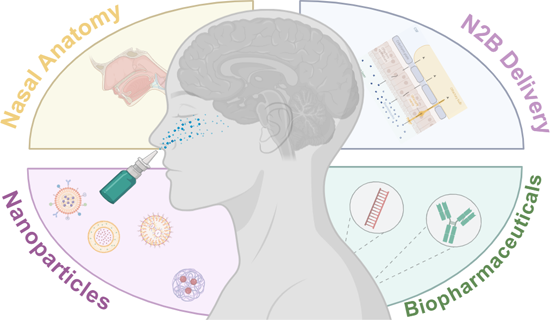
- ][26] and protect the drug from biological or chemical degradation or deactivation, which results in increased bioavailability in the brain [18][27]. This is particularly important since many other routes of administration pose multiple barriers and lead to relevant drug degradation, which are huge
- administration also suffers from enzymatic degradation including peptidase and protease activity, making it challenging to deliver peptides and proteins [29][30]. Yet, the intranasal route still yields lower enzymatic degradation and higher bioavailability in the brain [31]. While the challenges of the
- ][62]. Drug delivery systems for N2B delivery applications DDS can deliver the encapsulated APIs to the brain using olfactory or trigeminal pathways while protecting the drug from biological and chemical degradation. Moreover, they can provide target-specific delivery via surface modifications and


Various CVD-grown ZnO nanostructures for nanodevices and interdisciplinary applications
Beilstein J. Nanotechnol. 2024, 15, 1390–1399, doi:10.3762/bjnano.15.112
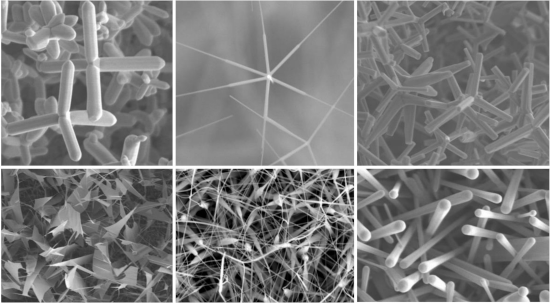
- ], photocatalytic degradation [41], and water splitting for hydrogen technologies [38]. Figure 3a–d show SEM images of ZnO tetrapods. These various morphologies were grown at approx. 625–650 °C. The first one, named T1 in Figure 3a, has needle-like arms of ≈1 μm of length. The dimeter of the arms is less than 50 nm



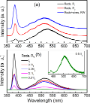
Nanoarchitectonics with cetrimonium bromide on metal nanoparticles for linker-free detection of toxic metal ions and catalytic degradation of 4-nitrophenol
Beilstein J. Nanotechnol. 2024, 15, 1312–1332, doi:10.3762/bjnano.15.106
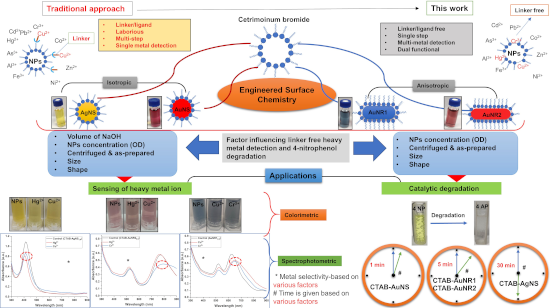
- nanoparticle-based systems capable of efficient detection and degradation. However, conventional approaches utilizing strong capping agents like cetrimonium bromide (CTAB) on nanoparticles lead to limitations due to the rigid nature of CTAB. This restricts its utility in heavy metal detection and 4-NP
- degradation, requiring additional surface modifications using linker molecules, thereby increasing process complexity and cost. To overcome these limitations, there is a critical need for the development of an easy-to-use, dual-functional, linker-free nanosystem capable of simultaneous detection of heavy
- metals and efficient degradation of 4-NP. For enabling linker-free/ligand-free detection of heavy metal ions and catalytic degradation of 4-NP, CTAB was engineered as a versatile capping agent on gold and silver nanoparticles. Various factors, including nanoparticle characteristics such as shape, size




Interaction of graphene oxide with tannic acid: computational modeling and toxicity mitigation in C. elegans
Beilstein J. Nanotechnol. 2024, 15, 1297–1311, doi:10.3762/bjnano.15.105
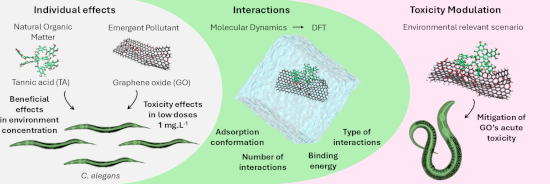
- , phototransformation, and degradation [8]. Furthermore, because of the presence of sites for different types of interaction mechanisms (i.e., hydrogen bonding, van der Waals interaction, and π–π stacking), its structure favors the adsorption of different molecules (i.e., biomolecules and organic pollutants) and metal
- ions [8][9][10]. The physicochemical changes and interactions undergone by GO in the environment greatly influence the biological effects of this material. Recently, Bortolozzo et al. [11] showed that GO degradation by sodium hypochlorite resulted in the mitigation of GO toxicity to Caenorhabditis


Mn-doped ZnO nanopowders prepared by sol–gel and microwave-assisted sol–gel methods and their photocatalytic properties
Beilstein J. Nanotechnol. 2024, 15, 1283–1296, doi:10.3762/bjnano.15.104
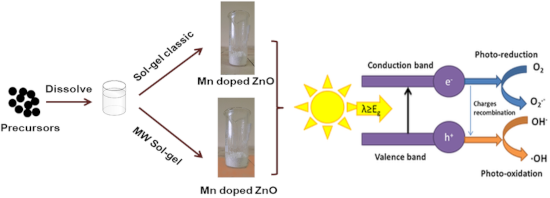
- use in photocatalysis processes (i.e., degradation of oxalic acid). In addition, the measured excitonic PL indicates the need for deeper investigation on the ability of the investigated materials to generate reactive oxygen species (ROS) under light irradiation. The photoluminescence signal of the
- fluorescent compound, namely umbelliferone, a coumarin degradation product obtained in the presence of hydroxyl radicals. Figure 11a–c clearly shows that ·OH radicals are photogenerated to a greater extent by the MW catalyst. This could be the result of specific differences in surface chemistry of the two
- photocatalyst for organic pollutant degradation but also underscore the importance of optimizing synthesis methods to enhance efficiency and reduce energy consumption. These advancements are crucial for addressing pressing environmental challenges and pave the way for more sustainable approaches to water


Enhanced catalytic reduction through in situ synthesized gold nanoparticles embedded in glucosamine/alginate nanocomposites
Beilstein J. Nanotechnol. 2024, 15, 1227–1237, doi:10.3762/bjnano.15.99
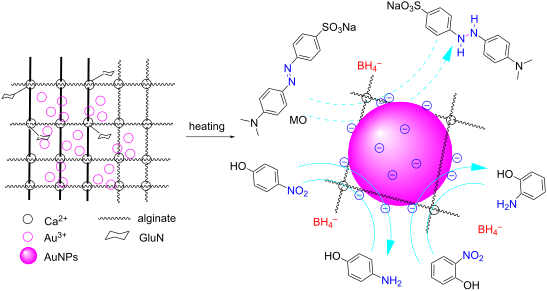
- challenge has spurred extensive research into various remediation methods. Recently, there has been growing interest in catalytic degradation using oxidizing agents such as H2O2 and iron in Fenton reactions [26], as well as reducing agents such as NaBH4 with nanometal catalysts. Additionally, the reduction
- tracked over time using a UV–vis spectrophotometer, covering the wavelength range of 200–600 nm at room temperature without delay. We examined the kinetics of catalytic degradation by monitoring changes in absorbance values at specific wavelengths. Given the small quantity of nanocatalyst and the
- ) as function of the reaction time exhibit strongly linear correlations, with high determination coefficients, indicating pseudo-first-order kinetics for the degradation of organic dyes (Figure 6C,G,K). The rate constant for the reduction of 2-NiP (4.26 × 10⁻³ s−1, R2 = 0.994) surpassed that for the



Quantum-to-classical modeling of monolayer Ge2Se2 and its application in photovoltaic devices
Beilstein J. Nanotechnol. 2024, 15, 1153–1169, doi:10.3762/bjnano.15.94
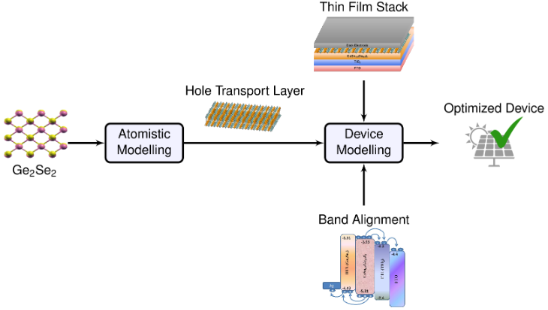
- ]. Integrating 2D materials in PSCs can improve their performance. The 2D materials can provide protective layers that work like a shield to the perovskite materials to protect them from environmental degradation caused by moisture and oxygen and provide better device scalability to the PSCs, which makes large
- carrier recombination. Nevertheless, the performance degradation is very slight because of the ultrathin HTL layer proposed here. It is worth mentioning that there is an incremental rise in the short-circuit current density with thicker HTL. This is due to less carrier losses owing to reduced
- the cell efficiency decreases [57]. Since the ETL thickness is low, the impact on the performance degradation is insignificant. After examining all parameters, we found an optimized ETL thickness of 20 nm in our proposed device. The optimized values of the solar cell parameters at the optimal ETL




Recent updates in applications of nanomedicine for the treatment of hepatic fibrosis
Beilstein J. Nanotechnol. 2024, 15, 1105–1116, doi:10.3762/bjnano.15.89
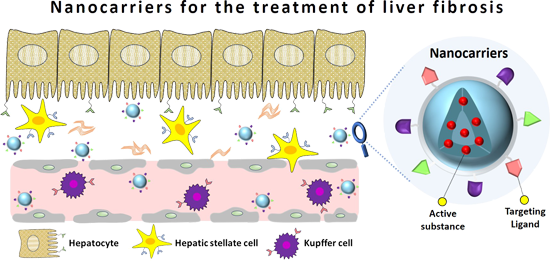
- inflammatory cells. Both PLA and PEG have been authorized by the FDA. The low molecular weight of PLA is preferable to construct nanocarriers because of its relatively fast degradation rate with non-toxic degradation products (H2O and CO2) [56]. Regarding liposomal platforms, Thant and co-workers encapsulated
- , inhibition of profibrogenic cytokine and growth factors secretion, and induction of ECM degradation [70]. A summary of liver-targeted delivery systems is shown in Table 1. Passive and active delivery strategies were combined by Luo and co-workers, who prepared silibinin–human serum albumin nanocrystals [71
- , siCol1α1 and siTIMP-1 siRNAs were used to inhibit collagen synthesis and to promote collagen degradation, respectively. The spherical lipid NPs with a mean particle size of 140 ± 0.12 nm and negative zeta potential (−12.9 mV) were constructed from amphiphilic cationic hyperbranched lipoids for siRNA


Unveiling the potential of alginate-based nanomaterials in sensing technology and smart delivery applications
Beilstein J. Nanotechnol. 2024, 15, 1077–1104, doi:10.3762/bjnano.15.88
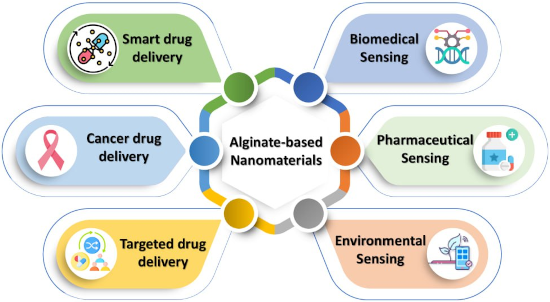
- stability, porosity, and degradation rate of alginate-based nanoparticles in order to enhance their sensing capabilities. Additionally, efforts should be made to explore the potential of alginate-based nanoparticles for detecting a wide range of environmental pollutants, such as heavy metals and pesticides


Interface properties of nanostructured carbon-coated biological implants: an overview
Beilstein J. Nanotechnol. 2024, 15, 1041–1053, doi:10.3762/bjnano.15.85
- environment is a dynamic and complex area, where several biological, physical, and chemical interactions can take place simultaneously, including immunological response [27], mechanical mismatch with the tissue [28], degradation [29], responses to stimuli [30], and proliferation of bacteria [31]. In the next
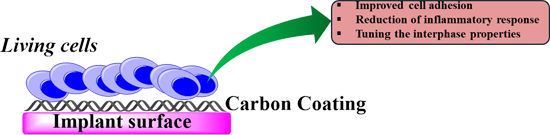
- solid choice to prevent massive implant degradation. Carbon nanomaterial coatings can prevent adverse chemical reactions triggered by both the adsorption of proteins and the metabolism of cells [151][152][153]. Hassan et al. [97] extensively investigated the effect of graphene and graphitic coatings as



Entry of nanoparticles into cells and tissues: status and challenges
Beilstein J. Nanotechnol. 2024, 15, 1017–1029, doi:10.3762/bjnano.15.83
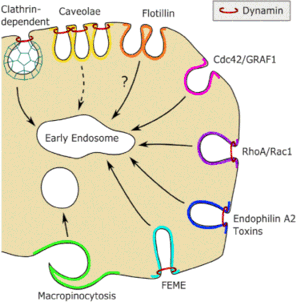
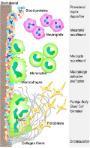
- ) are important tools to diagnose and treat diseases, and have proven useful in basic mechanistic studies of cells and animals. Thus, knowledge about cellular uptake, intracellular transport, and metabolism of NPs in cells, as well as their biodistribution, degradation, and excretion following
- chances that also other processes than endocytosis, such as recycling, degradation, and signaling are also regulated by cell density. In studies of uptake and transport of NPs, it is essential to determine whether the particle is in a sealed vesicle or whether it is still at the cell surface but present
- fraction of the NPs may have been recycled, degraded, or transcytosed. Furthermore, the accumulated particles and their degradation products may start to affect the cells. Functions of caveolae, caveolin and cavin In this section we provide some comments specifically about caveolae, the small caveolin


Electrospun nanofibers: building blocks for the repair of bone tissue
Beilstein J. Nanotechnol. 2024, 15, 941–953, doi:10.3762/bjnano.15.77
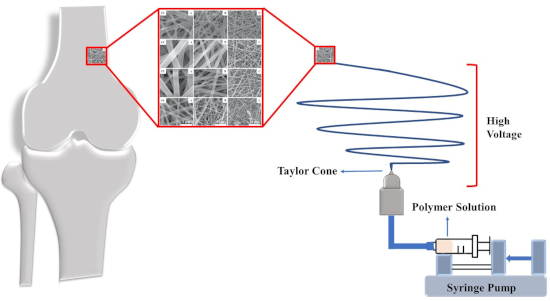
- the mechanism of release of active material from the nanofibers can be adjusted by changing the type and composition of polymer or polymer blends used as matrix and the process parameters. Some of the parameters affecting the release are (i) degradation of the polymer matrix, (ii) molecular weight of
- ][90]. In cases where the burst effect is not desired, hydrophobic polymer blends need to be used. Furthermore, either core–shell or laminated nanofibers can be produced [32][91]. The degradation of polymers, the diffusion of the active material, or both of them may affect the extended release phase
- . The polymer may degrade during or after the release of active material by diffusion. The in vivo degradation times for commonly used polymers change from days to months [52][61][92]. Different properties of the polymers lead to a wide range of degradation and drug release rates [33][93]. Since the


Intermixing of MoS2 and WS2 photocatalysts toward methylene blue photodegradation
Beilstein J. Nanotechnol. 2024, 15, 817–829, doi:10.3762/bjnano.15.68
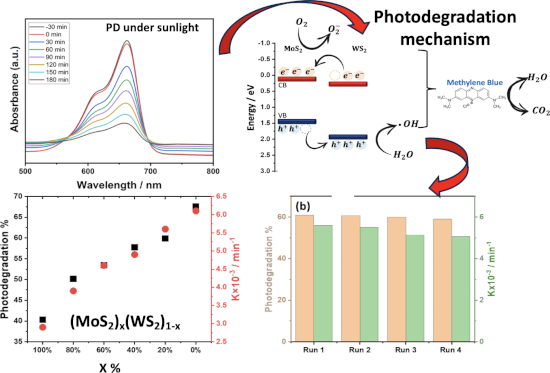
- Arab Emirates 10.3762/bjnano.15.68 Abstract Visible-light-driven photocatalysis using layered materials has garnered increasing attention regarding the degradation of organic dyes. Herein, transition-metal dichalcogenides MoS2 and WS2 prepared by chemical vapor deposition as well as their intermixing
- removal, or synthetic dye degradation [4][5][6]. For instance, methylene blue (MB), which is considered one of the most used synthetic organic dyes in various industrial and medical applications, poses serious risks as a pollutant to water resources [7]. Indeed, MB is a potential carcinogen and mutagen
- cost-effective technology. By harnessing impinging photons, the photocatalytic degradation of pollutants takes place at the interface between the photocatalyst surface and the MB-contaminated electrolyte. The photon energy is the driving force for breaking down the MB compound leading to its removal [9


Electrospun polysuccinimide scaffolds containing different salts as potential wound dressing material
Beilstein J. Nanotechnol. 2024, 15, 781–796, doi:10.3762/bjnano.15.65
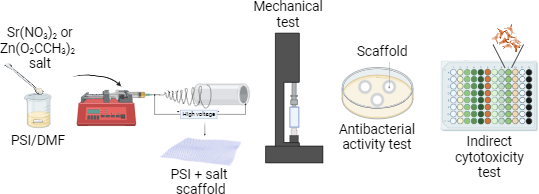
- they are flexible, variable in weight, have excellent biocompatibility, are resistant to biochemical degradation, and have suitable physical and mechanical characteristics. Moreover, they can be formed to the desired shape [6]. It is also worth mentioning that different drugs or other additives can be



Green synthesis of biomass-derived carbon quantum dots for photocatalytic degradation of methylene blue
Beilstein J. Nanotechnol. 2024, 15, 755–766, doi:10.3762/bjnano.15.63
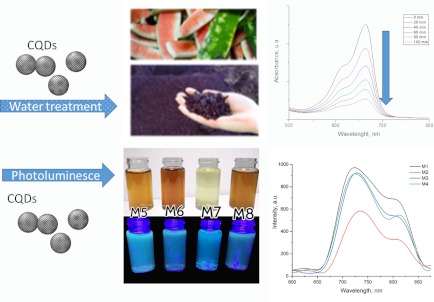
- -conversion luminescence. The results revealed effective photocatalytic degradation of methylene blue under sunlight, highlighting the potential for scalable production of these cost-effective catalytic nanomaterials for synthetic dye degradation. Keywords: biomass; carbon dots; catalysis; methylene blue
- quantum dots (CQDs) through a hydrothermal method using biomass from watermelon peels and grape pomace. This method is chosen for its ease of production, low cost, and scalability. We aim to evaluate the potential of CQDs as catalysts in the photocatalytic degradation of methylene blue (MB) dye in
- synthesized with nitric acid demonstrated superior catalytic activity in MB degradation. Carbon quantum dots typically exhibit luminescence properties, with emission peaks in the blue region between 450 and 500 nm varying based on the solvent used [26][27][28]. In our research, CQDs showed upconversion


Comparative analysis of the ultrastructure and adhesive secretion pathways of different smooth attachment pads of the stick insect Medauroidea extradentata (Phasmatodea)
Beilstein J. Nanotechnol. 2024, 15, 612–630, doi:10.3762/bjnano.15.52
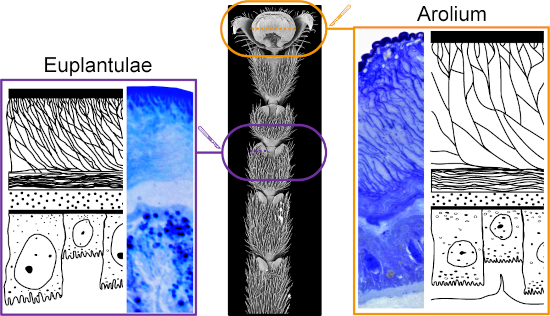
- shear forces without undergoing degradation. Similar morphological features have been previously described by Clemente and Federle [54] for the arolium and euplantulae of the cockroach N. cinera, by Bennemann et al. [71] for the arolium of the stick insect C. morosus, and by Schmitt and Betz [45] for







Radiofrequency enhances drug release from responsive nanoflowers for hepatocellular carcinoma therapy
Beilstein J. Nanotechnol. 2024, 15, 569–579, doi:10.3762/bjnano.15.49
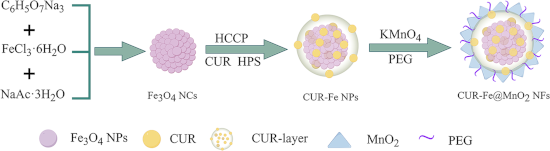
- was used to characterize the CUR-Fe@MnO2 NFs, which appeared flower-like with a size of 96.27 nm. The in vitro experimental data showed that RF enhanced the degradation of CUR-Fe@MnO2 NFs to release Mn2+ and CUR. The cytotoxicity test results indicated that after RF heating, the CUR-Fe@MnO2 NFs
- were r1 = 0.2565 mM−1·s−1 and r2 = 4.01376 mM−1·s−1, respectively (Figure 3b). Therefore, the CUR-Fe@MnO2 NFs showed marked sensitivity to the TME, suggesting that they are excellent dual-modal T1/T2 contrast agents. NFs degradation and drug release CUR-Fe@MnO2 NFs can respond to a simulated TME by
- this percentage increased to 42% at pH 5.0 (Figure 4a). These results indicate that RF heating enhances degradation of NFs. Due to their structure, CUR-Fe@MnO2 NFs efficiently increased the drug loading efficiency (DLE) of CUR and improved its stability. The drug encapsulation efficiency (DEE) and DLE


On the additive artificial intelligence-based discovery of nanoparticle neurodegenerative disease drug delivery systems
Beilstein J. Nanotechnol. 2024, 15, 535–555, doi:10.3762/bjnano.15.47
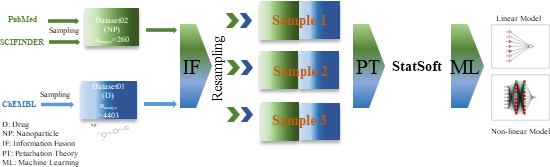
- possible nanomedicine strategies for NDD transport to the central nervous system (CNS) [9][10]. For simplicity, we are going to call them nanoparticle neuronal diseases drug delivery systems (N2D3Ss). N2D3Ss have the ability to protect NDDs from chemical and enzymatic degradation, direct the active




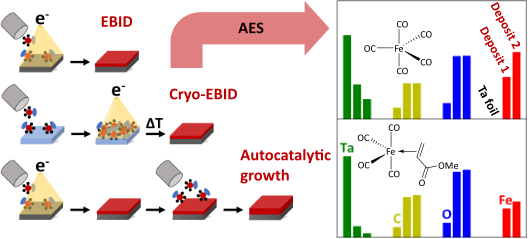
Electron-induced deposition using Fe(CO)4MA and Fe(CO)5 – effect of MA ligand and process conditions
Beilstein J. Nanotechnol. 2024, 15, 500–516, doi:10.3762/bjnano.15.45

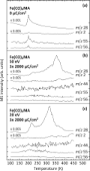

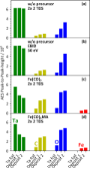
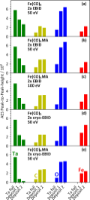
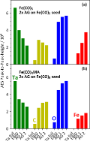

Aero-ZnS prepared by physical vapor transport on three-dimensional networks of sacrificial ZnO microtetrapods
Beilstein J. Nanotechnol. 2024, 15, 490–499, doi:10.3762/bjnano.15.44
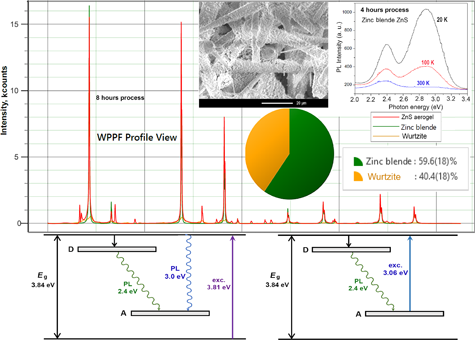
- nanocomposite components with respect to the HOMO and LUMO molecular orbitals of organic compounds subjected to photocatalytic degradation [18][44]. Specific photocatalytic properties of the aero-ZnS materials prepared by physical vapor transport have not been investigated in this paper. However, preliminary
- results suggest their suitability for the photocatalytic degradation of tetracycline. Nevertheless, focused investigations are needed concerning the optimization of the phase composition of the prepared materials for specific photocatalytic applications. Additional investigations of the surface states are



Photocatalytic degradation of methylene blue under visible light by cobalt ferrite nanoparticles/graphene quantum dots
Beilstein J. Nanotechnol. 2024, 15, 475–489, doi:10.3762/bjnano.15.43
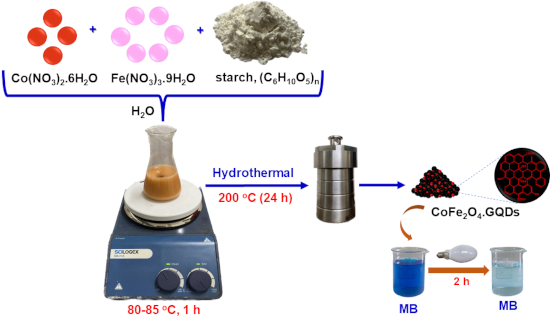
- degradation of methylene blue (MB) under visible light. The catalyst can be recycled with an external magnetic field and displays suitable stability. Also, it was reused in three successive experiments with a loss of efficiency of about 5%. The CF/GQDs are considered as an efficient photocatalyst for MB
- degradation and other dyes. Keywords: cobalt ferrite; graphene quantum dots; methylene blue; Introduction Graphene quantum dots (GQDs) have unique properties, including photoluminescence, biocompatibility, slight chemical toxicity, inertness, and excellent photostability [1][2]. Graphene quantum dots
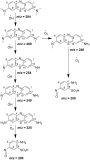
- /GQDs nanoparticles. Magnetic properties, morphology, structure, and fluorescence of the nanocomposites were studied, and the photocatalytic degradation of methylene blue as a dye model and the mechanism of methylene degradation were also addressed. Experimental Materials Cobalt(II) nitrate hexahydrate




Fabrication of nanocrystal forms of ᴅ-cycloserine and their application for transdermal and enteric drug delivery systems
Beilstein J. Nanotechnol. 2024, 15, 465–474, doi:10.3762/bjnano.15.42
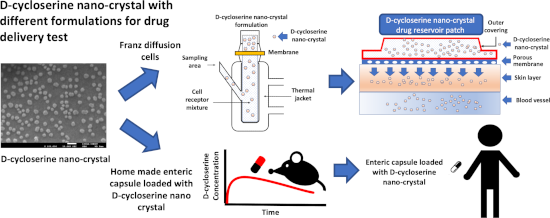
- commercial DCS, which is attributed to specific physicochemical properties of the nanocrystals, including faster dissolution and greater resistance to degradation in enteric capsules. Furthermore, with efficient delivery and long-term stability, the hydrophobic formulation of DCS nanocrystals is a potent


Classification and application of metal-based nanoantioxidants in medicine and healthcare
Beilstein J. Nanotechnol. 2024, 15, 396–415, doi:10.3762/bjnano.15.36
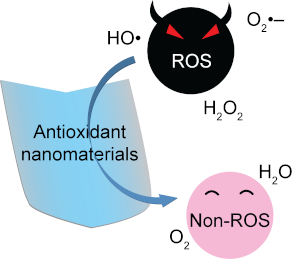
- resistance to severe environments than the antioxidants originating from plants and animals. More interestingly, through nanoencapsulation and nanodelivery, antioxidant nanomaterials improve the pharmacokinetics of natural antioxidants by preventing their degradation under stress conditions [9][10
- ]. Similarly, GPx-mimicking nanomaterials use two GSH molecules as cofactors to generate redox cycles for H2O2 degradation. In GPx-mimicking V2O5 nanocrystals, H2O2 first binds to the surface of V2O5 converting V=O into V-peroxido intermediates. The V-peroxido intermediates then react with GSH to V−OH
- radical scavenging. For example, cerium(IV) reacts with a superoxide radical to generate cerium(III) and oxygen. Then, cerium(III) reacts with the second superoxide radical to cerium(IV). The degradation of superoxide radicals by cerium nanomaterials can be described as follows: Cerium nanomaterials with