


Search results
Search for "electronic" in Full Text gives 1102 result(s) in Beilstein Journal of Nanotechnology. Showing first 200.
Integrating high-performance computing, machine learning, data management workflows, and infrastructures for multiscale simulations and nanomaterials technologies
Beilstein J. Nanotechnol. 2024, 15, 1498–1521, doi:10.3762/bjnano.15.119

- the properties of advanced and complex materials are exploited [5][18]. Methods applied in multiscale materials modelling address a broad range of phenomena from the electronic/atomistic to the macroscopic scale. However, the application of comprehensive multiscale models to relevant application


Effect of radiation-induced vacancy saturation on the first-order phase transformation in nanoparticles: insights from a model
Beilstein J. Nanotechnol. 2024, 15, 1453–1472, doi:10.3762/bjnano.15.117

- atoms. These defects can significantly alter the structural, mechanical, and electronic properties of materials. This prompts the questions: How do radiation-induced defects influence first-order phase transformations in nanoscale systems? Can radiation-induced defects initiate polymorphic transitions


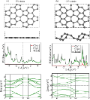
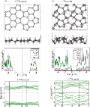
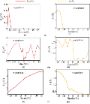
Strain-induced bandgap engineering in 2D ψ-graphene materials: a first-principles study
Beilstein J. Nanotechnol. 2024, 15, 1440–1452, doi:10.3762/bjnano.15.116
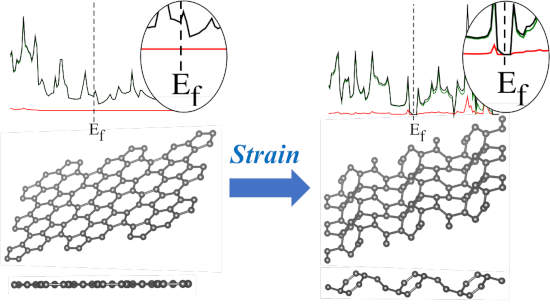
- are zero-bandgap, like goldene [15] and ψ-graphene [16]. The absence of bandgaps in 2D materials makes them unsuitable for conventional semiconductor applications and limits their use in photonics and optical devices [17]. Therefore, bandgap engineering (manipulation of electronic band structures
- (EBSs)) of these materials becomes essential to expand their utility in energy-related and optoelectronic applications [18][19]. Engineering of the electronic gap not only broadens the possible use of 2D materials but also enables them to satisfy the demand for ultramodern technologies [20]. Bandgap
- engineering can be achieved through different techniques like (i) doping, where the introduction of dopants or impurities modifies the EBS [21], (ii) strain engineering by inserting mechanical strain to alter the electronic properties [22][23], and (iii) defect engineering [24]. Among these techniques, strain


Lithium niobate on insulator: an emerging nanophotonic crystal for optimized light control
Beilstein J. Nanotechnol. 2024, 15, 1415–1426, doi:10.3762/bjnano.15.114
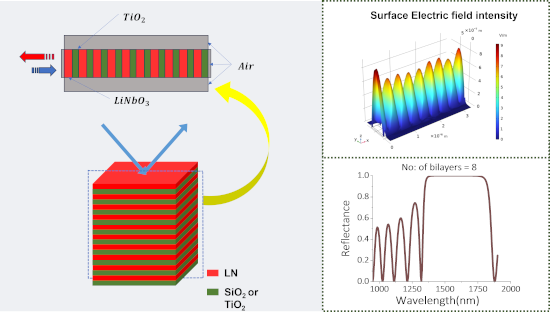
- photonic devices. Moreover, the enhancement of typically feeble light–matter interaction is enabled by robust light confinement. These characteristics can be exploited to mitigate the intrinsic limitations of photonics technologies compared to electronic and optoelectronic technologies [5]. Distributed


Various CVD-grown ZnO nanostructures for nanodevices and interdisciplinary applications
Beilstein J. Nanotechnol. 2024, 15, 1390–1399, doi:10.3762/bjnano.15.112
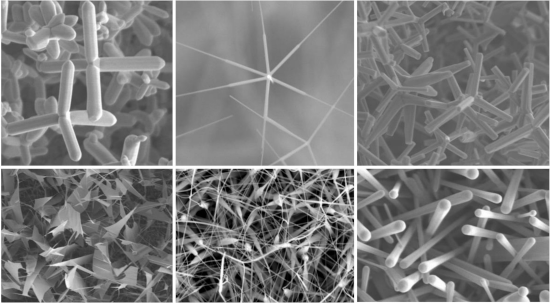
- surface effects dependent on the surface-to-volume ratio, which directly influences the electronic structure and the crystal structure symmetry. Thus, the study and fabrication of nanomaterials not only aim at exploring novel approaches of quantum physics, but also at realizing new multifunctional
- electronic/optoelectronic devices, energy storage/generation systems, and renewable energy conversion devices with high performance and low-power consumption [1][2][3]. In comparison to semiconductors, ZnO has attracted much more attention. This is due to ZnO having outstanding semiconductor behaviours in
- DMSs, these nanostructures will be beneficial to the development of new ZnO-based materials for photocatalytic [25], biomedical [26], gas sensing [27][28], and flexible electronic/optoelectronic applications [29][30]. They are usually fabricated by chemical vapour deposition (CVD) or solid-vapour phase



Green synthesis of carbon dot structures from Rheum Ribes and Schottky diode fabrication
Beilstein J. Nanotechnol. 2024, 15, 1369–1375, doi:10.3762/bjnano.15.110
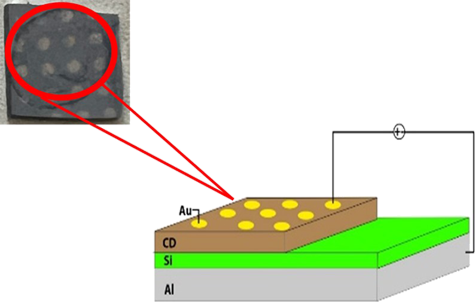
- , q, kB, T, and I0 are the ideality factor, the voltage drop on the series resistance (Rs), the applied bias voltage, the electronic charge, Boltzmann’s constant, the temperature in Kelvin, and the reverse saturation current, respectively. The reverse saturation current of the Schottky diode can be
- , it exhibits a non-ideal diode behavior with a high ideality factor. This study, in which CDs obtained from a completely natural product were used as an interface, showed that it may be possible to obtain CDs-based electronic devices for advanced technology in the future. Schematic representation of




Out-of-plane polarization induces a picosecond photoresponse in rhombohedral stacked bilayer WSe2
Beilstein J. Nanotechnol. 2024, 15, 1362–1368, doi:10.3762/bjnano.15.109
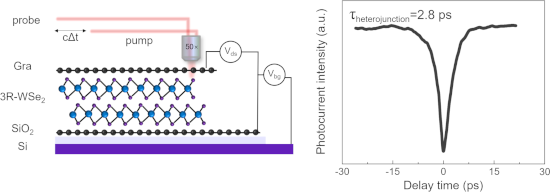
- /WSe2/graphene devices, we fabricated a WSe2 two-terminal device, the electronic characteristics of which are shown in Supporting Information File 1, Note 4. To utilize the BPVE in 3R WSe2, we investigated the vertical heterojunction using scanning photocurrent microscopy (SPCM). The scanning


Hymenoptera and biomimetic surfaces: insights and innovations
Beilstein J. Nanotechnol. 2024, 15, 1333–1352, doi:10.3762/bjnano.15.107
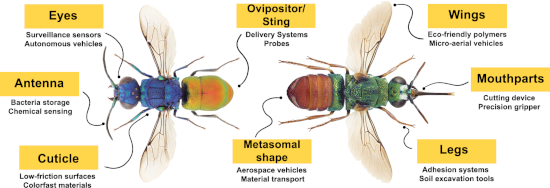
- coloration can be used to create more aesthetically pleasing and durable electronic devices. Smartphone cases, laptops, and other gadgets can feature iridescent colors that do not wear off or fade, enhancing both their appearance and longevity. This not only improves the user experience but also contributes
- to a reduction in electronic waste, as devices retain their visual appeal over a longer period. The techniques to create biomimetic materials with color producing mechanisms inspired by insects already exist [29][30] and applications of such technology have several possibilities. Hairs The body
- that offers several visual advantages, such large field of view, high temporal resolution, rapid capture and tracking of fast-moving objects [83][84]. This renders compound eyes particularly suitable for electronic surveillance applications, where broad observation coverage is essential for detecting








Interaction of graphene oxide with tannic acid: computational modeling and toxicity mitigation in C. elegans
Beilstein J. Nanotechnol. 2024, 15, 1297–1311, doi:10.3762/bjnano.15.105
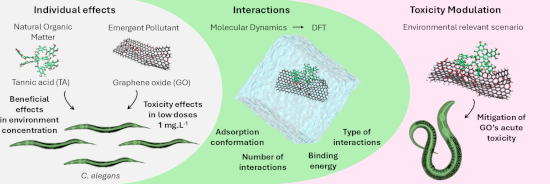
- regarding the electronic properties of the system, such as the most reactive sites and their interactions. Our findings provided new insights into toxicity mitigation and behavior of GO in the environment, as well as, the safety of application of TA for synthesis and functionalization of this nanomaterial
- surface of a GO flake in an aqueous environment. This allowed us to explore the chemical and conformational changes occurring in TA and GO. Additionally, ab initio calculations were conducted to investigate the electronic properties of the system, including the identification of the most reactive sites on
- indicates that TA mostly forms a single layer of stronger interacting molecules close to the surface. DFT calculations allowed us to evaluate the electronic and reactivity properties of the system TA and GO. Fukui functions are a concept used to study the local reactivity of molecules/materials. They


New design of operational MEMS bridges for measurements of properties of FEBID-based nanostructures
Beilstein J. Nanotechnol. 2024, 15, 1273–1282, doi:10.3762/bjnano.15.103
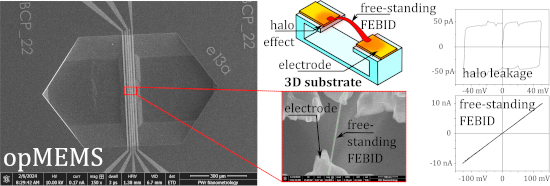
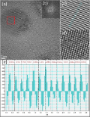
- nanostructure. Keywords: FEBID; MEMS; MEMS bridge; nanowires; opMEMS; Introduction Nanoelectronics is the fastest developing branch of modern electronic technology. Reduced dimensions allow for lower power consumption of the circuit and higher operating speeds [1][2]. Even more advantages (e.g., developed
- surface or reduced capacitance) are brought by volumetric, self-standing electronic nanostructures, which provide an experimental basis for their own properties and can serve as building blocks for nanoscale devices, in which phenomena such as giant piezoresistivity, single-electron tunnelling, or field


A low-kiloelectronvolt focused ion beam strategy for processing low-thermal-conductance materials with nanoampere currents
Beilstein J. Nanotechnol. 2024, 15, 1197–1207, doi:10.3762/bjnano.15.97

- terms were omitted in these simulations, but the ions’ electronic stopping power heating term was included. As isosurfaces beyond the ion tracks cannot be observed for the 5 keV ions, the cumulative heat damage does not seem to substantially occur for these lower incident ion energies (Figure 2C). 3D
- energy deposition into collagen due to the ion’s electronic and nuclear stopping was studied using COMSOL “Particle Tracing Physics”. The dissipated ion energy is converted to thermal energy at each mesh element encountered along the ion’s path in the collagen. For each of these mesh elements the “Heat
- the sample top, which was thermally insulated, as in a vacuum. As the ion passed through the sample, the energy gained by the sample due to the traversing ion’s electronic and nuclear stopping was accumulated. This deposited energy was then conducted away as heat. This heat was distributed to all mesh




AI-assisted models to predict chemotherapy drugs modified with C60 fullerene derivatives
Beilstein J. Nanotechnol. 2024, 15, 1170–1188, doi:10.3762/bjnano.15.95
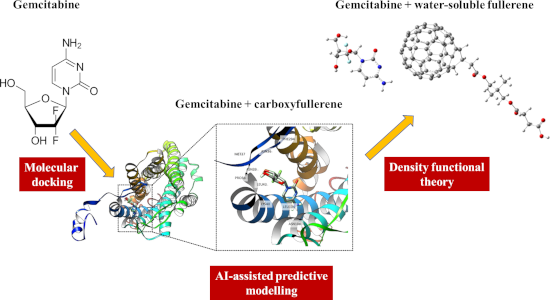
- 243.22 Å2, were modified. Also, after the introduction of the polar group, the RBC varied from 1 to 10. The fullerene derivative C60–COOH was expected to modify the electronic structure of the composed systems. In consequence, the energy of the HOMO of the complexes was recomputed for the globally
- frontier molecular orbitals are similar, and it is expected that electronic transit can occur in this region accepting and donating negative charges. The ESP map reinforces this suggestion showing negative density sites as well as a positive center, which can receive electrons. The energy of the HOMO was
- computed as −5.978 eV and that of the LUMO as −4.221 eV at the DFTB3 level. In comparison, the B3PW91 method yielded −6.116 and −3.242 eV, respectively. Thus, to consider the models obtained here, it is recommended to use DFTB3 to compute the electronic and energetic properties instead of DFT calculations


Quantum-to-classical modeling of monolayer Ge2Se2 and its application in photovoltaic devices
Beilstein J. Nanotechnol. 2024, 15, 1153–1169, doi:10.3762/bjnano.15.94
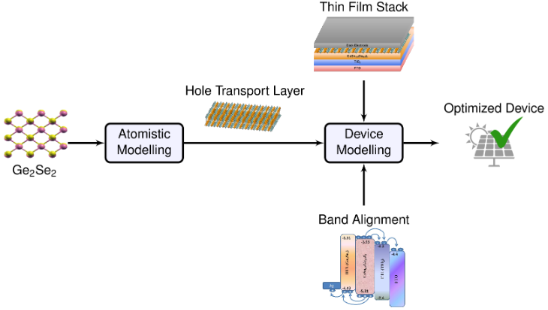
- astonishing device performance. We use ab initio modeling for the material prediction, while classical drift–diffusion drives the device simulations. Hybrid functionals calculate electronic and optical properties to maintain high accuracy. The structural stability has been verified using phonon spectra. The E
- –k dispersion reveals the investigated material’s key electronic properties. The calculations reveal a direct bandgap of 1.12 eV for monolayer Ge2Se2. We further extract critical optical parameters using the Kubo–Greenwood formalism and Kramers–Kronig relations. A significantly large absorption
- the investigated structure’s dynamic stability. Electronic and transport properties The electronic properties of materials play a crucial role in predicting the material behavior and transport parameters and, hence, its prospective applications. We investigated the electronic properties of monolayer




Introducing third-generation periodic table descriptors for nano-qRASTR modeling of zebrafish toxicity of metal oxide nanoparticles
Beilstein J. Nanotechnol. 2024, 15, 1142–1152, doi:10.3762/bjnano.15.93
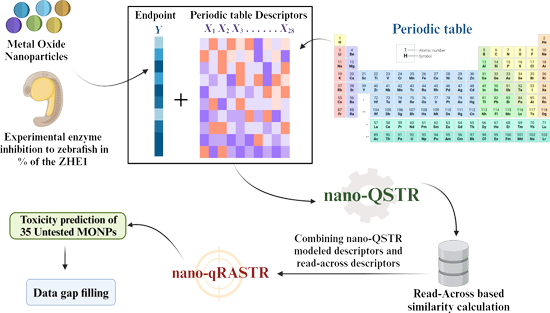
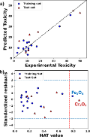
- the outer electrons in larger atoms, which might reduce the efficiency of electronic interactions essential for binding or catalytic activity. Our nano-QSTR model suggests that the enzymatic activity of ZHE1 in zebrafish is influenced negatively by the total electronegativity of metals and the atomic


Local work function on graphene nanoribbons
Beilstein J. Nanotechnol. 2024, 15, 1125–1131, doi:10.3762/bjnano.15.91
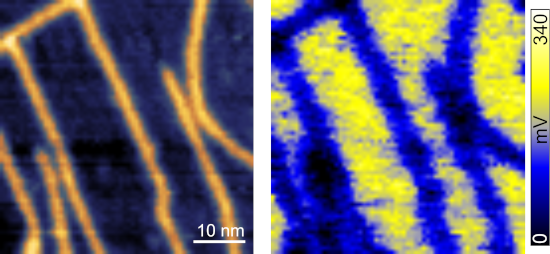
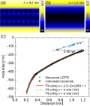
- , Switzerland current address: Department of Physics, University of Basel, CH-4056 Basel, Switzerland Institute of Chemistry, University of Potsdam, Karl-Liebknecht-Str. 24–25, 14476 Potsdam-Golm, Germany 10.3762/bjnano.15.91 Abstract Graphene nanoribbons show exciting electronic properties related to the
- exotic nature of the charge carriers and to local confinement as well as atomic-scale structural details. The local work function provides evidence for such structural, electronic, and chemical variations at surfaces. Kelvin prove force microscopy can be used to measure the local contact potential
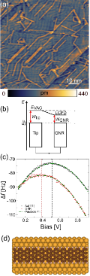
- density functional theory calculations, which verify that the maps reflect the doping of the nanoribbons. Our results help to understand the relation between atomic structure and electronic properties both in high-resolution images and in the distance dependence of the LCPD. Keywords: graphene

![[Graphic 1]](/bjnano/content/inline/2190-4286-15-91-i4.svg?max-width=637&scale=1.18182)
Interface properties of nanostructured carbon-coated biological implants: an overview
Beilstein J. Nanotechnol. 2024, 15, 1041–1053, doi:10.3762/bjnano.15.85
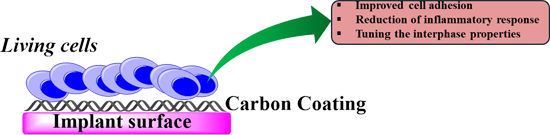
- carbon materials has several members with peculiar properties, namely, (i) graphene-related materials, (ii) CNTs, and (iii) nanodiamonds (NDs) as shown in Figure 2. All nanosized carbon materials show remarkable properties regarding both thermal and electronic conduction, but they should be treated
- rings, which prevents planar deformations [33]. The same phenomenon explains the high thermal conductivity of up to 3000 W·m−1·K−1 [34][35] and the outstanding electrical properties [36][37][38]. Compared to conventional 3D materials, the understanding of electronic transport and carrier dynamics in
- graphene is significantly complicated by the extreme anisotropy intrinsic to its crystal structure and its large compositional and structural variability [39]. Beyond the obvious consequences arising from the chemical composition, some of the main aspects affecting electronic transport in graphene are



Can neutral clusters: a two-step G0W0 and DFT benchmark
Beilstein J. Nanotechnol. 2024, 15, 1010–1016, doi:10.3762/bjnano.15.82
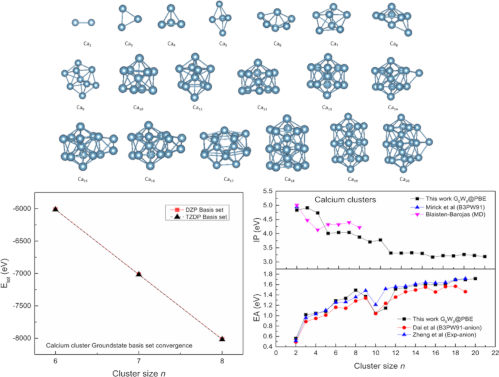
- /bjnano.15.82 Abstract Electronic and structural properties of calcium clusters with a varying size range of 2–20 atoms are studied using a two-step scheme within the GW and density functional theory (DFT) with generalized gradient approximation (GGA). The GGA overestimates the binding energies, optimized
- , except for a few stable even and odd clusters. The electronic properties of the calcium cluster were studied with an all-electron FHI-aims code. In the G0W0 calculation, the magic cluster Ca10 has relatively high ionization potential and low electron affinity. The obtained ionization potentials from the
- -capacity hydrogen storage [8]. As cluster size grows, the electronic configuration changes its semiconducting behavior from nonmetal to metallic due to the overlap between the s and p orbitals. Moreover, the geometry of clusters is related to their structural properties. Most of the studies on calcium


Recent progress on field-effect transistor-based biosensors: device perspective
Beilstein J. Nanotechnol. 2024, 15, 977–994, doi:10.3762/bjnano.15.80
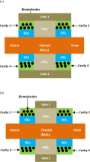
- hybrid partially gated design is reported as an exceptional device allowing digital gates with biosensing integration. Also, a hardware description language (Verilog-A) has been used for the modeling of each device structure to be incorporated into various system designs via electronic design automation




Identification of structural features of surface modifiers in engineered nanostructured metal oxides regarding cell uptake through ML-based classification
Beilstein J. Nanotechnol. 2024, 15, 909–924, doi:10.3762/bjnano.15.75

- ionization potential with the Moreau–Broto autocorrelation to measure the structural and electronic properties of surface modifiers [51] and has a negative impact on the cellular uptake of ENMOs. For example, in the case of surface modifiers 11, 24, 59, and 97, higher values of the AATS7i descriptor result
- , the maxsNH2 value indicates the maximum electronic state value of a single-bonded NH2 group [53]. It is observed that the structures of surface modifiers 74, 77, and 93 are not suitable for higher cellular uptake of ENMOs in the PaCa2 cell line because of the increased maxsNH2 values. Conversely, the
- ENMOs in the PaCa2 cell line. The descriptor maxssO denotes the maximum electronic states of the ether-type oxygen (–O–) present in the structure of a compound [58]. It has been observed that the surface modifiers 23, 29, and 49, which have a higher value of the maxssO descriptor, are suitable for the


A review on the structural characterization of nanomaterials for nano-QSAR models
Beilstein J. Nanotechnol. 2024, 15, 854–866, doi:10.3762/bjnano.15.71

- complexity of inorganic materials and, in place of structural features, focus on electronic features. In this regard, several descriptors were obtained from quantum mechanics (QM) calculations of small clusters or periodic models [26][27][28][29][30]. Although cluster-calculated QM descriptors are inherently
- size-dependent, they are calculated using smaller, single-size model clusters, which are not related to the size of the nanoparticles; thus, they should be considered size-independent. Cluster-related values include standard heat of formation, total energy, electronic energy, core–core repulsion energy
- incorporating the electronic structure in the model, that is, by using the electron configuration of the elements (e.g., by using electron configuration fingerprints) [32]. In this way, the atomic orbitals can be easily represented and used to estimate the molecular/crystal orbitals in the NM without requiring


Intermixing of MoS2 and WS2 photocatalysts toward methylene blue photodegradation
Beilstein J. Nanotechnol. 2024, 15, 817–829, doi:10.3762/bjnano.15.68
- experiments, we weighed the samples using a sensitive electronic balance (Secura microbalance, Sartorius) with an accuracy down to 0.01 mg. Structural, crystalline, and vibrational properties of the fabricated materials were examined utilizing X-ray diffraction (D8 Discover diffractometer, Bruker) with a Kα
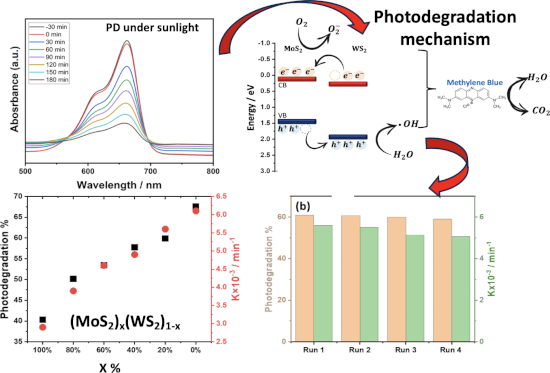
- excitations from a) sunlight and b) solar simulator. Proposed PD mechanisms of MB by MoS2/WS2 catalysts. PD stability comparison between WS2, MoS2 and WS2/MoS2 composite samples. Schematic diagram of the photocatalyst preparation. Electronic band structure for both MoS2 and WS2. Reported MoS2 and WS2-based


Synthesis of silver–palladium Janus nanoparticles using co-sputtering of independent sources: experimental and theorical study
Beilstein J. Nanotechnol. 2024, 15, 808–816, doi:10.3762/bjnano.15.67
- melting temperature and, partly, because the appearance of moisture delays the diffusion of silver atoms. The synthesis of AgPd nanocrystals with sizes ranging from 2.46 to 6.65 nm has been reported for applications in the manufacturing of electronic components [6]. Chu et al. [7] synthesized Pd–Ag
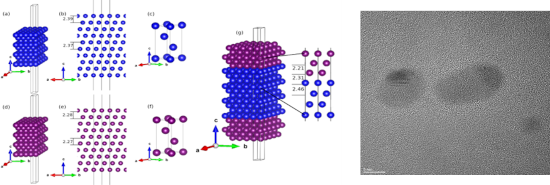
- complement the structural analysis of Janus BNPs, we performed a set of atomic-scale studies using density functional theory [19][20] as implemented in the Vienna Ab Initio Simulation (VASP) package [21][22]. VASP employs a plane wave basis set to represent the electronic states. We used the generalized




Electron-induced ligand loss from iron tetracarbonyl methyl acrylate
Beilstein J. Nanotechnol. 2024, 15, 797–807, doi:10.3762/bjnano.15.66
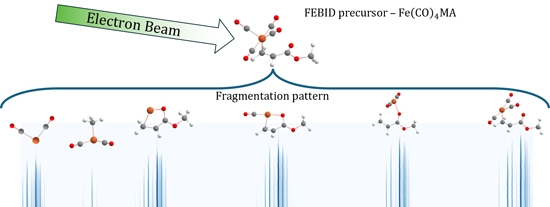
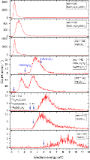
- the gas phase has been probed with respect to its dissociative ionization [10] and dissociative electron attachment [11][12]; there is even information available on its electronic excitation, which is the first step towards neutral dissociation [11]. The gas-phase studies have been complemented by
- with an odd number of electrons were assumed to be in doublet spin states. Threshold energies listed in the tables were obtained as differences of sums of the electronic and zero-point energies of products and reactants as Here, Ei is the sum of electronic and zero point energies of a given fragment
- higher vibrational density of states. It is well established that, upon vertical electron removal, which can create a cation in many different electronic states, the cation relaxes to its electronic ground state on an ultrafast timescale (typically via a series of conical intersections). The excess



Exploring surface charge dynamics: implications for AFM height measurements in 2D materials
Beilstein J. Nanotechnol. 2024, 15, 767–780, doi:10.3762/bjnano.15.64
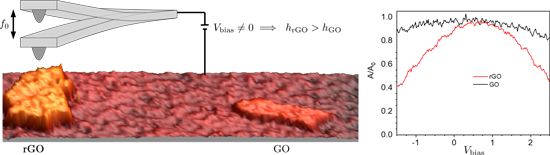
- of surface charges and their intricate interaction with the tip. Keywords: 2D materials; incorrect height measurements; Joule dissipation; surface conductivity; tip influence; Introduction Two-dimensional (2D) materials have emerged as a promising platform for next-generation electronic devices [1
- facilitates the creation of new heterostructures with tailored properties [15][16], making 2D materials suitable for different applications. Understanding the correlation between structural and topographical variations and their impact on mechanical [17][18], optical [19][20], magnetic [21][22], electronic
- microscopy (AFM) techniques emerge as ideal tools to investigate them [26][27]. Depending on the operation mode and under controlled environmental conditions, AFM offers the possibility to record morphology along with relevant electronic, mechanical, or magnetic properties with nanoscale resolution. In


Green synthesis of biomass-derived carbon quantum dots for photocatalytic degradation of methylene blue
Beilstein J. Nanotechnol. 2024, 15, 755–766, doi:10.3762/bjnano.15.63
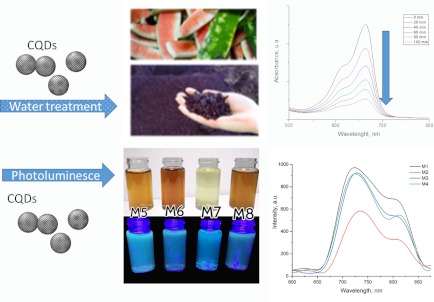
- the biomass source. Considering that the MB molecule contains azo bonds consisting of double bonds (–N=N–), it is possible to foresee a strong interaction with C–N groups on the surface of species M3 and M7. On the other hand, such C–N groups could cause a shift in the electronic energy states [43





