Search results
Search for "flow" in Full Text gives 945 result(s) in Beilstein Journal of Nanotechnology. Showing first 200.
A biomimetic approach towards a universal slippery liquid infused surface coating
Beilstein J. Nanotechnol. 2024, 15, 1376–1389, doi:10.3762/bjnano.15.111
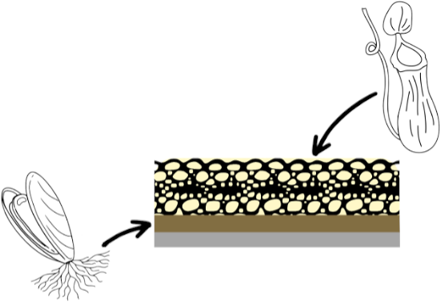
- BSA [36]. Similar surface-induced thrombus properties were observed in other SLIPS applications, where, in comparison to untreated surfaces, SLIPS-treated surfaces under dynamic blood flow yielded significantly lower thrombi weights [4]. Finally, platelet adhesion was quantified from SEM micrographs




Investigation of Hf/Ti bilayers for the development of transition-edge sensor microcalorimeters
Beilstein J. Nanotechnol. 2024, 15, 1353–1361, doi:10.3762/bjnano.15.108

- of the bulk resistivity at room temperature of 3.3 × 10⁻⁷ Ω·m [11]. The variation of calculated resistivity between bridges of different sizes is likely not due to physically different film properties, but rather due to rough estimations not taking into account the edge effects for the current flow


Nanoarchitectonics with cetrimonium bromide on metal nanoparticles for linker-free detection of toxic metal ions and catalytic degradation of 4-nitrophenol
Beilstein J. Nanotechnol. 2024, 15, 1312–1332, doi:10.3762/bjnano.15.106
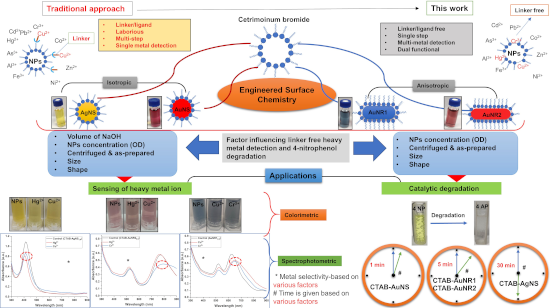
- . The mobile phase included a mixture of acetonitrile and water (40:60 v/v) at a 0.2 mL/min flow rate. The method was developed using CTAB powder as standard at different concentrations of 0.625, 1.2, 2.5, 5, 10, and 20 µg/mL in water. The blank sample (which consisted only of solvent) was also analyzed




New design of operational MEMS bridges for measurements of properties of FEBID-based nanostructures
Beilstein J. Nanotechnol. 2024, 15, 1273–1282, doi:10.3762/bjnano.15.103
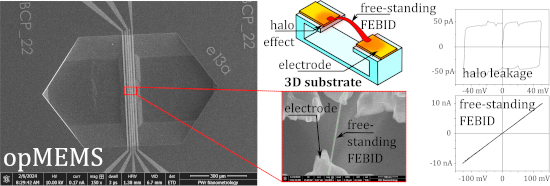
- cause leakage, that is, parasitic current flow through the insulating layer. Eliminating the halo effect is virtually impossible; however, the size of the halo can be measured, and its negative effects can be eliminated by proper spacing between conducting FEBID deposits [22]. Another approach is to
- , 17 pA, 13 ms dwell time, a single line pattern in a single pass with 4 nm pitch, and MeCpPtMe3 precursor at 321 K with a flow rate of 8.5 × 10⁻⁴ μm3/s. The pattern line was set to begin on one electrode and end on the other (Figure 7). In between, the nanowire growth proceeded horizontally with an


The role of a tantalum interlayer in enhancing the properties of Fe3O4 thin films
Beilstein J. Nanotechnol. 2024, 15, 1253–1259, doi:10.3762/bjnano.15.101

- process [14][15]. The impact of substrate temperature, annealing temperature, gas flow rate, and thickness on enhancing the characteristics of Fe3O4 thin films has been examined [15][16][17][18]. The substrates play a crucial role in directing the growth and enhancing the quality of the crystal, resulting
- ) substrates were prepared by immersing them in a methanol bath at a temperature of 60 °C and drying them in N2 gas flow. Subsequently, the purified substrates were moved into an ultrahigh vacuum (UHV) chamber and underwent a pre-heating process at 600 °C for 30 min in order to eliminate any remaining
- impurities. The SiO2/Si(100) substrates were immersed in acetone and 2-propanol for a duration of 2 min in an ultrasonic bath. Subsequently, they were immersed in a solution of methanol at a temperature of 60 °C and then dried in N2 gas flow. A 5 nm thick layer of tantalum was deposited on a SiO2/Si(100


Dual-functionalized architecture enables stable and tumor cell-specific SiO2NPs in complex biological fluids
Beilstein J. Nanotechnol. 2024, 15, 1238–1252, doi:10.3762/bjnano.15.100
- Biosystems) liquid chromatography system through a Proxeon nanoelectrospray ion source. Peptides were separated at a flow rate of 300 nL/min in a 2–90% acetonitrile gradient in 0.1% formic acid for a total gradient time of 65 min (35% acetonitrile at 33 min) using a PicoFrit analytical column (20 cm × ID75
- (DAPI). After that, samples were analyzed on the Operetta High Content Screening System microscope (PerkinElmer Life Sciences). To obtain quantitative information on the internalization of functionalized and non-functionalized SiO2NPs, the flow cytometry technique was used. HaCat and KB cells were
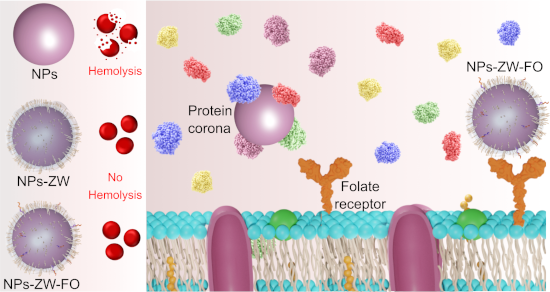
- of the folate receptor on the surface of KB cells, which increases the probability of receptor binding to the tumor driver on the surface of SiO2NPs-ZW-FO. Importantly, similar results were obtained for incubation times of 3, 6, and 12 h (Supporting Information File 1, Figure S9). The flow cytometry


Quantum-to-classical modeling of monolayer Ge2Se2 and its application in photovoltaic devices
Beilstein J. Nanotechnol. 2024, 15, 1153–1169, doi:10.3762/bjnano.15.94
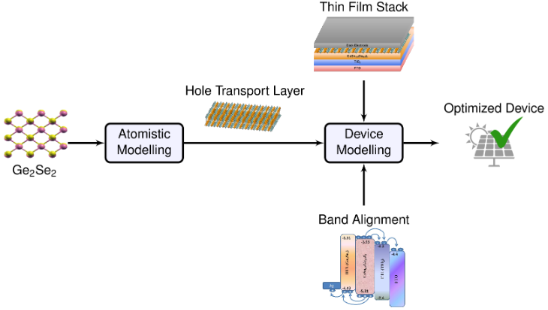
- required for the current flow. It is intuitive to have a thick absorber layer for a higher current density. However, because the absorber thickness further affects the recombination rate, optimizing it for optimal device performance is necessary. The impact of varying absorber thickness on the different




Photocatalytic methane oxidation over a TiO2/SiNWs p–n junction catalyst at room temperature
Beilstein J. Nanotechnol. 2024, 15, 1132–1141, doi:10.3762/bjnano.15.92
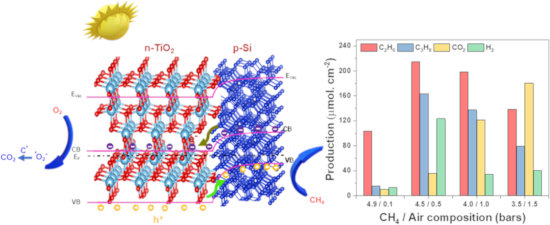
- min. The etched p-Si NWs substrate was eventually washed with DI water and dried under N2 flow, as shown in Figure 9. Second, the as-prepared SiNWs sample was transferred to the chamber of an ALD system (R200 Advanced Picosun, 2013) for TiO2 thin film deposition. The TiO2 thin film deposition was


Local work function on graphene nanoribbons
Beilstein J. Nanotechnol. 2024, 15, 1125–1131, doi:10.3762/bjnano.15.91
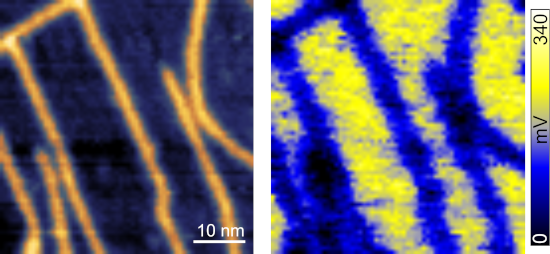
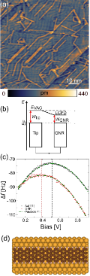
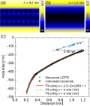
- can be measured. Also, charges can equilibrate, the Fermi levels of tip and surface align, accompanied by an electron flow to the Au, and the GNR is charged, leading to additional electrostatic forces (Figure 1b). During imaging, a voltage is applied in order to compensate for these additional

![[Graphic 1]](/bjnano/content/inline/2190-4286-15-91-i4.svg?max-width=637&scale=1.18182)
Direct electron beam writing of silver using a β-diketonate precursor: first insights
Beilstein J. Nanotechnol. 2024, 15, 1117–1124, doi:10.3762/bjnano.15.90

- months later, showing grown silver crystals in the direction of the precursor gas flow and in the further surrounding. (c) BSE image from the cross section where heavy elements appear bright. The Ag/C ratios were obtained from EDX measurements at the cross section in the areas indicated by white


Recent updates in applications of nanomedicine for the treatment of hepatic fibrosis
Beilstein J. Nanotechnol. 2024, 15, 1105–1116, doi:10.3762/bjnano.15.89
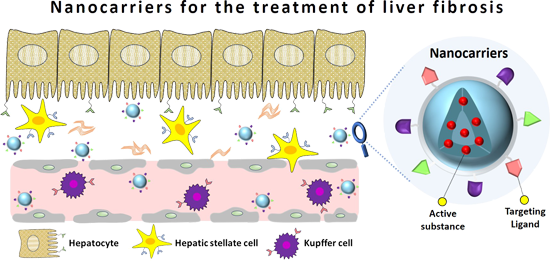
- activated HSCs in liver fibrosis resulted in a loss of the fenestrae, hindering plasma to reach the perisinusoidal space [43]. As the disease progresses, the reduced blood flow and the blockage of portal flow through the liver could diminish the efficiency of drug delivery. Nanoencapsulation as passive


Bolometric IR photoresponse based on a 3D micro-nano integrated CNT architecture
Beilstein J. Nanotechnol. 2024, 15, 1030–1040, doi:10.3762/bjnano.15.84
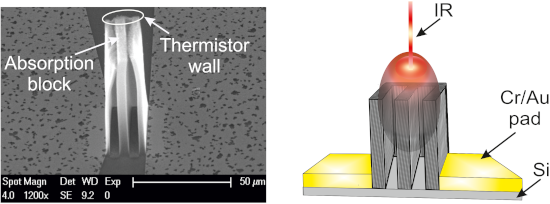
- optimizing device parameters such as resistance, optical absorption characteristics, and heat conductivity. The M-shape was used to have a homogeneous gas flow parallel to the CNT walls during CNT growth to achieve repeatably aligned walls. Prior to CNT growth, the Fe catalyst layer self-assembled into Fe


Recent progress on field-effect transistor-based biosensors: device perspective
Beilstein J. Nanotechnol. 2024, 15, 977–994, doi:10.3762/bjnano.15.80
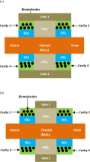
- bending between the carriers. However, when the gate bias that is supplied is greater than the threshold voltage of the device, the type of the channel is inverted which permits the current to flow and turns on the transistor [52]. The FET-based biosensors consist of two dissimilar transduction mechanisms
- . The gate metal around the three nanocavity regions was added for the best electrostatic control. Additionally, a spacer near the source region was removed to facilitate the introduction of biomolecules into the cavity. The fabrication process flow of the proposed VS NS FET has been detailed by Ryu et
- this case, two different gate metals with distinct work functions were designed to achieve maximum on-state current and an improved Ion/Ioff ratio. The fabrication process flow for the proposed biosensor structure is detailed in [120]. Sensitivity parameters were assessed by measuring the drain-current




Beyond biomimicry – next generation applications of bioinspired adhesives from microfluidics to composites
Beilstein J. Nanotechnol. 2024, 15, 965–976, doi:10.3762/bjnano.15.79
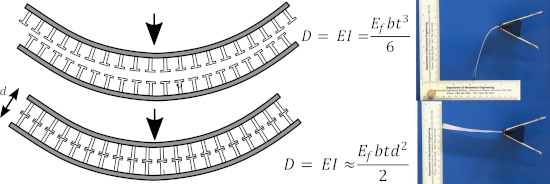
- the use of biomimetic adhesives. These subtopics are microfluidics, soft robotics, and reconfigurable composites. Microfluidics involves the manipulation and flow of fluids on a very small scale, typically with nanoliters or less of fluid and with feature sizes ranging from a few hundred microns down
- the channels but also directed the liquid metal flow via Laplace barriers within the channels, offering a mechanism by which we could precisely control the filling of a liquid with very high surface tension [36] (Figure 5). Additionally, small subfeatures within the microfluidic channels could allow
- for both air escape and the addition of acid in specific locations of the biomimetic adhesives to direct the flow of liquid metal into separate, isolated areas. Handling such extreme materials is something no animal would have evolved to manage, yet the artificial versions have proven to be very


Electrospun nanofibers: building blocks for the repair of bone tissue
Beilstein J. Nanotechnol. 2024, 15, 941–953, doi:10.3762/bjnano.15.77
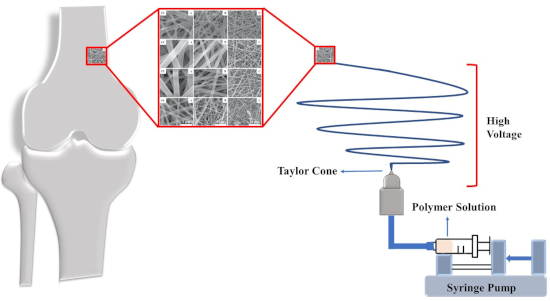
- production. With a coaxial needle design, two different solutions can be electrospun simultaneously, and core–shell or hollow fibers can be formed [47]. The main parameters affecting fiber morphology are described in the following. Process parameters Flow rate, voltage, distance, collector type
- defect density increases above a critical voltage [49]. The aspect ratio of the obtained beads increases up to a certain voltage value and then decreases [50][54]. Flow rate Insufficient flow rate does not allow for jet formation. In contrast, excessive flow rates will cause an increase in the polymer
- liquid accumulating at the needle tip above the stretching ability of the electric field strength; hence, polymer liquid may flow from the needle tip [49][52][55]. Generally, as the flow rate increases, thicker and more porous fibers with a wide distribution are formed [56][57]. When the flow rate is too


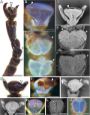
The effect of age on the attachment ability of stick insects (Phasmatodea)
Beilstein J. Nanotechnol. 2024, 15, 867–883, doi:10.3762/bjnano.15.72

- system, the low pressure is kept up by the heart and muscular activity [5][79]. The legs function as a terminal end in the circulatory system and often have accessory hearts to enable hemolymph flow [79]. If age has an effect on a stick insect’s cardiac system, any impairment could additionally decrease


Investigation on drag reduction on rotating blade surfaces with microtextures
Beilstein J. Nanotechnol. 2024, 15, 833–853, doi:10.3762/bjnano.15.70
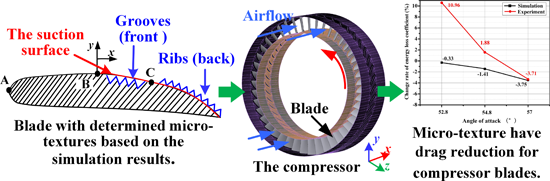
- microtextures to reduce the flow loss on the blade surfaces were carried out. First, based on the axisymmetric characteristics of the impeller, a new simulation method was proposed to determine the aerodynamic parameters of the blade model through the comparison of flow field characteristics and simulation
- ]. Lang et al. [8] constructed rectangular and sinusoidal grooves with 2 mm in width, 3 mm in depth, and 1 mm in spacing, thus mimicking the transverse grooves on the surface of dolphin skin. They observed the effect of the grooves on flow separation and boundary layer using digital particle image
- microstructures on the shark skin surface to study the effects on hydrodynamics and aerodynamics. Within these extremely small structures, a low-speed, stable fluid flow exists, which can mitigate turbulences and enhance the stability of fluid motion within the boundary layer, resulting in a reduction of


Synthesis of silver–palladium Janus nanoparticles using co-sputtering of independent sources: experimental and theorical study
Beilstein J. Nanotechnol. 2024, 15, 808–816, doi:10.3762/bjnano.15.67
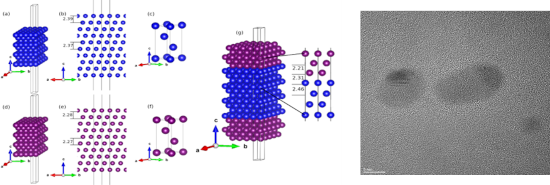
- copper grids in an argon flow at 52 sscm for 5 min at room temperature. The size of the BNPs can be modified by varying three parameters, namely, aggregation area, magnetron power, and partial pressure. The chosen parameters for both magnetrons are presented in Table 1. HRTEM micrographs were obtained


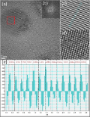


Electrospun polysuccinimide scaffolds containing different salts as potential wound dressing material
Beilstein J. Nanotechnol. 2024, 15, 781–796, doi:10.3762/bjnano.15.65
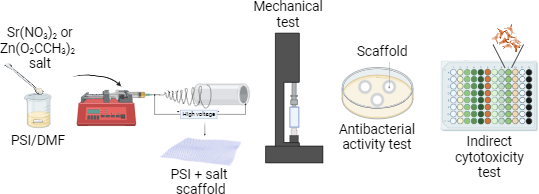
- Table 1. Electrospinning The PSI/DMF/salt solutions were placed in a syringe pump (NE-500 model, New Era Pump Systems, Inc., USA), and the flow rate was adjusted between 0.4 and 0.5 mL/h. In every case, the scaffolds were made from 1 mL of the solutions. The fibers were collected on an aluminum foil
- , which was placed on a slow rotary drum (10 rpm). The distance between the needle of the syringe and the collector was 15 cm in all cases. The applied voltages (direct current power supply, ES 30 Model, Gamma High Voltage Inc., USA) and flow rates are in Table 1. Fourier-transform infrared spectroscopy
- cells. * indicates significant differences (one-way ANOVA, *p < 0.05; **p < 0.01; ***p < 0.001; ****p < 0.0001). The components of the polymer/salt solutions and the applied voltages and flow rates at the electrospinning in the case of the PSI and different PSI + salt samples. The numbers before the



Effect of repeating hydrothermal growth processes and rapid thermal annealing on CuO thin film properties
Beilstein J. Nanotechnol. 2024, 15, 743–754, doi:10.3762/bjnano.15.62
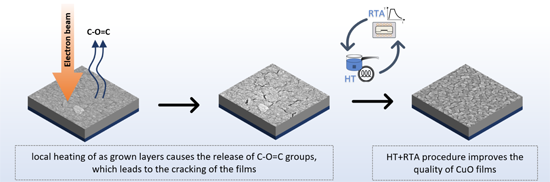
- , which disturbs the current flow. The most probable cause of such clear discrepancies may be a heterogeneous change in the chemical composition or distribution of defects as a result of thermal treatment. Capacitance differences between individual grains, which are observed to a small extent in the 1




Reduced subthreshold swing in a vertical tunnel FET using a low-work-function live metal strip and a low-k material at the drain
Beilstein J. Nanotechnol. 2024, 15, 713–718, doi:10.3762/bjnano.15.59
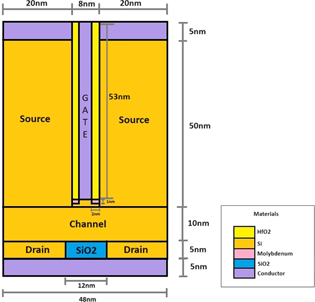
- in an increased flow of i(t) in the device. In the drain–channel region, low-k SiO2 is used. This not only reduces the drain region but also reduces the charge held in the parallel-plate capacitor (gate–drain). Hence, it reduces the undesirable Cgd. Device structure, parameters, and simulation models


Elastic modulus of β-Ga2O3 nanowires measured by resonance and three-point bending techniques
Beilstein J. Nanotechnol. 2024, 15, 704–712, doi:10.3762/bjnano.15.58
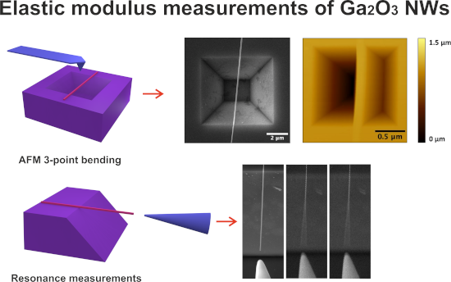
- a carrier gas mixture of Ar/H2 5%, maintaining this temperature and flow for 30 min to allow NW growth. Subsequently, the reactor was naturally cooled to room temperature. Ga2O3 NWs, up to 100 μm in length, grew on SiO2/Si substrates downstream in the low-temperature zone maintained around 850–900


Functional fibrillar interfaces: Biological hair as inspiration across scales
Beilstein J. Nanotechnol. 2024, 15, 664–677, doi:10.3762/bjnano.15.55
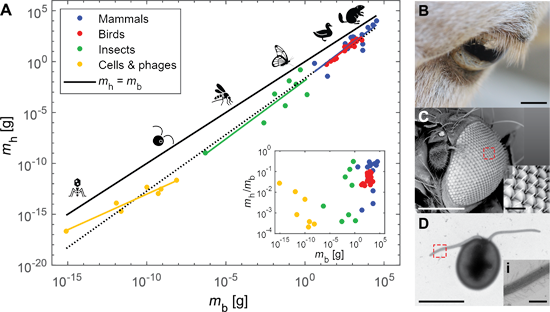
- honey bees have been found to facilitate both the collection and removal of pollen grains through the geometries of the hair arrays on their eyes and grooming appendages [44]. Mammalian fur effectively sheds contaminants because the hair deflects when exposed to a fluid flow. This deflection generates a
- shear flow that removes contaminants [45]. In addition to superhydrophobicity, in certain water plants, such as Salvinia spp., specialized structures have been observed to combine superhydrophobicity and superhydrophilicity [46]. In these plants, the fiber-like structures have hydrophilic tips, while
- together to prevent gaps between feathers [74]. Beyond forming the aerodynamic surfaces necessary for flight, feathers often exhibit species-specific adaptations. For example, owls have serrations on their leading-edge primary feathers, which are known to reduce noise during flight by mitigating flow


Exfoliation of titanium nitride using a non-thermal plasma process
Beilstein J. Nanotechnol. 2024, 15, 631–637, doi:10.3762/bjnano.15.53
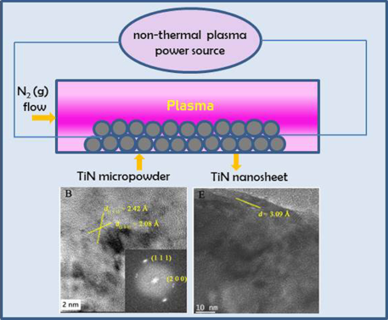
- flow. The arc was generated between a 316 L steel electrode and another electrode composed of graphite. The process lasted 60 min. Subsequently, the resultant material was collected, rinsed in a 1:1 mixture of water and isopropanol, and decanted for 24 h. Then, the liquid phase was filtered using a



Comparative analysis of the ultrastructure and adhesive secretion pathways of different smooth attachment pads of the stick insect Medauroidea extradentata (Phasmatodea)
Beilstein J. Nanotechnol. 2024, 15, 612–630, doi:10.3762/bjnano.15.52
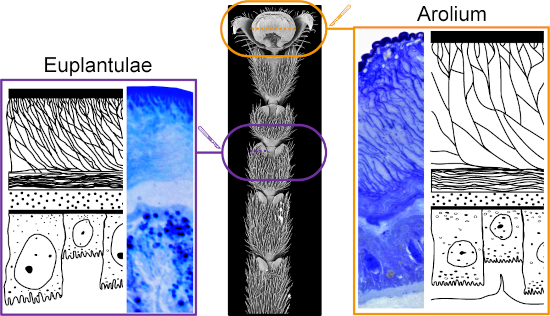
- layer may potentially restrict the flow of adhesive secretion, thereby reducing the risk of excessive fluid production. Schmitt and Betz [45] also postulated a comparable transport pathway for adhesive secretions in the smooth attachment pads of G. portentosa. There, the adhesive secretion produced by