


Search results
Search for "gas sensors" in Full Text gives 108 result(s) in Beilstein Journal of Nanotechnology.
Structural, optical and photocatalytic properties of flower-like ZnO nanostructures prepared by a facile wet chemical method
Beilstein J. Nanotechnol. 2013, 4, 763–770, doi:10.3762/bjnano.4.87
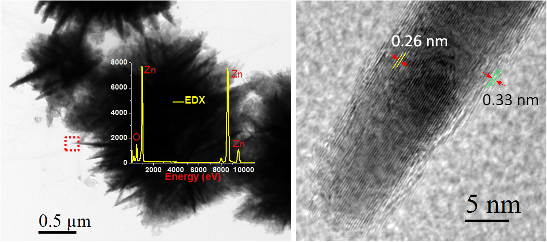
- ], gas sensors [29][30], clean energy applications [31] and UV detection [32]. Xia et al. [12] synthesized nanostructured ZnO flowers made up of bundled nanochains that could detect dopamine in the presence of L-ascorbic acid with high sensitivity and selectivity. Flower-shaped ZnO nanostructures were


Evolution of microstructure and related optical properties of ZnO grown by atomic layer deposition
Beilstein J. Nanotechnol. 2013, 4, 690–698, doi:10.3762/bjnano.4.78
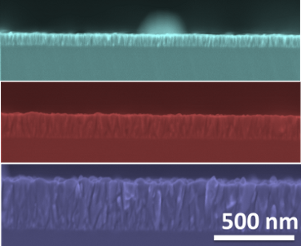
- (3.36 eV), a high dielectric constant, a high exciton binding energy (60 meV), and a high thermal stability [1]. Hence it is an important material for different applications in devices such as gas sensors [2], biosensors [3], transducers [4], solar cells [5][6][7], electronic and optoelectronic


Functionalization of vertically aligned carbon nanotubes
Beilstein J. Nanotechnol. 2013, 4, 129–152, doi:10.3762/bjnano.4.14
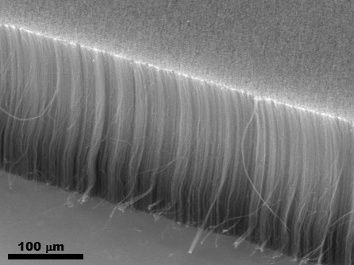
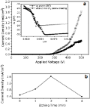
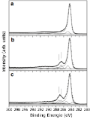
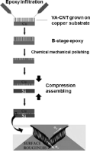
- to the CNT tips. The polymer-masking methodology was also used to manufacture highly efficient gas sensors [147]. VA-CNTs were embedded in a polymer matrix (e.g., poly(vinyl acetate) or polyisoprene) and two gold electrodes were sputtered onto the surface of the sample. A change of the charge








Zeolites as nanoporous, gas-sensitive materials for in situ monitoring of DeNOx-SCR
Beilstein J. Nanotechnol. 2012, 3, 667–673, doi:10.3762/bjnano.3.76
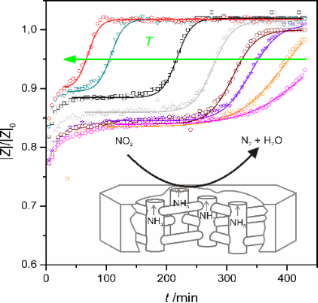
- also applied in gas sensors [12][13][14][15][16][17]. They are proton conductors due to the mobility of the charge-compensating protons. By means of impedance spectroscopy (IS) [18][19][20][21] and quantum chemical calculations on H-ZSM-5 [22][23], we showed in previous works that protons can move


Functionalised zinc oxide nanowire gas sensors: Enhanced NO2 gas sensor response by chemical modification of nanowire surfaces
Beilstein J. Nanotechnol. 2012, 3, 368–377, doi:10.3762/bjnano.3.43
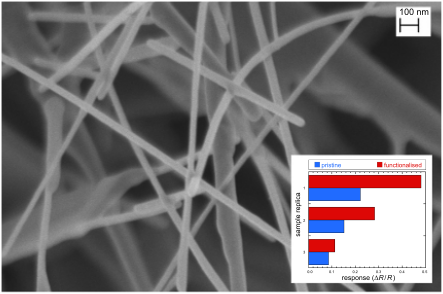
- ) sensor toward particular target gases in the environment. In this study the effect of an adsorbed organic layer on the dynamic response of zinc oxide nanowire gas sensors was investigated. The effect of ZnO surface functionalisation by two different organic molecules, tris(hydroxymethyl)aminomethane
- target are positive results arising from the coating of these ZnO nanowire sensors with organic-SAM-functionalised ZnO nanoparticles. Keywords: gas sensor; nanowire; tris(hydroxymethyl)aminomethane; self-assembled monolayer; zinc oxide; Introduction Semiconductor gas sensors have been extensively
- innovations in the semiconductor gas-sensing field are still in demand [1][2][3]. Impedance-semiconductor gas sensors typically operate at temperatures greater than 200 °C [4][5]. High operating temperatures are generally required to maximise the sensor response to target gases, either to activate the


Nanostructures for sensors, electronics, energy and environment
Beilstein J. Nanotechnol. 2012, 3, 351–352, doi:10.3762/bjnano.3.40

- and reduce the power consumption in gas sensors. Nanoelectronics is the next step in the electronic roadmap, with many devices currently in production already containing components smaller than 100 nm. Molecules [1][2] and conducting polymers [3] are at the forefront of this research with the goal of
Noncontact atomic force microscopy study of the spinel MgAl2O4(111) surface
Beilstein J. Nanotechnol. 2012, 3, 192–197, doi:10.3762/bjnano.3.21
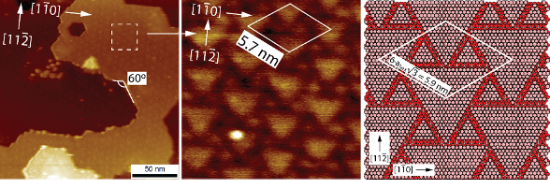
- ); polar surfaces; reconstructions; spinel; Introduction While the application of metal oxides in, e.g., catalysis, gas sensors, fuel cells, high-k dielectrics and corrosion protection has seen a very strong development, fundamental research on the surface properties of metal oxides has been a topic of



Investigation on structural, thermal, optical and sensing properties of meta-stable hexagonal MoO3 nanocrystals of one dimensional structure
Beilstein J. Nanotechnol. 2011, 2, 585–592, doi:10.3762/bjnano.2.62
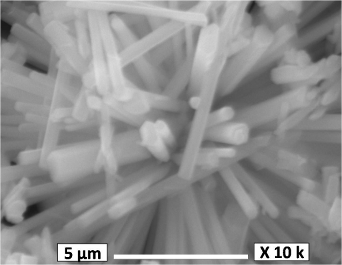
- always been one of the most fascinating challenges as the properties of nanomaterials are essentially determined by their phase, shape, size and chemical composition [1]. Recently, molybdenum oxide and its compounds have aroused interest for various potential applications, such as gas sensors, highly


Other Beilstein-Institut Open Science Activities



