Search results
Search for "human health" in Full Text gives 115 result(s) in Beilstein Journal of Nanotechnology.
An ISA-TAB-Nano based data collection framework to support data-driven modelling of nanotoxicology
Beilstein J. Nanotechnol. 2015, 6, 1978–1999, doi:10.3762/bjnano.6.202
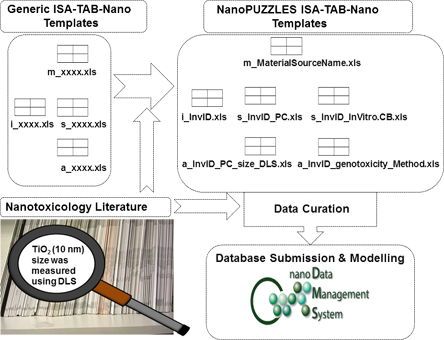
- potential risk posed by nanomaterials to human health and the environment [3][4][7]. Various research initiatives have been (and are being) funded to advance scientific understanding of nanotechnology and nanosafety and to enable the appropriate selection, design and regulation of nanomaterials for



Nanocuration workflows: Establishing best practices for identifying, inputting, and sharing data to inform decisions on nanomaterials
Beilstein J. Nanotechnol. 2015, 6, 1860–1871, doi:10.3762/bjnano.6.189
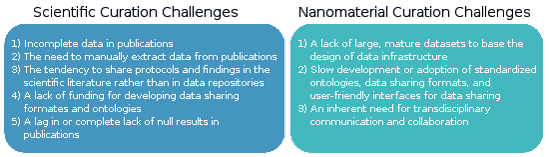
- implications of nanomaterials and their impact on human health and safety. While selection criteria regarding data sources remain a necessary element to the curation workflow, the NR uses an internally defined compliance score (minimal information about nanomaterials [MIAN]) to communicate the relative extent


Nanotechnology in the real world: Redeveloping the nanomaterial consumer products inventory
Beilstein J. Nanotechnol. 2015, 6, 1769–1780, doi:10.3762/bjnano.6.181
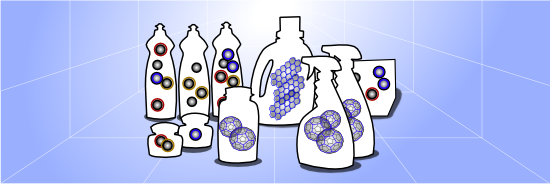
- incorporated into consumer products, although research is still ongoing on their potential effects to the environment and human health. This research will continue long into the future. To document the penetration of nanotechnology in the consumer marketplace, the Woodrow Wilson International Center for



How decision analysis can further nanoinformatics
Beilstein J. Nanotechnol. 2015, 6, 1594–1600, doi:10.3762/bjnano.6.162

- research [20]. The MCDA process identified pertinent criteria: synthesis cost, material efficiency, energy consumption, life cycle environmental impacts, and risks to human health. A probability distribution of scores for each technology was specified for each criterion via author judgment and the
Using natural language processing techniques to inform research on nanotechnology
Beilstein J. Nanotechnol. 2015, 6, 1439–1449, doi:10.3762/bjnano.6.149
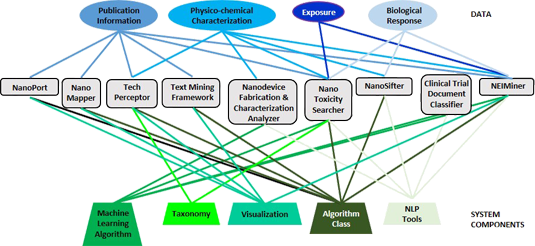
- spearheaded efforts to “get it right the first time” by studying the potential human health and environmental impacts of ENMs in parallel with ENMs discovery and development. However, the creation and establishment of data repositories as well as algorithms to automatically analyze the collected resources has
- potential effects of commercialized ENMs on human health and environment. A wealth of data has been collected through large-scale centers, which in the U.S. include the Center for Biological and Environmental Nanotechnology (CBEN) and the two Centers for Environmental Implications of Nanotechnology (CEIN
- the human health or environmental impact of ENMs, it is important to recognize that risk is a function of exposure and hazard. Without exposure, there is no risk. All substances are potentially hazardous depending on the dose or concentration encountered. In addition, the biological response data of
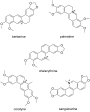
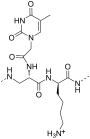
Natural and artificial binders of polyriboadenylic acid and their effect on RNA structure
Beilstein J. Nanotechnol. 2015, 6, 1338–1347, doi:10.3762/bjnano.6.138
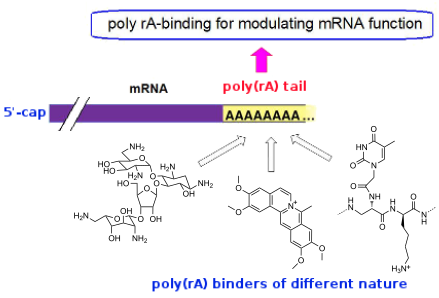
- some cases covalently, the polyadenylic tail present at the 3’-terminus of mRNA, an event that was linked to cancer development. Even if these molecules are clearly dangerous to human health, the study of the structural characteristics on the basis of their poly(rA) binding ability could aid in





Biological responses to nanoscale particles
Beilstein J. Nanotechnol. 2015, 6, 380–382, doi:10.3762/bjnano.6.37
- potentially negative effects cannot easily be predicted or derived from the known toxicity of the corresponding macroscopic material. Hence, major gaps in the knowledge necessary for assessing their risk to human health currently exist. There is also a lack of existing methodologies to improve techniques for
Gas sensing properties of nanocrystalline diamond at room temperature
Beilstein J. Nanotechnol. 2014, 5, 2339–2345, doi:10.3762/bjnano.5.243
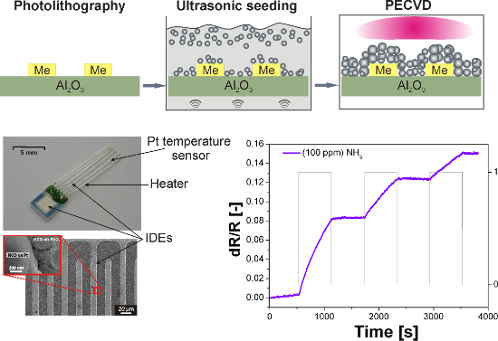
- electrodes; nanocrystalline diamond; response; Introduction Air pollution is one of the main environmental-health related threats. Increasing amounts of noxious pollutants are emitted into the atmosphere, resulting in damage to human health and the environment. There is great interest in using sensing


The gut wall provides an effective barrier against nanoparticle uptake
Beilstein J. Nanotechnol. 2014, 5, 2092–2101, doi:10.3762/bjnano.5.218
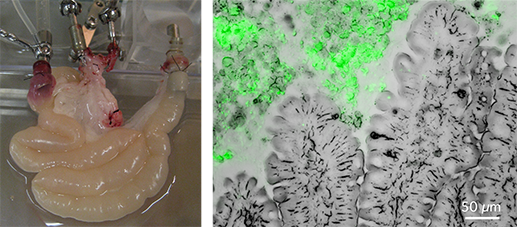
- products [1][2][3], incorporation of anthropogenic NPs, be it through inhalation or ingestion, becomes an issue. The public is increasingly worried about potential hazards such consumer good-borne NPs may pose to human health [4][5][6]. Besides that, work environments with metal grinders or welding
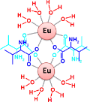
- (69 ± 14)% (luminal (33 ± 21)%, gut tissue including mucus (36 ± 14)%) of the total particle dose applied could be found when assayed through detection of the europium tracer. Discussion Potential hazards that incorporated NPs may pose to human health are subject of intense debates. A rapidly growing


Effects of surface functionalization on the adsorption of human serum albumin onto nanoparticles – a fluorescence correlation spectroscopy study
Beilstein J. Nanotechnol. 2014, 5, 2036–2047, doi:10.3762/bjnano.5.212
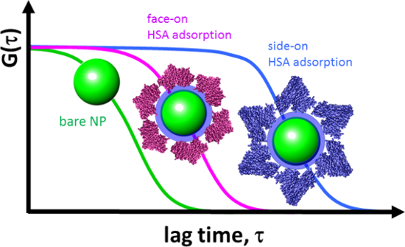
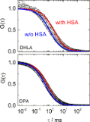
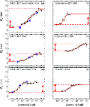
- scientific and commercial applications of nanoparticles (NPs) and other nanomaterials have been increasing at a rapid pace [1][2]. Human health can be adversely affected by NP exposure. A profound assessment of these risks, however, is not yet available because fundamental interactions of nanomaterials with



PVP-coated, negatively charged silver nanoparticles: A multi-center study of their physicochemical characteristics, cell culture and in vivo experiments
Beilstein J. Nanotechnol. 2014, 5, 1944–1965, doi:10.3762/bjnano.5.205

- vitro experiments, representative silver nanoparticle concentrations are not expected to induce acute cytotoxic or pro-inflammatory effects after 24 h exposure in a realistic environmental setting, therefore implicating to have a low impact on the human health. However, bioaccumulation of silver


Biocompatibility of cerium dioxide and silicon dioxide nanoparticles with endothelial cells
Beilstein J. Nanotechnol. 2014, 5, 1795–1807, doi:10.3762/bjnano.5.190
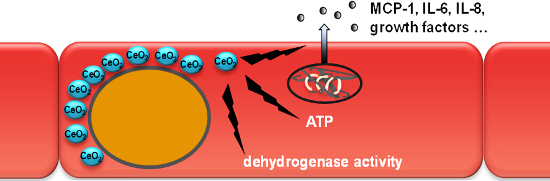
- markedly exposed to them in their everyday life. Once passing biological barriers, these nanoparticles are expected to interact with endothelial cells, leading to systemic alterations with distinct influences on human health. In the present study we observed the metabolic impact of differently sized CeO2
- not only from the consumption of products containing them, but also from their presence in the environment. Despite their widespread utilization, there is still uncertainty in the safety of these nanoparticles on human health, because appropriate experimental data are often contradictory. For example


Precise quantification of silica and ceria nanoparticle uptake revealed by 3D fluorescence microscopy
Beilstein J. Nanotechnol. 2014, 5, 1616–1624, doi:10.3762/bjnano.5.173
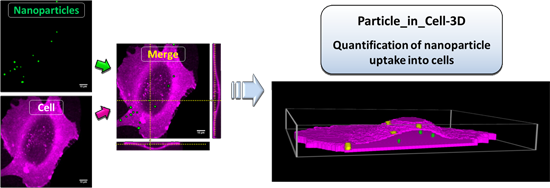
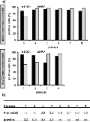
- , pulmonary, and neurologic systems [24][25]. Therefore, endothelial cells such as the ones used in the present study (HUVEC and HMEC-1) represent a very appropriate model system to estimate the impact of nanoparticles on human health. Results and Discussion Particle_in_Cell-3D Particle_in_Cell-3D [5] is a


Mimicking exposures to acute and lifetime concentrations of inhaled silver nanoparticles by two different in vitro approaches
Beilstein J. Nanotechnol. 2014, 5, 1357–1370, doi:10.3762/bjnano.5.149
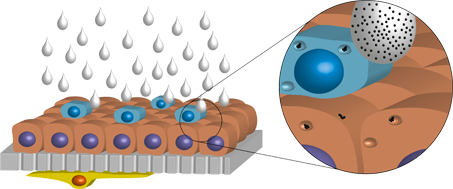
- been demonstrated [11]. Therefore, the effects of Ag NPs on human health and the environment are currently increasingly explored [12]. Human interaction with Ag NPs can occur through the lung, skin, gastrointestinal tract, and bloodstream. However, inhalation of Ag NPs is a primary concern for humans
- scenarios, revealing a low impact of Ag NPs on human health. Nevertheless, secondary effects of Ag NPs, when incorporated in the biological environment over time, cannot be ruled out by in vitro experiments and chronic inhalation studies of Ag NPs need to be considered in the future. Experimental Cell



Injection of ligand-free gold and silver nanoparticles into murine embryos does not impact pre-implantation development
Beilstein J. Nanotechnol. 2014, 5, 677–688, doi:10.3762/bjnano.5.80
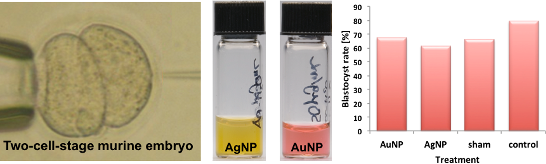
- . In particular, reprotoxicological aspects of these particles still need to be addressed so that the potential impacts of this development on human health can be reliably estimated. Therefore, in this study the toxicity of gold and silver nanoparticles on mammalian preimplantation development was