Search results
Search for "long-term stability" in Full Text gives 112 result(s) in Beilstein Journal of Nanotechnology.
Visible light photooxidative performance of a high-nuclearity molecular bismuth vanadium oxide cluster
Beilstein J. Nanotechnol. 2014, 5, 711–716, doi:10.3762/bjnano.5.83

- data suggest that in the 400–450 nm region, compound 1 might be employed as a homogeneous polyoxometalate photocatalyst with promising efficiencies for this compound class [5]. Recyclability of 1 To demonstrate the long-term stability and recyclability of 1, three consecutive photooxidative indigo
- irradiation, see Figure 5. The experimental series demonstrates that the cluster can be employed multiple times and catalyst recycling under photooxidative conditions is indeed possible. Stability of 1 under irradiation To understand the long-term stability of 1, long-irradiation runs with high substrate


A visible-light-driven composite photocatalyst of TiO2 nanotube arrays and graphene quantum dots
Beilstein J. Nanotechnol. 2014, 5, 689–695, doi:10.3762/bjnano.5.81
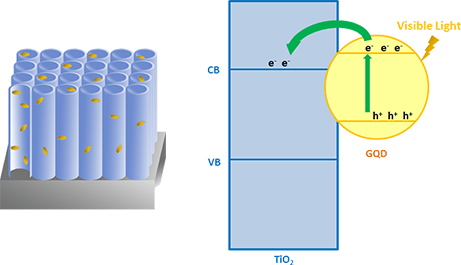
- ][2]. Among various photocatalysts, nanostructured titanium dioxide (TiO2) is the most widely used because of its high activity, long-term stability and low production cost [3][4]. However, pure TiO2 is not efficient for solar-driven applications because it requires UV excitation [5]. Belonging to one


Plasma-assisted synthesis and high-resolution characterization of anisotropic elemental and bimetallic core–shell magnetic nanoparticles
Beilstein J. Nanotechnol. 2014, 5, 466–475, doi:10.3762/bjnano.5.54
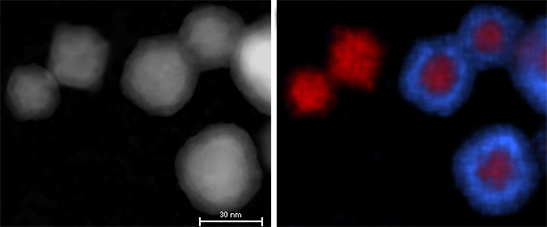
- shell consists of an oxygen-rich outer part of several nanometers thickness, which is in agreement with previous HRTEM bright field image results. Finally, the long-term stability of the samples has been analyzed. CS-NPs have therefore been stored for 12 months under ambient air conditions. Subsequent


Structural development and energy dissipation in simulated silicon apices
Beilstein J. Nanotechnol. 2013, 4, 941–948, doi:10.3762/bjnano.4.106
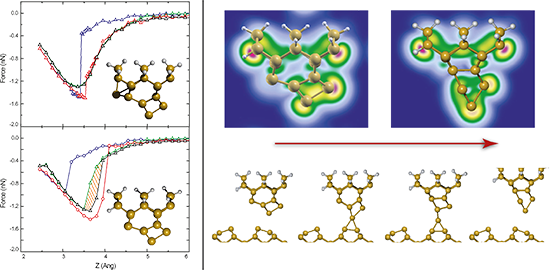
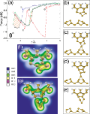
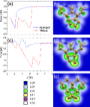
- –sample forces and the long-term stability of the tip apex. We observe that the rotation of the simulated tip cluster around the surface normal axis can have a dramatic effect on the stability of the tip apex such that at particular alignments permanent structural deformations occur which lead to new


Electrochemical and electron microscopic characterization of Super-P based cathodes for Li–O2 batteries
Beilstein J. Nanotechnol. 2013, 4, 665–670, doi:10.3762/bjnano.4.74
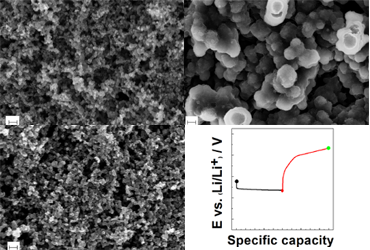
- able to give the desired discharge products, even if their long-term stability is still questionable [9][10][11][12][13][14][15]. In view of this, we present an investigation of the lithium-oxide phases that are generated during the operation of Li–O2 batteries, which use LiTFSI/tetraglyme as the


Novel composite Zr/PBI-O-PhT membranes for HT-PEFC applications
Beilstein J. Nanotechnol. 2013, 4, 481–492, doi:10.3762/bjnano.4.57
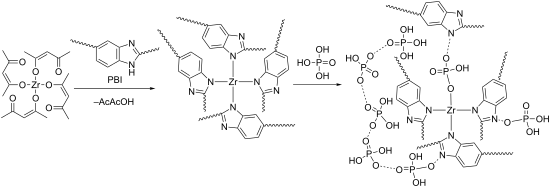
- hydrogen produced by natural gas reforming, at the place of consumption. On the way to commercialization, however, this promising type of PEFC still faces several problems concerning its long term stability and the overall efficiency of electrode and membrane materials. These properties should be further


Kelvin probe force microscopy of nanocrystalline TiO2 photoelectrodes
Beilstein J. Nanotechnol. 2013, 4, 418–428, doi:10.3762/bjnano.4.49
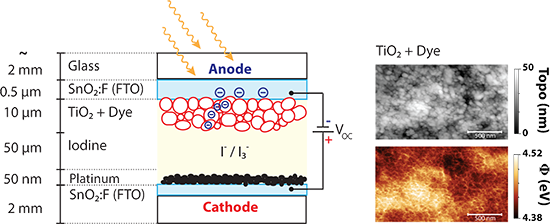
- ., surface topography and potential, are still unclear and have the potential to increase the efficiency and long-term stability of the devices. Investigations of nanoscaled photovoltaic devices require nanometer-scale measuring methods, including time-resolved measurements of the carrier dynamics [15][16


Near-field effects and energy transfer in hybrid metal-oxide nanostructures
Beilstein J. Nanotechnol. 2013, 4, 306–317, doi:10.3762/bjnano.4.34
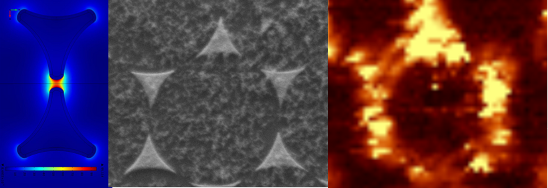
- . Typically, noble metals are used for the metal nanostructures, since they offer both long term stability and strong resonant enhancements in the range of visible light. A general review of materials aspects in nanotechnology-based approaches in energy technology can be found in [8]. From the examples given








Reversible mechano-electrochemical writing of metallic nanostructures with the tip of an atomic force microscope
Beilstein J. Nanotechnol. 2012, 3, 824–830, doi:10.3762/bjnano.3.92
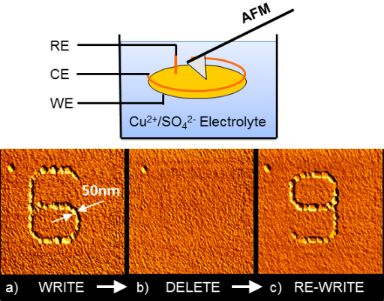
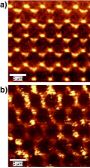
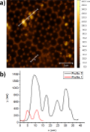
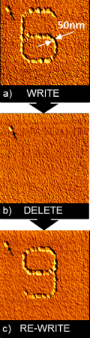
- -selective electrochemical deposition. Here, we demonstrate the reversibility of this process and study the long-term stability of the resulting metallic structures. The remarkable stability for more than 1.5 years under ambient air without any observable changes can be attributed to self-passivation. After
- electrochemical deposition on the nanometer scale, e.g., by mechanically depassivating a surface. Here, we study this process in more detail. We demonstrate that the technique of AFM-tip-induced mechano-electrochemical writing is fully reversible, and we investigate the long-term stability of the resulting
- key feature for the technological relevance and application perspectives of electrochemically deposited nanostructures is their long-term stability. The nanostructures have to remain stable under ambient air after being taken out of the electrolyte. To study the long-term stability of


Low-temperature synthesis of carbon nanotubes on indium tin oxide electrodes for organic solar cells
Beilstein J. Nanotechnol. 2012, 3, 524–532, doi:10.3762/bjnano.3.60
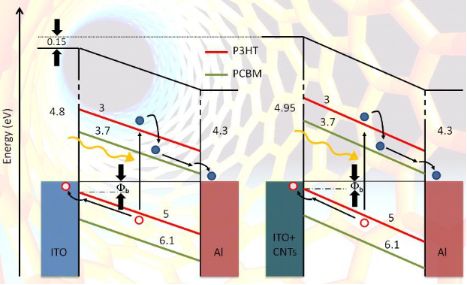
- the PCE of OSCs; or, once the process would be refined, they could become a suitable replacement for PEDOT:PSS, with the aim of improving the interface morphology without compromising the long-term stability of the cell. To this end, more research should be devoted to obtain a more uniform and ohmic




Superhydrophobic surfaces of the water bug Notonecta glauca: a model for friction reduction and air retention
Beilstein J. Nanotechnol. 2011, 2, 137–144, doi:10.3762/bjnano.2.17
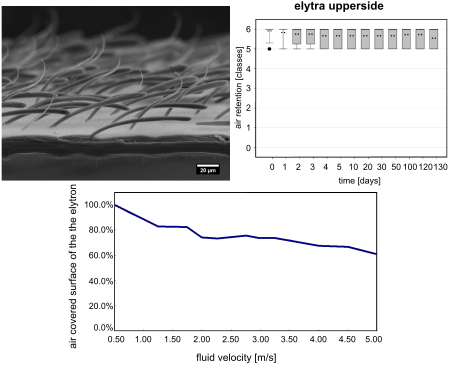
- hold additional air for respiration. The volume of the air might be more relevant than long term stability of the air film because the air store in this area is frequently renewed. The underside of the elytra with a dense but pure microtrichia cover showed high air film persistence. This observation



Preparation and characterization of supported magnetic nanoparticles prepared by reverse micelles
Beilstein J. Nanotechnol. 2010, 1, 24–47, doi:10.3762/bjnano.1.5