Search results
Search for "penetration depth" in Full Text gives 130 result(s) in Beilstein Journal of Nanotechnology.
Two step formation of metal aggregates by surface X-ray radiolysis under Langmuir monolayers: 2D followed by 3D growth
Beilstein J. Nanotechnol. 2015, 6, 2406–2411, doi:10.3762/bjnano.6.247
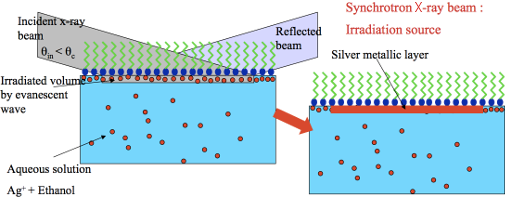
- layer, the X-ray beam induces the radiolytic synthesis of a nanostructured metal–organic layer whose ultrathin thickness is defined by the vertical X-ray penetration depth. We have shown that increasing the X-ray flux on the surface, which considerably enhances the kinetics of the silver layer formation
- thickness of the formed layer (here, 4.5 nm thick) created with this process is determined by the penetration depth of the X-ray evanescent wave [4]. Hence, we termed this method surface X-ray radiolysis. Based on the analysis of the intensity and the shape of the diffraction peaks that emerge in the
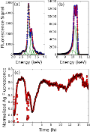
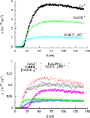
- shows strong fluctuations. The first regime associated with the fluorescence intensity increase can be associated with an increase of the amount of silver atoms in the irradiated volume, defined by the X-ray footprint (1 × 50 mm2) and the penetration depth (4.6 nm) of X-rays. Comparing this curve to the


Fabrication of hybrid nanocomposite scaffolds by incorporating ligand-free hydroxyapatite nanoparticles into biodegradable polymer scaffolds and release studies
Beilstein J. Nanotechnol. 2015, 6, 2217–2223, doi:10.3762/bjnano.6.227
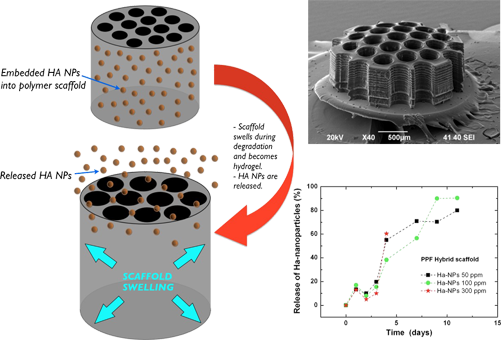
- , and FTIR measurements similar to a previous work performed on Au NPs embedded in the same polymer matrix [19]. Shortly, 2D samples were made to measure the changes of penetration depth (and thus, the layer thickness), while five layer, non-porous circular scaffolds with 2 mm diameter were prepared for
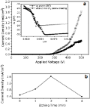
- achieve direct compatibility between the particles and the PPF resin. As seen in Figure 2a, the added nanoparticles only barely affected the penetration depth of the light from the XeCl excimer laser (308 nm) even with the highest particle concentration. On the other hand, TGA (Figure 2a inset) and


Development of a novel nanoindentation technique by utilizing a dual-probe AFM system
Beilstein J. Nanotechnol. 2015, 6, 2015–2027, doi:10.3762/bjnano.6.205
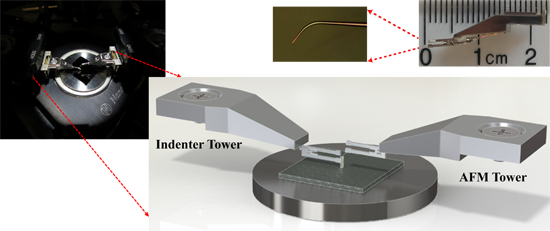
- surface and accordingly guarantee the angle of the tip relative to the fork and the angle of the fork relative to the mount. Penetration depth is measured by the second tower with a specifically fabricated cantilevered AFM glass probe tips coated with Cr. These probes have a cantilever length of 300 μm


The role of low-energy electrons in focused electron beam induced deposition: four case studies of representative precursors
Beilstein J. Nanotechnol. 2015, 6, 1904–1926, doi:10.3762/bjnano.6.194
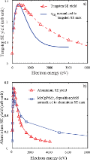
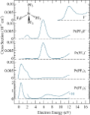
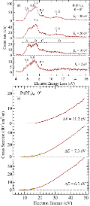
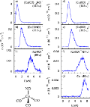
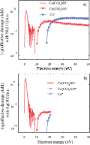
- represents the distributions of SE energies while the latter means the total SE yield as function of PE energy. The principal variable determining the influence of the PE energy on the SE yield at the surface is their penetration depth. This, in turn, depends mainly on the Z-value of the substrate. In








Lower nanometer-scale size limit for the deformation of a metallic glass by shear transformations revealed by quantitative AFM indentation
Beilstein J. Nanotechnol. 2015, 6, 1721–1732, doi:10.3762/bjnano.6.176
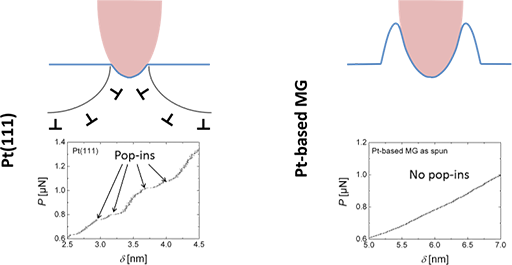
- suitable alternative to determine the hardness of a material, even when the remaining indent is too small to be accurately imaged. The projected area is then determined from the penetration depth with the help of an indenter-area function [2]. Meanwhile the Berkovich indenter with a half-opening angle α
- compliant sample surface, an extension of the z-scanner also leads to a penetration of the AFM tip into the sample surface by the penetration depth δ = Z − D. While the cantilever deflection D is calibrated independently, the height value Z is subject to drift or creep effects of the piezoelectric scanner
- according to ΔZdrift = Δδ + ΔD = vdrift × t, where Δδ and ΔD are the differences in penetration depth and deflection with regard to the fastest measurement, vdrift is the drift velocity and t is the time. Subsequently, the penetration depth was re-evaluated according to δ = Z + ΔZdrift − D under the



Scanning reflection ion microscopy in a helium ion microscope
Beilstein J. Nanotechnol. 2015, 6, 1125–1137, doi:10.3762/bjnano.6.114
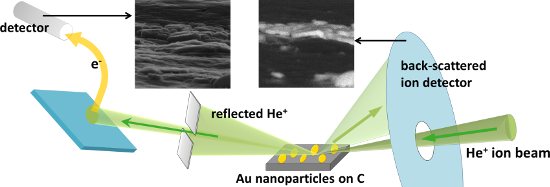
- asterisk is used to emphasize that the reflection coefficient near the step edge differs from the reflection coefficient of the bulk sample surface when the distance to the step edge is comparable with the ion penetration depth. Near the step edge some part of the incident beam penetrates through it with


Fabrication of high-resolution nanostructures of complex geometry by the single-spot nanolithography method
Beilstein J. Nanotechnol. 2015, 6, 976–986, doi:10.3762/bjnano.6.101
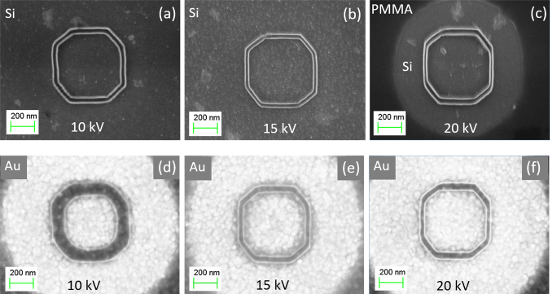
- determines the energy of the electron beam, and hence the penetration depth into the resist and substrate. The exposure dose refers to the number of inserted electrons in the primary electron beam. In the beginning, it was empirically found that at single spot doses less than 0.2 pC, the PMMA resist behaves
- that the electron backscattering coefficient for bulk Au is about three times larger than for bulk Si at an acceleration voltage of 10 kV [18]. The electron beam energy plays a very important role in the fabrication process because of its strong effect on the electron penetration depth and the number
- of inelastic collisions occurring in the resist. On the one hand, with an increase of the electron energy, the penetration depth increases, giving a narrow energy density distribution of primary electrons in the resist. On the other hand, at higher voltages, the number of polymer chain scissions per


In situ observation of biotite (001) surface dissolution at pH 1 and 9.5 by advanced optical microscopy
Beilstein J. Nanotechnol. 2015, 6, 665–673, doi:10.3762/bjnano.6.67
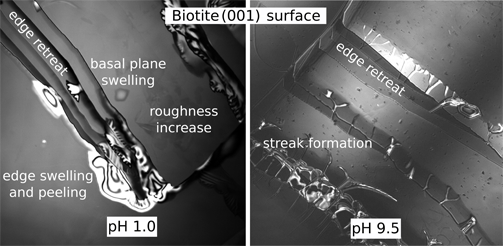
- of the streak structures, the reacted biotite surface was analysed by confocal Raman spectroscopy. The spectra of the unreacted (001) basal surface and that of the reacted surface with the streaks only showed biotite peaks (Figure 5). However, it should be noted that, owing to the penetration depth


Overview of nanoscale NEXAFS performed with soft X-ray microscopes
Beilstein J. Nanotechnol. 2015, 6, 595–604, doi:10.3762/bjnano.6.61
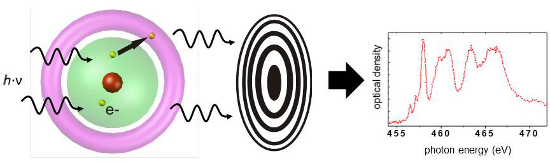
- nanostructures needs spatial resolution in the nanoscale range together with X-ray spectroscopy methods. X-ray microscopy reaches a higher Rayleigh resolution than optical microscopy as the resolution is decreasing linear with the wavelength. Additionally, the larger penetration depth and smaller radiation
- normally detect the photons which are transmitted through the sample. The penetration depth of X-rays and therefore the usable sample thickness correlates with the X-ray photon energy used for the analysis and is much larger than for electrons (Figure 2) [30]. In the soft X-ray regime penetration depths in
- energy. The penetration depth of X-rays is larger than for electrons. In the so called “water window”, i.e., between the carbon and oxygen absorption edges at 284 and 543 eV protein and water have quite different absorption values which leads to a natural absorption contrast. Reprinted with permission


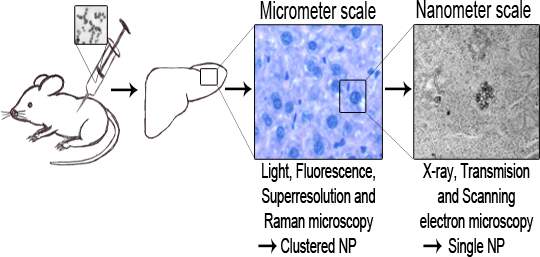
Overview about the localization of nanoparticles in tissue and cellular context by different imaging techniques
Beilstein J. Nanotechnol. 2015, 6, 263–280, doi:10.3762/bjnano.6.25
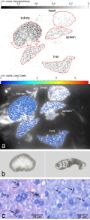
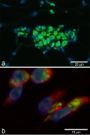
- in the soft regime and even tomographic analyses of biological samples of up to 10 µm thickness are possible [143]. Besides high contrast and penetration depth, synchrotron radiation in the soft X-ray regime may be tuned for spectromicroscopy and chemical identification of the X-ray absorbing



Oxygen-plasma-modified biomimetic nanofibrous scaffolds for enhanced compatibility of cardiovascular implants
Beilstein J. Nanotechnol. 2015, 6, 254–262, doi:10.3762/bjnano.6.24
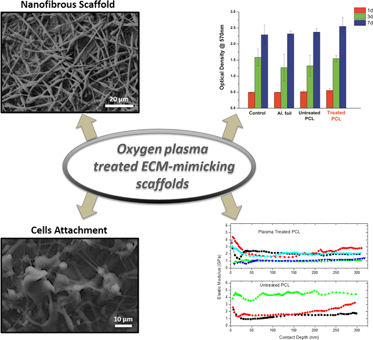
- locations of the samples to 300 nm maximum penetration depth. The nanoindentation load–displacement curves were analyzed by using the Oliver–Pharr model to calculate the elastic modulus of the samples versus the indenter penetration (contact) depth [31]. Cell studies MTT assay: MTT assay (Sigma-Aldrich


The distribution and degradation of radiolabeled superparamagnetic iron oxide nanoparticles and quantum dots in mice
Beilstein J. Nanotechnol. 2015, 6, 111–123, doi:10.3762/bjnano.6.11
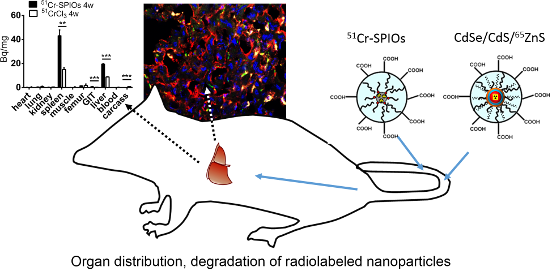
- the lack of appropriate techniques to reliably quantify the dynamic variation of Qdots in living animals. Fluorescent imaging has low spatial resolution and limited penetration depth, and quantification based only on such methods is limited. Functionalized SPIOs are also interesting candidates for





Low-cost plasmonic solar cells prepared by chemical spray pyrolysis
Beilstein J. Nanotechnol. 2014, 5, 2398–2402, doi:10.3762/bjnano.5.249
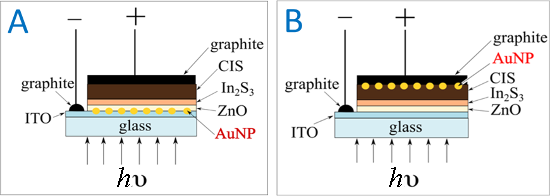
- . The penetration depth of the optical radiation (in the region of 400–900 nm) remains roughly between 0.1 and 1 μm within the CuInS2 absorber [16]. Since the thickness of the CuInS2 is approximately 350 nm, a significant gain of absorption was not expected for wavelength regions with a low penetration
- depth. However, longer wavelengths penetrate deeper into the absorber (or are transmitted) and hence can fully utilize the presence the Au-NPs on the rear side of the absorber. In addition, Au is also an excellent reflector for wavelengths greater than 600 nm. Furthermore, an increase in the optical


Interaction of dermatologically relevant nanoparticles with skin cells and skin
Beilstein J. Nanotechnol. 2014, 5, 2363–2373, doi:10.3762/bjnano.5.245
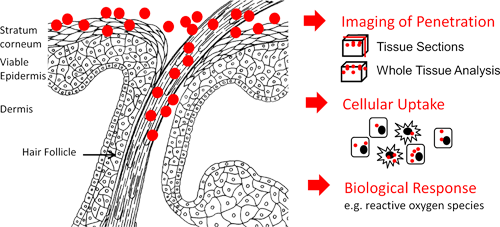
- generate valid data, however, it is not sufficient to rely on the penetration depth alone [9]. A deeper understanding can only be obtained by combining different approaches. Notably, X-ray microscopy could become a valuable tool for imaging with high spatial resolution combined with analysis of
- penetration of silver nanoparticles (AgNP, mean size 70 nm) in porcine ear skin. By tracking the Raman signal of AgNP, the mean penetration depth in intact skin was found to be 4.4 ± 1.5 µm, which is in accordance with other investigations on silica [3], zink oxide [19], or AgNP in this size range or smaller
- [20]. A pre-treatment with tape stripping of 20 adhesive tapes, which according to our own unpublished data corresponds to a removal of approximately 70–80% of the stratum corneum, only slightly increased the penetration depth to 5.1 ± 2.5 µm. Additionally, the penetration profile of AgNP was analyzed


Inorganic Janus particles for biomedical applications
Beilstein J. Nanotechnol. 2014, 5, 2346–2362, doi:10.3762/bjnano.5.244

- based on the little two photon-cross-section of most biomolecules leading to less auto-fluorescence, enhanced penetration depth within biological samples by tuning the excitation light to the biological window, near IR range 700–1000 nm. Furthermore, the effect of photobleaching can be reduced by






PVP-coated, negatively charged silver nanoparticles: A multi-center study of their physicochemical characteristics, cell culture and in vivo experiments
Beilstein J. Nanotechnol. 2014, 5, 1944–1965, doi:10.3762/bjnano.5.205



A reproducible number-based sizing method for pigment-grade titanium dioxide
Beilstein J. Nanotechnol. 2014, 5, 1815–1822, doi:10.3762/bjnano.5.192
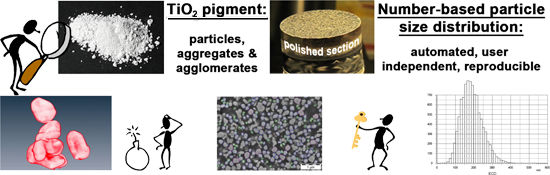
- of ECD and minimum Feret diameter of the pigment sections. Stereologic correction has not been performed, and is not feasible for this application [15][20]. Errors introduced by stereologic effects may gain importance if the size of the measured objects is large compared to the penetration depth of
- ensures comparability, not only within the set of images of one sample, but also between different samples or even between samples measured on different instruments with varying detector settings or noise levels. The comparability is sufficient, as long as the penetration depth of the electrons, which is


Probing viscoelastic surfaces with bimodal tapping-mode atomic force microscopy: Underlying physics and observables for a standard linear solid model
Beilstein J. Nanotechnol. 2014, 5, 1649–1663, doi:10.3762/bjnano.5.176
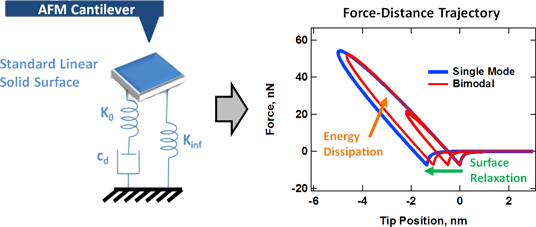
- oscillation loop (since the tip will travel up and down according to the second frequency oscillation while still remaining under the sample for a contact time dictated by the first oscillation frequency). However, as A2 increases and exceeds the penetration depth, the surface will only interact with single


Dry friction of microstructured polymer surfaces inspired by snake skin
Beilstein J. Nanotechnol. 2014, 5, 1091–1103, doi:10.3762/bjnano.5.122

- depth of the glass ball into the microstructures under a certain applied normal force is a combination of the material deformation and geometric conditions. Hence, this calculated penetration depth describes the minimal penetration depth between the tribo-pair. It is necessary to notice that the spacial


Scale effects of nanomechanical properties and deformation behavior of Au nanoparticle and thin film using depth sensing nanoindentation
Beilstein J. Nanotechnol. 2014, 5, 822–836, doi:10.3762/bjnano.5.94
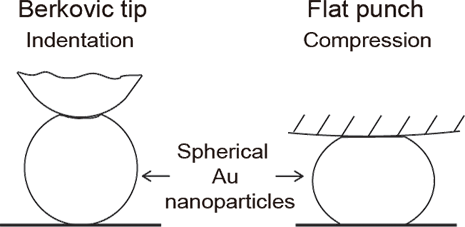
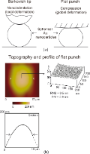
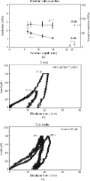
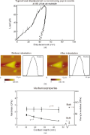
- than bulk. Both nanoparticles and film showed increasing hardness for decreasing penetration depth. For the film, creep and strain rate effects were observed. In comparison of nanoindentation and compression tests, more pop-ins during loading were observed during the nanoindentation of nanoparticles
- compression with a flat punch (global deformation). Data from the nanoindentation studies were compared with bulk to study scale effects on hardness. The effects of the penetration depth on hardness were investigated for nanoparticles and thin films. For the films, creep and strain rate tests were also






Modeling and optimization of atomic layer deposition processes on vertically aligned carbon nanotubes
Beilstein J. Nanotechnol. 2014, 5, 234–244, doi:10.3762/bjnano.5.25
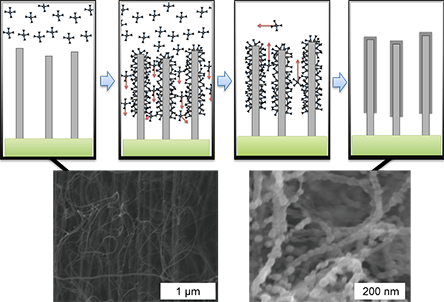
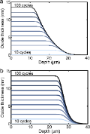
- -sized pores has demonstrated that the factor limiting the penetration depth of the oxide is the depth, to which the precursor molecules can diffuse in the pores and adsorb on the pore surface during the precursor exposure/adsorption step of the ALD process. The penetration depth of the oxide into the
- the CNTs with adsorbed precursors, as illustrated in Figure 1. Understanding how the penetration depth of the precursor varies with the ALD process parameters and radii of the CNTs could thus enable deposition recipes to be optimized to obtain a ceramic with uniform thickness to a desired penetration
- function of depth results from the decrease in the penetration depth from cycle to cycle. The model predicts that if the precursor exposure times are scaled as a function of cycle number, uniform depositions can be achieved. Finally, we experimentally confirm our model predictions. Results and Discussion



Friction behavior of a microstructured polymer surface inspired by snake skin
Beilstein J. Nanotechnol. 2014, 5, 83–97, doi:10.3762/bjnano.5.8
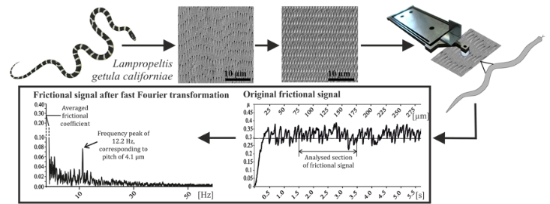
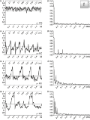
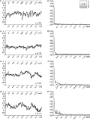
- microstructures, based on geometry only are listed in Table 4. It is necessary to notice that the spatial resolution of the microtribometer for cantilever deflection in normal direction is too low to detect the deflection on microstructures with pitch dimensions of 5 µm and 25 µm (penetration depth: 0.002 µm and




Template based precursor route for the synthesis of CuInSe2 nanorod arrays for potential solar cell applications
Beilstein J. Nanotechnol. 2013, 4, 868–874, doi:10.3762/bjnano.4.98
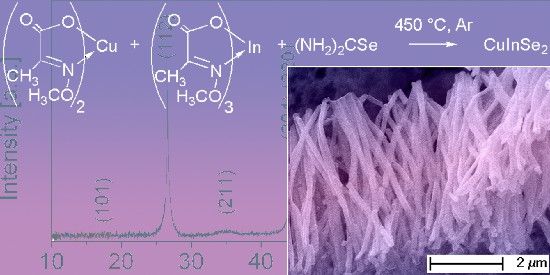
- indium selenide is characterised by a large absorption coefficient, and incident light can reach penetration depths only up to 100–200 nm, which results in a low signal intensity [22][23]. However, the penetration depth corresponds well with the nanorod diameter, and reliable information about the


Evolution of microstructure and related optical properties of ZnO grown by atomic layer deposition
Beilstein J. Nanotechnol. 2013, 4, 690–698, doi:10.3762/bjnano.4.78
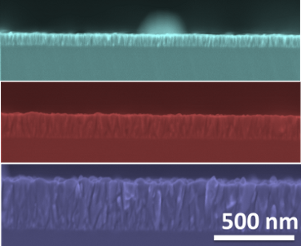
- while matching the thickness with an advancement of the crystalline structures. This finding correlates well with XRD data. Photoluminescence and absorption spectra. The penetration depth of the laser spot in the ALD deposited thin films estimated from transmittance data according to the Beer–Lambert


Functionalization of vertically aligned carbon nanotubes
Beilstein J. Nanotechnol. 2013, 4, 129–152, doi:10.3762/bjnano.4.14
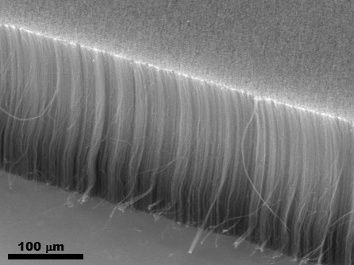
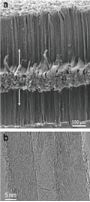
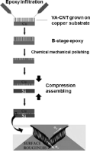
- polymer-free region (Figure 19). Mechanical insertion of a VA-CNT forest in a spin-cast PM allows the best control of the penetration depth [145]. A post-treatment consisting of the attachment of nanoparticles in the polymer-free region can take place (as discussed in the previous section), the