Search results
Search for "polarity" in Full Text gives 156 result(s) in Beilstein Journal of Nanotechnology.
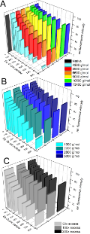
Properties of Ni and Ni–Fe nanowires electrochemically deposited into a porous alumina template
Beilstein J. Nanotechnol. 2016, 7, 1709–1717, doi:10.3762/bjnano.7.163
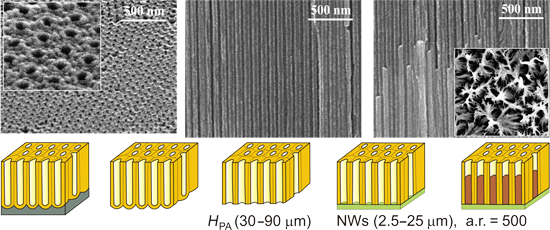
- high aspect ratio) [19]. During deposition in the alternating current mode (ac-deposition) [2][19][20] and pulsed electro-deposition with pauses between the opposite polarity pulses [21][22][23] etching of the pore walls during the cathodic polarity stage and during pauses occurs. It changes and


Analysis of self-heating of thermally assisted spin-transfer torque magnetic random access memory
Beilstein J. Nanotechnol. 2016, 7, 1676–1683, doi:10.3762/bjnano.7.160
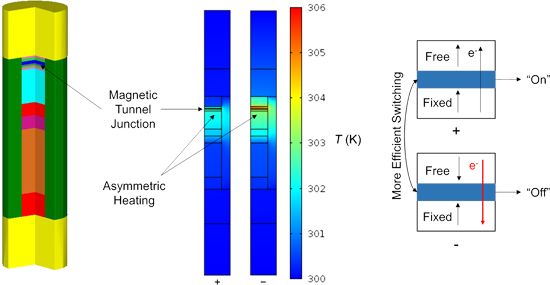
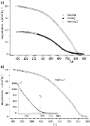
- tunneling junction. We compare self-heating for different common passivation materials, positive and negative electrical current polarity, and different device thermal anchoring and boundaries resistance configurations. The variations considered are found to result in significant differences in maximum
- temperatures reached. Average increases of 3 K, 10 K, and 100 K for different passivation materials, positive and negative polarity, and different thermal anchoring configurations, respectively, are observed. The highest temperatures, up to 424 K, are obtained for silicon dioxide as the passivation material
- , positive polarity, and low thermal anchoring with thermal boundary resistance configurations. Interestingly it is also found that due to the tunneling heat, Peltier effect, device geometry, and numerous interfacial layers around the magnetic tunnel junction (MTJ), most of the heat is dissipated on the





Photothermal effect of gold nanostar patterns inkjet-printed on coated paper substrates with different permeability
Beilstein J. Nanotechnol. 2016, 7, 1480–1485, doi:10.3762/bjnano.7.140
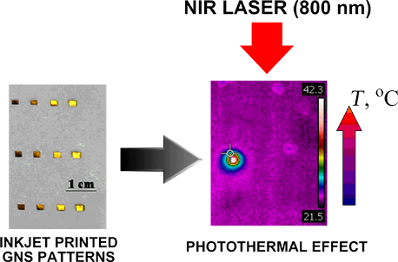
- commonly employed material that combines low-cost and excellent environmental compatibility [20]. Furthermore, the physical and chemical properties of this superb printing substrate (e.g., topography, roughness, stiffness, surface energy, polarity, porosity and pore geometry) can be easily tailored by


Influence of ambient humidity on the attachment ability of ladybird beetles (Coccinella septempunctata)
Beilstein J. Nanotechnol. 2016, 7, 1322–1329, doi:10.3762/bjnano.7.123
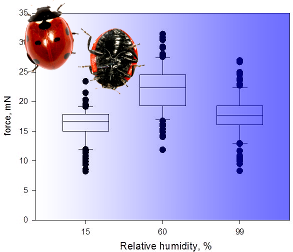
- by ambient humidity [16][17]. Due to its polarity it can work as a bonding agent between two surfaces, and therefore have a substantial effect on adhesion [18][19][20][21]. In insects the terminal contact elements of tenent setae are not dry, but rather wetted by a fluid secretion that is usually a


Tunable longitudinal modes in extended silver nanoparticle assemblies
Beilstein J. Nanotechnol. 2016, 7, 1219–1228, doi:10.3762/bjnano.7.113
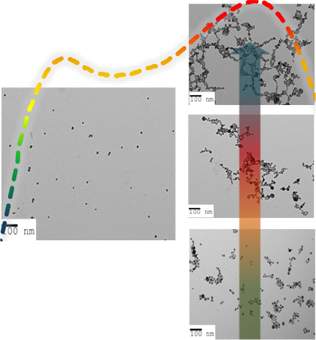
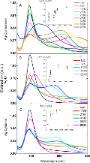
- File 1). Different pH values were used to test how H-bonding modulates the self-assembly and contributes to the stability of the assemblies. Protonating H-bonding moieties should reduce the ligand polarity and hence prevent nanoparticle assembly. Figure 5A clearly demonstrates this for AgNPs–cysteamine


High antiviral effect of TiO2·PL–DNA nanocomposites targeted to conservative regions of (−)RNA and (+)RNA of influenza A virus in cell culture
Beilstein J. Nanotechnol. 2016, 7, 1166–1173, doi:10.3762/bjnano.7.108
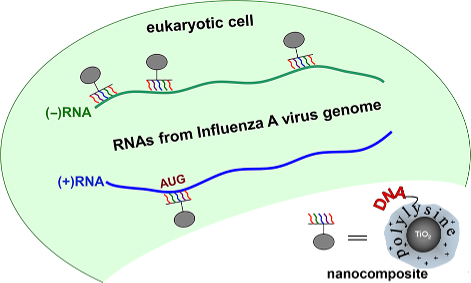
- -based drugs to affect IAV replication may contribute to the creation of therapeutic preparations, the activity of which would be less dependent on mutations. The IAV genome contains eight single-stranded RNA segments of negative polarity and belongs to the Ortomyxoviridae family. All eight segments are
- fragments with phosphodiester internucleotide bonds can be used without any additional modification. We investigated the antiviral action of eight nanocomposites of this type bearing DNA fragments complementary to eight conservative regions of RNA segment 5 of negative and positive polarity (Figure 1, Table


Reorientation of single-wall carbon nanotubes in negative anisotropy liquid crystals by an electric field
Beilstein J. Nanotechnol. 2016, 7, 825–833, doi:10.3762/bjnano.7.74
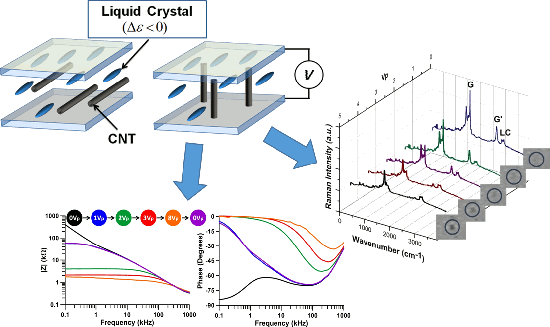
- according to the driving voltage under study. The LC reorientation is minimally affected by polarity changes by the use of a square signal. The low amplitude AC impedance probe signal (0.1Vrms) is added. The details about the results sampling have been described in [15]. The Raman measurements are made


Rigid multipodal platforms for metal surfaces
Beilstein J. Nanotechnol. 2016, 7, 374–405, doi:10.3762/bjnano.7.34

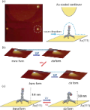
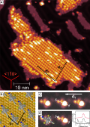
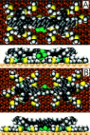
- tunneling. Electroluminescence from the excited molecules is a strongly unipolar process and depends on the polarity of the applied bias as revealed by STML spectra, which displayed electroluminescence exclusively at positive bias polarity (ca. 1.9 V). They attributed this unipolar behavior to both, the










Chemical bath deposition of textured and compact zinc oxide thin films on vinyl-terminated polystyrene brushes
Beilstein J. Nanotechnol. 2016, 7, 102–110, doi:10.3762/bjnano.7.12
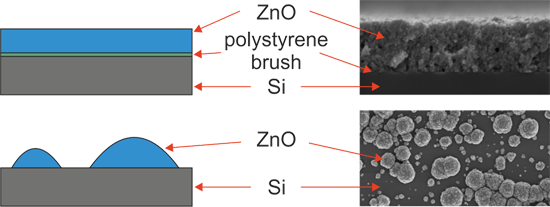
- the molecules. Since we measured a thickness of 1–2 nm for our PS films, we can calculate a nominal grafting density of 20–40% (0.164–0.329 molecules per nm2) for our brush system. The polarity of the different surfaces was investigated by ζ-potential and contact angle measurements. The isoelectric
- spectra (see Supporting Information File 1) show a decrease in intensity for the aromatic bands after the modification reaction, confirming the ATR results. Here it also seems that the transesterification process is incomplete and a PS Brush with modified properties (increased polarity and charge) is the


Blue and white light emission from zinc oxide nanoforests
Beilstein J. Nanotechnol. 2015, 6, 2463–2469, doi:10.3762/bjnano.6.255
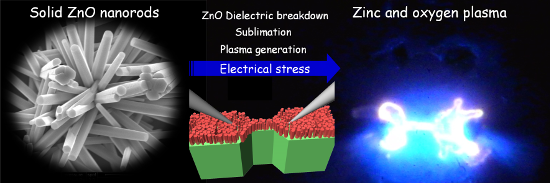
- during DC tests with an approximate probe distance of 10–15 μm. The probe locations and applied voltage polarity are as indicated in yellow (multimedia view). Frames extracted from high-resolution videos showing light emission from the ZnO nanorods contacted by tungsten probes during AC excitation of 10


Nanofibers for drug delivery – incorporation and release of model molecules, influence of molecular weight and polymer structure
Beilstein J. Nanotechnol. 2015, 6, 1939–1945, doi:10.3762/bjnano.6.198
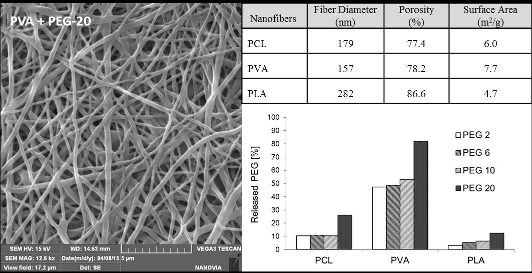
- PVA with water molecules during immersion – the PVA molecular structure contains hydroxy groups, which interact with water molecules at the expense of the interaction with PEG molecules, which are consequently released faster. The lower polarity of PCL and PLA and therefore weaker interaction with



Predicting cytotoxicity of PAMAM dendrimers using molecular descriptors
Beilstein J. Nanotechnol. 2015, 6, 1886–1896, doi:10.3762/bjnano.6.192
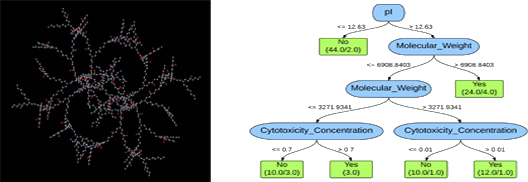
- polarizability, rotatable bond count, atom count, logD, aliphatic bond count, chain bond count, chain atom count, aliphatic atom count, exact mass, molecular weight, Wiener index, Randic index, Szeged index, Wiener polarity, Platt index, H-bond donor count, hyper Wiener index, H-bond donor sites, and H-bond


Template-controlled mineralization: Determining film granularity and structure by surface functionality patterns
Beilstein J. Nanotechnol. 2015, 6, 1763–1768, doi:10.3762/bjnano.6.180
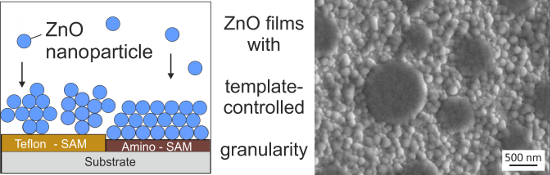
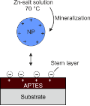
- controlling the properties of a self-assembling mineral film by means of the functionality and polarity of a substrate template. In the presented case, a zinc oxide film is deposited by chemical bath deposition on a nearly topography-free template structure composed of a pattern of two self-assembled
- topographically flat (<1 nm roughness), but chemically patterned surface as a template, it was possible to guide the deposition – mainly by means of surface polarity. While deposition took place at sites with amino functionalization, no deposition was observed at locations with a fluorinated surface functionality

Peptide-equipped tobacco mosaic virus templates for selective and controllable biomineral deposition
Beilstein J. Nanotechnol. 2015, 6, 1399–1412, doi:10.3762/bjnano.6.145
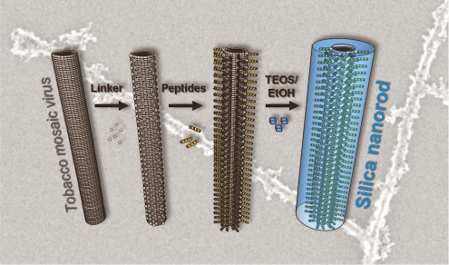
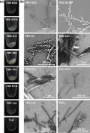
- ). Analyzing SiOH+ and several fragments characteristic of silica in negative polarity spectra (SiO2−, SiO3−, SiO3H−) indicated the same trend. Since the sample preparation method did not yield fully TMV-covered samples, the recorded mass spectra averaged over a field of view of 500 × 500 µm2 show individual




Closed-loop conductance scanning tunneling spectroscopy: demonstrating the equivalence to the open-loop alternative
Beilstein J. Nanotechnol. 2015, 6, 1116–1124, doi:10.3762/bjnano.6.113
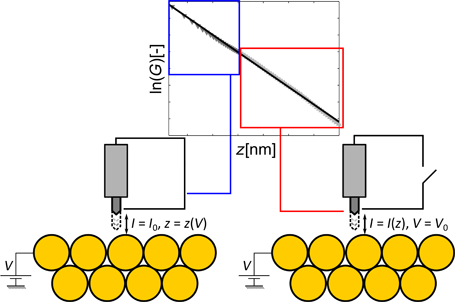
- voltage between the tip and sample causes the barrier to lower in an asymmetrical fashion: Any charge travelling between the tip and the sample will induce an image charge of equal magnitude but opposite polarity. In addition to lowering the barrier, the presence of an image charge effect will also narrow


Superluminescence from an optically pumped molecular tunneling junction by injection of plasmon induced hot electrons
Beilstein J. Nanotechnol. 2015, 6, 1100–1106, doi:10.3762/bjnano.6.111
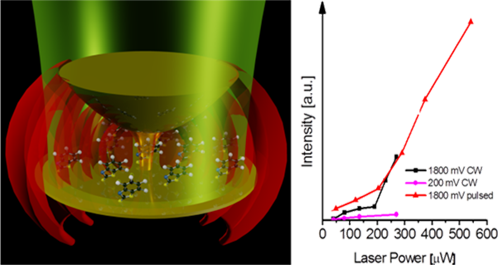
- 1 nA is kept constant, the negatively charged part of the molecules experiences an increasing attractive force towards the positively charged tip. In the low bias-voltage range, i.e., for |Ub| < 1000 mV, the spectra (Figure 1a and Figure 1b) change only moderately irrespective of the polarity of the
- Figure 2b. If the bias voltage is inverted, (negative tip and positive sample) we observe only a very weak electroluminescence band centered at 725 nm. In contrast, electroluminescence from a pure Au/Au junction induced by inelastic electron tunnelling is independent of the tip polarity [1][2][3][4][5


Fulleropeptide esters as potential self-assembled antioxidants
Beilstein J. Nanotechnol. 2015, 6, 1065–1071, doi:10.3762/bjnano.6.107
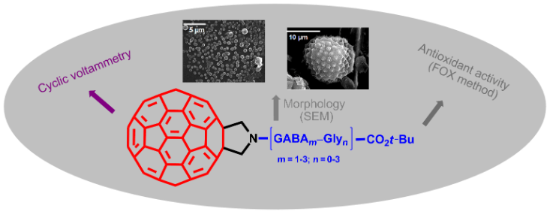
- concentration. It was shown that the longer peptide chain facilitates the formation of a network structure as a consequence of stronger, arranged interparticle associations. The solid samples of the control compound 1, obtained by precipitation from a CHCl3/CS2 solution with solvents of different polarity (i.e
- morphology were carried out with SEM, using a JEOL JSM-840A instrument, at an acceleration voltage of 30 kV. The solid samples were prepared by precipitation from a CHCl3/CS2 solution with solvents of different polarity (i.e., MeOH, Et2O or hexane), and subsequent drying under vacuum. A small amount of each


Manipulation of magnetic vortex parameters in disk-on-disk nanostructures with various geometry
Beilstein J. Nanotechnol. 2015, 6, 697–703, doi:10.3762/bjnano.6.70
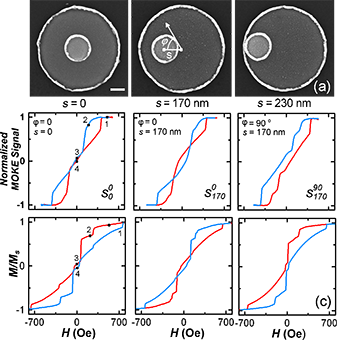
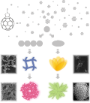
- different combinations of polarity and chirality [2]. Polarity (up or down out-of-plane component of magnetization in the central core of the vortex state) can be controlled by an external magnetic field aligned perpendicular to a disk plane. This method is complicated to be used for microelectronic


In situ scanning tunneling microscopy study of Ca-modified rutile TiO2(110) in bulk water
Beilstein J. Nanotechnol. 2015, 6, 438–443, doi:10.3762/bjnano.6.44
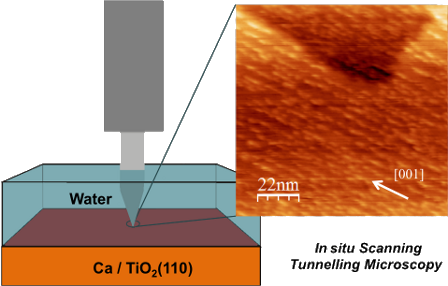
- shown. The sample was transferred from the UHV chamber to the STM cell and then immersed in high purity water (see Experimental section for details). STM images of the surface shown in Figure 2 were recorded in water after approximately two hours of immersion. In the chosen tip polarity (the sample is


Electrical response of liquid crystal cells doped with multi-walled carbon nanotubes
Beilstein J. Nanotechnol. 2015, 6, 396–403, doi:10.3762/bjnano.6.39
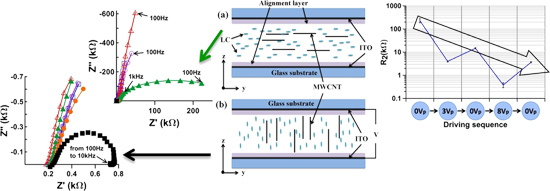
- alignment layers. To avoid this issue, DC bias has been substituted by a low frequency (0.5 Hz) AC square wave to which the low amplitude AC probe voltage signal is added up (Figure 7). Being a square signal, reorientation of the LC is minimally affected by polarity changes. However, sampling is performed


Overview about the localization of nanoparticles in tissue and cellular context by different imaging techniques
Beilstein J. Nanotechnol. 2015, 6, 263–280, doi:10.3762/bjnano.6.25
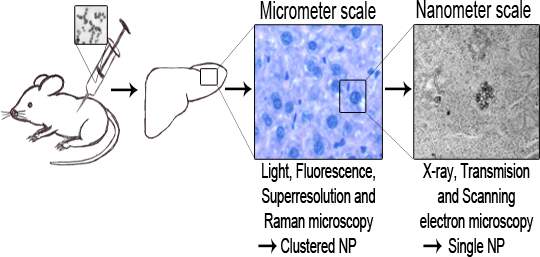
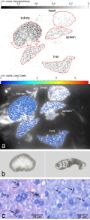
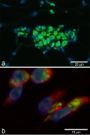
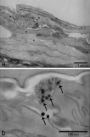
- fluorochrome can be monitored independently of the fluorochrome concentration [102]. FLIM gains its information from the fluorescence decay curves and applications of this technique include environmental sensing of, amongst others, polarity, local pH, and calcium concentrations, as well as the study of protein



Oxygen-plasma-modified biomimetic nanofibrous scaffolds for enhanced compatibility of cardiovascular implants
Beilstein J. Nanotechnol. 2015, 6, 254–262, doi:10.3762/bjnano.6.24
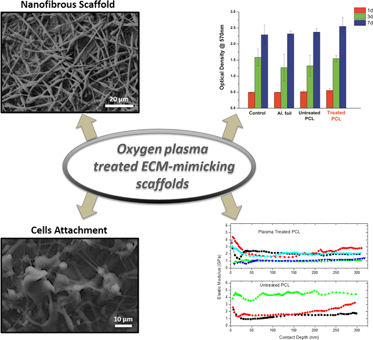
- functional groups are created. This leads to an increase in the polarity and the surface energy, resulting in a roughened topography. Higher plasma power (P = 40 W) significantly decreased Ra resulting into smoother nanofibrous surfaces compared to the untreated samples, due to the partial polymer melting


Tailoring the ligand shell for the control of cellular uptake and optical properties of nanocrystals
Beilstein J. Nanotechnol. 2015, 6, 232–242, doi:10.3762/bjnano.6.22
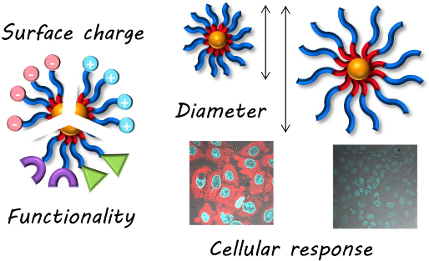
- the polymers were determined based on the varying fluorescence properties of pyrene, depending on the polarity of the surrounding medium [21]. The values correlate well with the polymer size and lie between 6.0 × 10⁻⁷ M for the smallest and 1.5 × 10⁻⁷ M for the biggest polymer. Encapsulation methods






Kelvin probe force microscopy in liquid using electrochemical force microscopy
Beilstein J. Nanotechnol. 2015, 6, 201–214, doi:10.3762/bjnano.6.19
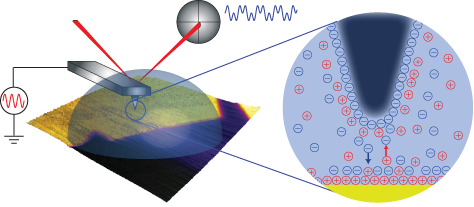
- () which contains information on the polarity and magnitude of the signal. Little to no relaxation of the electrostatic force is observed, with following the applied bias, and therefore satisfying the second principle of KPFM, a time-invariant electrostatic response. This is expected for a purely


![[Graphic 6]](/bjnano/content/inline/2190-4286-6-19-i11.png?max-width=637&scale=1.18182) response collected 200 nm above a grounded Au electrode in (a, b, c) air, (d, e, f) decane an...
response collected 200 nm above a grounded Au electrode in (a, b, c) air, (d, e, f) decane an...


![[Graphic 22]](/bjnano/content/inline/2190-4286-6-19-i27.png?max-width=637&scale=1.18182) spectra [bias-on] collected 500 nm above HOPG in aqueous solutions of increasing salt concent...
spectra [bias-on] collected 500 nm above HOPG in aqueous solutions of increasing salt concent...

![[Graphic 25]](/bjnano/content/inline/2190-4286-6-19-i30.png?max-width=637&scale=1.18182) spectra [bias-on] collected 500 nm above (a) HOPG and (b) Au in milli-Q water (vertical color...
spectra [bias-on] collected 500 nm above (a) HOPG and (b) Au in milli-Q water (vertical color...

![[Graphic 27]](/bjnano/content/inline/2190-4286-6-19-i32.png?max-width=637&scale=1.18182) spectra [bias-on] recorded 500 nm above a HOPG/Au boundary in milli-Q water. T...
spectra [bias-on] recorded 500 nm above a HOPG/Au boundary in milli-Q water. T...

Inorganic Janus particles for biomedical applications
Beilstein J. Nanotechnol. 2014, 5, 2346–2362, doi:10.3762/bjnano.5.244
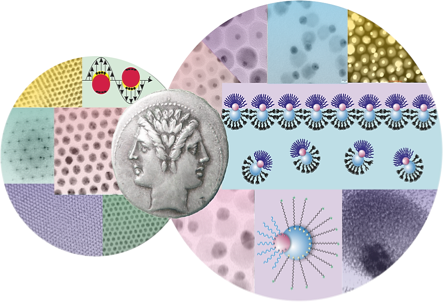
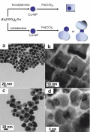
- formation of Cu@Fe3O4 heterodimers with different morphologies based on the use of solvents of various polarity (top) and corresponding (HR-)TEM images of (a, b) cube-shape, (c, d) cloverleaf-shape Cu@Fe3O4 heterodimerparticles (bottom). Reproduced with permission from [57]. Copyright 2011 The Royal Society