Search results
Search for "pyrolysis" in Full Text gives 117 result(s) in Beilstein Journal of Nanotechnology.
Purification of ethanol for highly sensitive self-assembly experiments
Beilstein J. Nanotechnol. 2014, 5, 1254–1260, doi:10.3762/bjnano.5.139
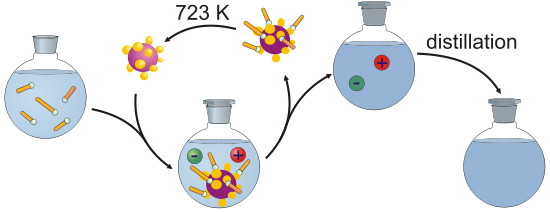
- fully regenerated via a simple pyrolysis protocol. Keywords: ethanol; gold nanoparticles; purification; self-assembled monolayers; solvent; Introduction Thirty years after their introduction [1][2][3], self-assembled monolayers (SAMs) of organothiolates have matured to an established tool for surface
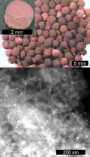
- pure, powdered zeolite. The color of these beads changed from off-white to yellow after immersion into the HAuCl4 solution and to violet upon pyrolysis in the tube furnace, indicative for the formation of the Au-NPs with their characteristic Mie scattering behavior [38]. Typical samples of zeolite
- can be expected. The idea to use the very same metal in a highly disperse form to remove these contaminants led to the application of gold-NPs on a highly porous support, zeolite. We could demonstrate that this material can conveniently be prepared by an impregnation/pyrolysis route. Optimization of

Organic and inorganic–organic thin film structures by molecular layer deposition: A review
Beilstein J. Nanotechnol. 2014, 5, 1104–1136, doi:10.3762/bjnano.5.123




Biomolecule-assisted synthesis of carbon nitride and sulfur-doped carbon nitride heterojunction nanosheets: An efficient heterojunction photocatalyst for photoelectrochemical applications
Beilstein J. Nanotechnol. 2014, 5, 770–777, doi:10.3762/bjnano.5.89
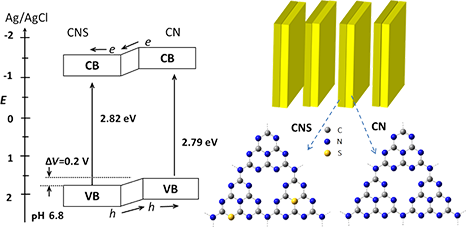
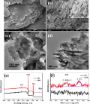
- Hua Bing Tao Hong Bin Yang Jiazang Chen Jianwei Miao Bin Liu School of Chemical and Biomedical Engineering, Nanyang Technological University, 62 Nanyang Drive, Singapore 637459, Singapore 10.3762/bjnano.5.89 Abstract A biomolecule-assisted pyrolysis method has been developed to synthesize sulfur
- properties including chemical and thermal stability, physical abundance, as well as suitable bandgap energy and band position [1][2][3][4]. The polymeric nature of CN could facilitate the tuning of the physical and chemical properties by simply changing the CN precursors, by varying the pyrolysis conditions
- ]. Herein, we employ a biomolecule-assisted (L-cysteine) pyrolysis method to synthesize sulfur-doped carbon nitride (CNS) nanosheets, which can serve as the framework to grow CN to form an all CN-based heterojunction composite. The formation of CN/CNS heterojunctions significantly improves the


Controlled synthesis and tunable properties of ultrathin silica nanotubes through spontaneous polycondensation on polyamine fibrils
Beilstein J. Nanotechnol. 2013, 4, 793–804, doi:10.3762/bjnano.4.90
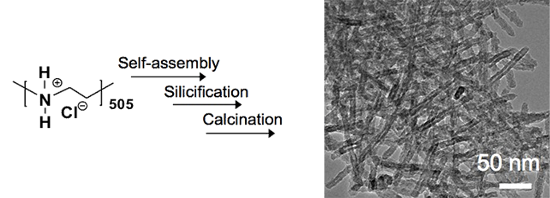
- , a distinct emission centered at 540 nm was observed for the silica nanotubes under a maximum excitation wavelength of 320 nm. In comparison, no obvious emission was observed for the silica nanoribbons treated under the same N2-atmosphere pyrolysis conditions. In addition, the pure silica nanotubes
- very mild silicification conditions (aqueous media, room-temperature and high efficiency), which could allow for an easy scale-up of silica nanotube fabrication and subsequently for wide technological applications. The silica nanotubes can be tuned to an emitter of visible light through the pyrolysis


Synthesis of indium oxi-sulfide films by atomic layer deposition: The essential role of plasma enhancement
Beilstein J. Nanotechnol. 2013, 4, 750–757, doi:10.3762/bjnano.4.85
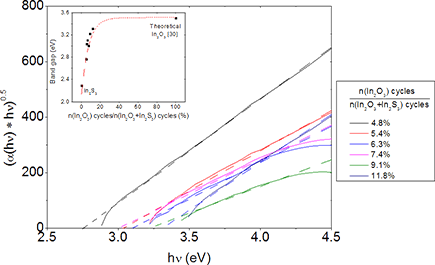
- pyrolysis technique, Maha et al. have inserted sulfur atoms in In2O3 thin films and obtained optical band gaps in the range from 3.85 to 3.96 eV [18]. Thus, based on our previous results and those studies, we became interested in adjusting the optical properties of In2S3 by incorporating oxygen atoms while



Influence of particle size and fluorination ratio of CFx precursor compounds on the electrochemical performance of C–FeF2 nanocomposites for reversible lithium storage
Beilstein J. Nanotechnol. 2013, 4, 705–713, doi:10.3762/bjnano.4.80
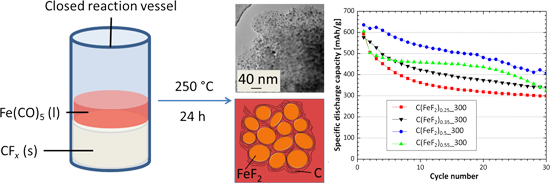
- the electrochemical performance of the metal fluoride conversion systems [20][21][22][23][24][25][26][27][28][29][30][31][32][33]. Recently, conversion systems with excellent cyclic stabilities were synthesized through the pyrolysis of metallocenes with LiF, in which agglomerates of LiF and transition


A facile synthesis of a carbon-encapsulated Fe3O4 nanocomposite and its performance as anode in lithium-ion batteries
Beilstein J. Nanotechnol. 2013, 4, 699–704, doi:10.3762/bjnano.4.79
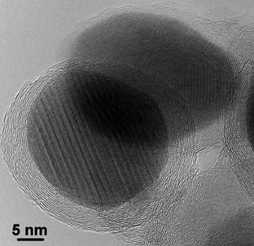
- -von-Helmholtz-Platz 1, Karlsruhe, 76344, Germany Helmholtz Institute Ulm (HIU), Albert-Einstein-Allee 11, Ulm, 89081, Germany 10.3762/bjnano.4.79 Abstract A carbon-encapsulated Fe3O4 nanocomposite was prepared by a simple one-step pyrolysis of iron pentacarbonyl without using any templates, solvents
- oxide; lithium-ion battery; nanoparticles; pyrolysis; Findings Due to high energy density and excellent cyclic performance, lithium-ion batteries (LIBs) have become the leading energy storage device for portable electronic markets and for powering upcoming electric vehicles [1][2]. In order to obtain
- , plasma synthesis, electro-spray, and laser pyrolysis techniques. Much improved electrochemical performances have been achieved with the modified materials [13]. However, all aforementioned methods need multi-step processes that include removing solvents, surfactants, or templates. Especially, the removal


Ferromagnetic behaviour of Fe-doped ZnO nanograined films
Beilstein J. Nanotechnol. 2013, 4, 361–369, doi:10.3762/bjnano.4.42
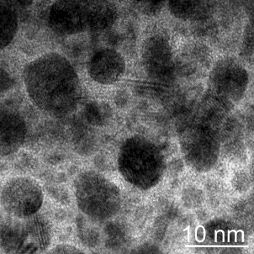
- deposited onto (102) single-crystalline sapphire substrates. Drying at 100 °C in air for about 30 min was followed by thermal pyrolysis in an electrical furnace in air at 550 °C. The Zn and Fe content in doped oxides was measured by atomic absorption spectroscopy in a Perkin-Elmer spectrometer and electron
- ][52][54][55][58][64] or nanopowders [24][29][32][41][42][46][53][56][59][65][66], or for films obtained by sol–gel method, pyrolysis, CVD or PLD [22][23][25][27][28][45]. If the samples mentioned in the analysed papers were not poreless, such as in the partly sintered powders (open and filled diamonds


Near-field effects and energy transfer in hybrid metal-oxide nanostructures
Beilstein J. Nanotechnol. 2013, 4, 306–317, doi:10.3762/bjnano.4.34
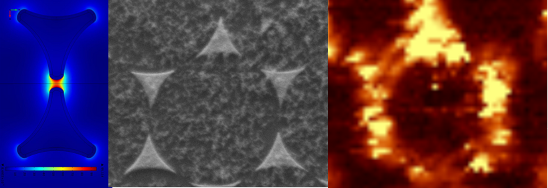
- . [16] on Eu-doped TiO2 nanoparticles with comparable Eu3+ concentration obtained by a plasma-pyrolysis synthesis route. The excitation spectrum of the TiO2:Eu nanoparticles is shown in Figure 4. The emission intensity at 617 nm was recorded and shows several maxima for excitation at around 400 nm as








Functionalization of vertically aligned carbon nanotubes
Beilstein J. Nanotechnol. 2013, 4, 129–152, doi:10.3762/bjnano.4.14
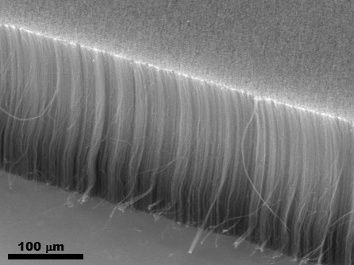
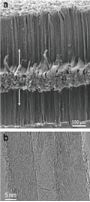
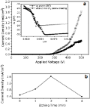
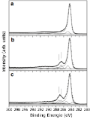
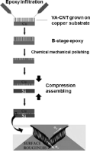
- involving a single synthesis step and those requiring double step synthesis. The single-step synthesis is based on the pyrolysis of organometallic precursors such as metallocenes [29][30]; this method was called “floating catalyst CVD” because it does not require the preparation of catalyst particles
- pyrolysis of iron(II) phthalocyanine (FePc) under Ar/H2 atmosphere at 800–1100 °C, which leads to the growth of vertically aligned carbon nanotubes in the plasma-patterned polymer-free regions. The highly cross-linked structure of the plasma-patterned polymer films guarantees the integrity of the polymer
- fibers was solved by Feng et al. who made well-aligned MWCNTs/PANI hybrid materials. The methodology is the following: (i) VA-CNTs are grown on a quartz substrate by catalytic pyrolysis, (ii) the film is immersed in an aniline/HCl solution (0 °C, 12 h), (iii) polymerization on the CNTs surfaces. The








Reduced electron recombination of dye-sensitized solar cells based on TiO2 spheres consisting of ultrathin nanosheets with [001] facet exposed
Beilstein J. Nanotechnol. 2012, 3, 378–387, doi:10.3762/bjnano.3.44
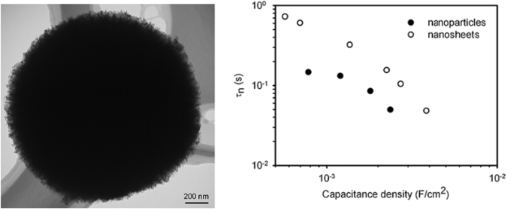
- thoroughly washed with detergent water, distilled water, acetone, isopropanol and ethanol in sequence under sonication for 15 min. The cleaned FTO substrate was first coated with a compact layer of TiO2 film by spray pyrolysis to reduce the electron back reaction at the interface between the bare FTO and the


Template-assisted formation of microsized nanocrystalline CeO2 tubes and their catalytic performance in the carboxylation of methanol
Beilstein J. Nanotechnol. 2011, 2, 776–784, doi:10.3762/bjnano.2.86

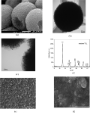
- polymer-templating method was investigated in an effort to reduce such agglomeration [1][7][8][9][10][11]. Nanosized ceria can be synthesized by methods such as chemical vapour deposition (CVD), spray pyrolysis, hydrothermal synthesis or electrosynthesis [1][2][9]. These approaches lead to particulate


Approaches to nanostructure control and functionalizations of polymer@silica hybrid nanograss generated by biomimetic silica mineralization on a self-assembled polyamine layer
Beilstein J. Nanotechnol. 2011, 2, 760–773, doi:10.3762/bjnano.2.84
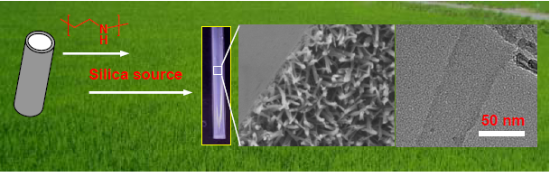
- [8][9][10][11]. On the other hand, silica films consisted of a network of interwoven nanofibers were also reported as produced by flame spray pyrolysis of organometallic solutions with the deposition and annealing temperature of silica in the range from 500 to 800 °C [12]. However, these conventional


Formation of SiC nanoparticles in an atmospheric microwave plasma
Beilstein J. Nanotechnol. 2011, 2, 665–673, doi:10.3762/bjnano.2.71
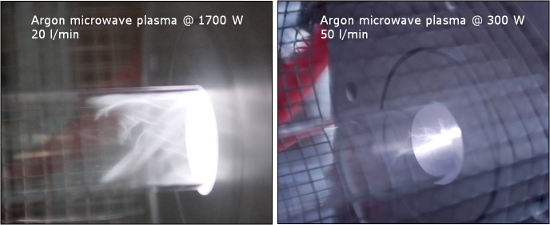
- industrial process. But, SiC nanoparticles also exhibit properties different from the bulk material and allow the creation of composite materials with new properties. Thus, their production has been studied by different methods such as the thermal pyrolysis of organic precursors [3][4][5], or plasma
- atmospheric plasma [18][19]. However, the established industrial production processes for nanoparticles, such as flame pyrolysis yielding millions of tons of carbon black or oxide nanoparticles per year, are performed at atmospheric pressure. The plasma synthesis of nanoparticles in atmospheric plasma offers



Ceria/silicon carbide core–shell materials prepared by miniemulsion technique
Beilstein J. Nanotechnol. 2011, 2, 638–644, doi:10.3762/bjnano.2.67
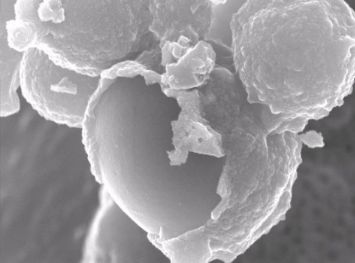
- methacrylate (MMA) or acrylic acid. Furthermore the prevalent problem of sphere sintering during pyrolysis has been overcome by means of a coating procedure. In this contribution, we describe the functionalization of SiC spheres with ceria shells. Ceria is known as an oxidation catalyst for soot combustion
- CTAB or Lutensol AT50 (Figure 3). The green PCS spheres exhibited a low specific surface area of ~9 m2.g−1. Functionalization and pyrolysis The dispersion of PCS spheres can be destabilized either by adding acetone, by the evaporation of water at 353 K overnight, or by centrifugation. Subsequently, the
- resulting PCS spheres are either pyrolyzed instantaneously or functionalized before pyrolysis. The latter results in a core–shell-structured hybrid material. A promising method for the synthesis of core–shell hybrid materials in general was described by Landfester et al. [36]. They created surface


Studies towards synthesis, evolution and alignment characteristics of dense, millimeter long multiwalled carbon nanotube arrays
Beilstein J. Nanotechnol. 2011, 2, 293–301, doi:10.3762/bjnano.2.34
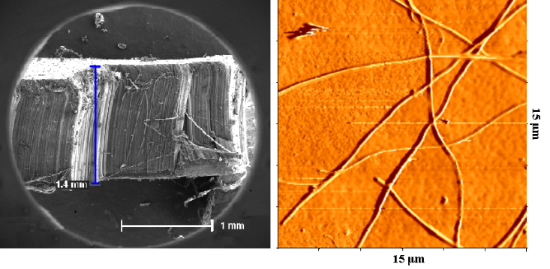
- and length 70 cm, closed at one end [53][54][55]. The other end of the quartz tube was connected to a rubber bladder to collect the exhaust gases. The precursors were vaporized inside a horizontal furnace and heated to the desired pyrolysis temperature (range 650–1100 °C) at a rate of 20 °C/min. When


Aerosol assisted fabrication of two dimensional ZnO island arrays and honeycomb patterns with identical lattice structures
Beilstein J. Nanotechnol. 2010, 1, 71–74, doi:10.3762/bjnano.1.9
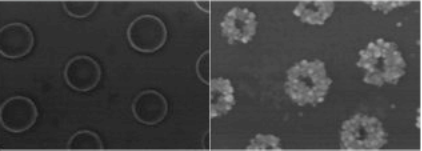
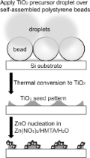
- monolayer on SiO2/Si substrates. Subsequent pyrolysis converts the precursor to crystalline TiO2 with concomitant removal of the polystyrene. The resulting TiO2 seed pattern was then used to direct ZnO nanocrystals growth in a one-pot solution process [2][9][26][27]. In addition, this type of laminated