


Search results
Search for "time-resolved" in Full Text gives 102 result(s) in Beilstein Journal of Nanotechnology.
Characterization of protein adsorption onto FePt nanoparticles using dual-focus fluorescence correlation spectroscopy
Beilstein J. Nanotechnol. 2011, 2, 374–383, doi:10.3762/bjnano.2.43
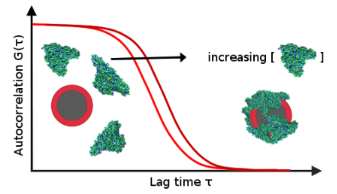
- thickness on these NPs, and time-resolved fluorescence quenching experiments revealed a typical protein residence time of ~100 s [11]. For transferrin [8], an important blood plasma protein involved in iron transport and delivery, we observed formation of a 7 nm thick protein corona. The FCS method is based
- . 2fFCS setup The 2fFCS setup is based on a time-resolved confocal microscopy system (Microtime 200, PicoQuant, Berlin, Germany). Instead of using a single excitation laser, the light from two identical, orthogonally polarized pulsed 640 nm diode lasers (LDH-P-C-640B, Picoquant, Berlin, Germany) was


Sensing surface PEGylation with microcantilevers
Beilstein J. Nanotechnol. 2010, 1, 3–13, doi:10.3762/bjnano.1.2
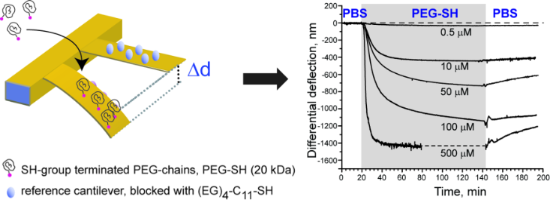
- , time resolved manner [13][14]. By an asymmetrical chemisorption of molecules (i.e., on one side of the microcantilever), the sensors can detect processes in “static” mode by measuring the bending of a microcantilever due to stress formation during the adsorption process; or in “dynamic” mode where the



Other Beilstein-Institut Open Science Activities



